
“Fruits . . . love to have their portraits painted. They sit there and apologize for changing color.” — Paul Cézanne
“The painter gives concrete expression to his sensations, his perceptions, by means of line and color,” Paul Cézanne wrote to the younger artist Émile Bernard. Throughout his decades-long career, he dedicated himself to this task, continuously experimenting with his materials and techniques in an effort to record his sensations on paper and canvas. Returning consistently to the same repertoire of familiar subjects, Cézanne depicted long views and close details of the natural landscape; arrangements of fruit and kitchen utensils; portraits of himself and his family members; and individual and grouped bathers. These works reveal the innovative technical means by which the artist achieved his vision: the repetitions and transformations that realize a composition; the purposeful elements of unfinish that suggest the contingency of perception; the searching, multiple lines that together describe form. Through these efforts to represent the world around him, Cézanne pushed the boundaries of seeing, paving the way for further developments in abstraction in the 20th century, from Pablo Picasso to Henri Matisse and beyond. Cézanne was born in 1839 in Aix-en-Provence, a city in southern France, and spent his youth exploring the region’s rugged countryside, forging a lifelong attachment to this landscape that he would return to often in his art. In 1858, at his father’s behest, he enrolled at the University of Aix to pursue a law degree. After two years, he abandoned his studies to devote himself to art, moving to Paris in 1861. He would subsequently divide his time between the capital and the south, residing primarily in a bright studio in the hills above Aix in the final decade of his life. Despite his reputation as an artist who “founded new traditions,” Cézanne was in constant dialogue with the past. He frequented the Louvre, where he would copy works by old masters, including Michelangelo, Rubens, and Pierre Puget. The practice, he believed, prepared him “to see well the following day.” He would later reflect, “The Louvre is the book from which we learn to read,” and the shaping influence of the art of his predecessors is visible in pencil drawings such as Mercury after Pigalle. Cézanne carefully copied Mercury’s coiled posture from a sculpture by Jean-Baptiste Pigalle during one of his museum visits, and later echoed the pose for the left-most nude in Bathers, a pencil and watercolor drawing on a sheet subsequently torn from one of his many sketchbooks. Cézanne was also initially influenced by his Impressionist contemporaries, among them Camille Pissarro, Claude Monet, and Auguste Renoir. Working alongside Pissarro in the 1870s, he began increasingly to draw and paint outdoors. This practice was aided by the advent of easily prepared, widely available, and relatively inexpensive art materials, including industrially produced pencils, tubes of paint, and artist sketchbooks. With Pissarro’s guidance, Cézanne adopted a brighter, prismatic palette, which he would employ throughout the remainder of his career. But he eventually distanced himself from the Impressionists, explaining, “What I wanted was to make of Impressionism something solid and durable, like the art of the museum.” He sought to unite the Impressionists’ direct observational approach with the sense of structure and solidity of classical composition, as in the works he encountered at the Louvre. Cézanne’s innovative approach is apparent in the oil-on-canvas Milk Can and Apples, in which he constructs the dimensionality of fruit and fabric through the application of colored parallel brushstrokes. At the same time, he exaggerates the tilt of the sideboard to emphasize the two-dimensional nature of the picture’s surface. The result captures the material weight of objects encountered from life and exposes the reality of the composition as a work of art. While most often celebrated as a painter, Cézanne was also an accomplished draughtsman. Drawing was a foundational aspect of his artistic practice, and he drew almost daily, making over 2,000 works on paper over the course of his career. Executed primarily in pencil and in watercolor on the pages of sketchbooks and on loose sheets, these works demonstrate Cézanne’s technical range. Cézanne used repeated parallel or perpendicular pencil strokes—hatching and cross-hatching—to model surfaces and create a sense of volume. He deployed dense scribbles to indicate patches of shadow, loops and spirals to demarcate foliage, and mirrored the skips and pauses of vision with fragmented, multiple outlines. He thinned his watercolor and applied it in translucent veils, adding pencil marks between and over these layers and leaving paper blank to indicate highlights. These works challenge traditional assumptions about the purpose of drawing. With few exceptions, Cézanne did not undertake drawing as preparatory study for oil painting. Rather, he pursued drawing as an activity that was valuable and vital in its own right. In Mont Sainte-Victoire, the artist depicts one of Provence’s most recognizable landmarks, which appears in approximately 100 of his drawings and paintings. The peak is rendered with multiple dashed lines in pencil and watercolor, while overlapping washes of pigment describe the valley below. Showcasing his technical mastery over this notoriously hard-to-control medium, Cézanne varied the density and color of pigments across the composition to convey a wealth of surfaces and textures both near and far. Brushwork and line coalesce into a kaleidoscope of vibrating color, pervading the composition with a sense of dynamism—as though its observer is in motion. Illustrating the complexities of vision inherent to an age transformed by new technologies, like photography and film, this watercolor turns landscape into a prism, offering evidence of the modernity of Cézanne’s vision.
Kiko Aebi, Curatorial Assistant, Department of Drawings and Prints, 2021
Opening quote is from Cézanne, as reported by Joachim Gasquet in Cézanne (Paris: Les Éditions Bernheim-Jeune, 1921). Trans. In Michael Doran, ed., Conversations with Cézanne, trans. Julie Lawrence Cochran (Berkeley: University of California Press, 2001), 156.
Works in Collection
21 works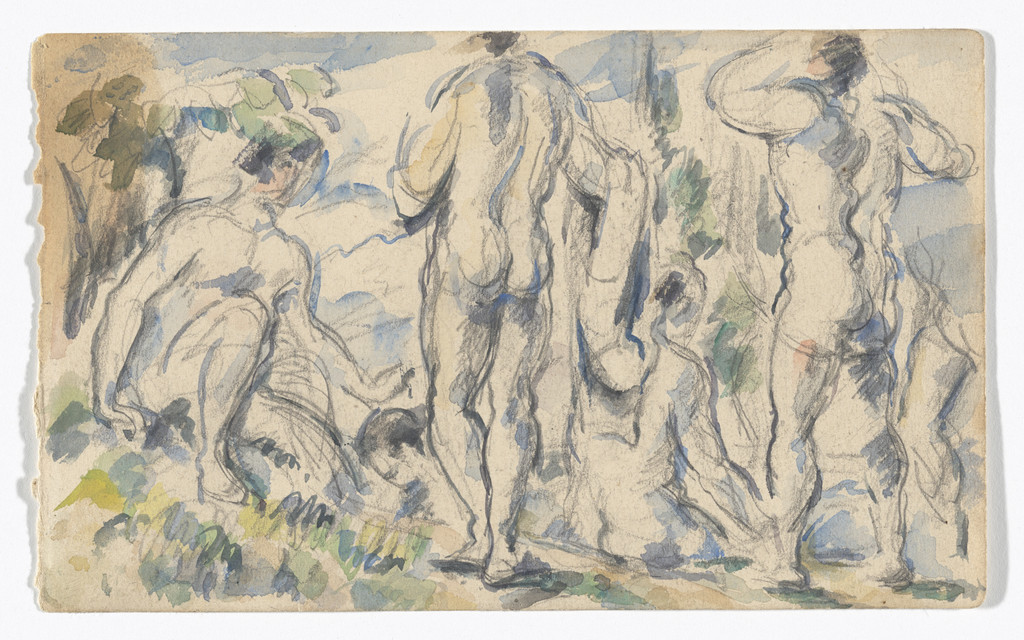
Bathers
Paul Cézanne
c. 1885-1890
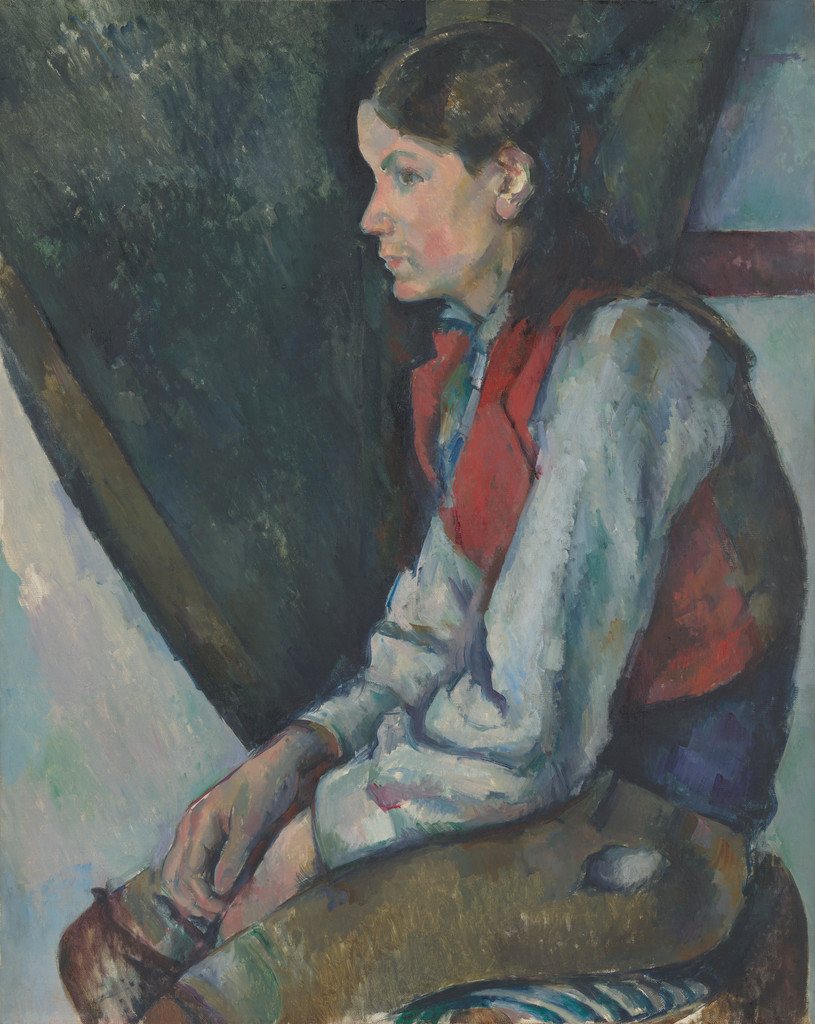
Boy in a Red Vest
Paul Cézanne
1888-90
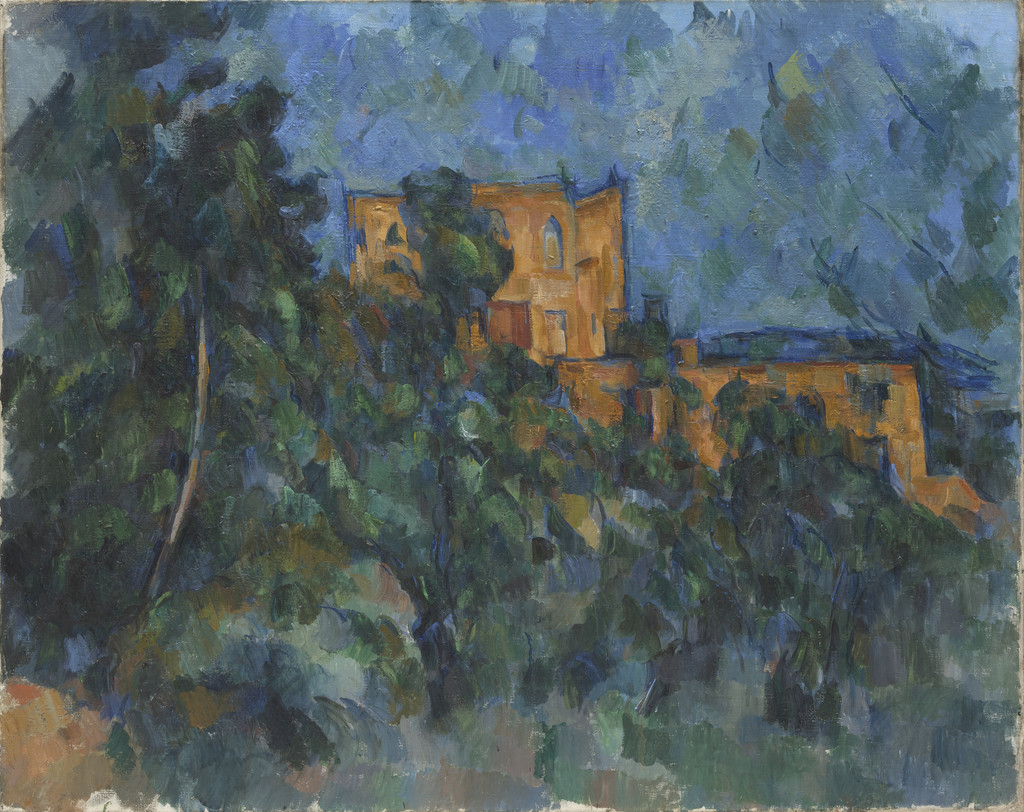
Château Noir
Paul Cézanne
1903-04
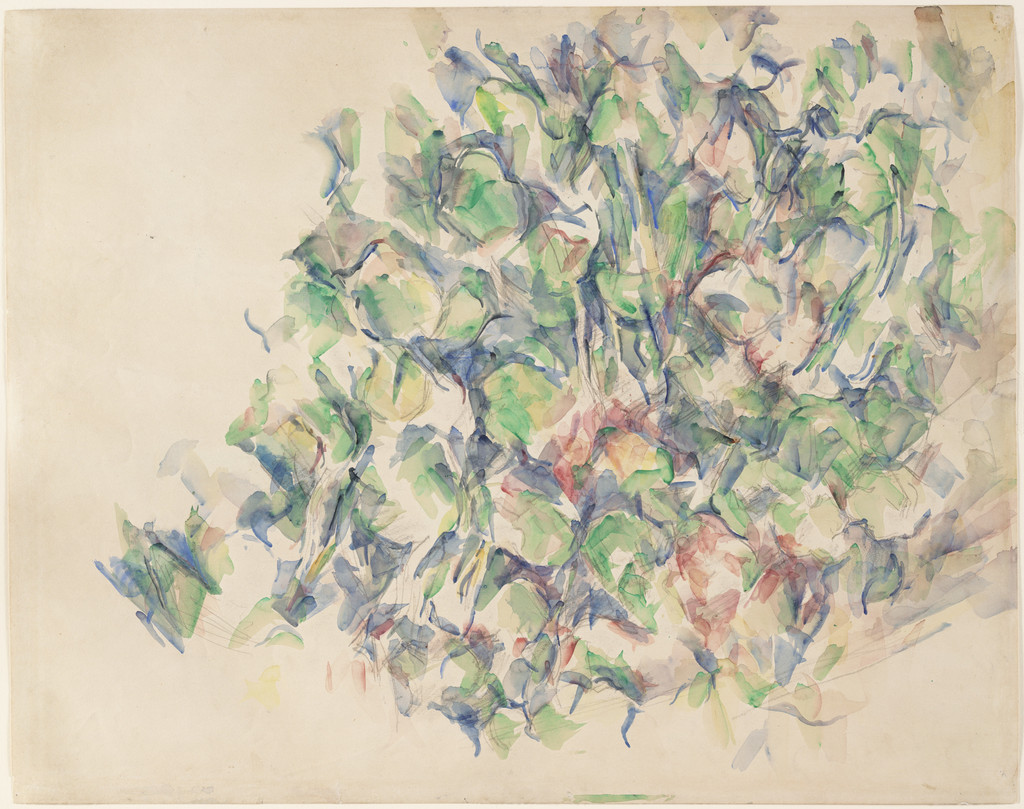
Foliage (recto); Study of Trees (verso)
Paul Cézanne
1895
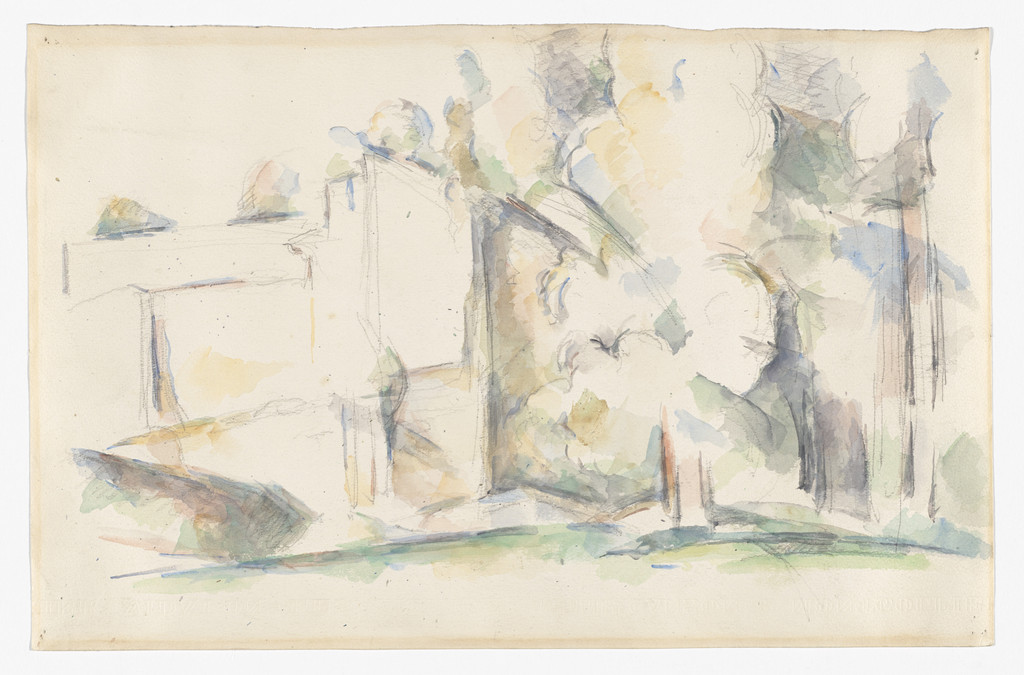
House Among Trees
Paul Cézanne
c. 1900
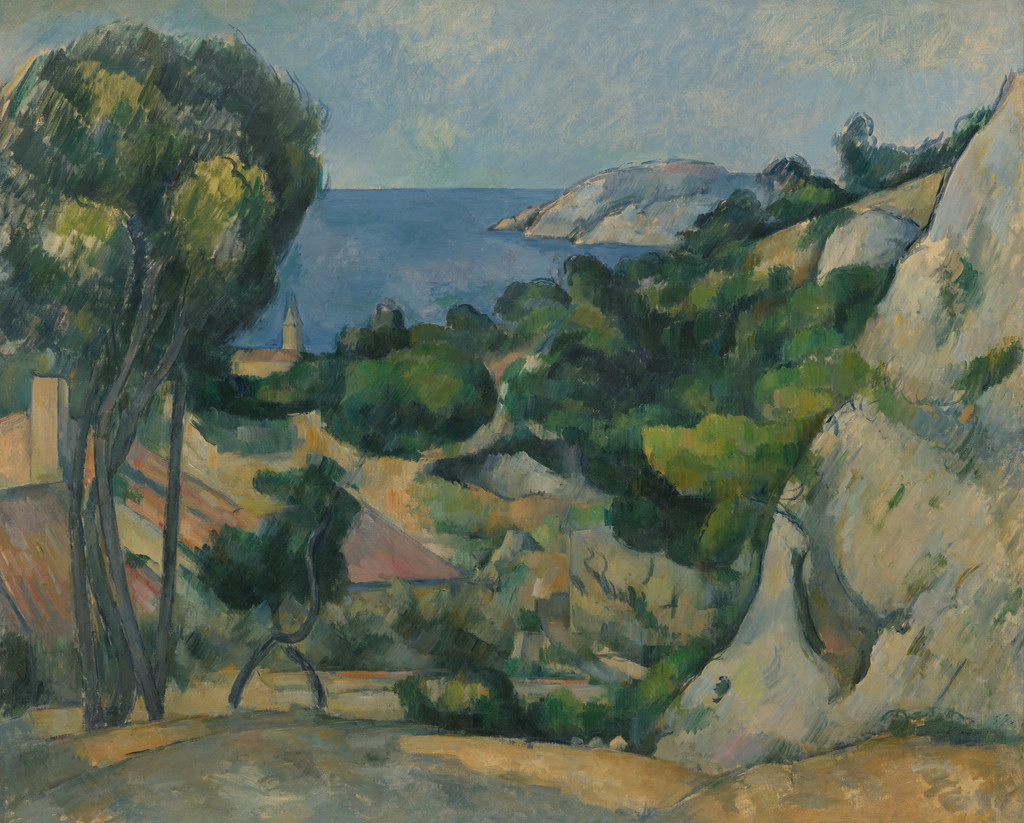
L'Estaque
Paul Cézanne
1879-83
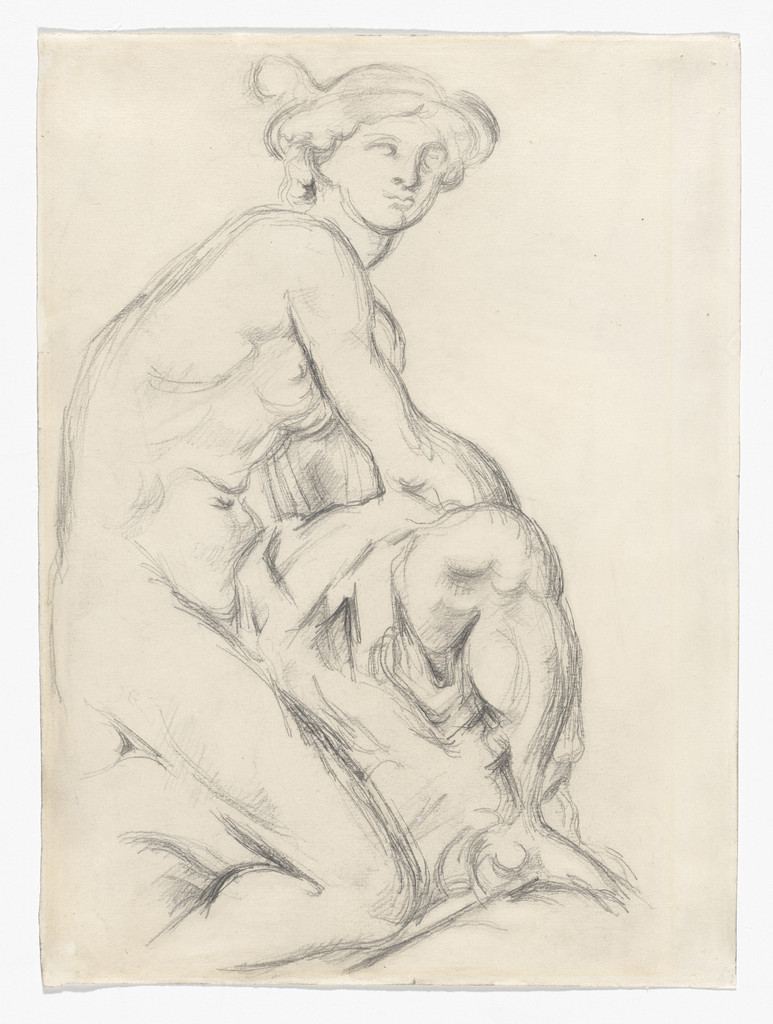
Mercury after Pigalle
Paul Cézanne
c. 1890
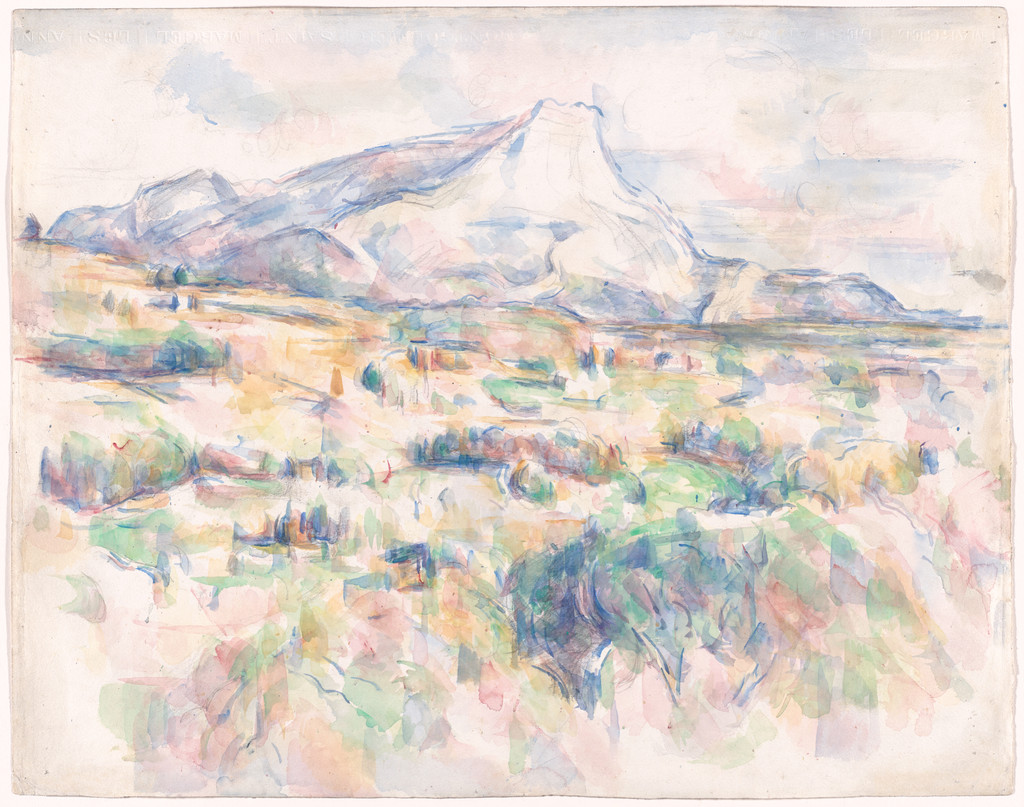
Mont Sainte-Victoire
Paul Cézanne
1902–06
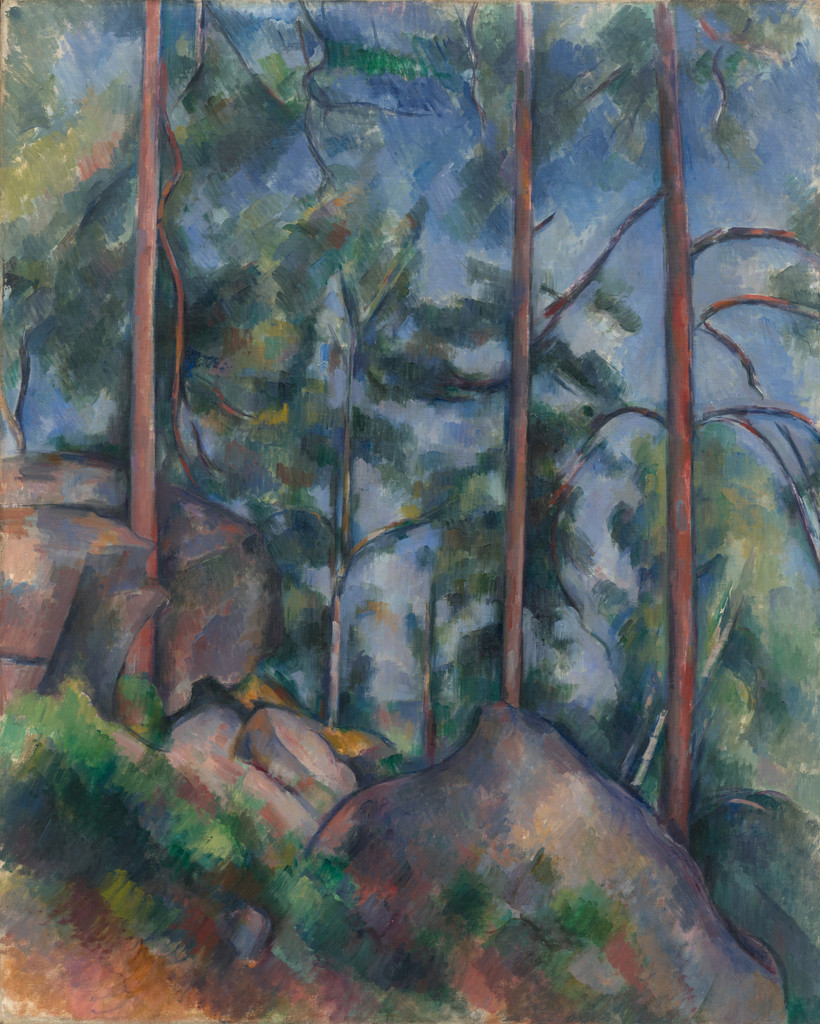
Pines and Rocks (Fontainebleau?)
Paul Cézanne
c. 1897
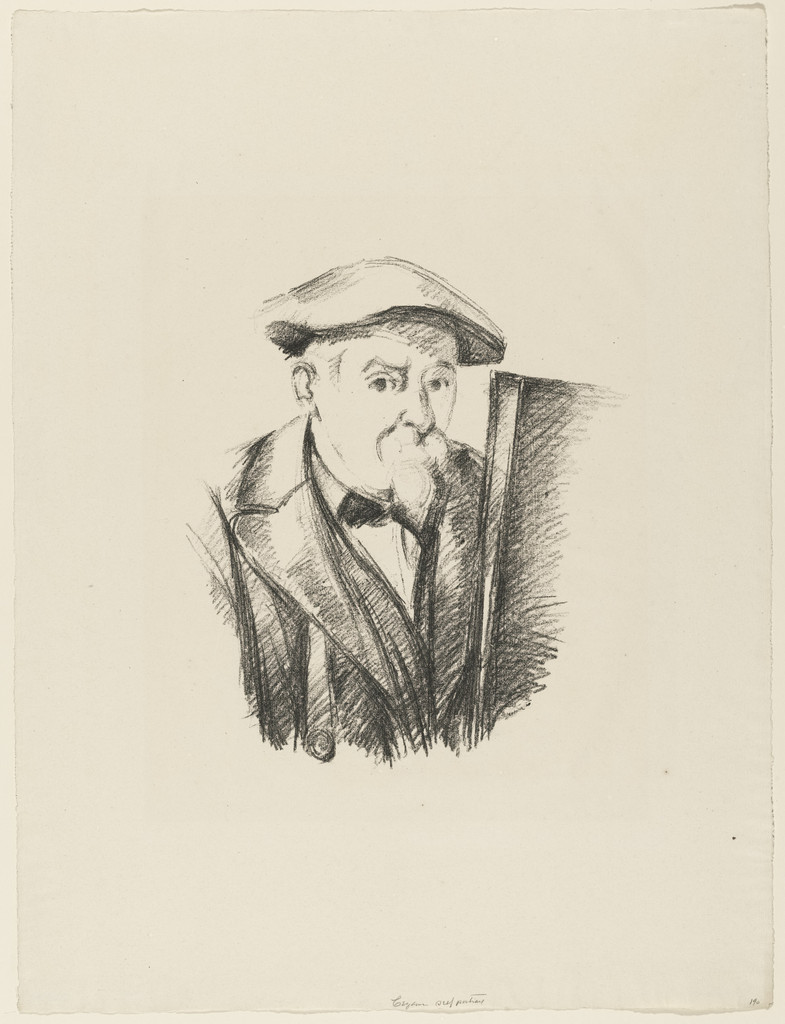
Portrait of Cézanne
Paul Cézanne
c. 1898–1900
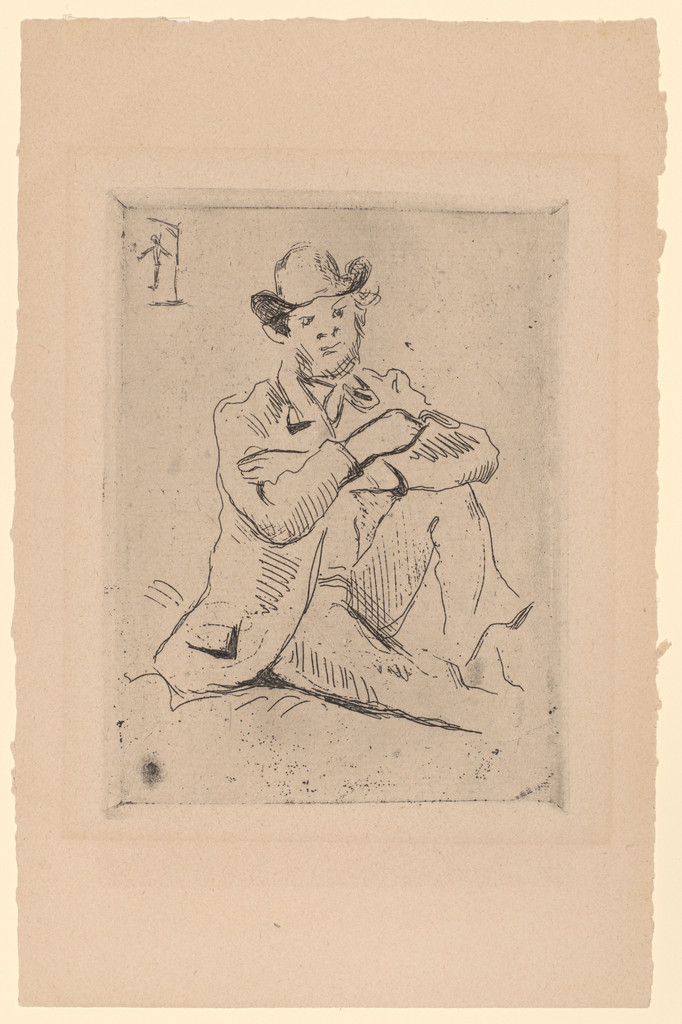
Portrait of Guillaumin with a Hanging Man
Paul Cézanne
1873
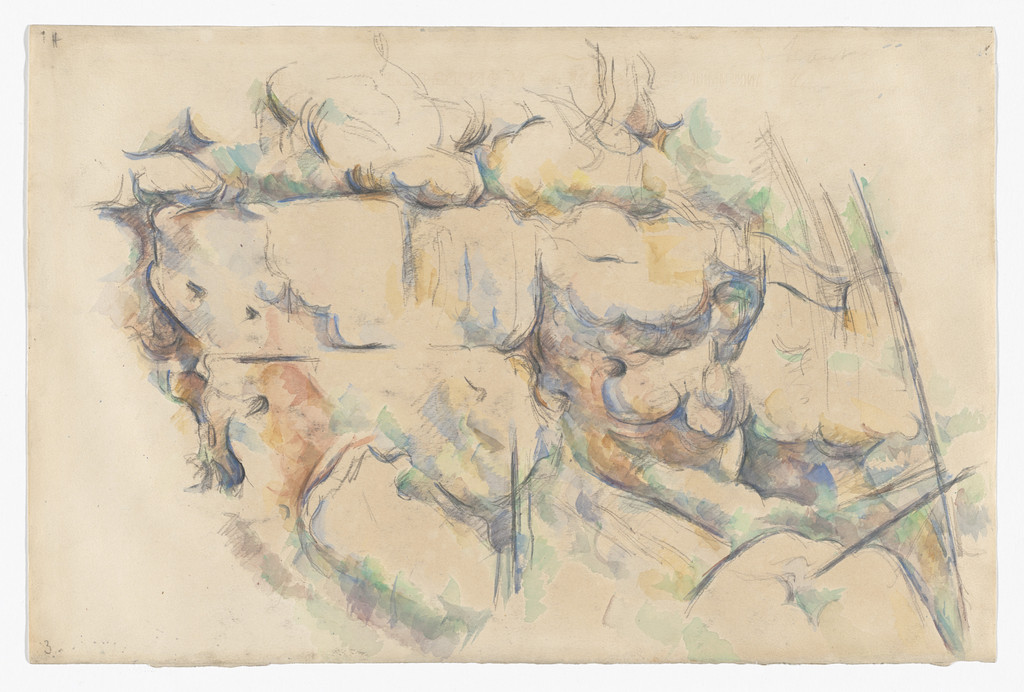
Rocks Near the Caves above Château Noir
Paul Cézanne
1895–1900
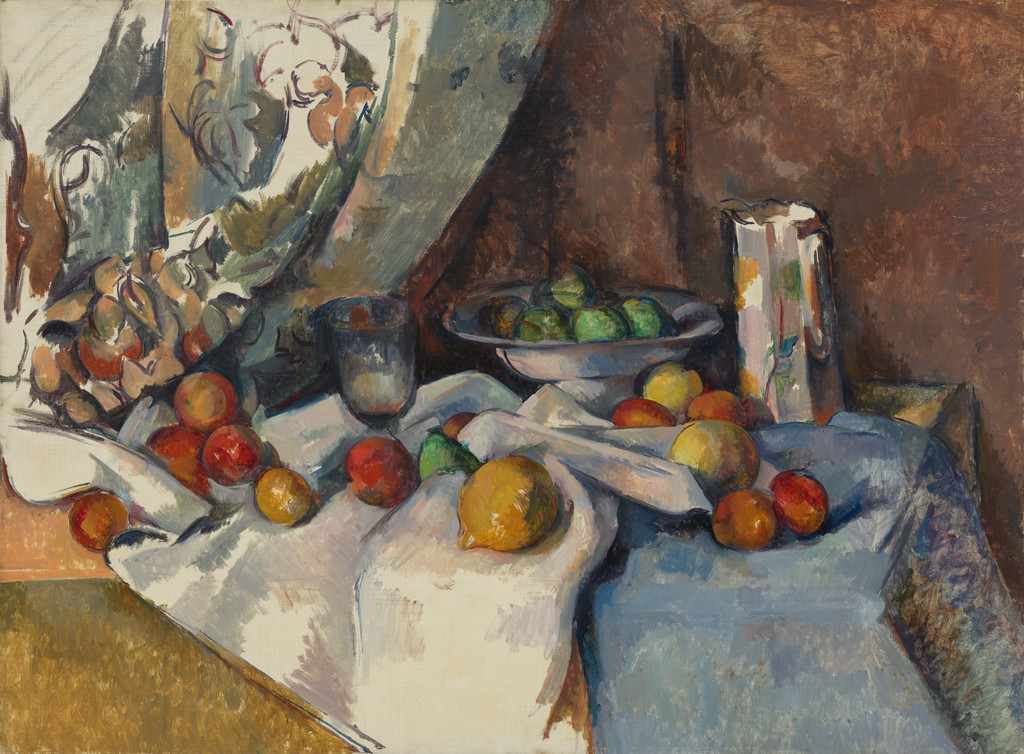
Still Life with Apples
Paul Cézanne
1895-98
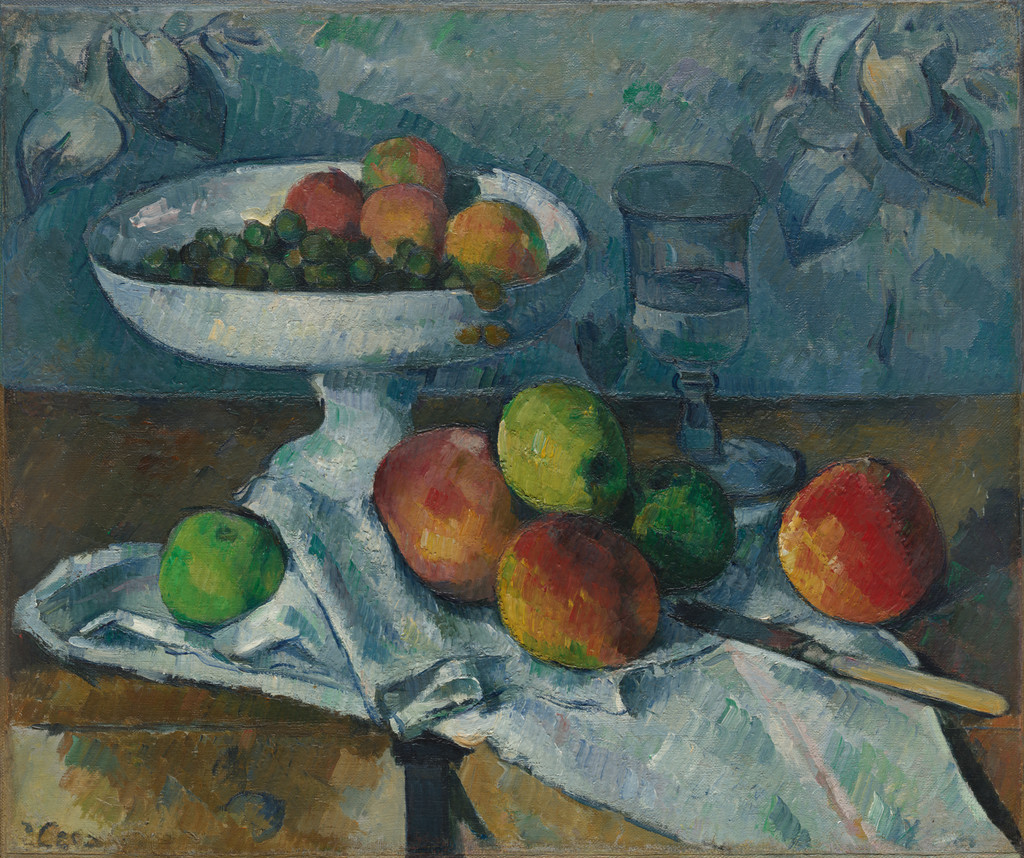
Still Life with Fruit Dish
Paul Cézanne
1879-80
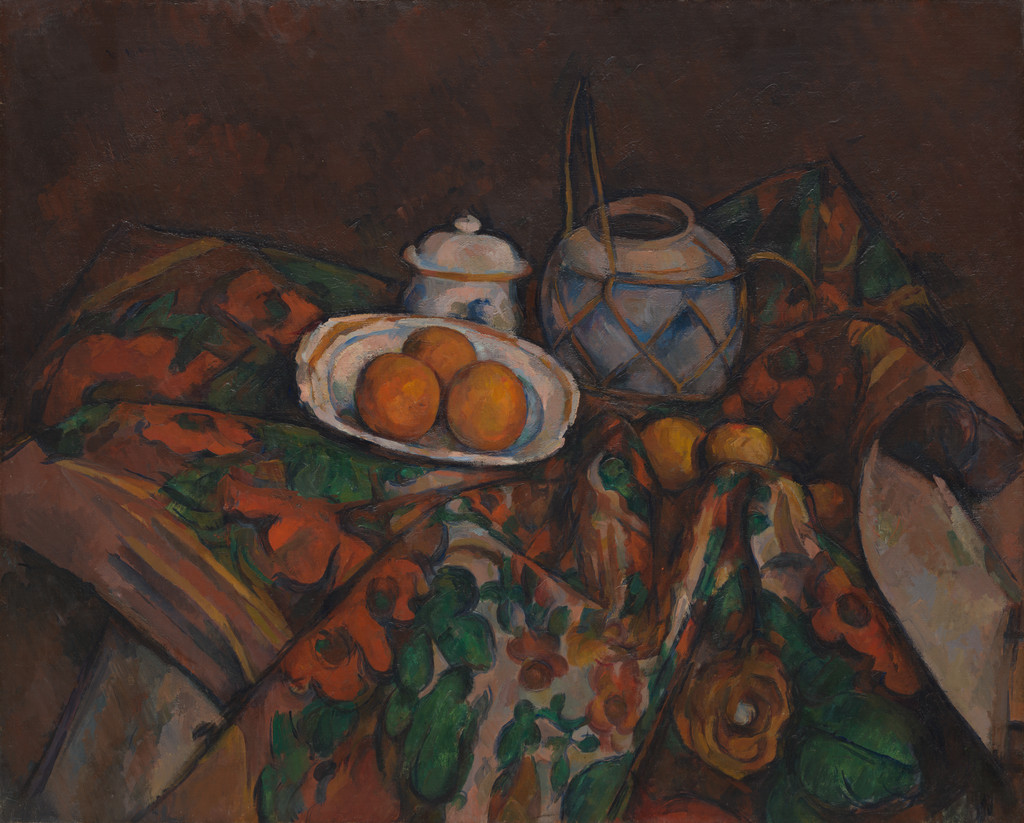
Still Life with Ginger Jar, Sugar Bowl, and Oranges
Paul Cézanne
1902-06
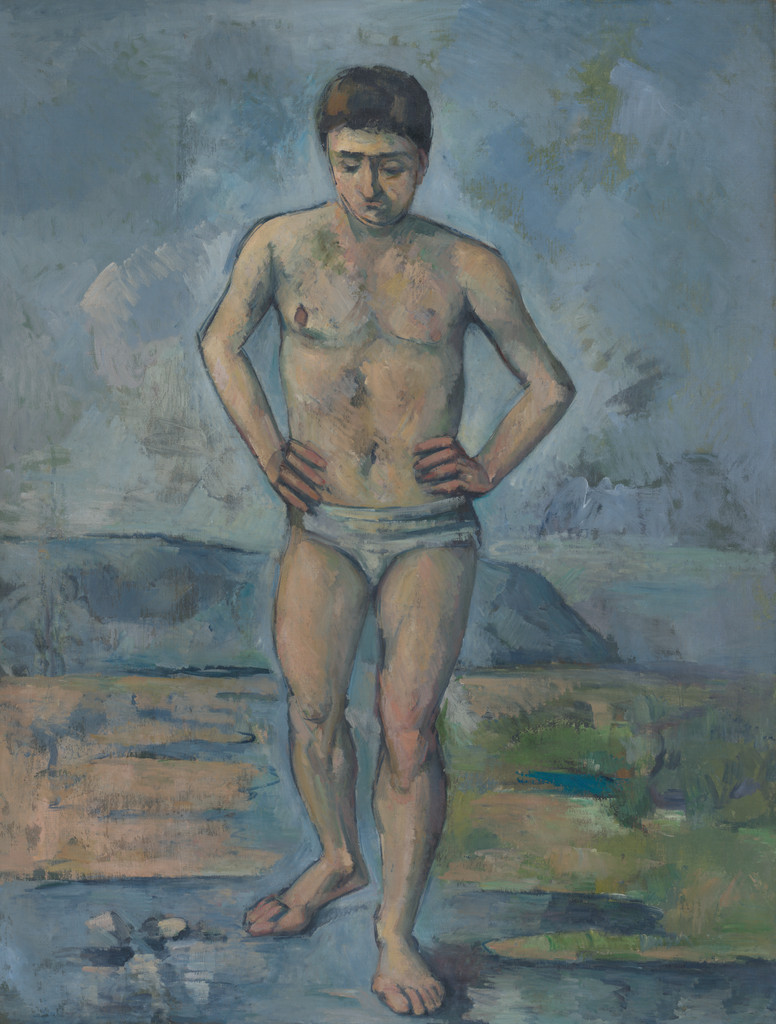
The Bather
Paul Cézanne
c. 1885
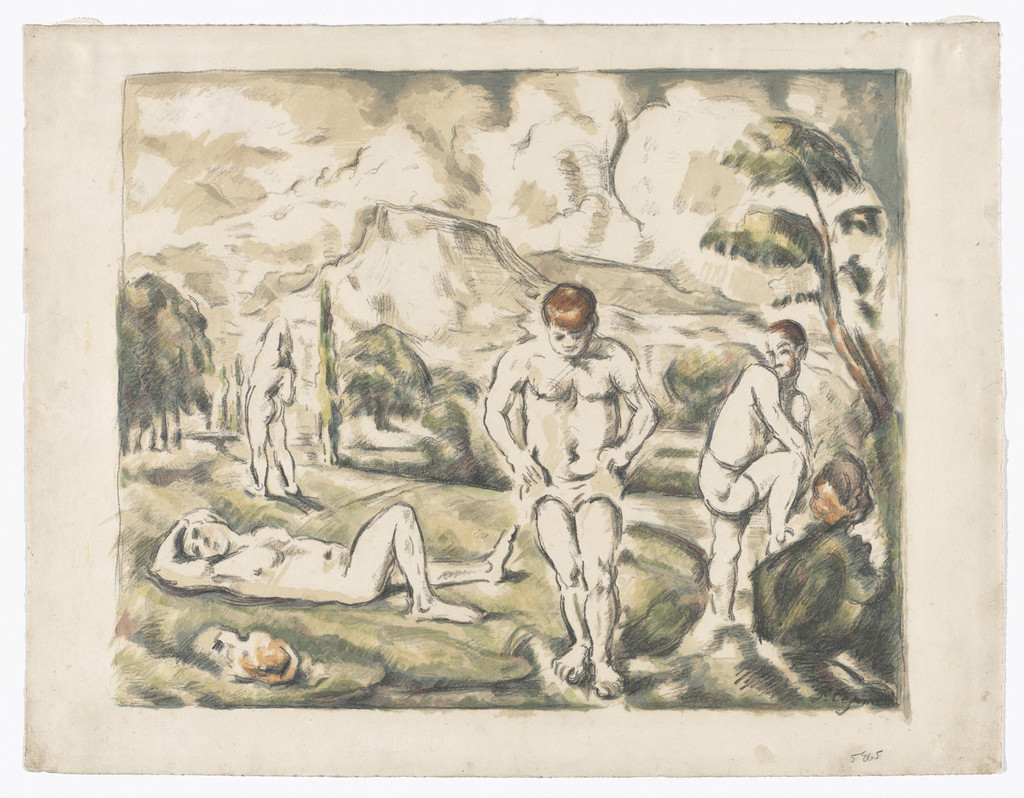
The Bathers, large plate (Les baigneurs, grand planche)
Paul Cézanne
1896-97
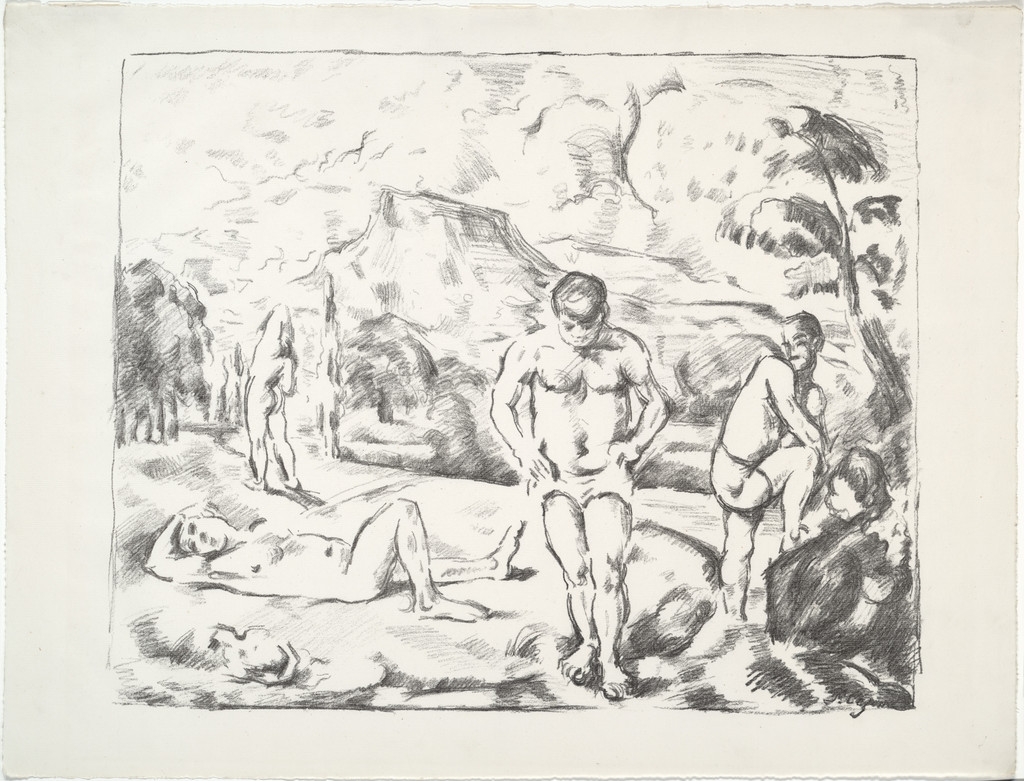
The Bathers, large plate (Les baigneurs, grand planche)
Paul Cézanne
1899
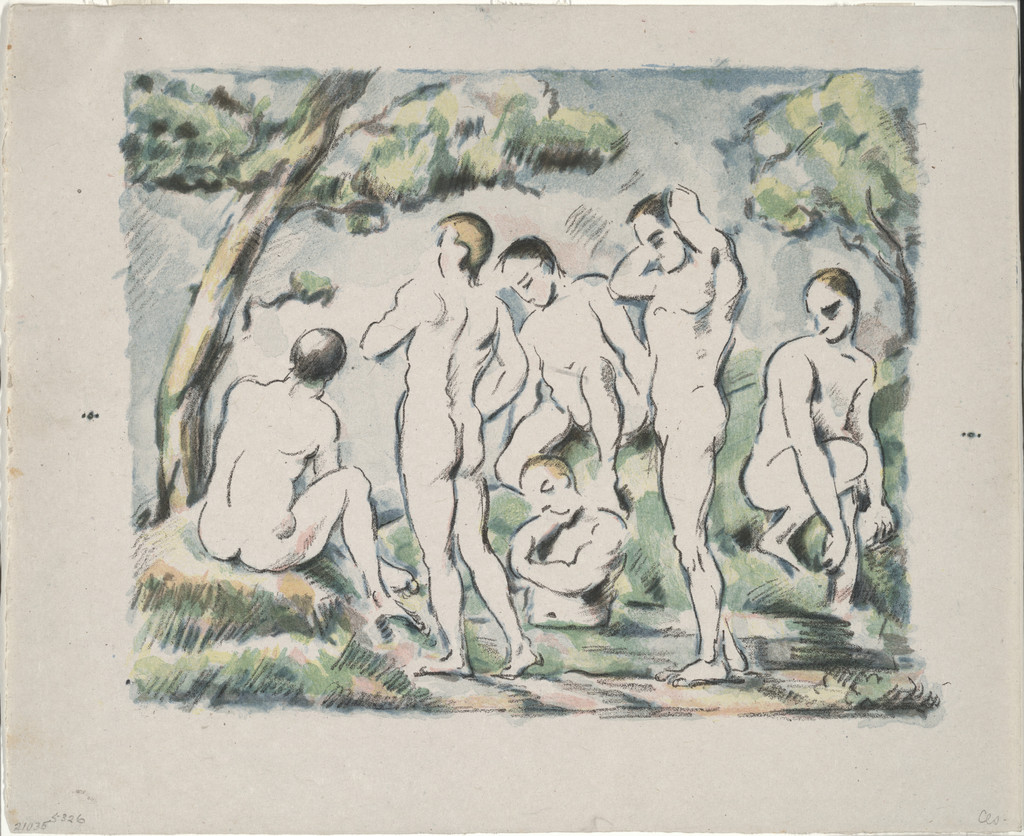
The Bathers, small plate (Les baigneurs, petit planche)
Paul Cézanne
1897
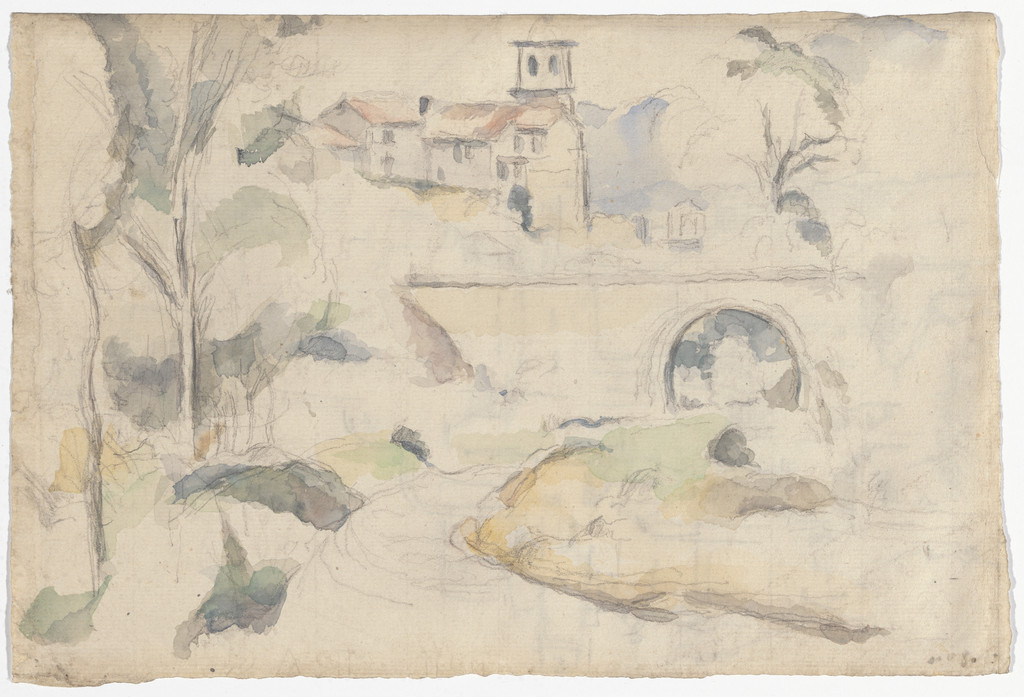
The Bridge at Gardanne (recto); View of Gardanne (verso)
Paul Cézanne
1885–86
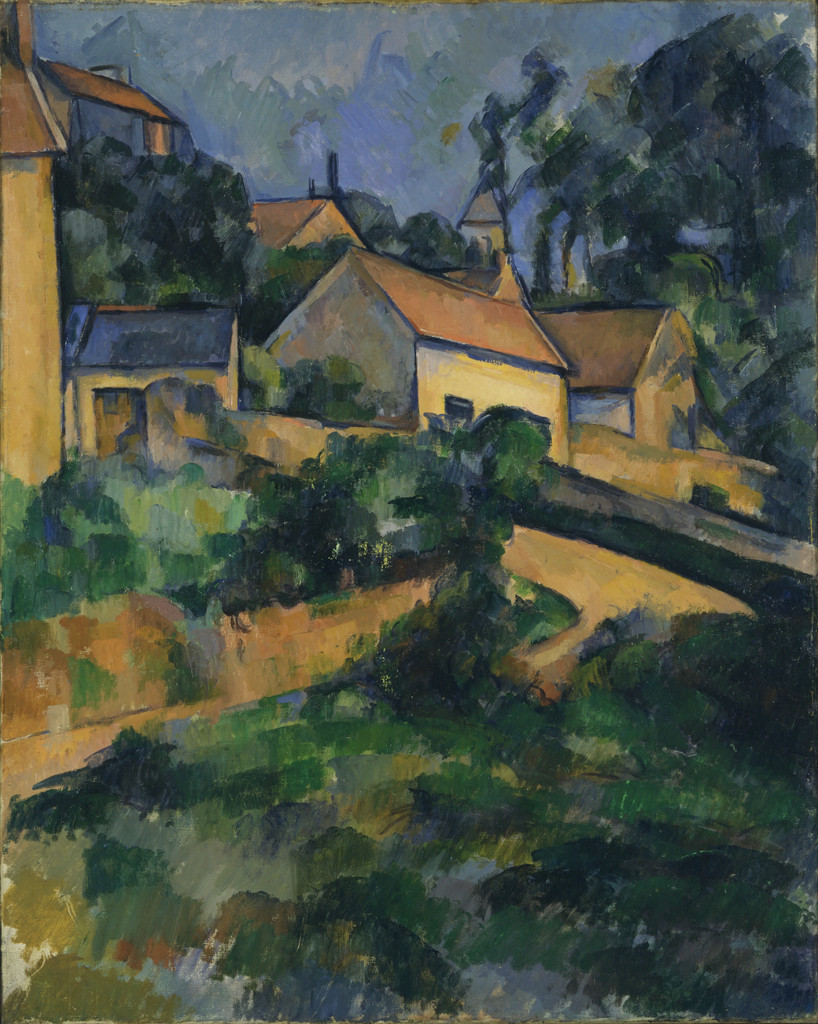
Turning Road at Montgeroult
Paul Cézanne
1898
Exhibitions
89 exhibitionsNov 07, 1929 – Dec 07, 1929
Cézanne, Gauguin, Seurat, Van Gogh
4 artists · 1 curator
Jun 15, 1930 – Sep 28, 1930
Summer Exhibition: Painting and Sculpture
52 artists
May 17, 1931 – Oct 06, 1931
Memorial Exhibition: The Collection of the Late Lillie P. Bliss
25 artists
Jun 07, 1932 – Oct 30, 1932
Summer Exhibition: Painting and Sculpture
57 artists
Jul 20, 1932 – Oct 05, 1932
A Brief Survey of Modern Painting
38 artists
May 13, 1933 – May 31, 1933
Fruit and Flower Paintings
31 artists
Jul 10, 1933 – Sep 30, 1933
Summer Exhibition: Painting and Sculpture
48 artists
Oct 03, 1933 – Oct 27, 1933
Modern European Art
53 artists
May 14, 1934 – Sep 12, 1934
The Lillie P. Bliss Collection, 1934
22 artists
Jul 11, 1934 – Sep 13, 1934
New Acquisitions: Lachaise Torso; Prints
21 artists
Aug 13, 1934 – Sep 21, 1934
Color Reproductions: Modern Watercolors and Pastels
24 artists
Nov 19, 1934 – Jan 20, 1935
Modern Works of Art: 5th Anniversary Exhibition
117 artists
Jun 04, 1935 – Sep 24, 1935
Summer Exhibition: The Museum Collection and a Private Collection on Loan
53 artists
Mar 02, 1936 – Apr 19, 1936
Cubism and Abstract Art
113 artists · 1 curator
Jul 20, 1936 – Sep 02, 1936
Summer Exhibition: The Museum Collection and a Private Collection on Loan
26 artists
Apr 28, 1937 – May 30, 1937
Paintings by Paul Cézanne from the Museum
1 artist
Apr 28, 1937 – May 30, 1937
Color Reproductions of Paintings by Cézanne
1 artist
Jun 23, 1937 – Nov 04, 1937
Summer Exhibition: Painting and Sculpture from the Museum Collection and on Loan
53 artists
Dec 01, 1937 – Jan 07, 1938
Transitions and Contrasts in Painting and Sculpture
12 artists
May 10, 1939 – Sep 30, 1939
Painting, Sculpture, Prints
154 artists
Jan 12, 1940 – Mar 03, 1940
Paintings and Sculpture from the Museum Collection
55 artists
Jan 26, 1940 – Mar 24, 1940
Modern Masters from European and American Collections
25 artists
Jan 31, 1940 – Mar 01, 1940
Twelve Favorites: Paintings Selected by Students from the Museum Collection
5 artists
Oct 23, 1940 – Jan 12, 1941
Painting and Sculpture from the Museum Collection
80 artists
May 06, 1941 – Apr 30, 1941
Painting and Sculpture from the Museum Collection
74 artists
May 06, 1941 – Jun 30, 1941
Understanding Modern Art
9 artists
Aug 04, 1941 – Oct 15, 1941
Techniques of Painting
16 artists
Aug 26, 1941 – Sep 15, 1941
Ancestral Sources of Modern Painting
26 artists
Feb 16, 1944 – May 10, 1944
Modern Drawings
120 artists · 3 curators
May 24, 1944 – Oct 15, 1944
Painting, Sculpture, Prints
133 artists · 1 curator
Nov 15, 1944 – May 30, 1945
Painting, Sculpture, Graphic Arts from the Museum Collection
9 artists
Mar 06, 1945 – Mar 25, 1945
What is Modern Painting?
37 artists
Jun 20, 1945 – Feb 13, 1946
The Museum Collection of Painting and Sculpture
174 artists
Nov 28, 1945 – Feb 03, 1946
Museum of Modern Art Color Reproductions
13 artists
Feb 19, 1946 – May 05, 1946
The Museum Collection of Painting
67 artists
Jun 11, 1946 – Oct 06, 1946
Designed for Children
20 artists · 1 curator
Jul 02, 1946 – Sep 22, 1946
Paintings from New York Private Collections
37 artists · 1 curator
Jul 02, 1946 – Sep 12, 1954
Paintings, Sculpture, and Graphic Arts from the Museum Collection
112 artists · 1 curator
Apr 15, 1947 – Jun 01, 1947
Drawings in the Collection of The Museum of Modern Art
83 artists
Jun 10, 1947 – Aug 31, 1947
Alfred Stieglitz Exhibition: His Collection
36 artists · 1 curator
Jun 01, 1948 – Sep 06, 1948
Portraits in Prints
29 artists · 1 curator
Nov 16, 1948 – Jan 23, 1949
Timeless Aspects of Modern Art
21 artists · 1 curator
Mar 18, 1949 – Apr 17, 1949
Pictures for Children Aged 312 Years
16 artists
May 10, 1949 – Jul 10, 1949
Master Prints from the Museum Collection
132 artists · 2 curators
Jun 26, 1951 – Sep 09, 1951
Selections from 5 New York Private Collections
34 artists · 1 curator
Jun 24, 1952 – Sep 07, 1952
French Paintings from the Molyneux Collection
24 artists
Oct 07, 1952 – Jan 04, 1953
Les Fauves
21 artists · 1 curator
Mar 03, 1953 – Apr 12, 1953
Edward G. Robinson Collection
27 artists · 1 curator
Oct 19, 1954 – Feb 06, 1955
XXVth Anniversary Exhibition: Paintings from the Museum Collection
260 artists
Dec 07, 1954 – Feb 01, 1955
Modern Masterprints of Europe
72 artists · 1 curator
Feb 25, 1955 – Apr 24, 1955
Fifteen Paintings by French Masters of the 19th Century from the Louvre and the Museums of Albi and Lyon
15 artists · 1 curator
May 31, 1955 – Sep 07, 1955
Paintings from Private Collections
33 artists · 1 curator
Jun 24, 1956
Renoir's Reclining Nude
6 artists
Apr 23, 1958 – May 18, 1958
50 Selections from the Collection of Mr. and Mrs. Walter Bareiss
41 artists · 1 curator
Oct 08, 1958 – Nov 09, 1958
Works of Art: Given or Promised
22 artists · 1 curator
Oct 08, 1958
Second Floor Permanent Collection
28 artists
Apr 20, 1960
Fifty Modern Paintings and Sculpture Especially Donated for the Benefit of the 30th Anniversary Fund of The Museum of Modern Art
35 artists · 2 curators
Dec 21, 1960 – Feb 05, 1961
Recent Acquisitions
222 artists · 3 curators
Jun 09, 1961 – Jul 16, 1961
The Mrs. Adele R. Levy Collection: A Memorial Exhibition
19 artists
Nov 20, 1962 – Jan 13, 1963
Recent Acquisitions
77 artists
May 27, 1964
Painting and Sculpture from the Museum Collection
169 artists
Apr 28, 1967 – Apr 30, 1967
The Artist as His Subject
46 artists · 2 curators
Jun 06, 1967 – Sep 17, 1967
The Artist as His Subject
49 artists
Apr 28, 1969 – Nov 04, 1969
Painting and Sculpture from the Museum Collection
9 artists
Nov 05, 1969 – Jan 02, 1973
Painting and Sculpture from the Museum Collection
35 artists
Dec 19, 1970 – Mar 01, 1971
Four Americans in Paris: The Collections of Gertrude Stein and her Family
23 artists · 2 curators
Jul 28, 1971 – Nov 01, 1971
Ways of Looking
132 artists · 1 curator
Mar 29, 1972
Permanent Collection
45 artists · 2 curators
Jun 27, 1972 – Oct 10, 1972
European Drawings from the Collection
24 artists · 1 curator
Jun 13, 1974 – Sep 08, 1974
Seurat to Matisse: Drawing in France
79 artists · 1 curator
Aug 05, 1975 – Sep 28, 1975
Modern Masters: Manet to Matisse
21 artists · 1 curator
Feb 09, 1976 – May 09, 1976
Cubism and Its Affinities
45 artists · 1 curator
Dec 17, 1976 – Mar 01, 1977
European Master Paintings from Swiss Collections: Post-Impressionism to World War II
35 artists · 1 curator
Jun 06, 1977 – Sep 06, 1977
Impresario: Ambroise Vollard
44 artists · 1 curator
Oct 07, 1977 – Jan 02, 1978
Cézanne: The Late Work
1 artist · 3 curators
Oct 23, 1980
Reinstallation of the Collection
129 artists
Oct 25, 1980 – Jan 27, 1981
Masterpieces from the Collection: Selections from the Late Nineteenth- and Early Twentieth-Centuries
26 artists · 1 curator
Mar 19, 1981 – Jun 02, 1981
Recent Acquisitions: Drawings
65 artists · 1 curator
Aug 20, 1981 – Oct 06, 1981
Words and Pictures
49 artists · 1 curator
Mar 01, 1982 – Mar 16, 1982
A Century of Modern Drawing, 18811981
59 artists · 1 curator
Mar 08, 1982 – Mar 01, 1983
Masterpieces from the Collection
19 artists · 2 curators
Oct 26, 1983 – Jan 03, 1984
The Modern Drawing: 100 Works on Paper from The Museum of Modern Art
81 artists · 1 curator
May 17, 1984
Selections from the Permanent Collection: Painting and Sculpture
59 artists · 2 curators
May 17, 1984
Selections from the Permanent Collection: Drawings
61 artists · 2 curators
May 29, 1986 – Sep 30, 1986
Naked/Nude
63 artists · 1 curator
Mar 10, 1988 – Jun 05, 1988
A Cézanne Treasure: The Basel Sketchbooks
1 artist · 1 curator
Mar 16, 1989 – Jul 04, 1989
Watercolors: Selections from the Permanent Collection
39 artists · 1 curator
Apr 06, 1989 – Aug 08, 1989
Master Prints from the Collection
102 artists · 1 curator
Nov 16, 1989 – Mar 13, 1990
Prints: Proofs and Variants
25 artists · 1 curator