
“I felt that I have no right to withdraw from the responsibility of being an advocate. It is my duty to voice the sufferings of men, the never-ending sufferings heaped mountain-high.” — Käthe Kollwitz
Born in the Prussian city of Königsberg (now Kaliningrad, Russia) in 1867, Käthe Kollwitz established herself in an art world dominated by men by developing an aesthetic vision centered on women and the working class. Her representations of women, including her frequent self-portraits, effectively communicated her subjects’ predicaments during a period when women were still negotiating ways to represent themselves in the arts. While her naturalistic style appeared out of touch in an era that witnessed the birth of abstraction, her depictions of universal human experiences, given depth and emotional power through her dense networks of lines and light and dark contrasts, were also reflective of her time. The loss of her son during World War I, for instance, led to a lifelong exploration of the subject of mourning. She also found many of her motifs in her husband’s medical clinic for workers and people in need, where she also kept her studio. Initially trained as a painter, Kollwitz began to focus on the graphic arts after she encountered the work and writings of fellow artist Max Klinger, who defended the exacting art of drawing over the free form of painting. After 1890, she gave up painting in favor of etching and sculpture, and later turned to lithography and woodcuts. Moving from one technique to another, she increasingly simplified her visual language over time, but never at the expense of legibility. The detailed quality of drawing matched her concerns with depicting the stark reality of war and its victims. In a woodcut titled The Widow II (Die Witwe II), from her 1921–22 print cycle War, Kollwitz depicts the body of a distressed mother lying flat on the ground. The mother holds her limp child, and both appear as if they are dead. The ease of distribution and accessibility of prints such as these appealed to the artist’s sense of advocacy. Writing in her diary, Kollwitz declared, “I felt that I have no right to withdraw from the responsibility of being an advocate. It is my duty to voice the sufferings of men, the never-ending sufferings heaped mountain-high. This is my task, but it is not an easy one to fulfil [sic].” Kollwitz’s compassion for those in need has bestowed on her continued international renown. Today, her name evokes images of bereaved mothers, ailing, fatherless children, anguished parents, and, more generally, suffering and death. However, her reputation, while largely defined by its socially critical subject matter, also rests on her artistic talent and drive for experimentation in a wide range of mediums. Kollwitz often mixed various printing techniques to achieve a desired image. Even though the majority of her prints are black-and-white, a significant number of them reveal an interest in color that reflects her beginnings, when she was studying to be a painter.
Luise Mahler, Assistant Curator, Department of Painting and Sculpture, 2016
Works in Collection
46 works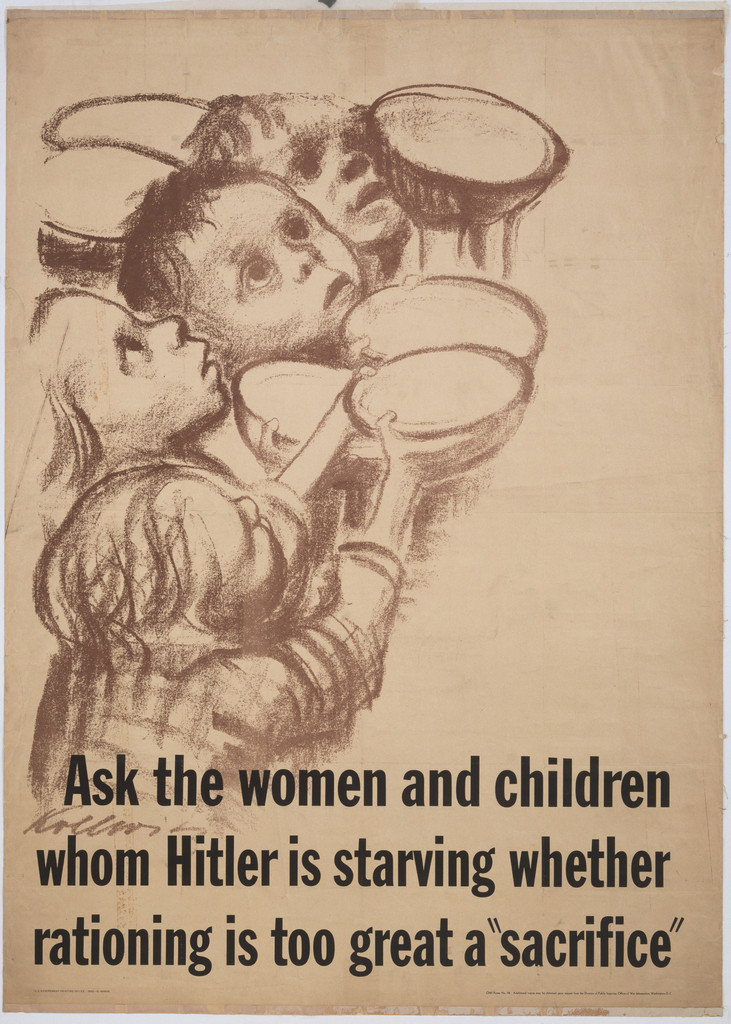
Ask the Women and Children Whom Hitler is Starving Whethe...
Käthe Kollwitz
1942
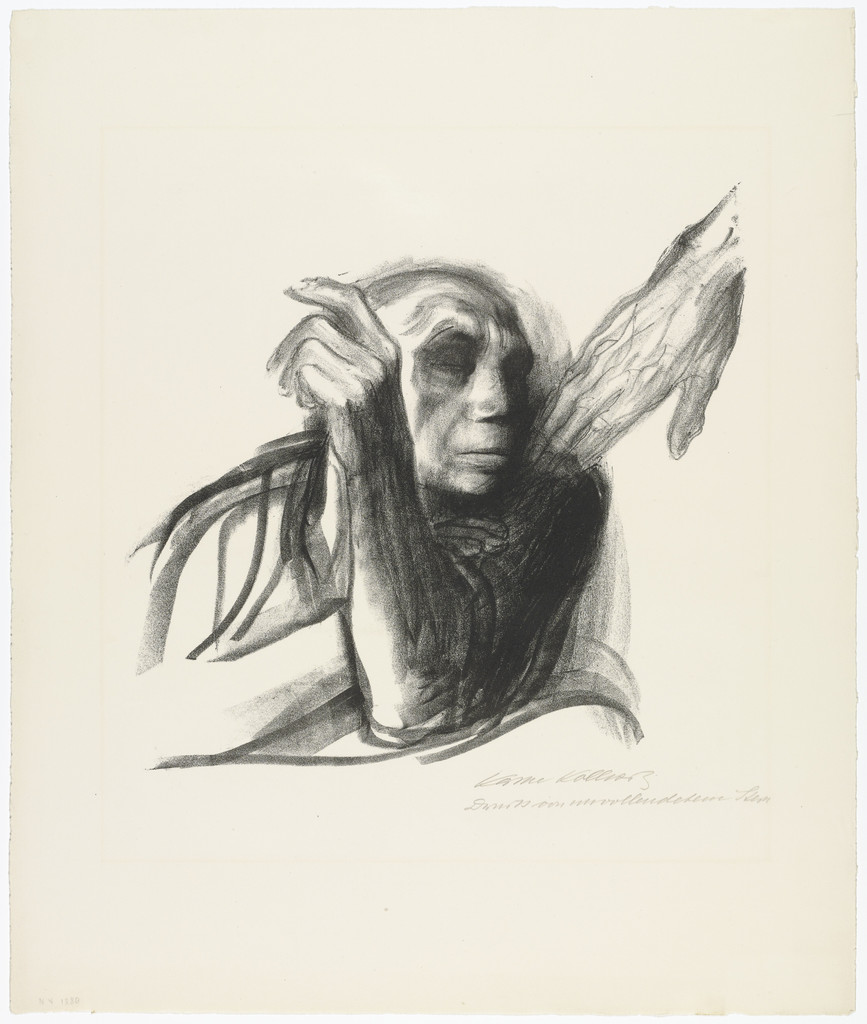
Call of Death (Ruf des Todes), plate 8 from the series De...
Käthe Kollwitz
c. 1937
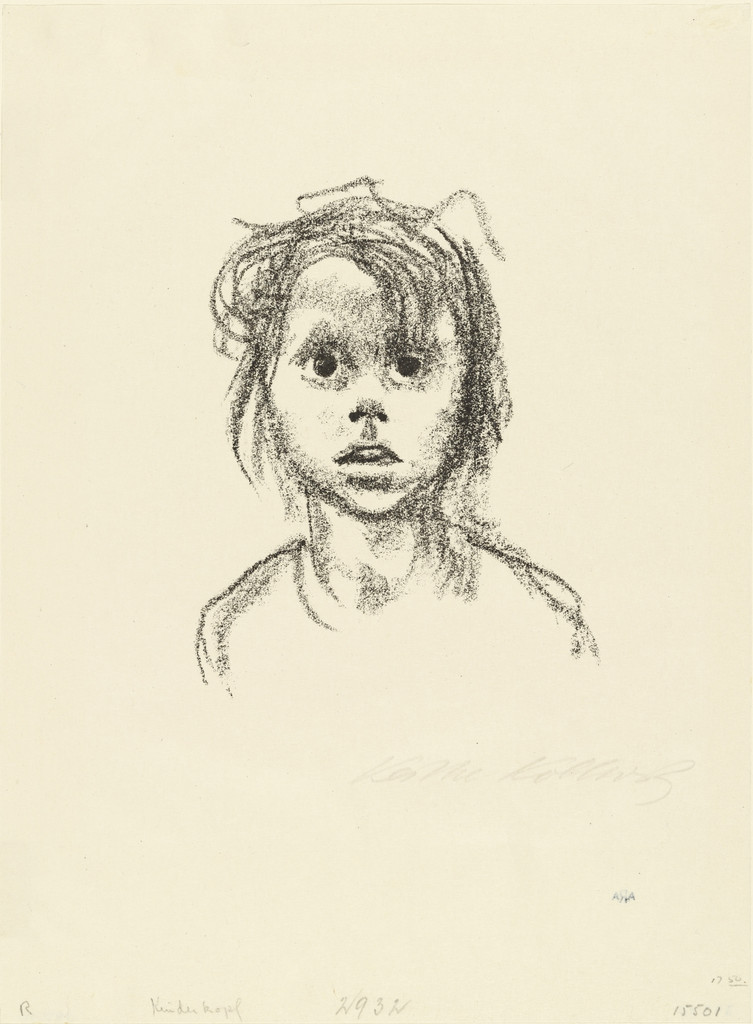
Child's Head (Kinderkopf)
Käthe Kollwitz
1925
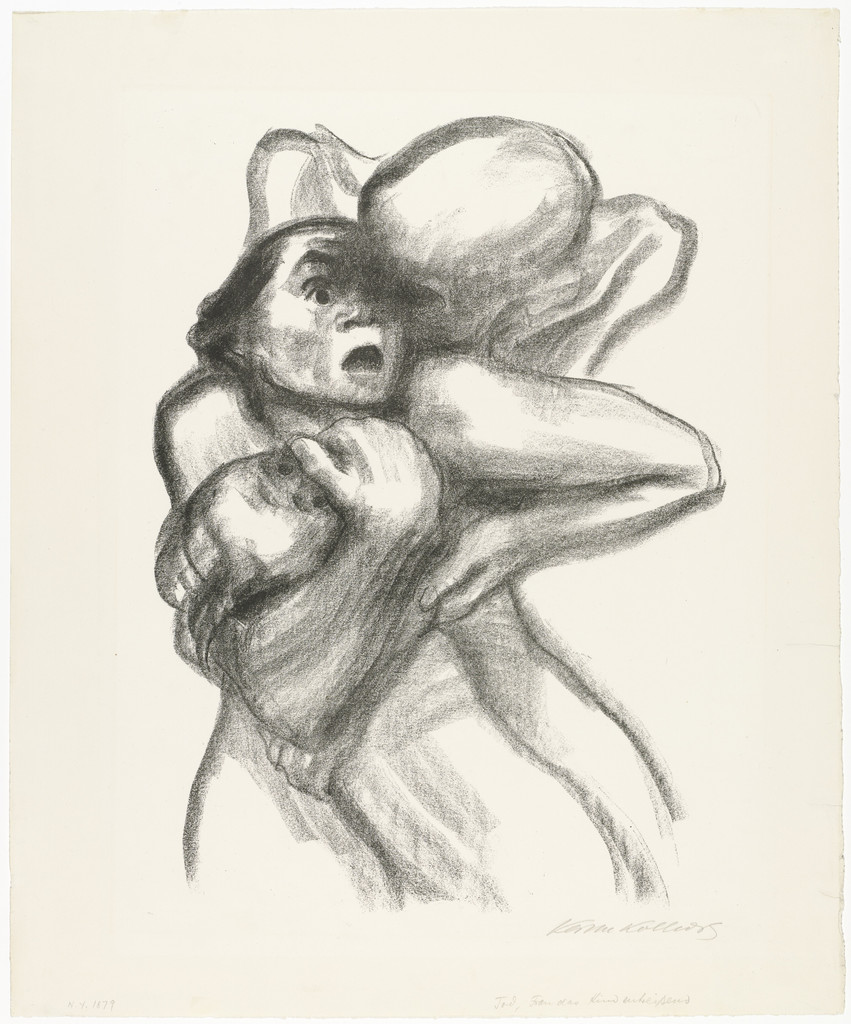
Death Seizes a Woman (Tod packt eine Frau), plate 4 from ...
Käthe Kollwitz
1934
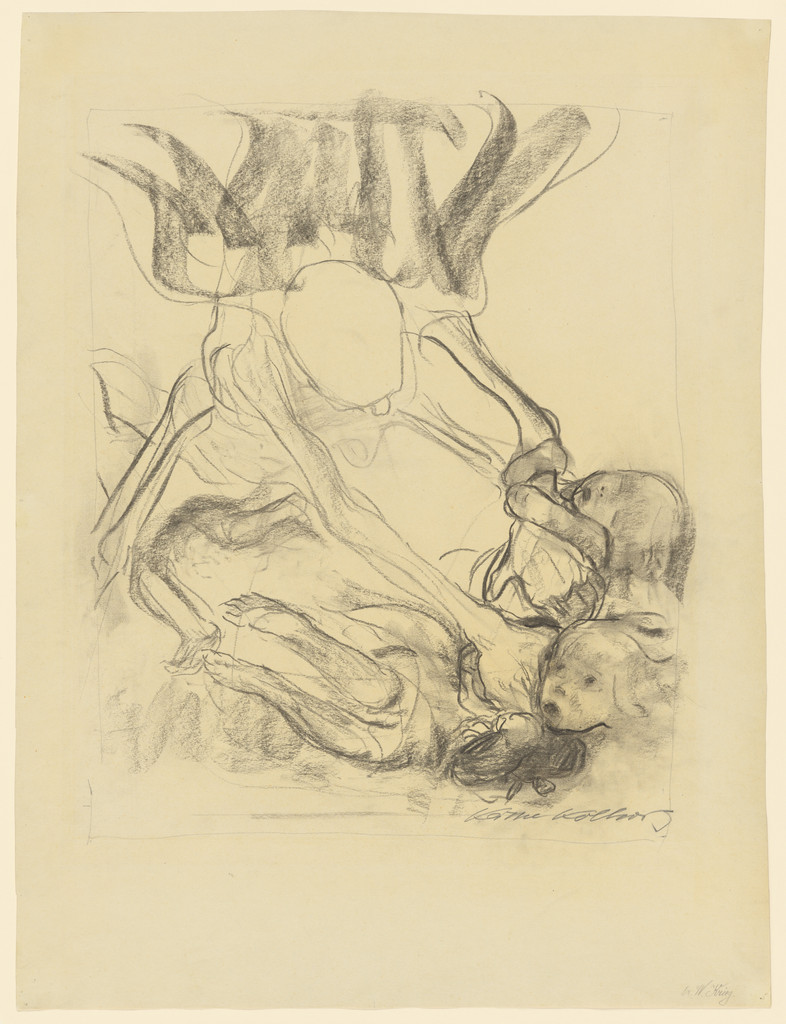
Death Seizes the Children (Tod greift in Kinderschar)
Käthe Kollwitz
1934
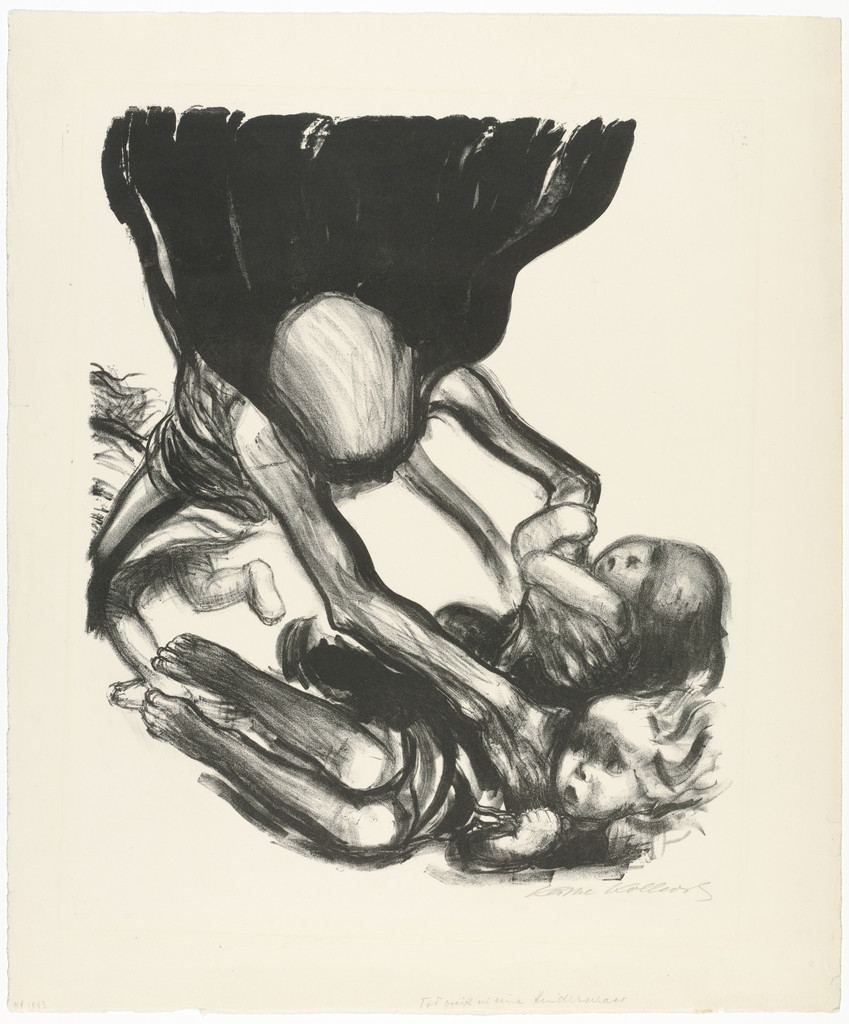
Death Seizes the Children (Tod greift in Kinderschar), pl...
Käthe Kollwitz
1934
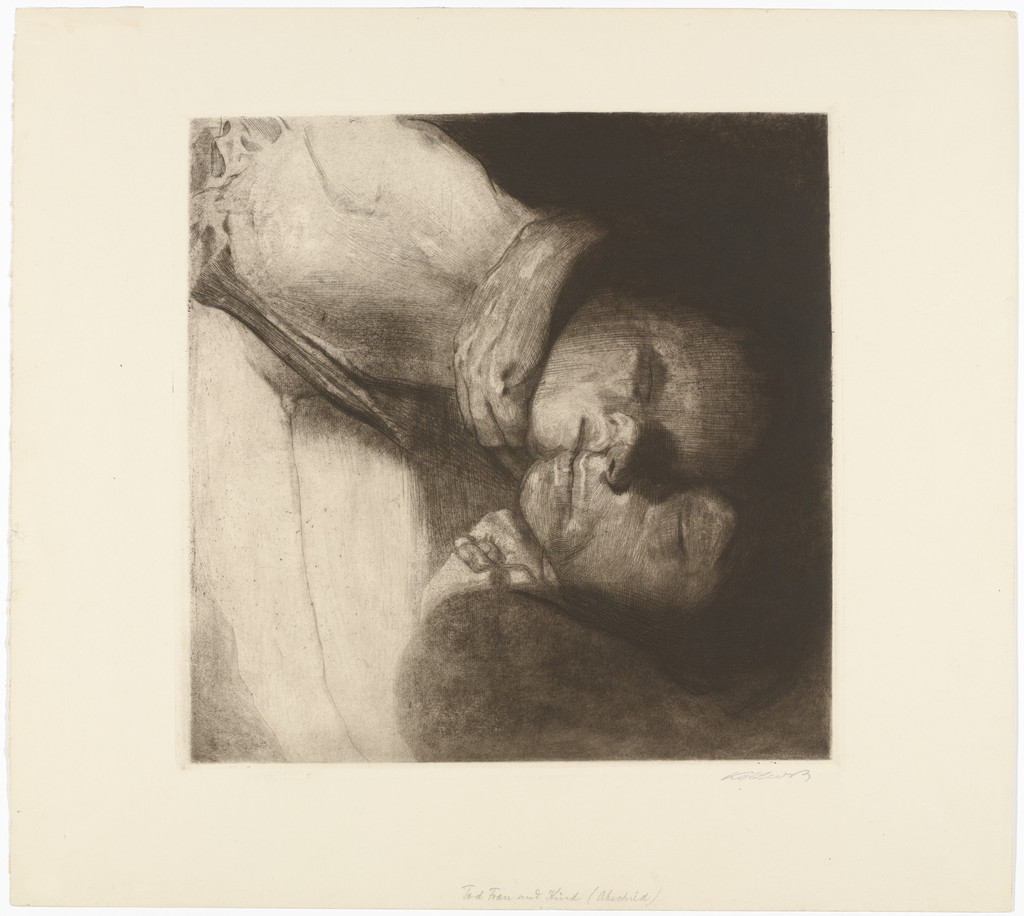
Death, Woman, and Child (Tod, Frau und Kind)
Käthe Kollwitz
1910, printed c. 1931 or after
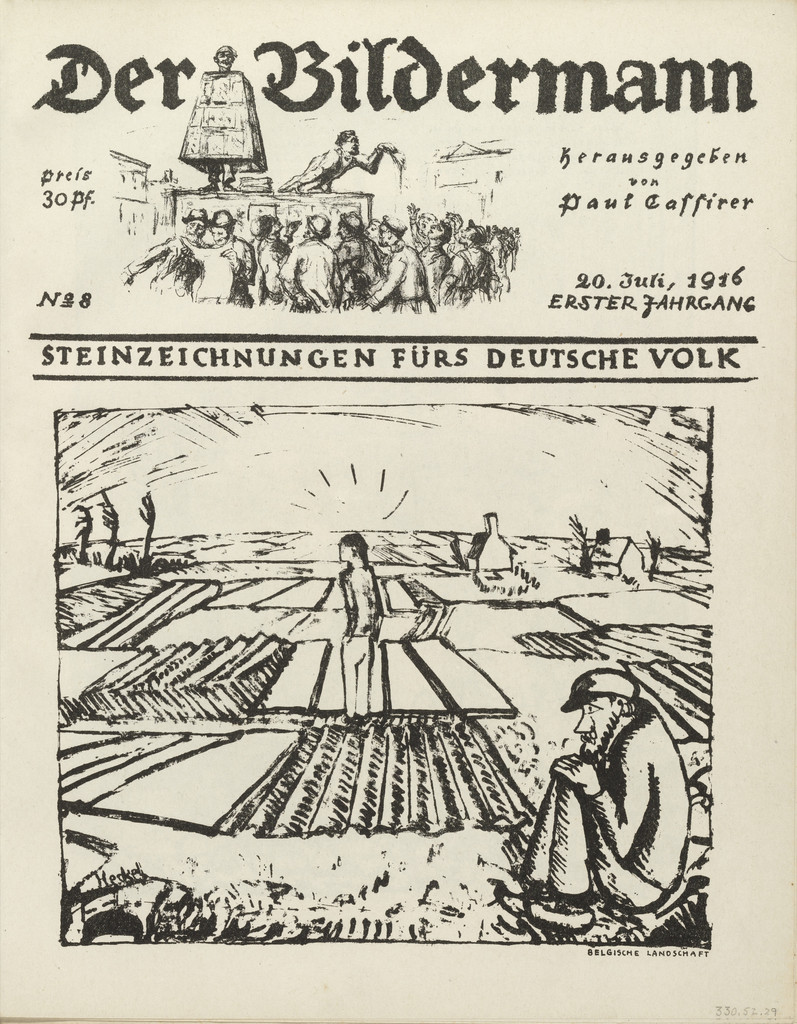
Der Bildermann, vol. 1, nos. 1-18
Ernst Barlach
April 1916-December 1916
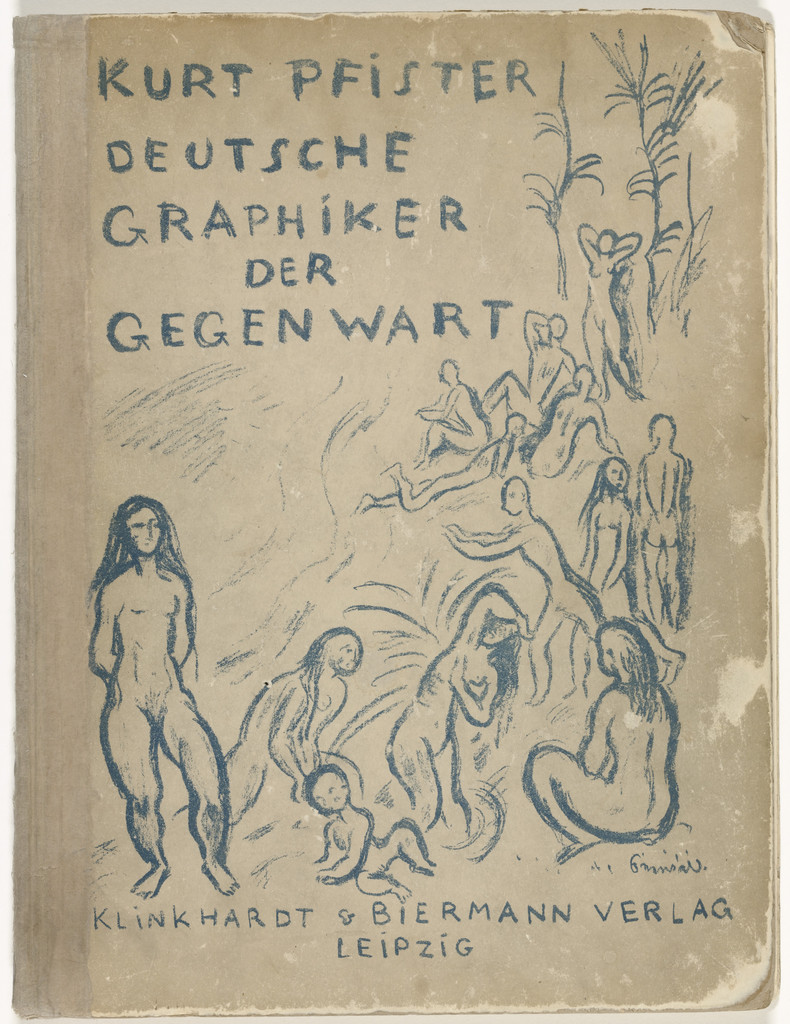
Deutsche Graphiker der Gegenwart (German Printmakers of O...
Ernst Barlach
1920
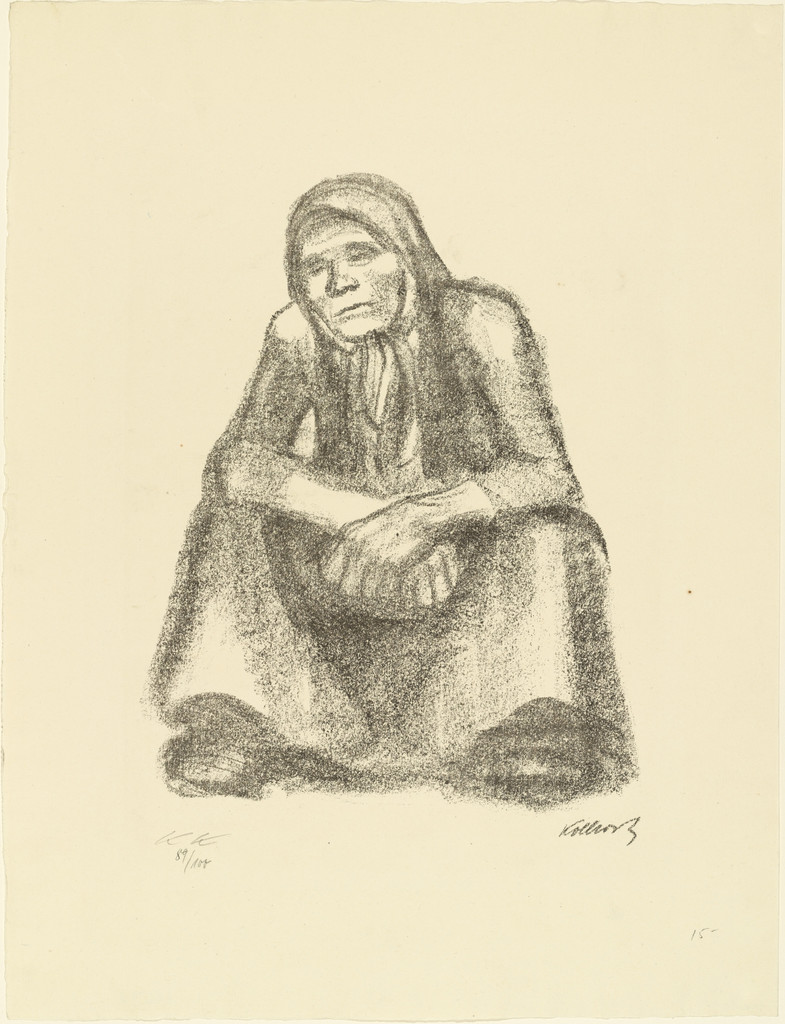
Frontal Crouching Woman with Crossed Hands (Hockende Frau...
Käthe Kollwitz
1921
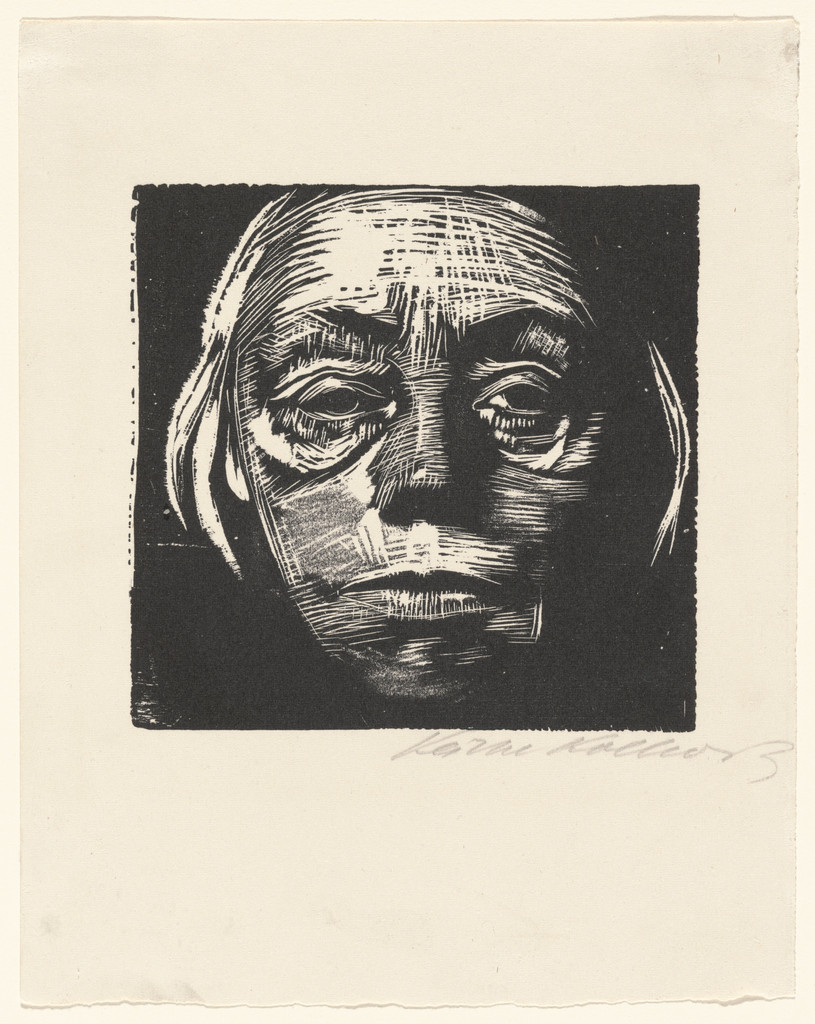
Frontal Self-Portrait (Selbstbildnis von vorn), state XIV...
Käthe Kollwitz
1922–23
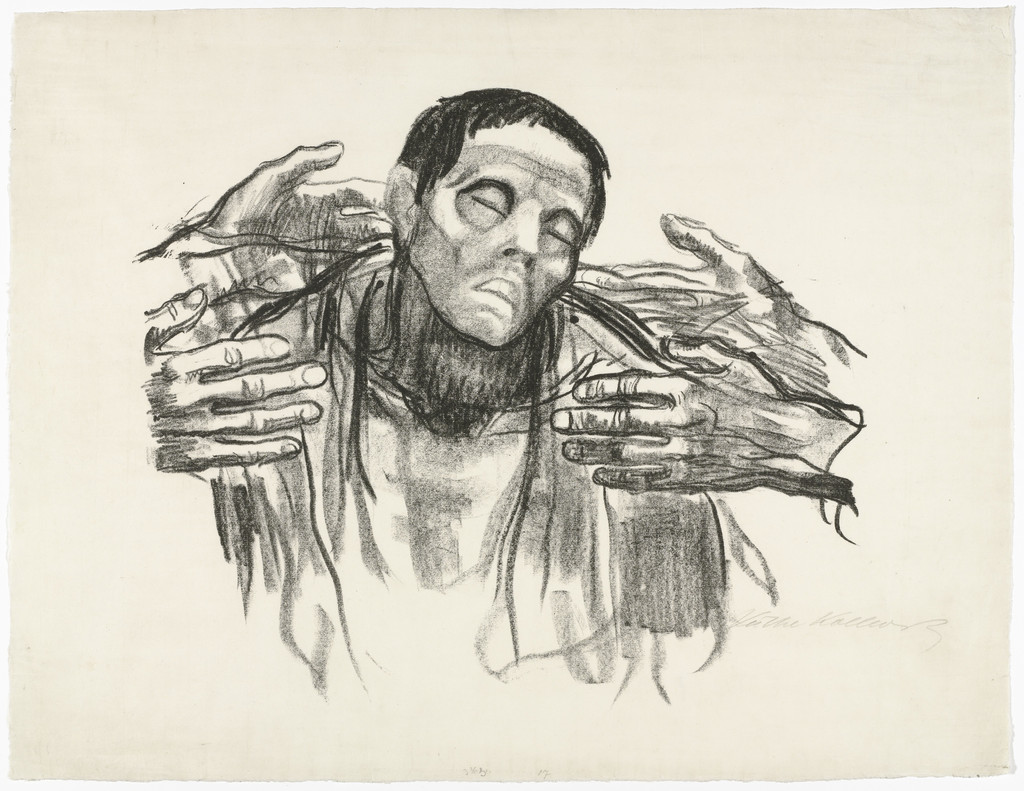
Help Russia (Helft Russland)
Käthe Kollwitz
1921
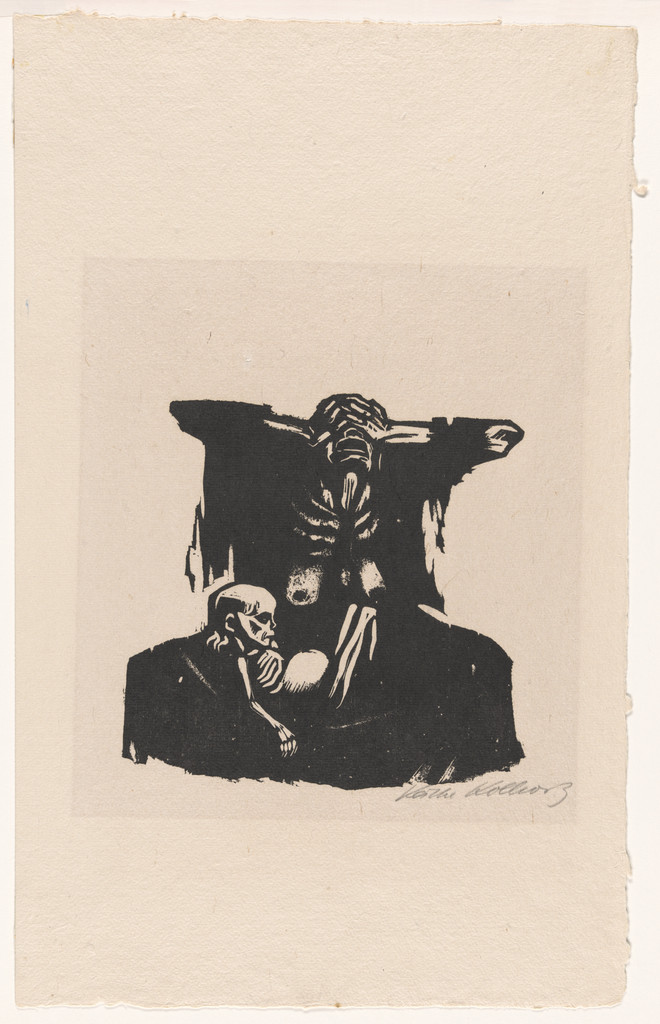
Hunger
Käthe Kollwitz
1922
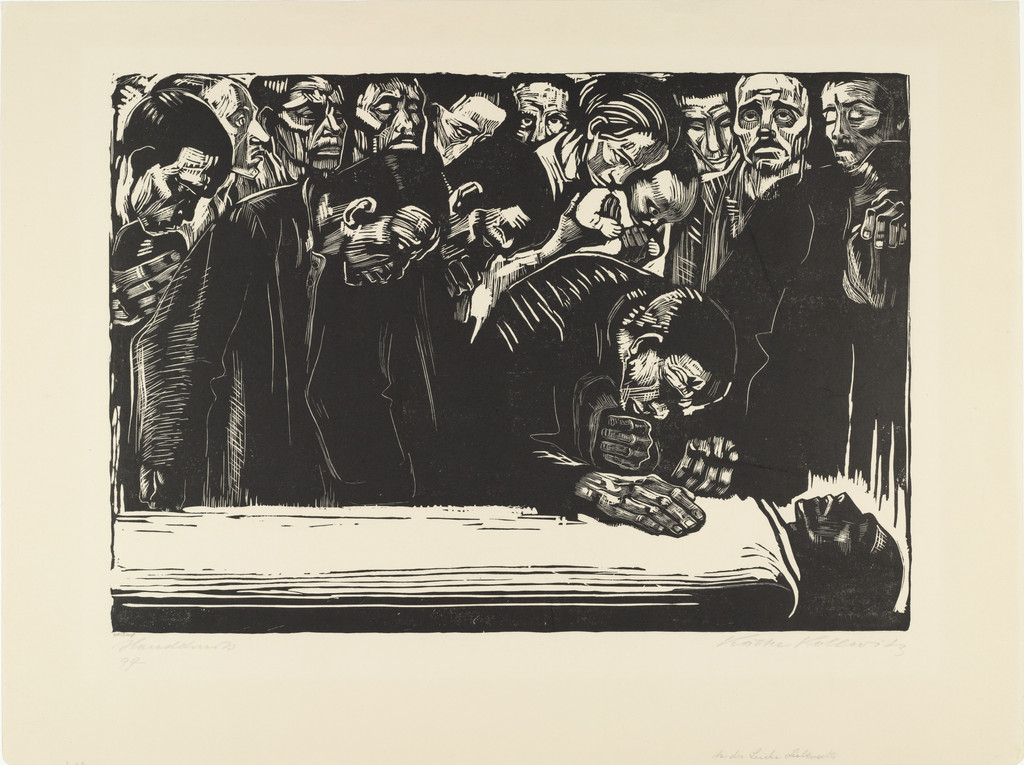
In Memoriam Karl Liebknecht (Gedenkblatt für Karl Liebkne...
Käthe Kollwitz
1920
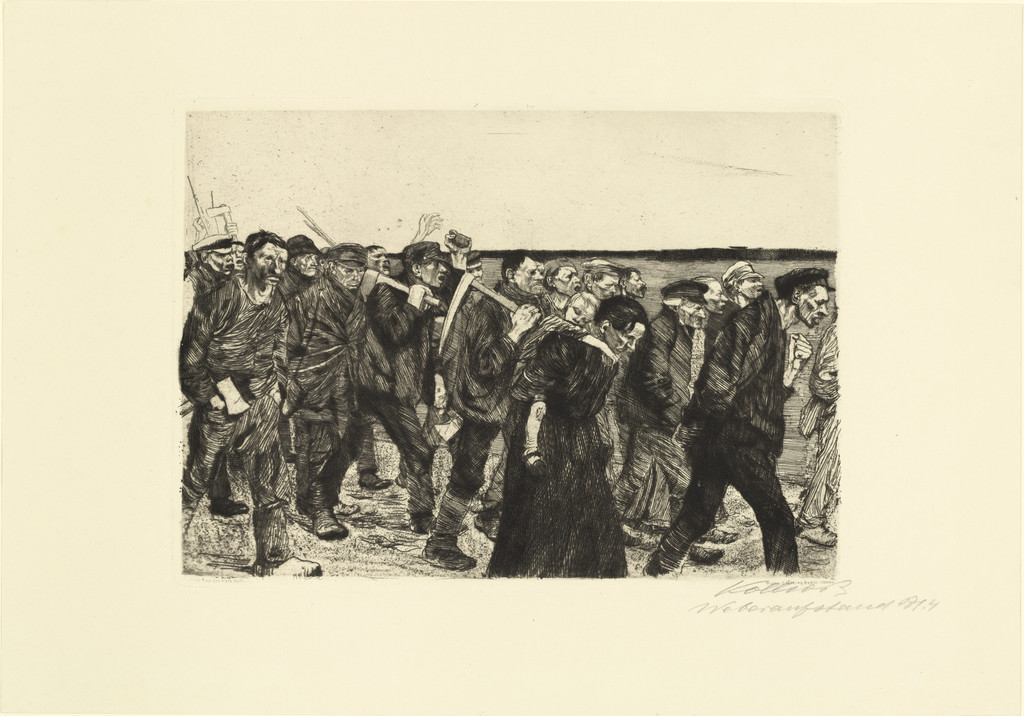
March of the Weavers (Weberzug)
Käthe Kollwitz
1893–97, published c. 1931
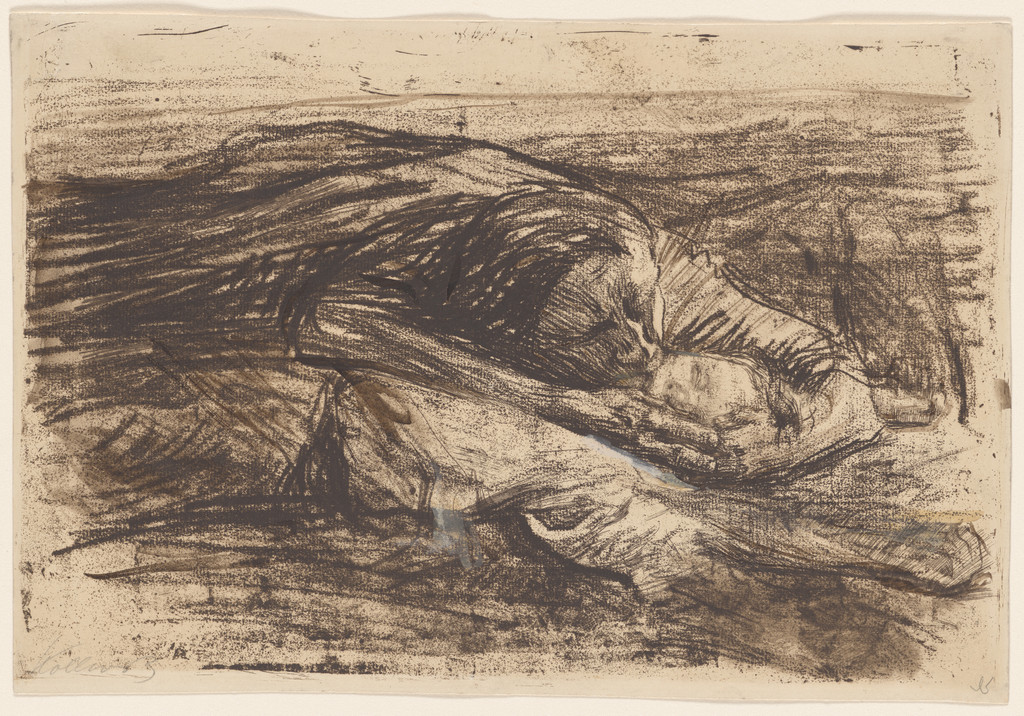
Mother and Dead Son (Mutter und toter Sohn), state II/IV....
Käthe Kollwitz
1903
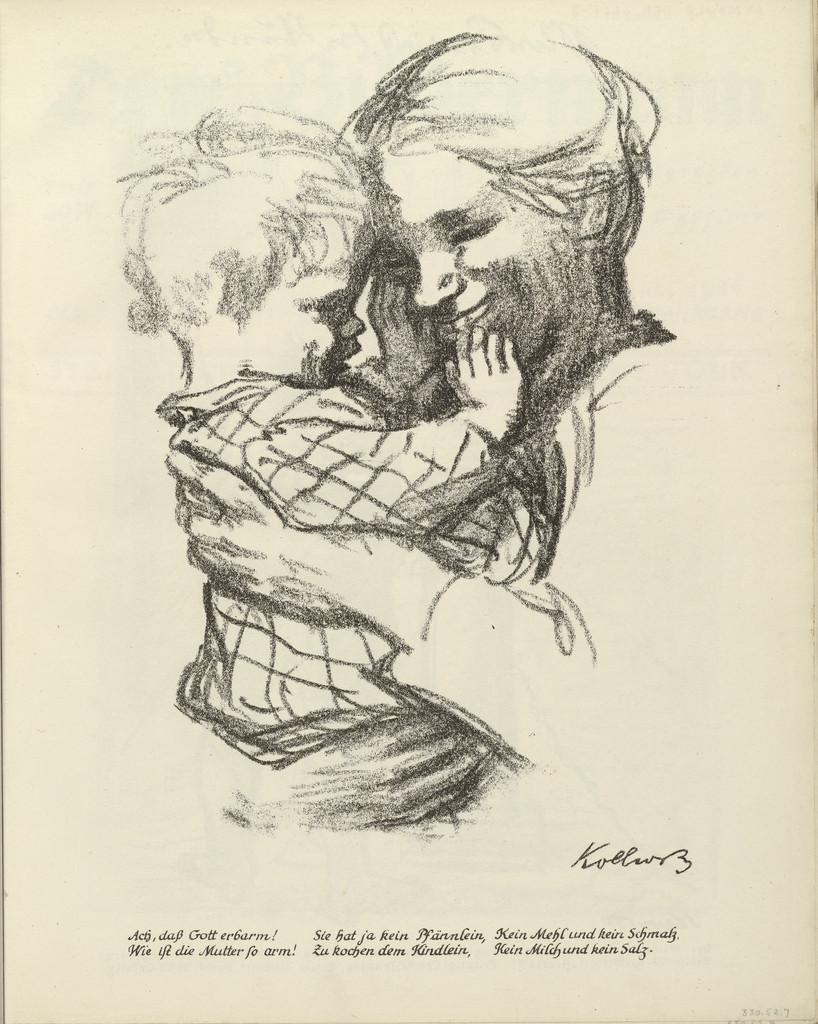
Mother with a Child in her Arms (Mutter mit Kind auf dem ...
Käthe Kollwitz
1916
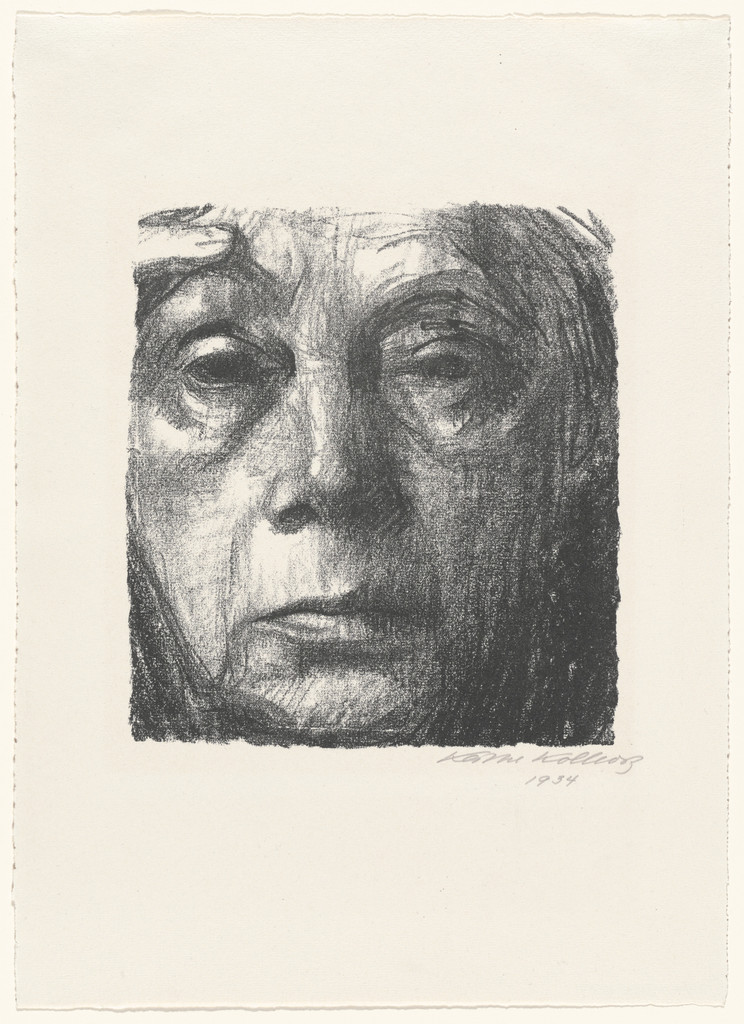
Self-Portrait (Selbstbildnis)
Käthe Kollwitz
1934
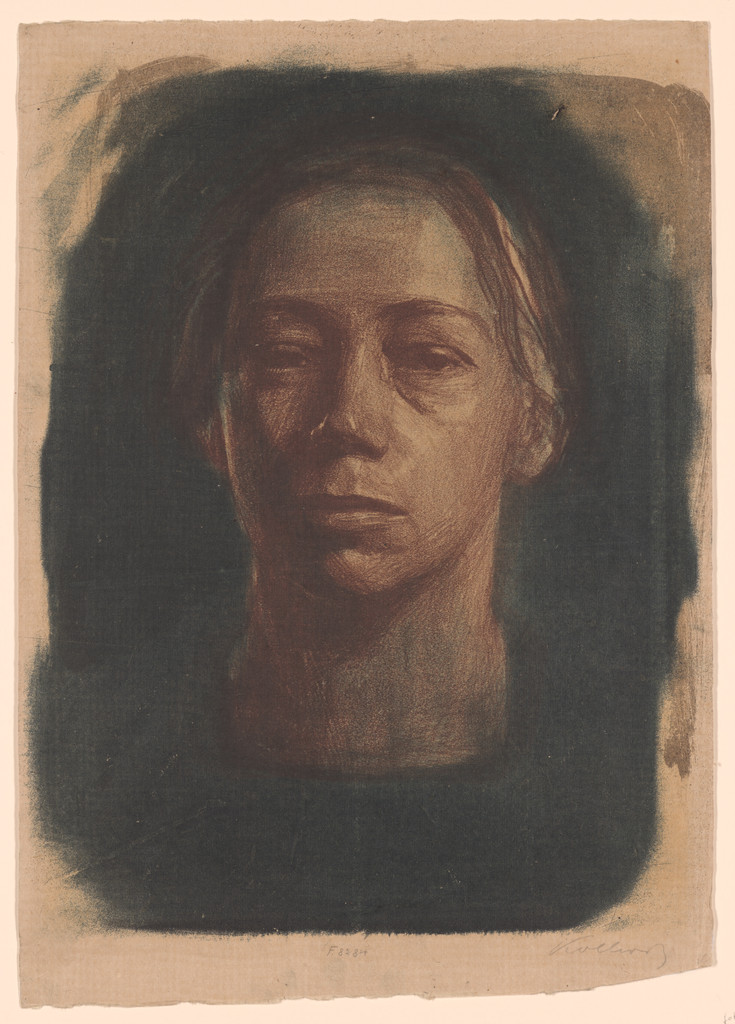
Self-Portrait en Face (Selbstbildnis en face) state I/II
Käthe Kollwitz
c.1904
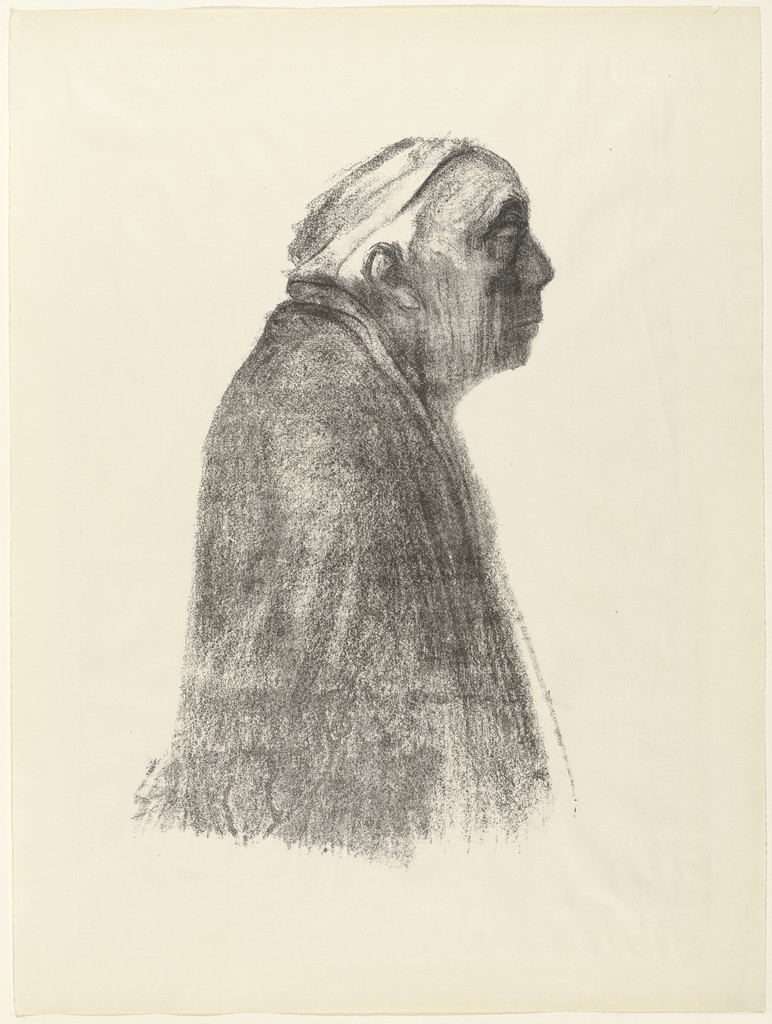
Self-Portrait in Profile Toward Right (Selbstbildnis im P...
Käthe Kollwitz
c. 1938, published 1947
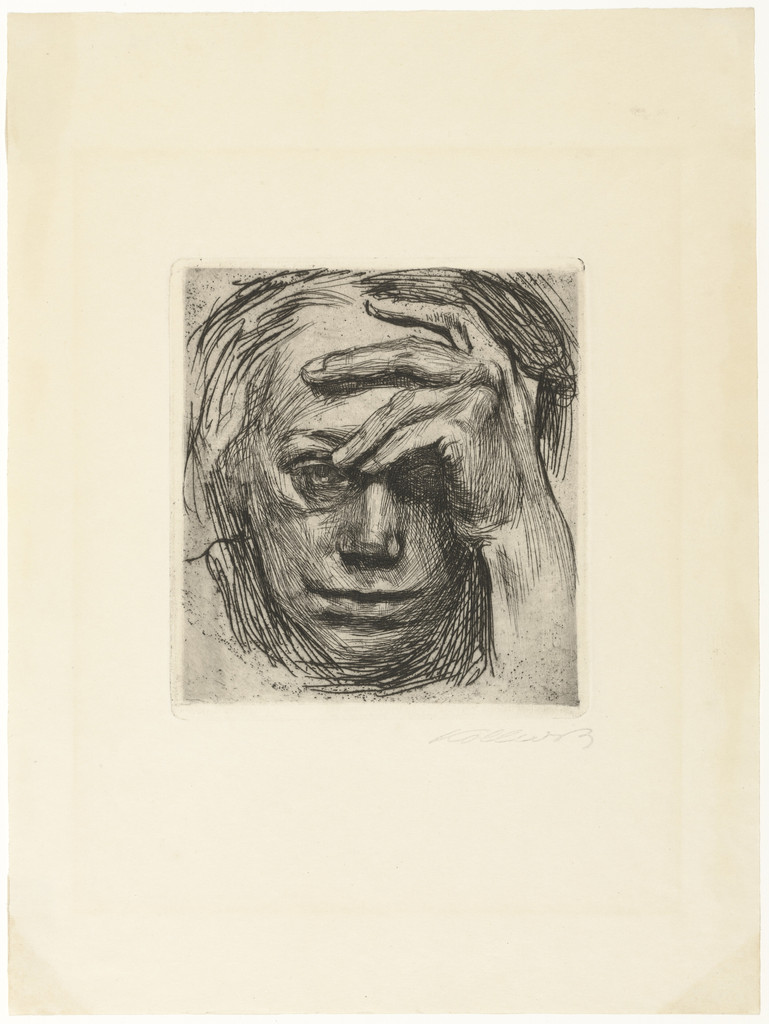
Self-Portrait, Hand at the Forehead (Selbstbildnis mit de...
Käthe Kollwitz
1910, published c. 1946/1948
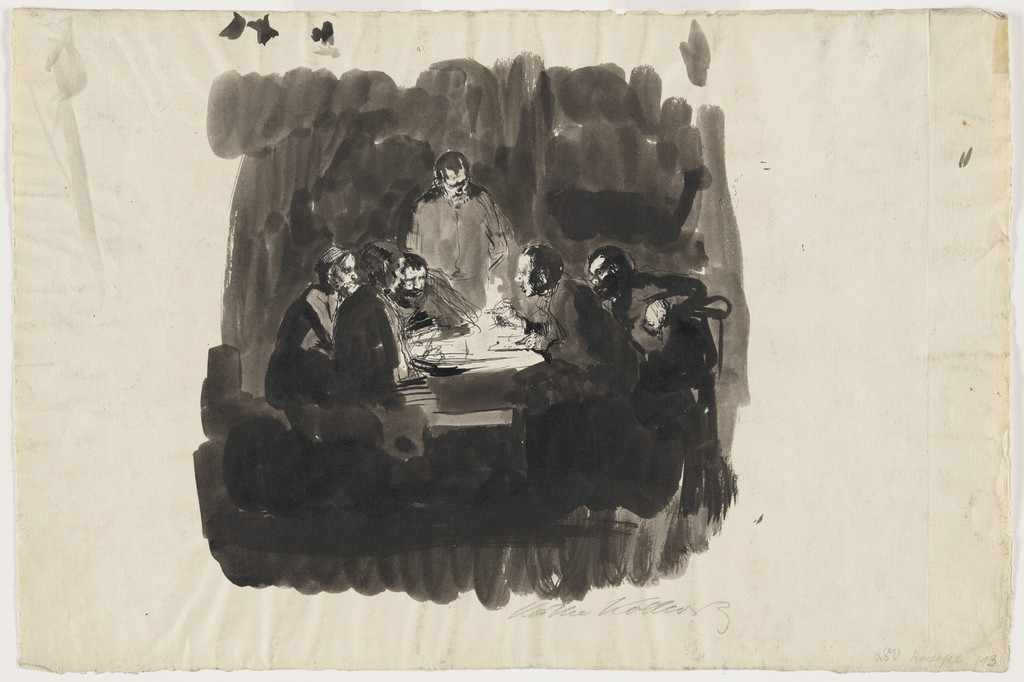
Six People at a Table by Lamplight (Sechs Personen an ein...
Käthe Kollwitz
1892-93
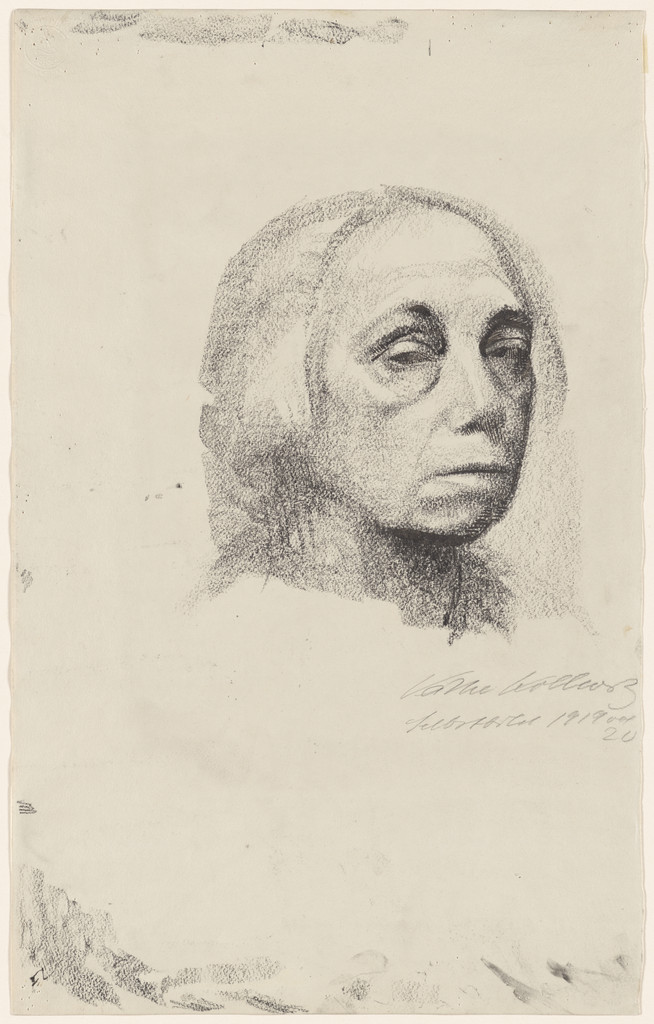
Small Self-Portrait (Kleines Selbstbildnis)
Käthe Kollwitz
1919
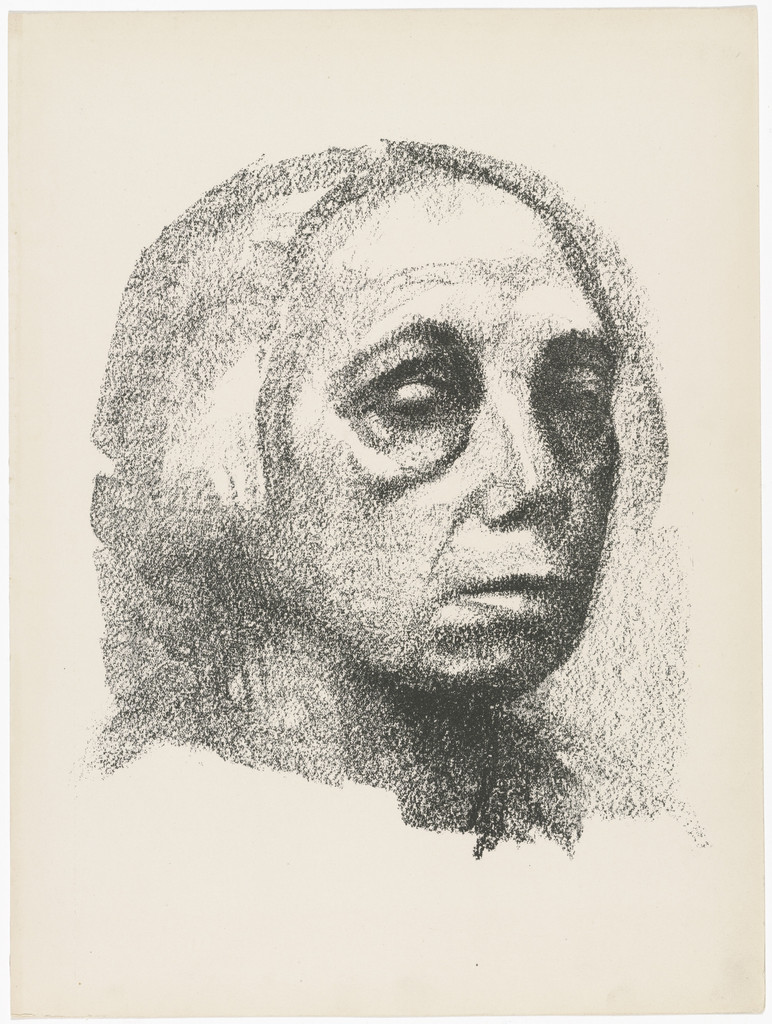
Small Self-Portrait (Kleines Selbstbildnis) (plate 3) fro...
Käthe Kollwitz
1920
Exhibitions
23 exhibitionsJul 11, 1934 – Sep 13, 1934
New Acquisitions: Lachaise Torso; Prints
21 artists
May 10, 1939 – Sep 30, 1939
Painting, Sculpture, Prints
154 artists
Sep 16, 1941 – Oct 14, 1941
Twenty Lithographs: Graphic Art Processes
36 artists
Jun 24, 1942 – Aug 24, 1942
New Acquisitions: Free German Art
4 artists
Dec 09, 1942 – Jan 24, 1943
Twentieth Century Portraits
159 artists · 1 curator
Feb 16, 1944 – May 10, 1944
Modern Drawings
120 artists · 3 curators
May 24, 1944 – Oct 15, 1944
Painting, Sculpture, Prints
133 artists · 1 curator
Jun 01, 1948 – Sep 06, 1948
Portraits in Prints
29 artists · 1 curator
May 10, 1949 – Jul 10, 1949
Master Prints from the Museum Collection
132 artists · 2 curators
Aug 03, 1949 – Oct 05, 1949
Sculpture by Painters
12 artists
Mar 04, 1952 – May 11, 1952
Posters by Painters and Sculptors
41 artists
Apr 28, 1953 – Sep 07, 1953
Sculpture of the XXth Century
47 artists · 1 curator
Dec 07, 1954 – Feb 01, 1955
Modern Masterprints of Europe
72 artists · 1 curator
May 04, 1955 – May 31, 1955
Prints from Europe and Japan; Etchings by Matisse
32 artists · 1 curator
Oct 02, 1957 – Dec 01, 1957
German Art of the 20th Century
42 artists · 2 curators
Apr 28, 1967 – Apr 30, 1967
The Artist as His Subject
46 artists · 2 curators
Jun 06, 1967 – Sep 17, 1967
The Artist as His Subject
49 artists
Jul 01, 1971 – Sep 27, 1971
The Artist as Adversary
140 artists · 1 curator
Mar 07, 1975 – Jun 08, 1975
Points of View
29 artists · 1 curator
Nov 14, 1979 – Jan 22, 1980
Art of the Twenties
167 artists · 1 curator
Mar 03, 1983 – May 15, 1983
Prints from Blocks: Gauguin to Now
128 artists · 1 curator
May 06, 1985 – Dec 18, 1985
The Expressionist Idiom
43 artists · 1 curator
Apr 06, 1989 – Aug 08, 1989
Master Prints from the Collection
102 artists · 1 curator