“I try to make work that joins the seductions of wishful thinking with the criticality of knowing better.” — Barbara Kruger
Barbara Kruger’s work speaks directly to us. Using pronouns like “I,” “You,” and “We” and bold declarative statements, Kruger’s work prompts us to question what we see and hear in mainstream media, and to contemplate how these messages shape our identities and society. About the impetus of her practice, Kruger has said, “I try to make work that joins the seductions of wishful thinking with the criticality of knowing better.” Through a canny combination of imagery and text appropriated from magazines, television, video, and newspapers, Kruger's practice, spanning more than four decades, challenges how we assign meaning to visual signifiers of faith, morality, and power. Born in 1945 in Newark, New Jersey, Kruger grew up during the golden age of American advertising, which permeated all aspects of life and informed her now-signature style. She began her training at the School of Art at Syracuse University in 1964, continuing her art and design studies in 1965 at Parsons School of Design in New York under Diane Arbus and Marvin Israel. The following year, Kruger gained first-hand experience in creating magazine content as a page designer at Condè Nast and as a picture editor for Mademoiselle and House & Garden. Physically arranging layouts for magazine spreads gave her fundamental insight into the circulation and cultural impact of images. Associated with the Pictures Generation—a loose cohort of Conceptual artists concerned with the critical analysis and dissemination of mass-media culture—Kruger’s interest in vernacular photography is shared by Cindy Sherman, Richard Prince, Sarah Charlesworth, Louise Lawler, and Sherrie Levine. Adopting Futura Bold Oblique and Helvetica Ultra Compressed typesets across her work, Kruger employs the pithy graphic design strategies of text and imagery common in advertisements to direct attention to pernicious systems of power. Kruger’s Untitled (You Invest in the Divinity of the Masterpiece) (1982) depicts a section from Michelangelo’s Sistine Chapel ceiling frescoes as its central image; the relationship between the seductive black-and-white reproduction of Adam almost touching God’s finger and the accusatory slogan confronts us with our complicity in upholding the importance and value of institutions like religion and art history. In 1988, Kruger was invited to curate Picturing “Greatness” at The Museum of Modern Art, an exhibition that comprised photographs of famous artists selected from MoMA’s collection and which raised questions about notions of staging artistic “greatness.” In the exhibition’s introductory text, she provocatively proposed that the portraits “show us how vocation is ambushed by cliché and snapped into stereotype by the camera, and how photography freezes moments, creates prominence, and makes history.” Questions around who has a voice in society—and how—are key in Kruger’s practice. Her portfolio of lithographs Untitled (We will no longer be seen and not heard), from 1985, assigns a word from the work’s title to each image, suggesting a vaguely recognizable sign language. The work exhibits Kruger’s desire “to ruin certain representations” of hierarchical roles through its contradictory message: viewers may guess who the speaker is and who is included in the “we.” Kruger’s use of commonplace objects to circulate her work beyond the gallery or museum focuses our attention on how structures of control operate and are insidiously interwoven with our everyday life. Her Untitled matchbook series from 1986 allowed for wide distribution of dark messages and violent images, providing immediate access to her ideas and statements—such as the phrase “You construct intricate rituals which allow you to touch the skin of other men” superimposed over an image of a man being physically harassed—packaged as ordinary, ephemeral objects. As her work becomes part of the larger consumer realm of merchandising, it is important to note how others, most notably the lifestyle brand Supreme, have co-opted her iconic style for their own purposes, further underscoring questions about originality and ownership. Creating architecturally enveloping installations has long been a part of Kruger’s practice, beginning with her 1991 exhibition at Mary Boone Gallery in New York, which featured a site-specific installation covering all four walls of the gallery with provocative text and images. In 2022, she will cover MoMA’s Marron Family Atrium with her characteristic declarations about power, voyeurism, and the horrors of war. Rather than infiltrating mundane spaces through objects, Kruger noted that her installations “construct and contain our experiences” against the overwhelming onslaught of graphics and text. Printed phrases covering a building or a room punctuate our lived experiences, hopes, and fears, inviting viewers to understand “how [spaces] form us as much as we form them.”
Margarita Lizcano Hernandez, Curatorial Assistant, Department of Drawings and Prints, 2022
Works in Collection
33 works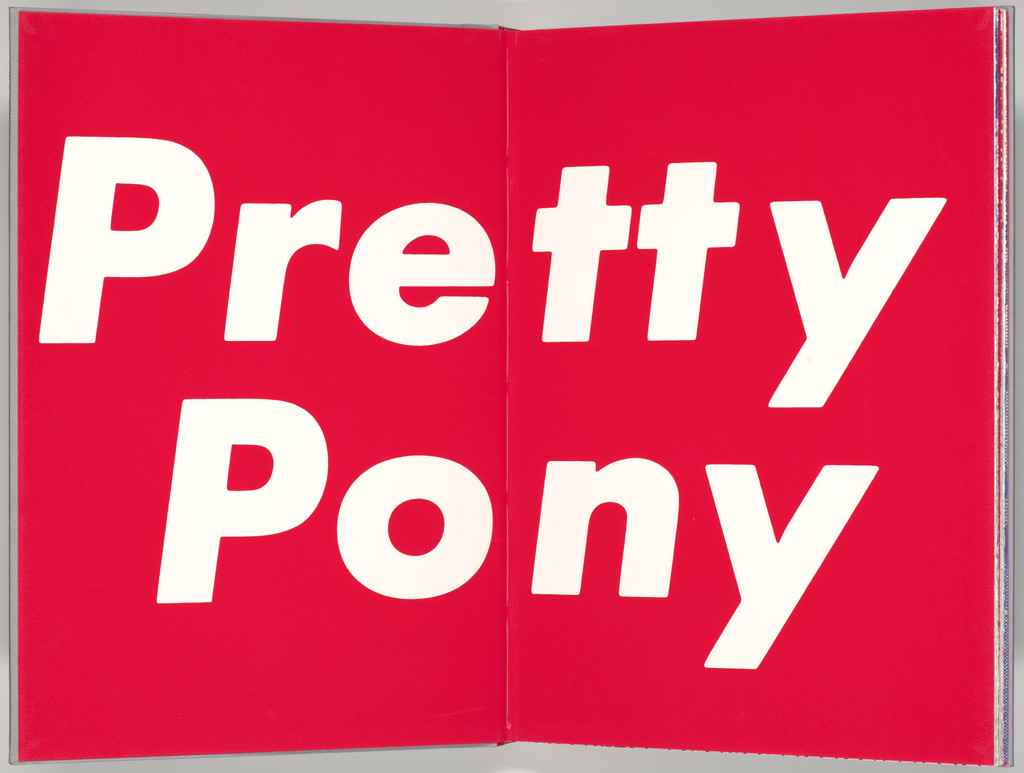
Double page plate (folios 1 verso and 2) from My Pretty Pony
Barbara Kruger
1988
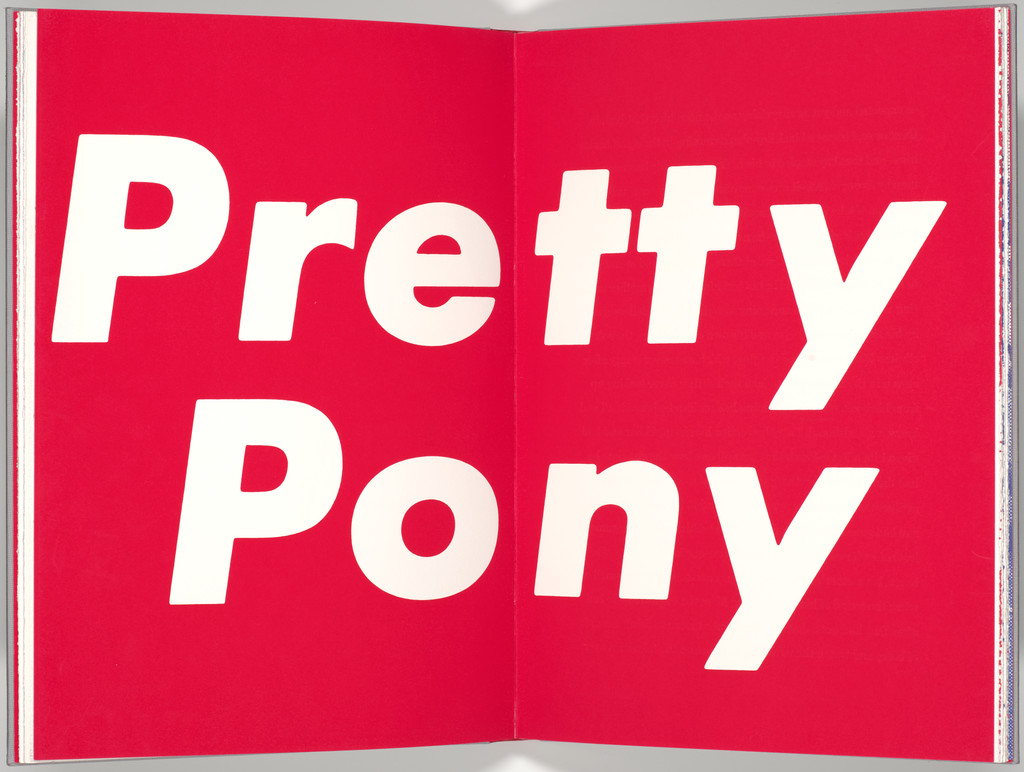
Double page plate (folios 14 verso and 15) from My Pretty...
Barbara Kruger
1988
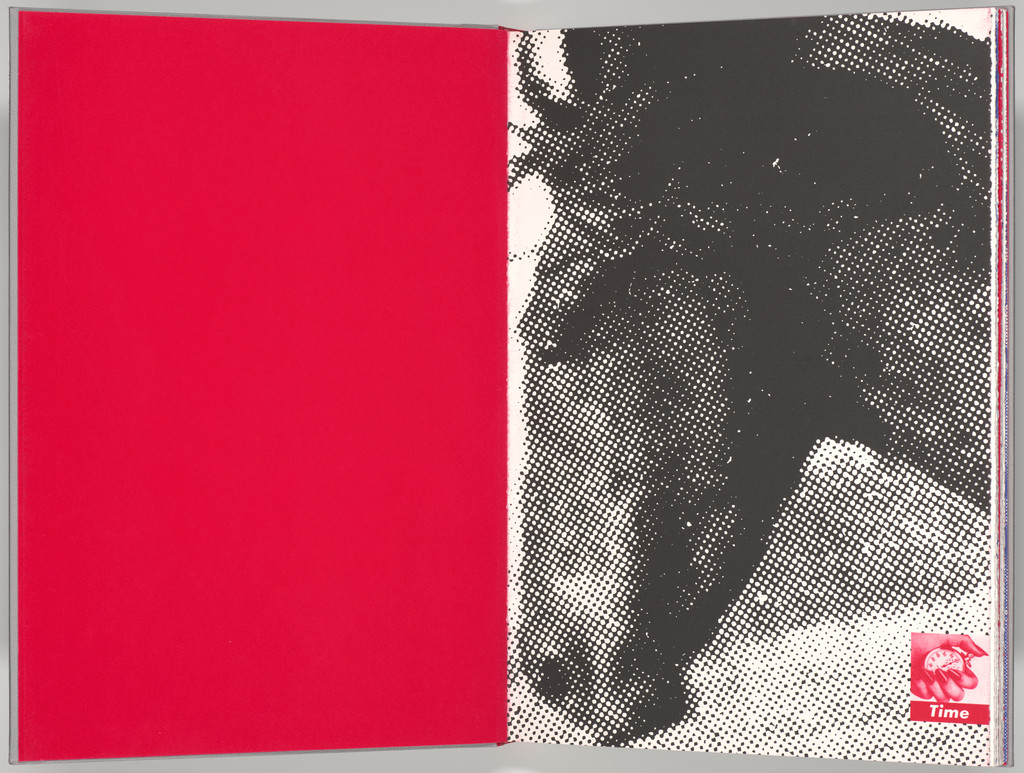
Double page plate (folios 2 verso and 3) from My Pretty Pony
Barbara Kruger
1988
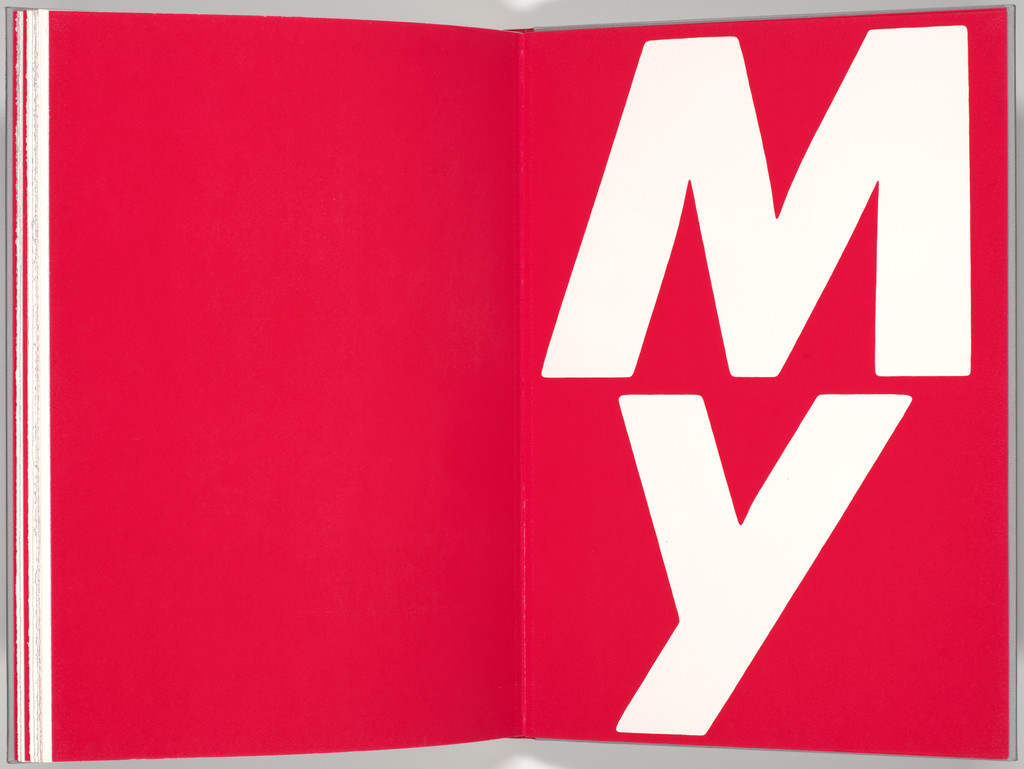
Double page plate (folios 29 verso and 30) from My Pretty...
Barbara Kruger
1988
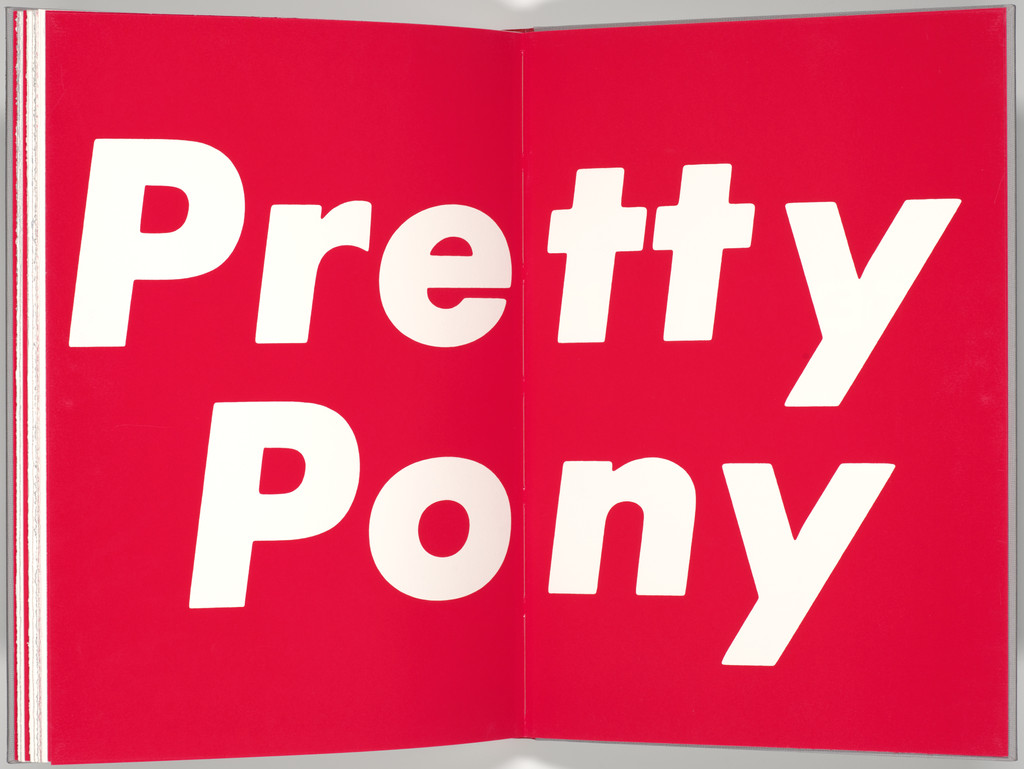
Double page plate (folios 30 verso and 31) from My Pretty...
Barbara Kruger
1988
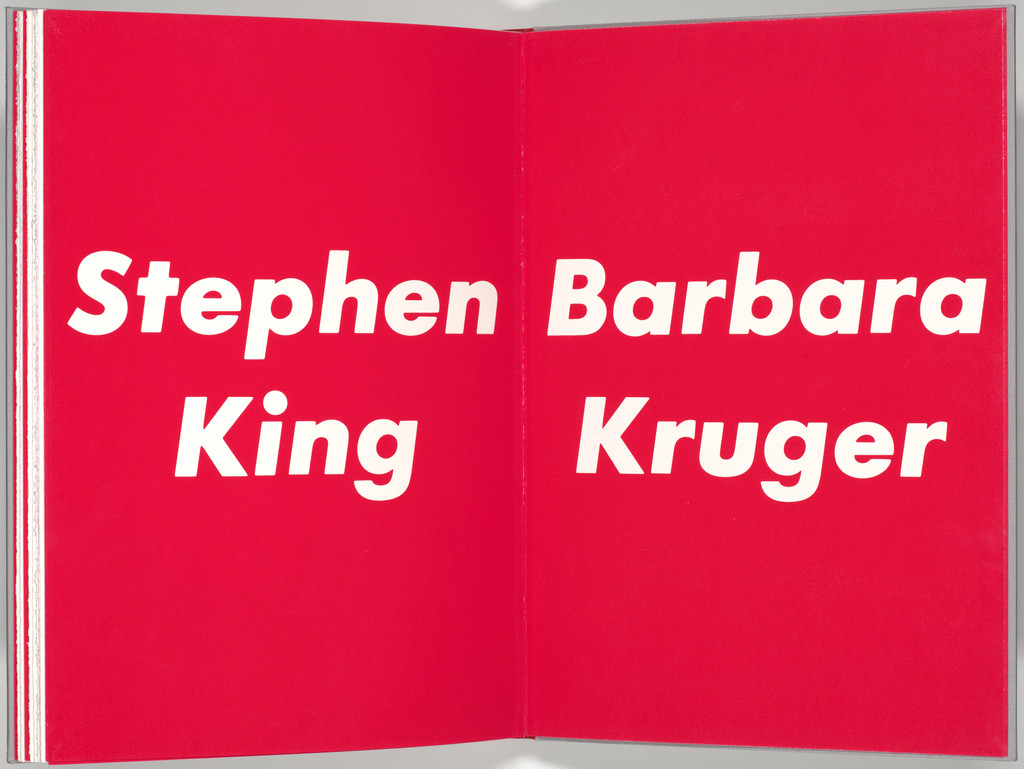
Double page plate (folios 31 verso and 32) from My Pretty...
Barbara Kruger
1988
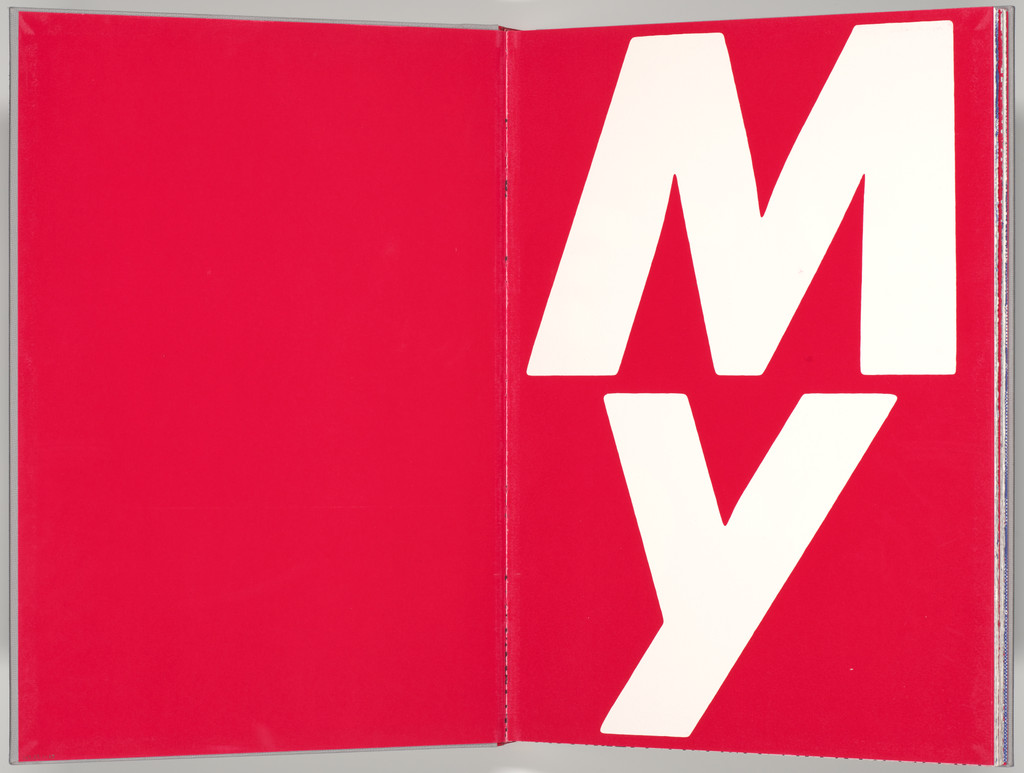
Double page plate (front endpaper and folio 1) from My Pr...
Barbara Kruger
1988
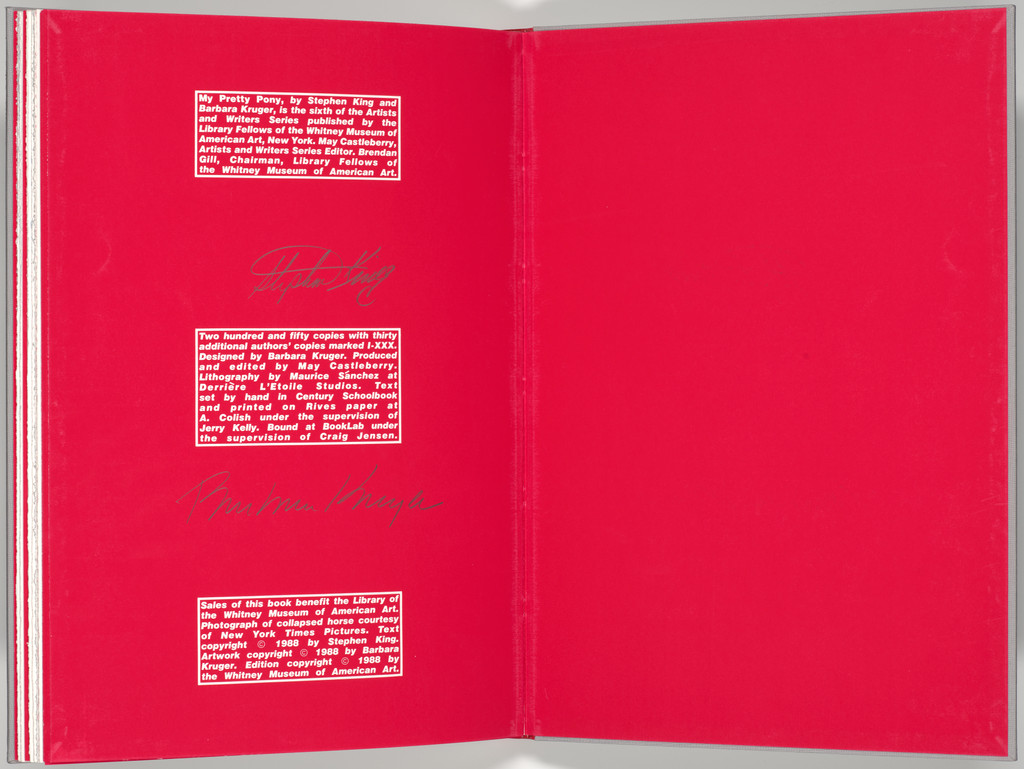
Double page plate with colophon (folio 32 verso and endpa...
Barbara Kruger
1988
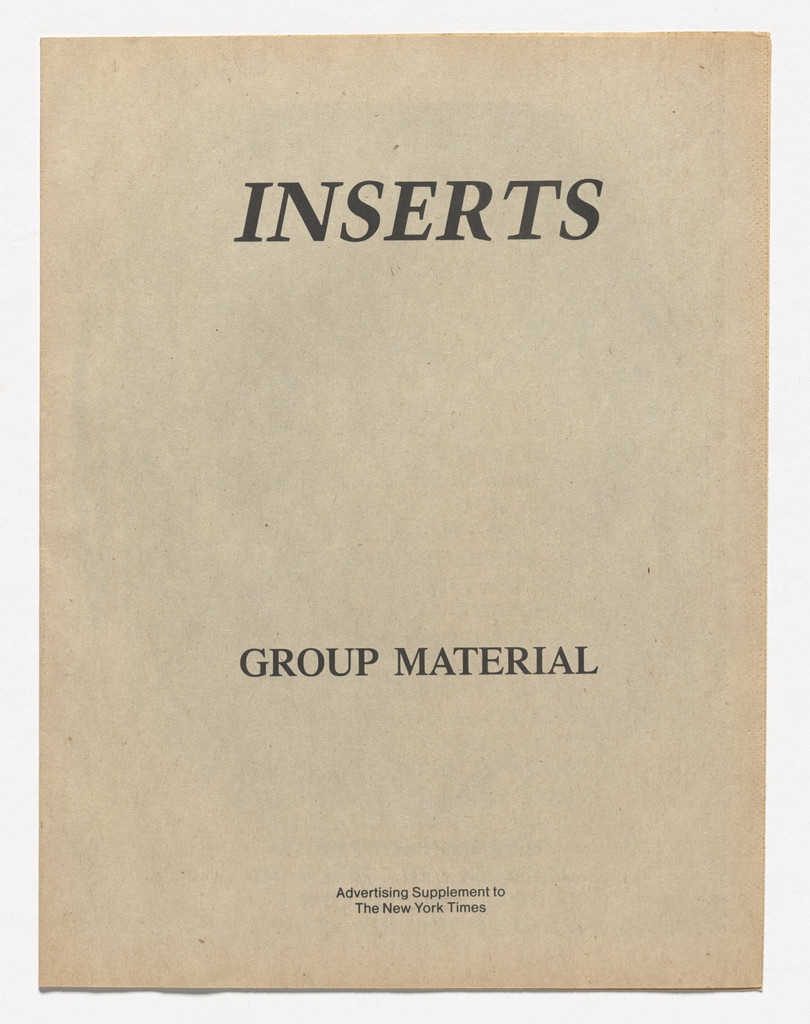
Inserts, an advertising supplement produced for New York ...
Felix Gonzalez-Torres
1988
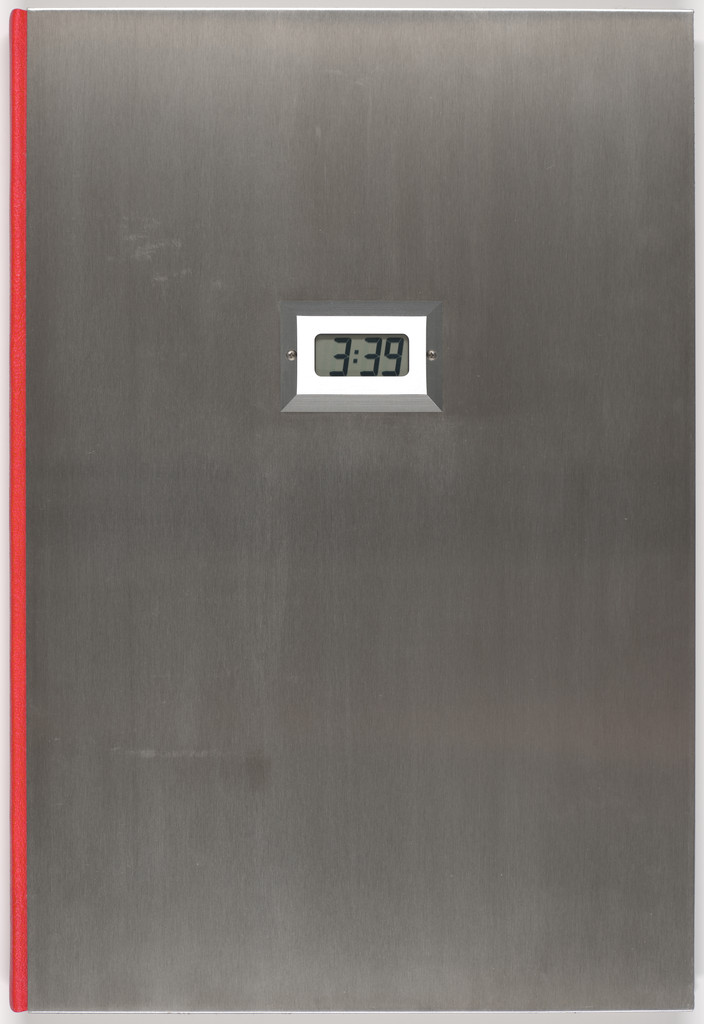
My Pretty Pony
Barbara Kruger
1988
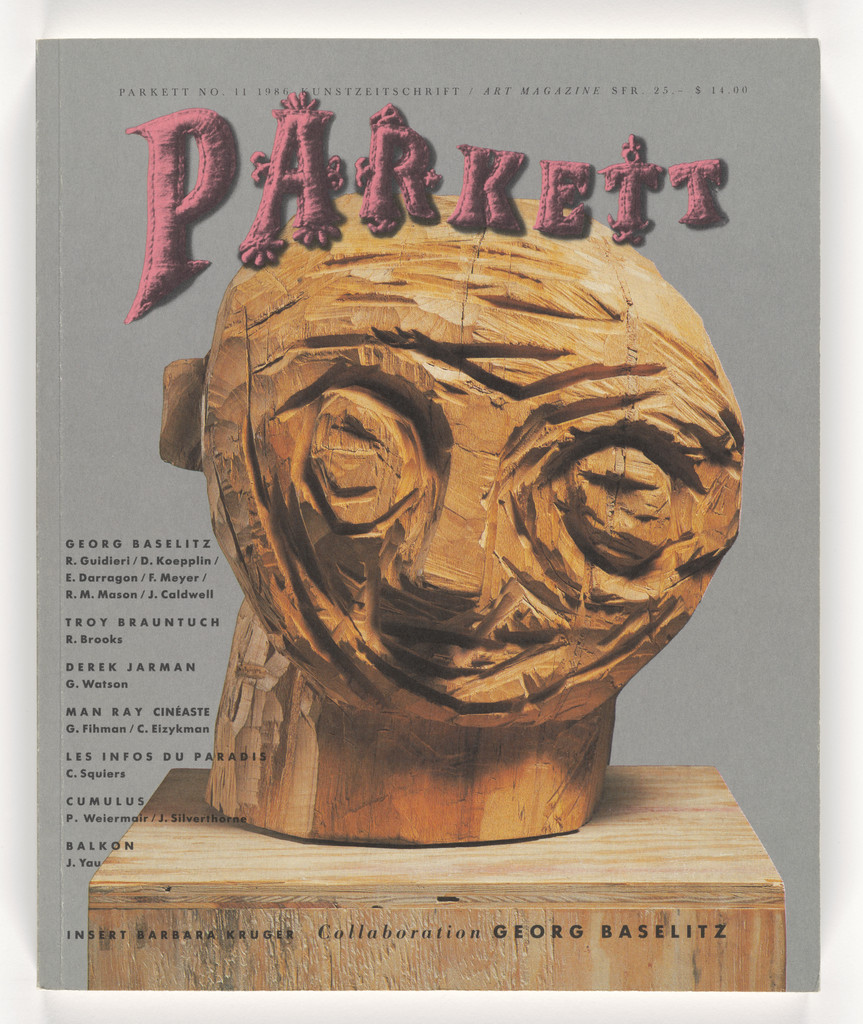
Parkett no. 11
Georg Baselitz
1986
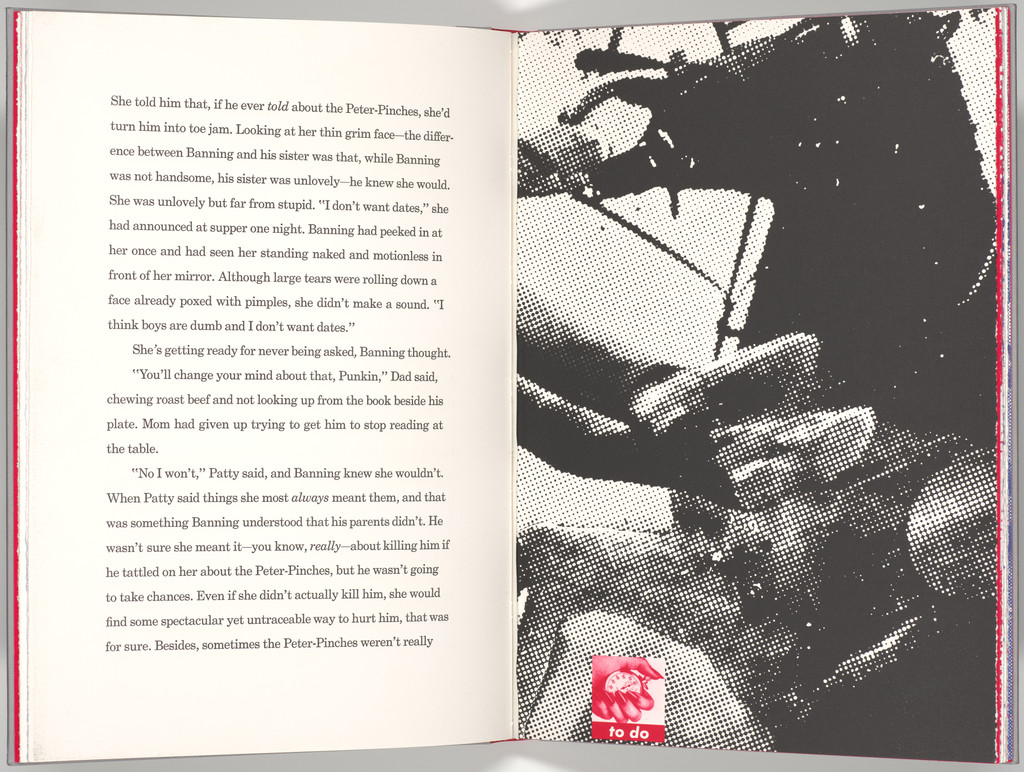
Plate (folio 12) from My Pretty Pony
Barbara Kruger
1988
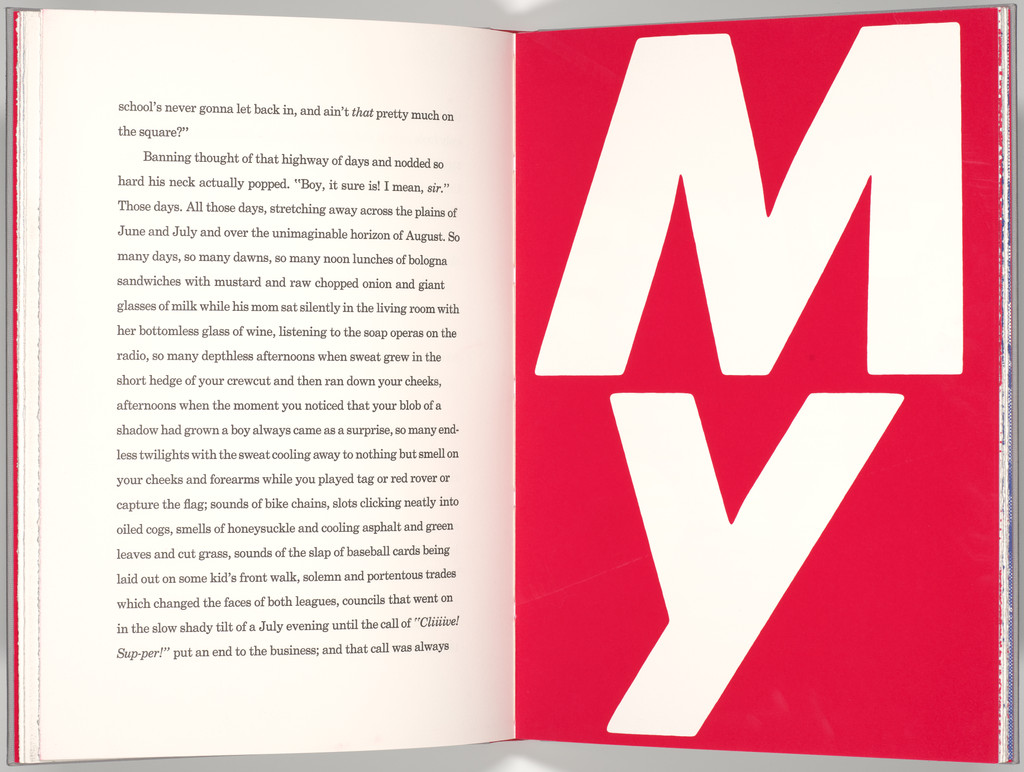
Plate (folio 14) from My Pretty Pony
Barbara Kruger
1988
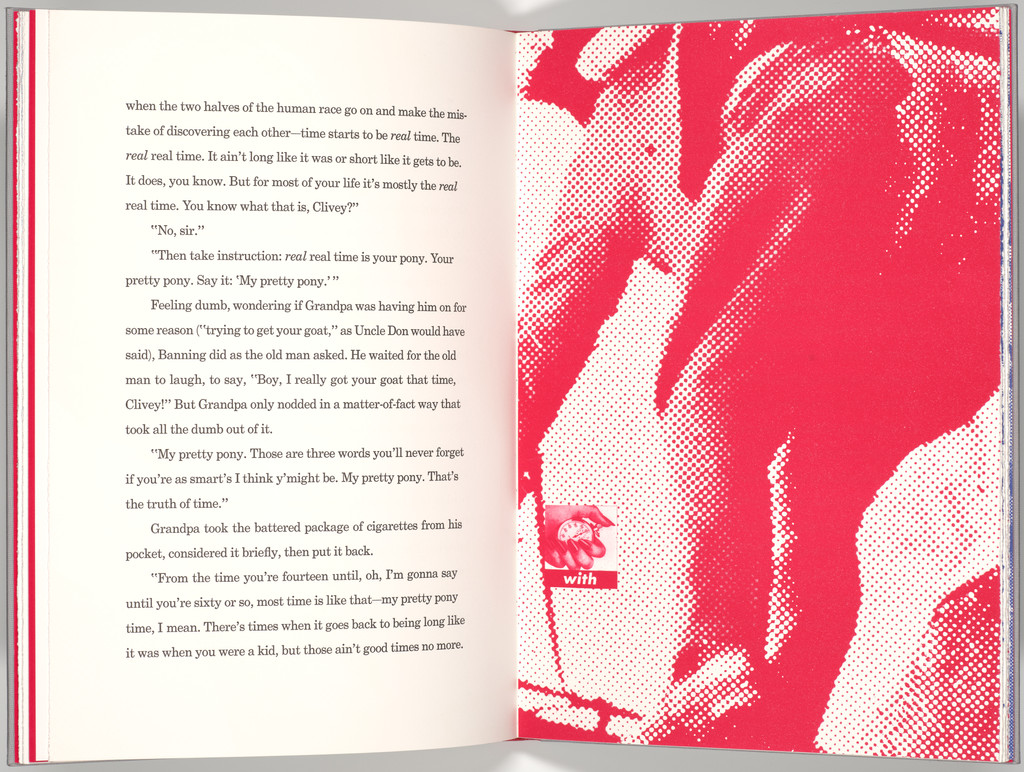
Plate (folio 17) from My Pretty Pony
Barbara Kruger
1988
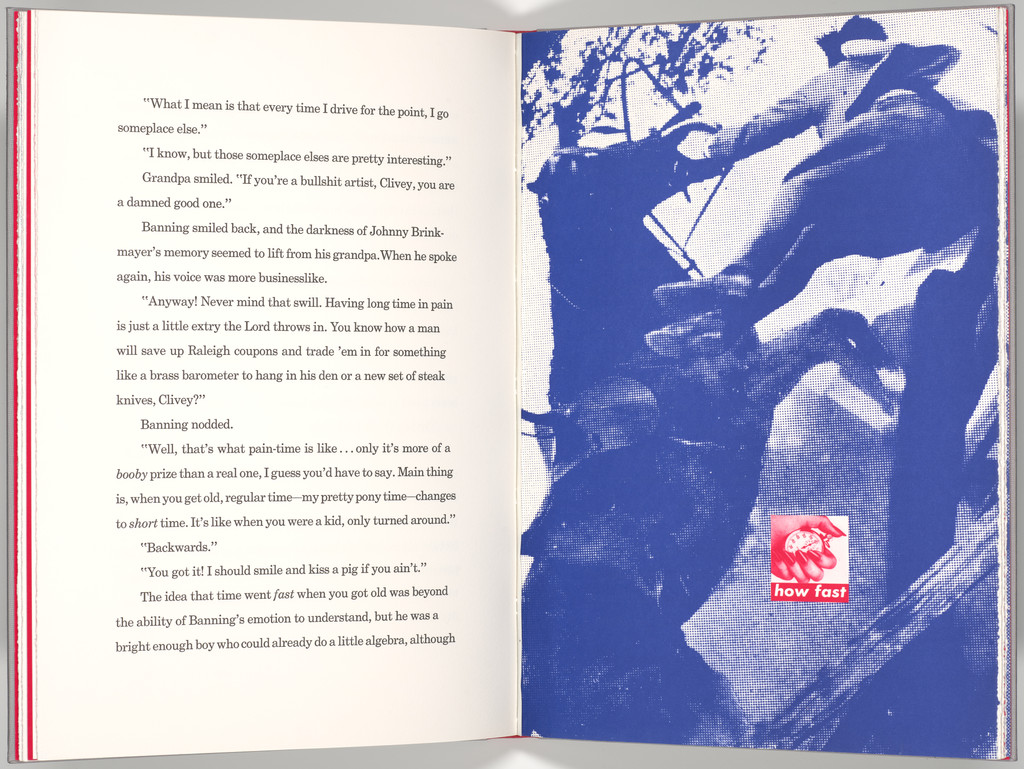
Plate (folio 20) from My Pretty Pony
Barbara Kruger
1988
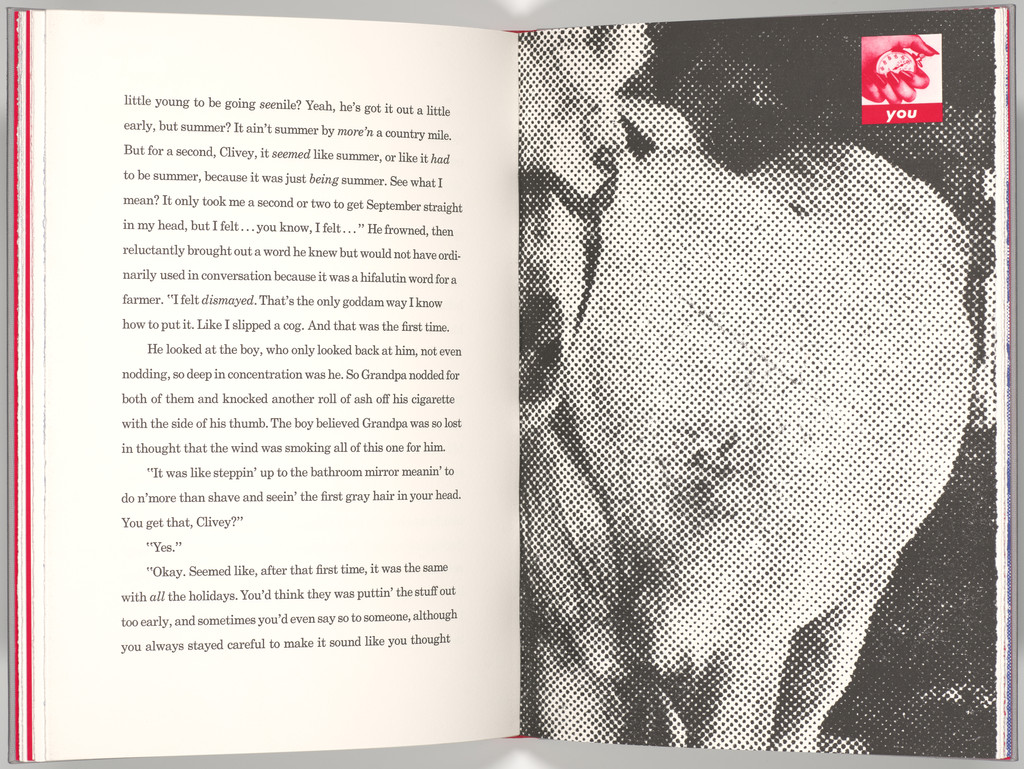
Plate (folio 23) from My Pretty Pony
Barbara Kruger
1988
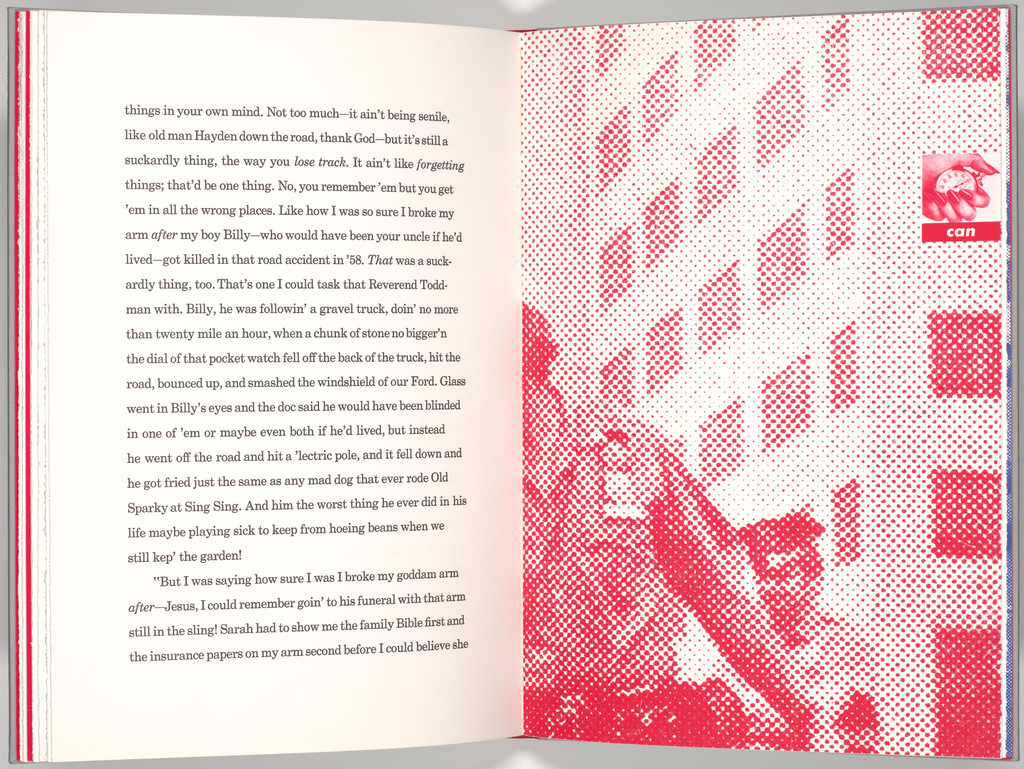
Plate (folio 26) from My Pretty Pony
Barbara Kruger
1988
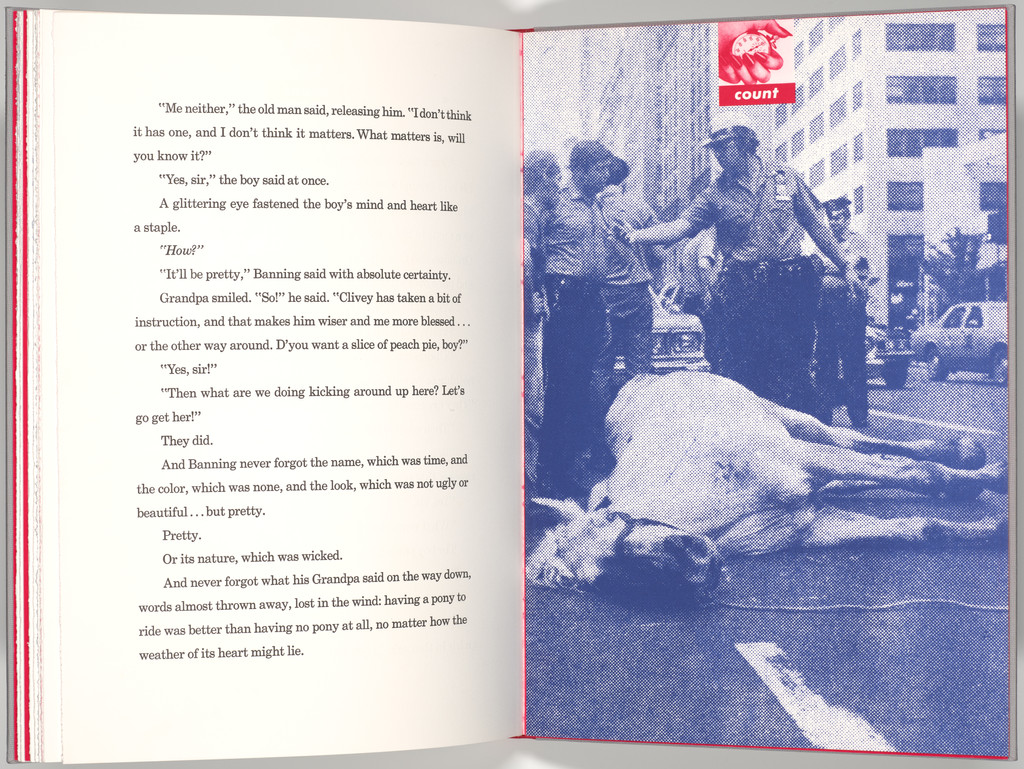
Plate (folio 29) from My Pretty Pony
Barbara Kruger
1988
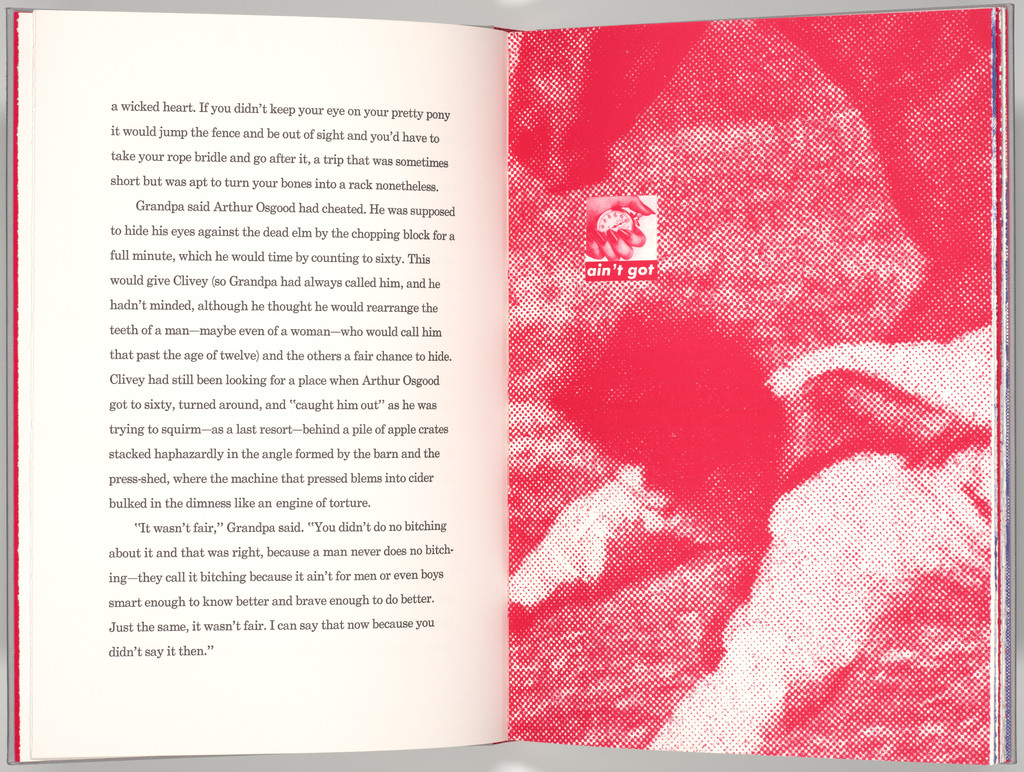
Plate (folio 6) from My Pretty Pony
Barbara Kruger
1988
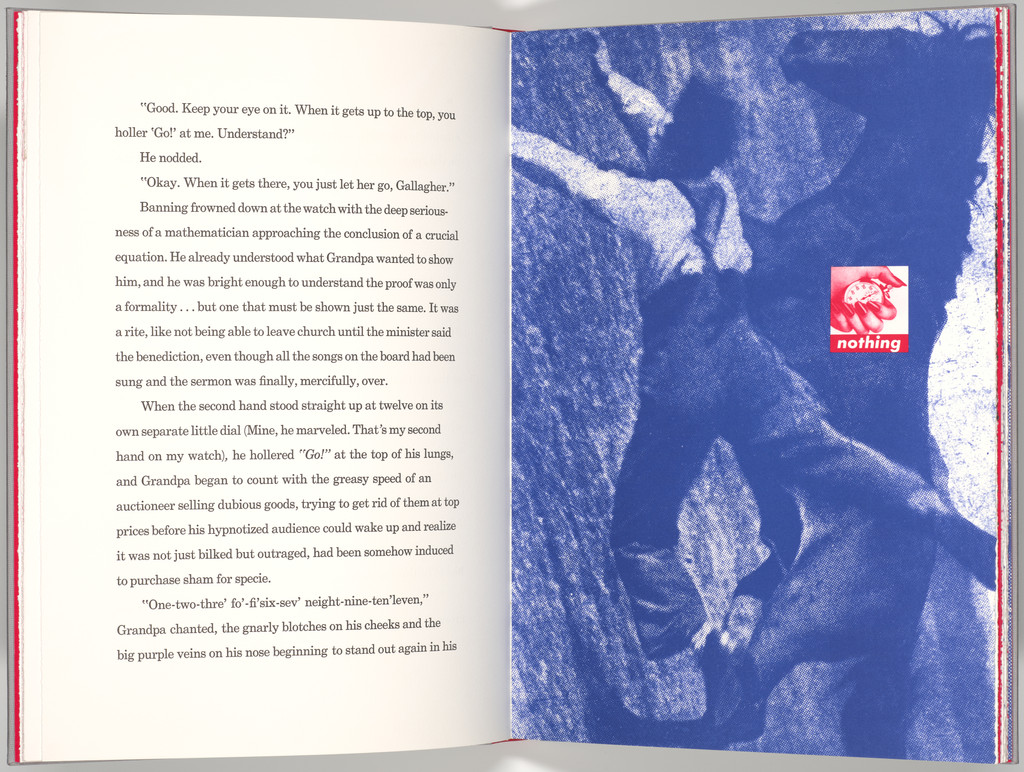
Plate (folio 9) from My Pretty Pony
Barbara Kruger
1988
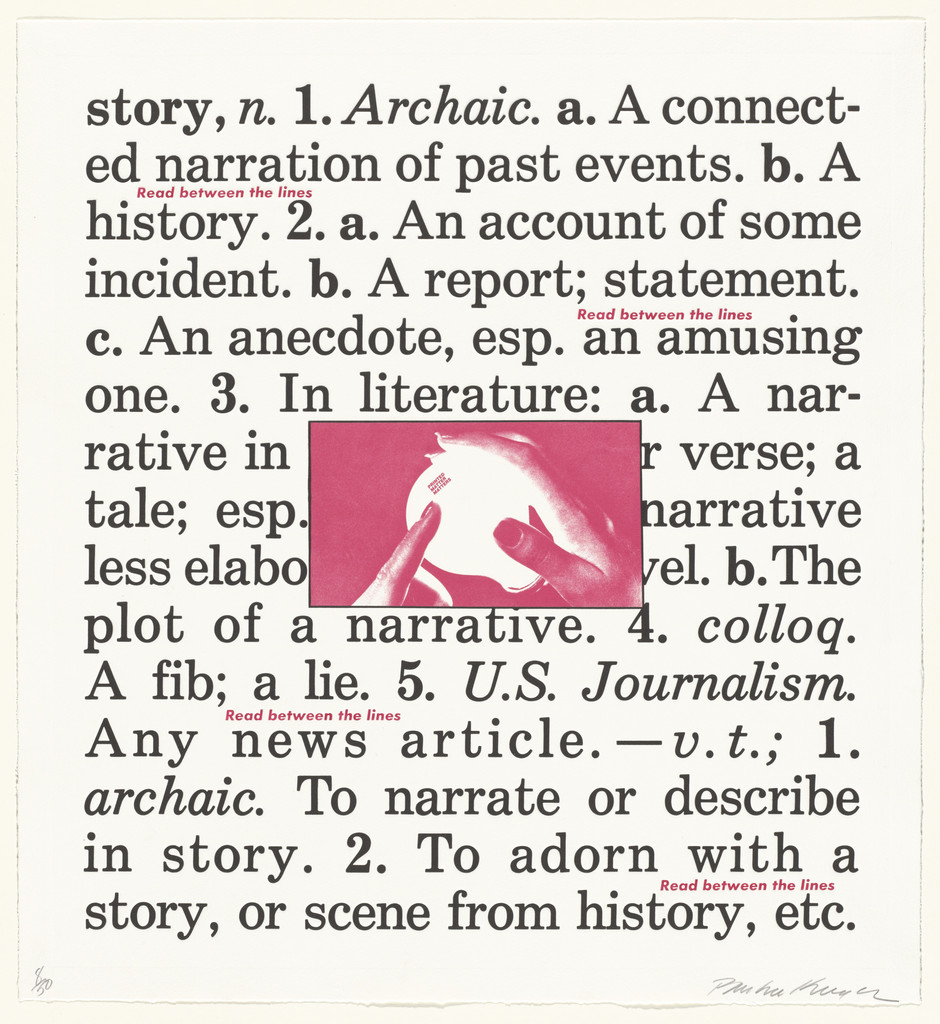
Untitled (Printed Matter Matters)
Barbara Kruger
(1989)
Untitled (We Will No Longer Be Seen and Not Heard)
Barbara Kruger
1985
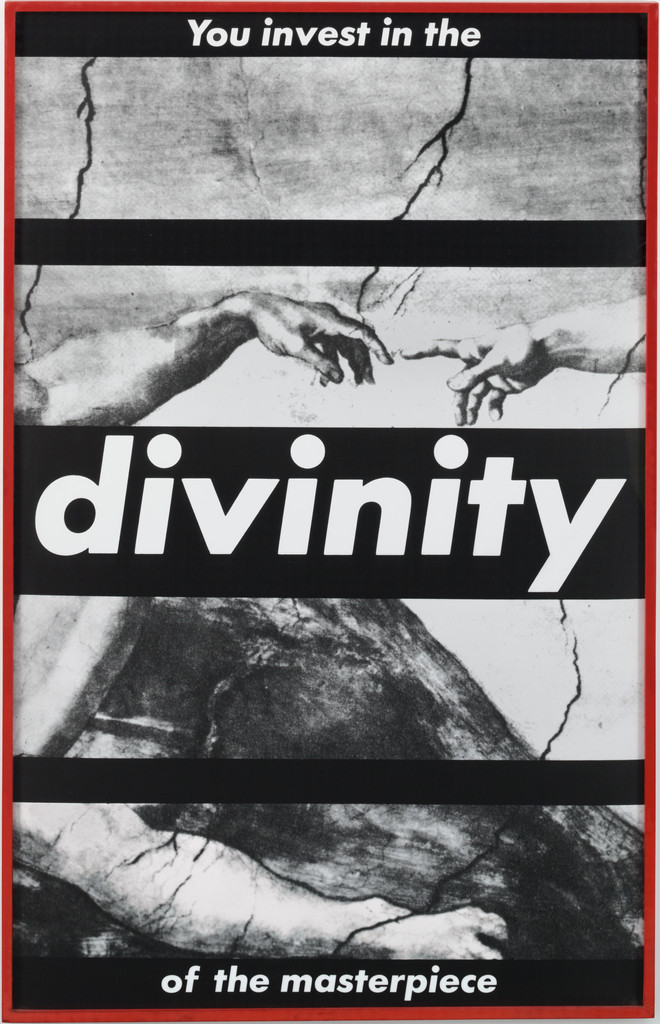
Untitled (You Invest in the Divinity of the Masterpiece)
Barbara Kruger
1982
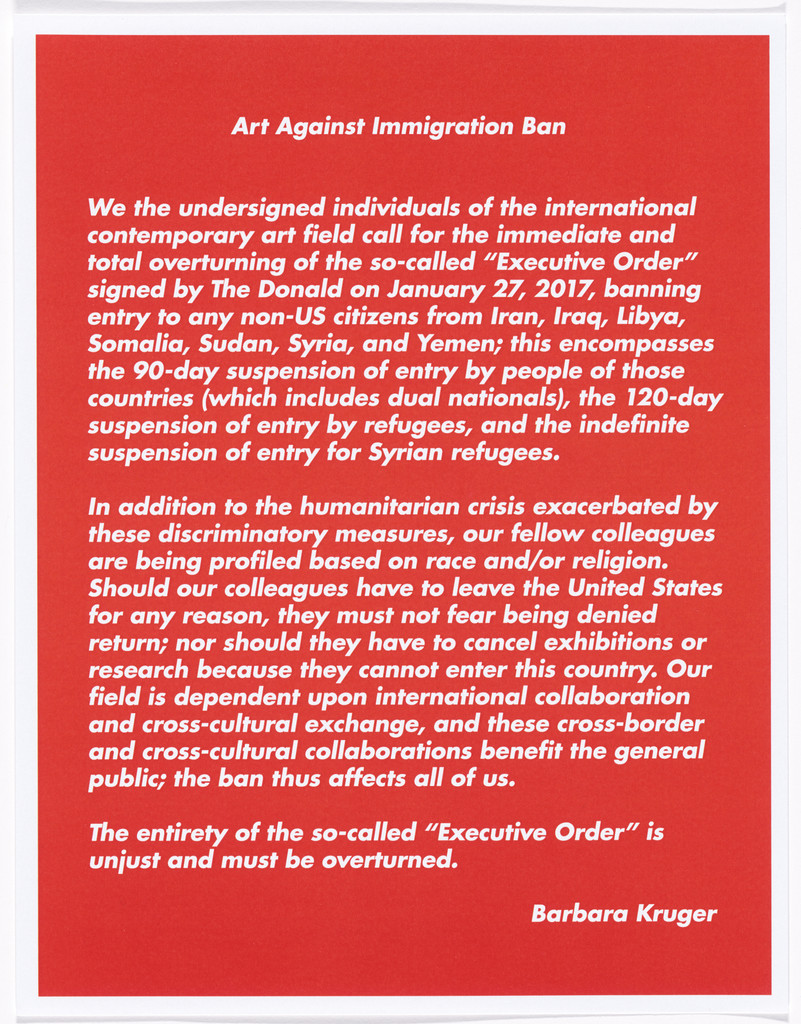
Untitled from Art Against Immigration Ban Letter Portfolio
Barbara Kruger
2017
Exhibitions
5 exhibitionsNov 06, 1986 – Mar 31, 1987
Contemporary Works from the Collection
46 artists · 1 curator
Dec 24, 1987 – Sep 12, 1988
Contemporary Works from the Collection
53 artists · 1 curator
Jan 14, 1988 – Apr 17, 1988
Picturing "Greatness"
17 artists · 2 curators
Jan 31, 1988 – Apr 19, 1988
Committed to Print
125 artists · 1 curator
Aug 18, 1989 – Nov 07, 1989
Recent Acquisitions
32 artists · 1 curator