
“My painting is an act of decolonization not in a physical sense, but in a mental one.” — Wifredo Lam
Wifredo Lam charted a pathbreaking trajectory in modern art and served as a reference for subsequent generations of artists working across the Caribbean, Africa, and the West. The early decades of his career were defined by movement and exile: from Cuba to Spain, where he trained as an academic painter, and later to Paris, to escape the Spanish Civil War, in which he had fought alongside the Republicans against the Nationalist military dictatorship. Though Lam would break with his academic training, he stated that “in Spain I truly learned to admire painting. When I arrived, for the first time, I felt that everything belonged to me…. Spain gave me the strength and structure of painting.” Once in Paris, Lam continued his experimentation with simplified geometric forms and anti-illusionistic space. _Mother and Child_ (1939) is a striking example of Lam’s departure from his earlier academic style.
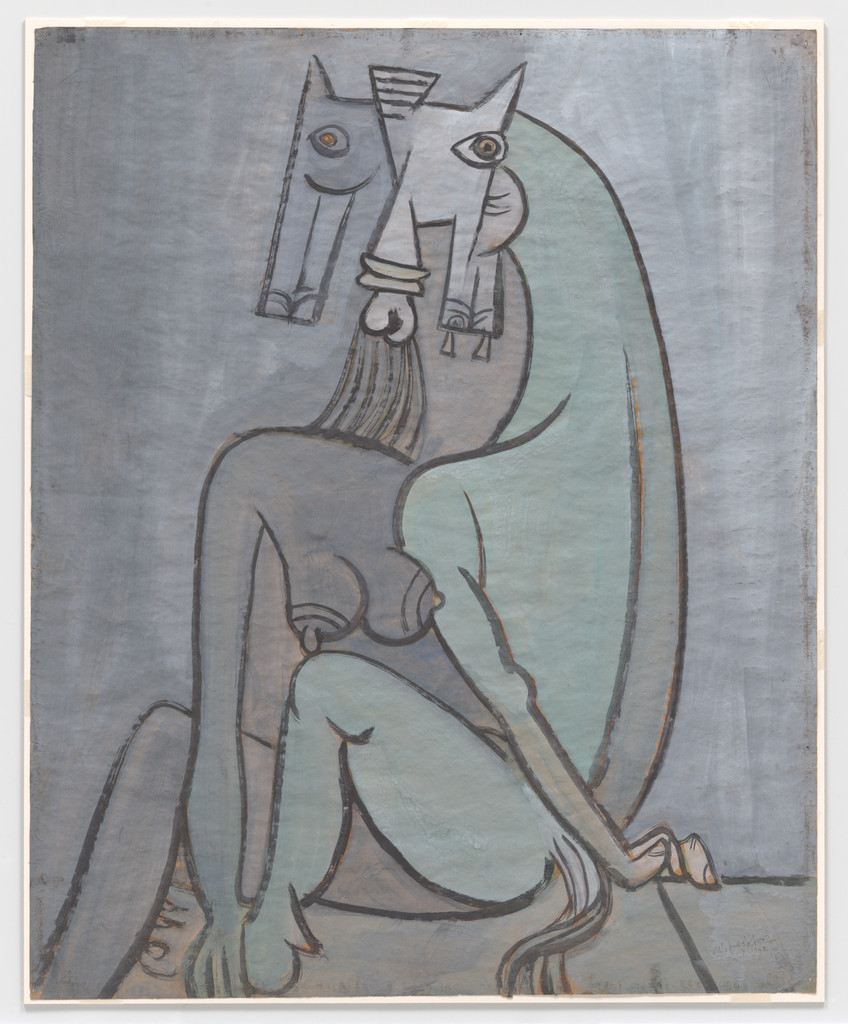
Lam was forced to flee again in the summer of 1940, after the Nazi invasion of Paris. His exile in Marseille, where he awaited safe passage back to the Americas, laid the foundation for his later work. There, he found himself part of a circle of artists, writers, and poets experimenting with Surrealist techniques meant to engage the unconscious, including automatic drawing and the collaborative _cadavre exquis_ (Exquisite Corpse) game, and he began drawing hybrid figures in which human, plant, and animal merge. The Surrealist poet André Breton also asked the artist to contribute a series of illustrations to his book-length poem _Fata Morgana_ (1941). Reflecting on the importance of automatic drawing, Lam stated, “This new world began to surface within me…I had carried all of this in my subconscious, and by allowing myself to produce automatic painting…this strange world started to flow out of me.”
Lam would continue to elaborate on this new world when he returned to Cuba, entering a period of heightened experimentation. Arriving in the summer of 1941 after a long transatlantic voyage, he was disturbed by the conditions he encountered, confronting anew the racial and economic realities of a neocolonial Cuba. Of African and Chinese descent, Lam was acutely affected by these experiences. His return home forced him to relive “all the dramas of my family, all the dramas of my youth, all the images of the consciousness of colonial activity.”
This experience sparked a highly productive period in which he further developed the world of hybrid figures begun in Marseille and explored representations of Afro-Cuban culture. He completed the monumental oil painting on kraft paper _La Jungla (The Jungle)_ (1942–43), whose all-over composition features life-size plant-animal-human figures emerging from a dense field of sugarcane, a location that evokes Cuba’s history of slavery and indentured servitude. Thinly painted with drips and unexpected colors, _La Jungla_ is widely celebrated in modern art history for its references to Afro-Cuban religious practices and anticolonial critique. In 1944 the Pierre Matisse Gallery included _La Jungla_ in the second solo exhibition of Lam’s work in New York. It was acquired shortly thereafter by MoMA.
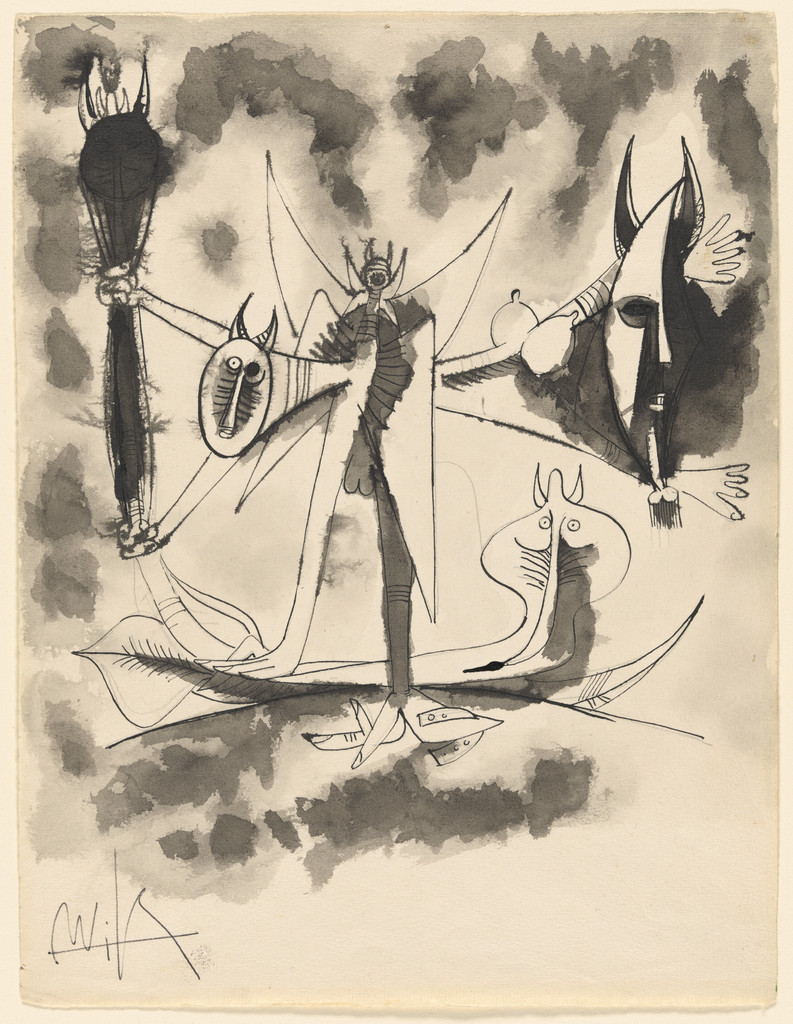
Lam spent a decade in the Caribbean, enabling him to connect with other artists, poets, and intellectuals in the region. In Martinique, he befriended Aimé Césaire, the poet and founder of the Négritude movement. Césaire’s anticolonial writings—particularly his book-length poem _Cahier d’un retour au pays natal (Notebook of a Return to the Native Land)_ (1939)—resonated deeply with Lam’s worldview, bringing the artist “a great moral comfort.” Lam illustrated the Spanish-language edition of Césaire’s poem, published in Cuba in 1943; the two would remain close friends and collaborators until the end of Lam’s life. Lam also traveled to Haiti, where he reconnected with Breton, met with local artists and writers, and deepened his understanding of Afro-diasporic religious practices. Lam’s paintings and Breton’s lectures on Surrealism spoke to a generation of Haitian poets and artists who recognized aesthetic and political affinities. A series of pencil and ink drawings, including _Moths and Candles_ (1946), reflect Lam’s time in Haiti.
In 1949 Lam completed his largest work, the painting on paper _Grande Composition (Large Composition)_. Substituting the vibrant tropical setting of the early 1940s with a muted palette and simplified landscape, _Grande Composition_ marks a turning point. Though hybridized figures remained central to his repertoire, Lam adopted this darkened palette to depict indeterminate spaces. His use of dynamic diagonal lines, negative space, and geometric shapes also foreshadows his experimentation with abstraction in the 1950s. Consisting of tiles painted with black triangles and rhomboids, Lam’s mural _Abstracción (Abstraction)_ (1955), installed at the Edificio del Seguro Medico in Vedado, Cuba, is the peak of his exploration of a geometric and abstract idiom.
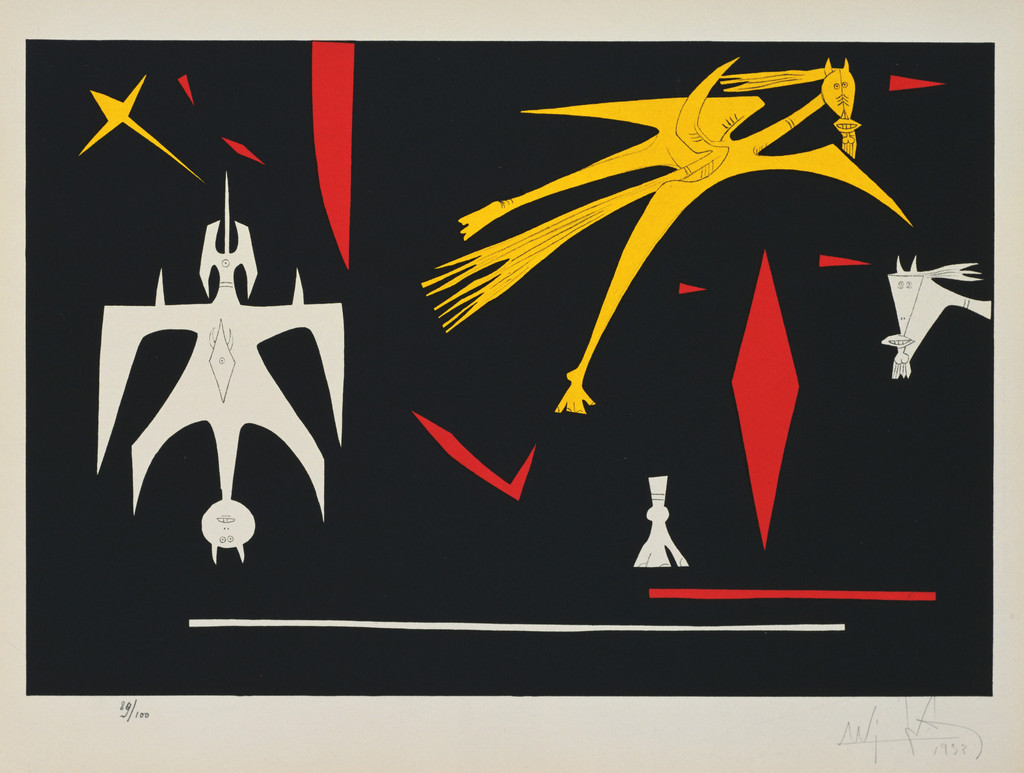
Lam permanently relocated to Europe in 1952, settling first in Paris and later in Albissola Marina, Italy. In the final, prolific decades of his life, he experimented with new mediums, including ceramics, printmaking, and sculpture. He also continued collaborating with artists and writers in the Caribbean, creating a series of lithographs for Édouard Glissant’s poetry collection _La Terre inquiète (The Restless Earth)_ (1955) and, a decade later, helping organize the Salón de Mayo (May Salon) in Havana, a major exhibition featuring works by 100 international artists working in the 20th century. In the final years of his life, Lam invited Aimé Césaire to collaborate on a last project, _Annonciation (Annunciation)_ (1982). Lam first approached Césaire in 1979, showing the poet a series of etchings he had completed a decade earlier and, in response, Césaire wrote a set of poems. The etchings and poems were eventually published together as a portfolio in 1982, a testament to the enduring intellectual affinities between their work.
Note: Opening quote is from Wifredo Lam, “My Painting Is an Act of Decolonization,” interview by Gerardo Mosquera. Translated by Colleen Kattau and David Craven. Journal of Surrealism and the Americas 3, no. 1-2 (2009), 3.
Cathryn Jijon, Mellon-Marron Research Consortium Fellow, Department of Drawings and Prints, 2025
Works in Collection
35 works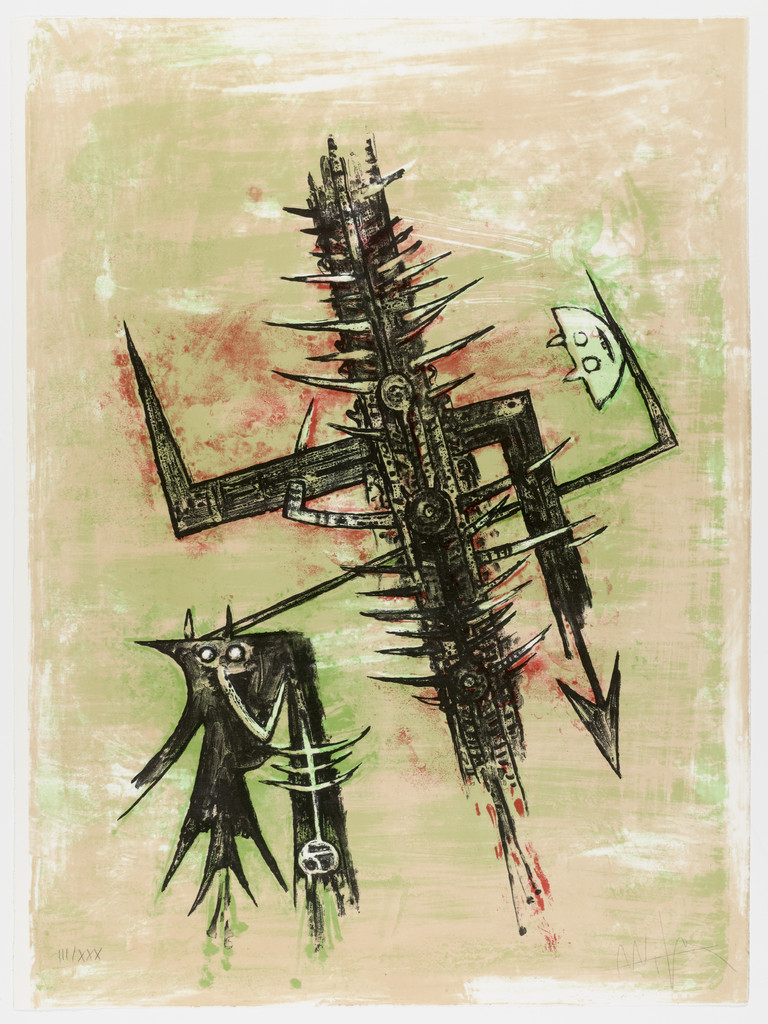
Acide doux from Homage to Picasso (Hommage à Picasso)
Wifredo Lam
1973
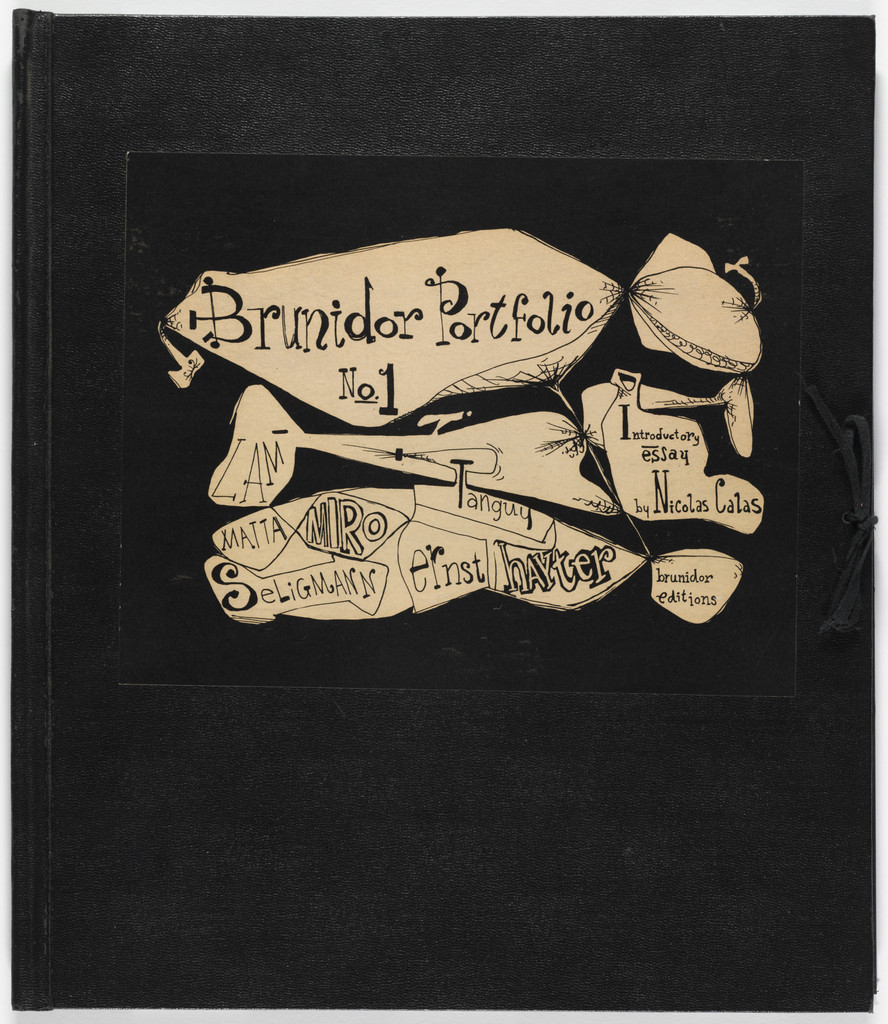
Brunidor Portfolio, No. 1
Max Ernst
1947
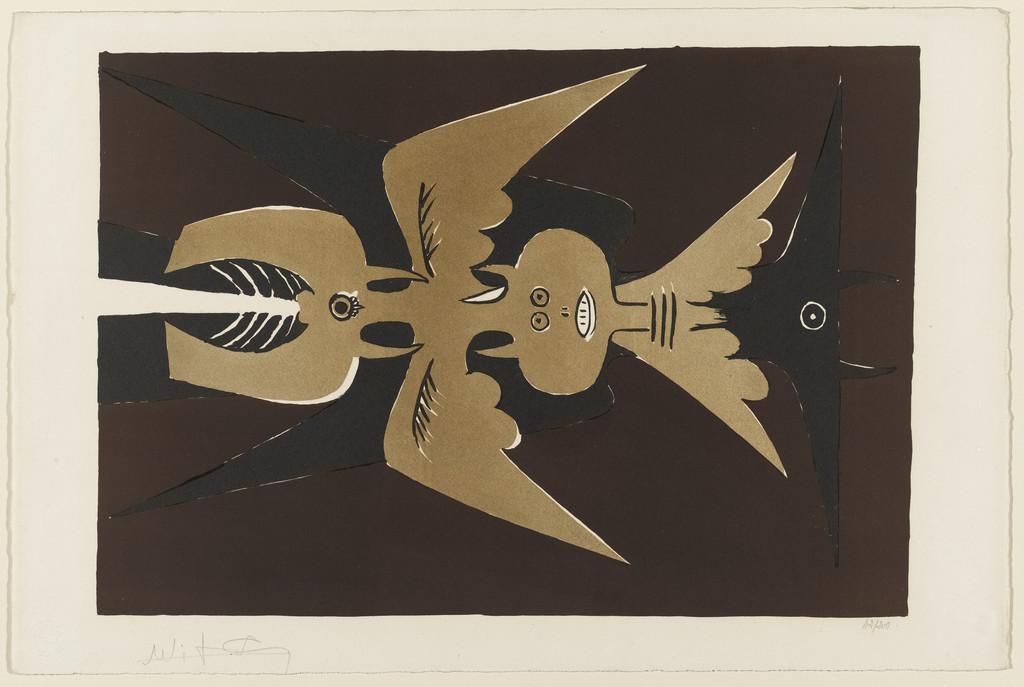
Emblem (Emblèm)
Wifredo Lam
1952
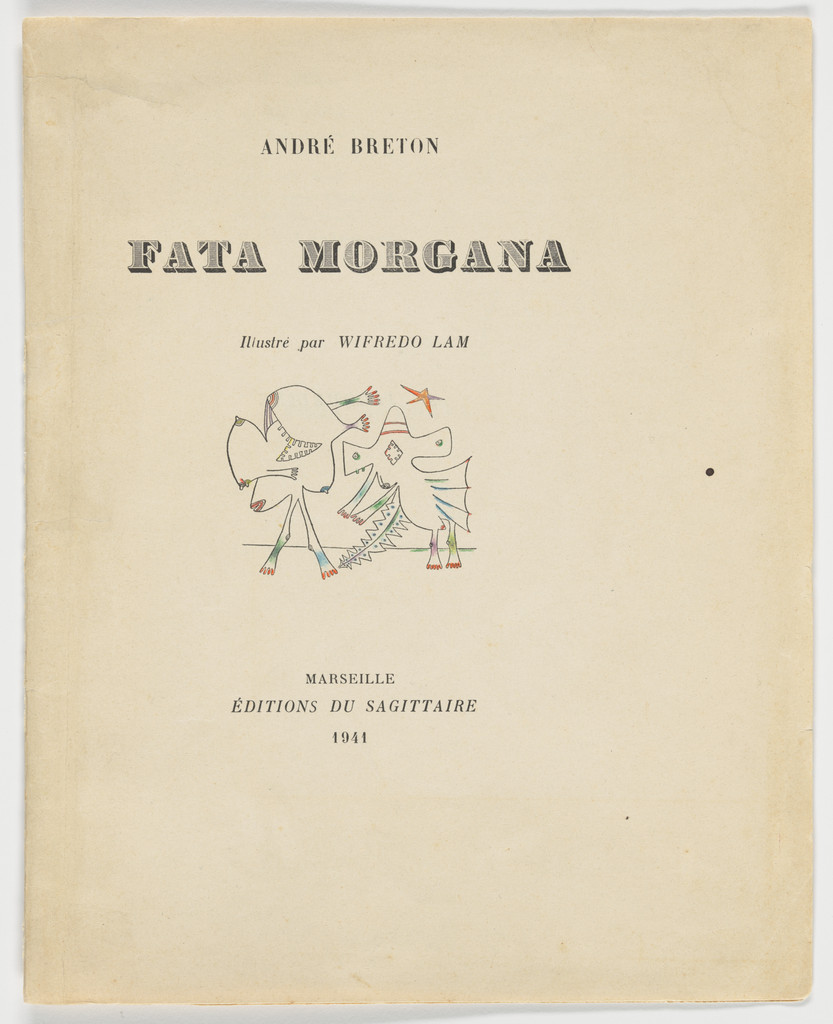
Fata Morgana
Wifredo Lam
1941
Feuilles éparses
Jean (Hans) Arp
1957–65, published 1965
Flight
Alexander Calder
1971
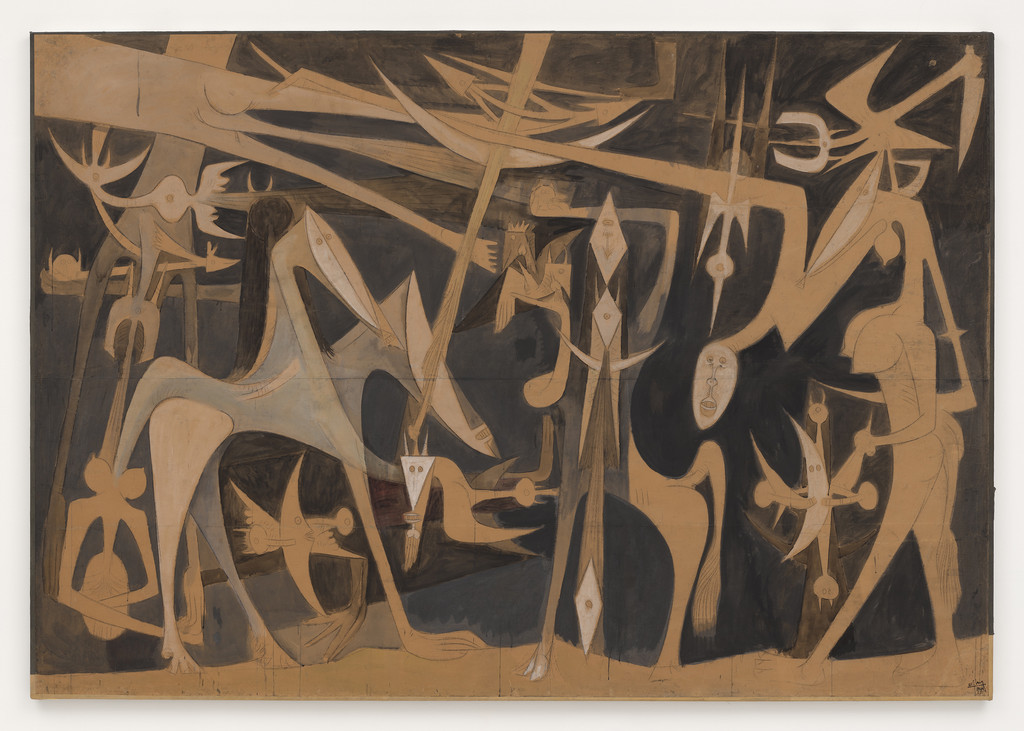
Grande Composition
Wifredo Lam
1949
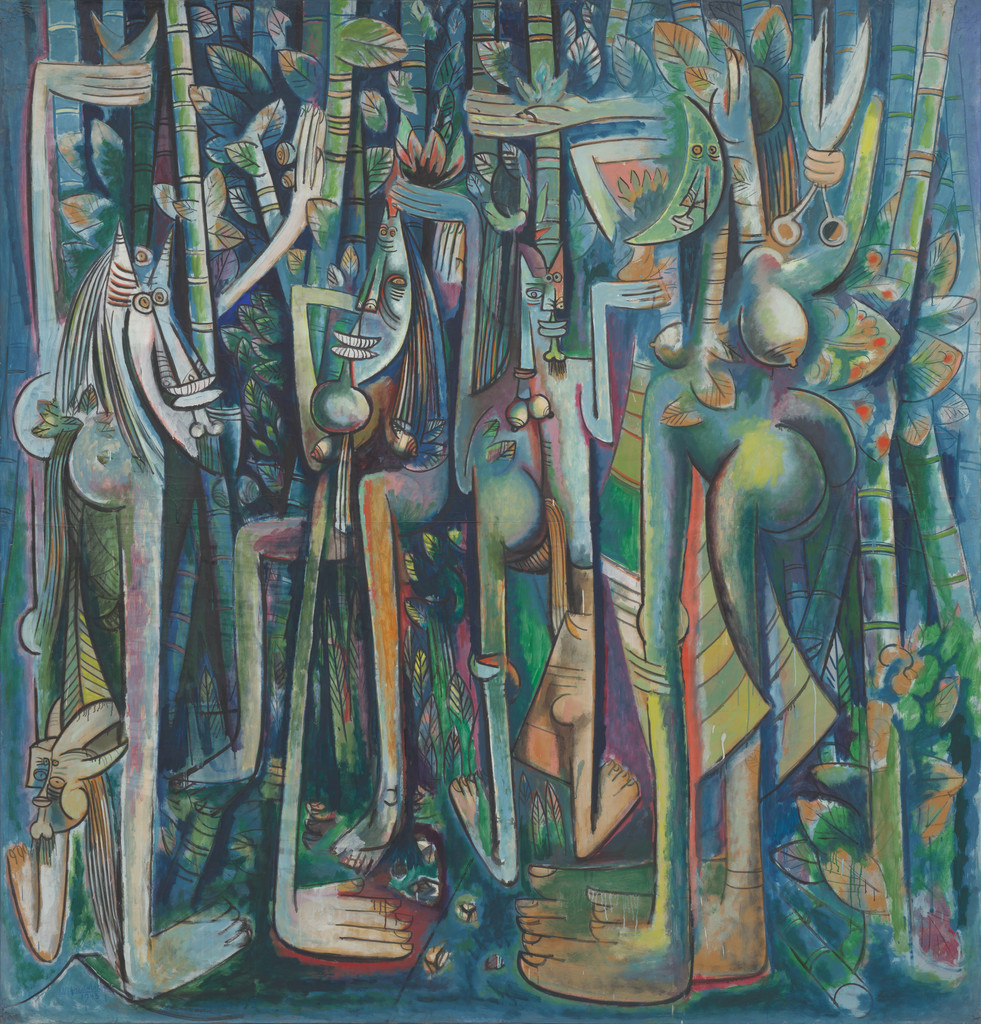
La jungla (The Jungle)
Wifredo Lam
1942–43
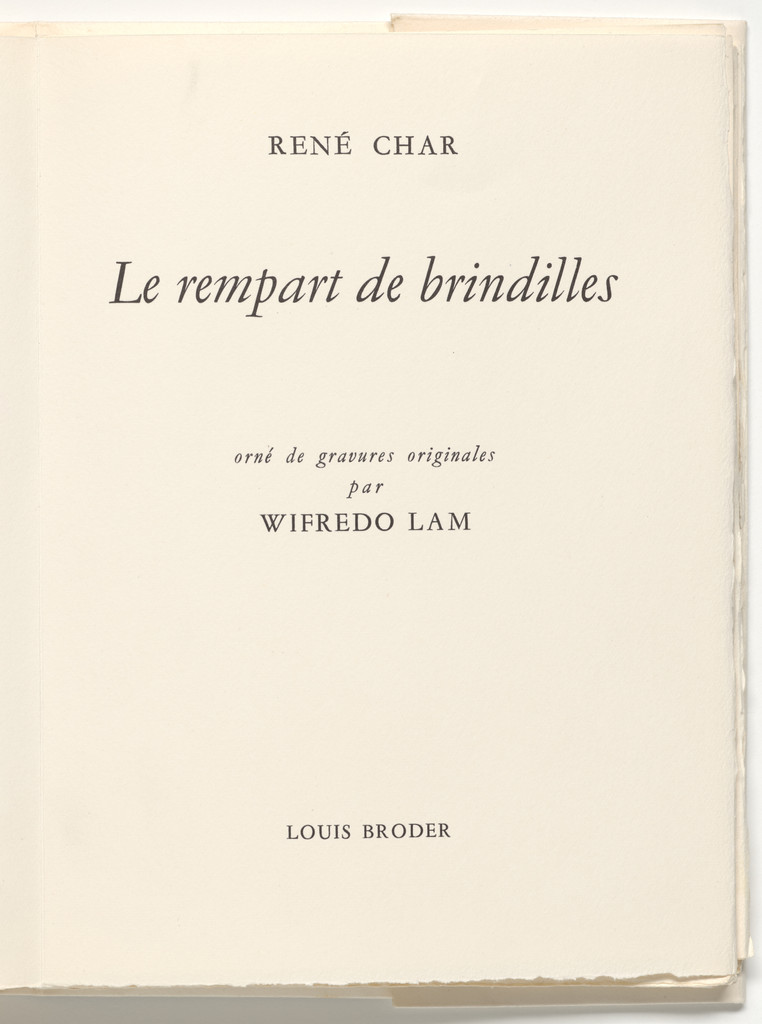
Le Rempart de brindilles (The Rampart of Twigs)
Wifredo Lam
1953
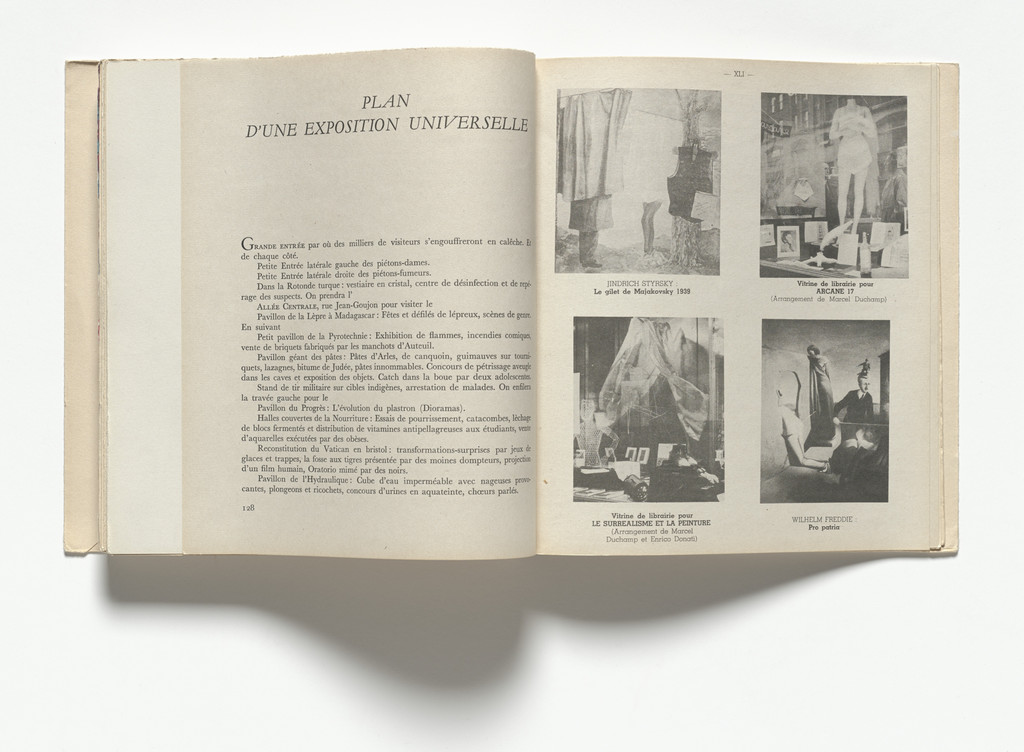
Le Surréalisme en 1947
Jean (Hans) Arp
1947
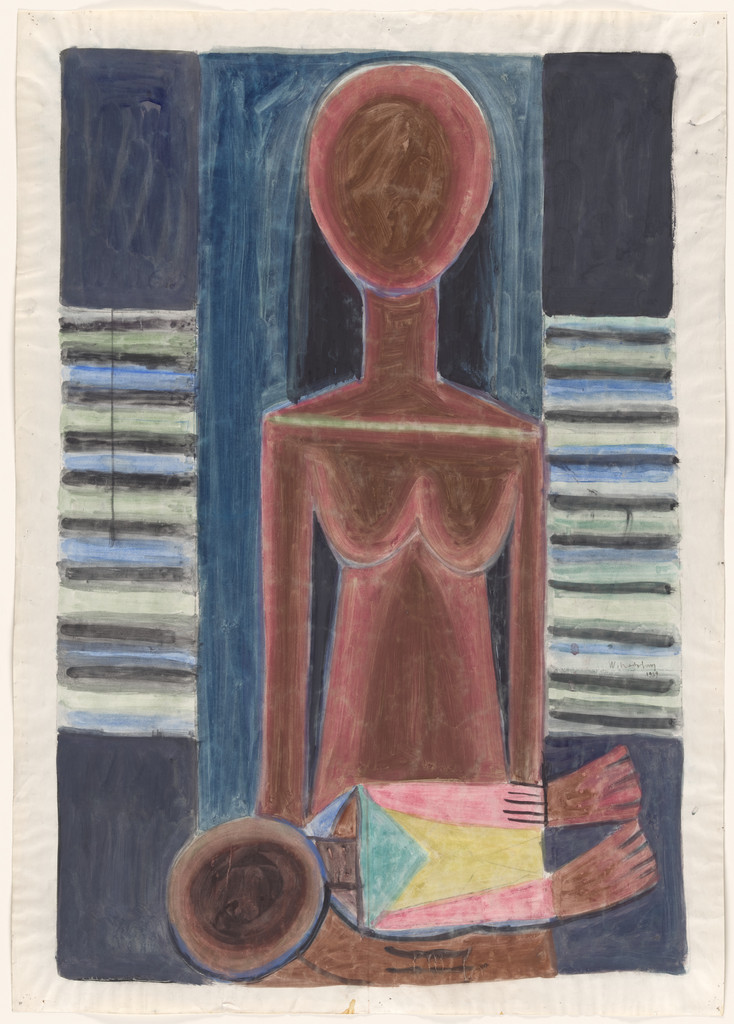
Mother and Child
Wifredo Lam
1939
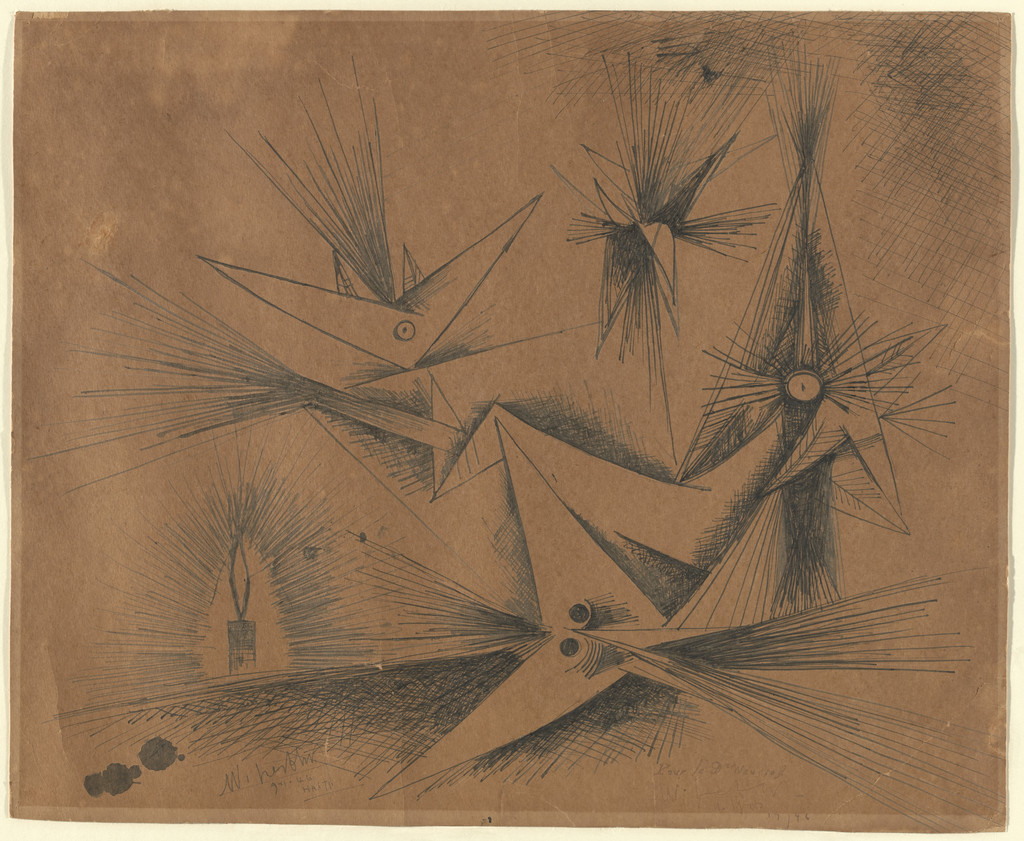
Moths and Candles
Wifredo Lam
1946
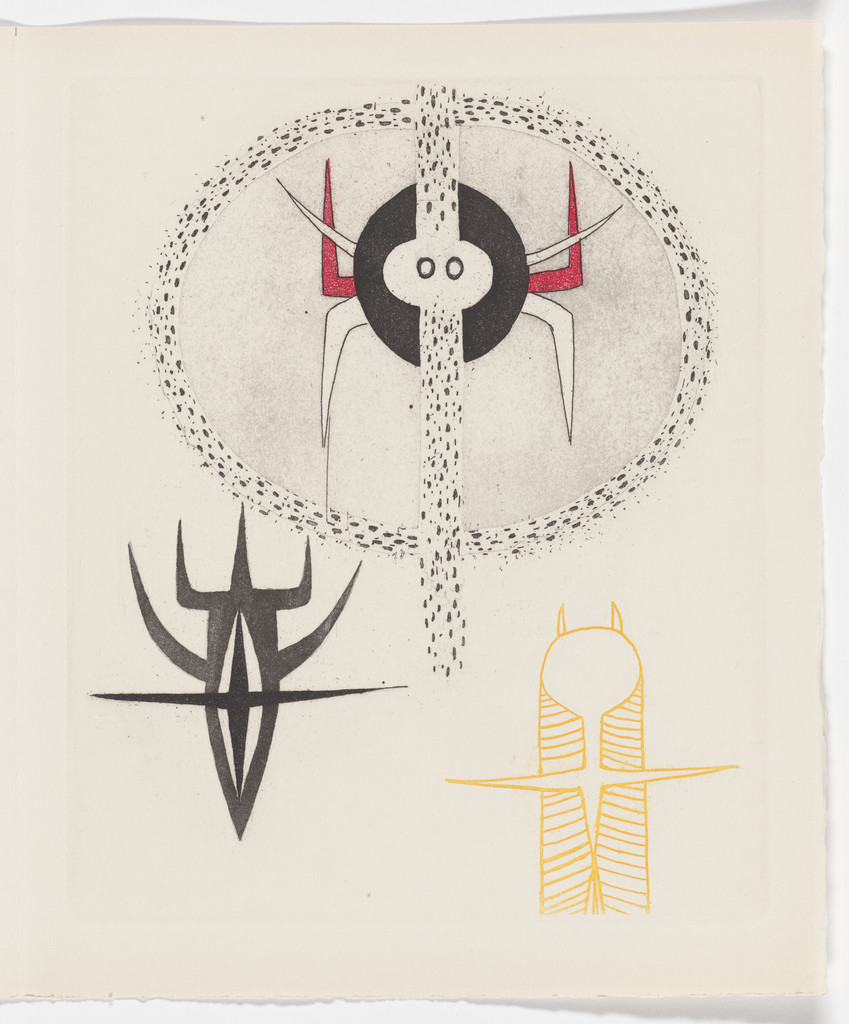
Night (Nuit) (plate, page 19) from Feuilles éparses
Wifredo Lam
1965
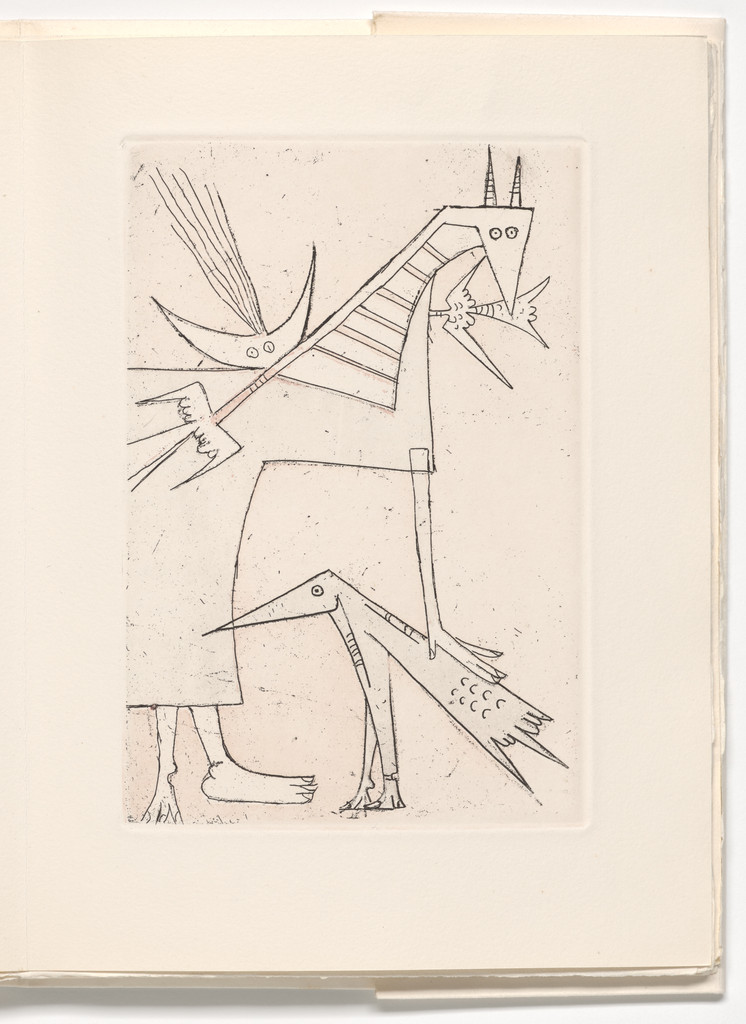
Plate (page 17) from Le Rempart de brindilles (The Rampar...
Wifredo Lam
1953
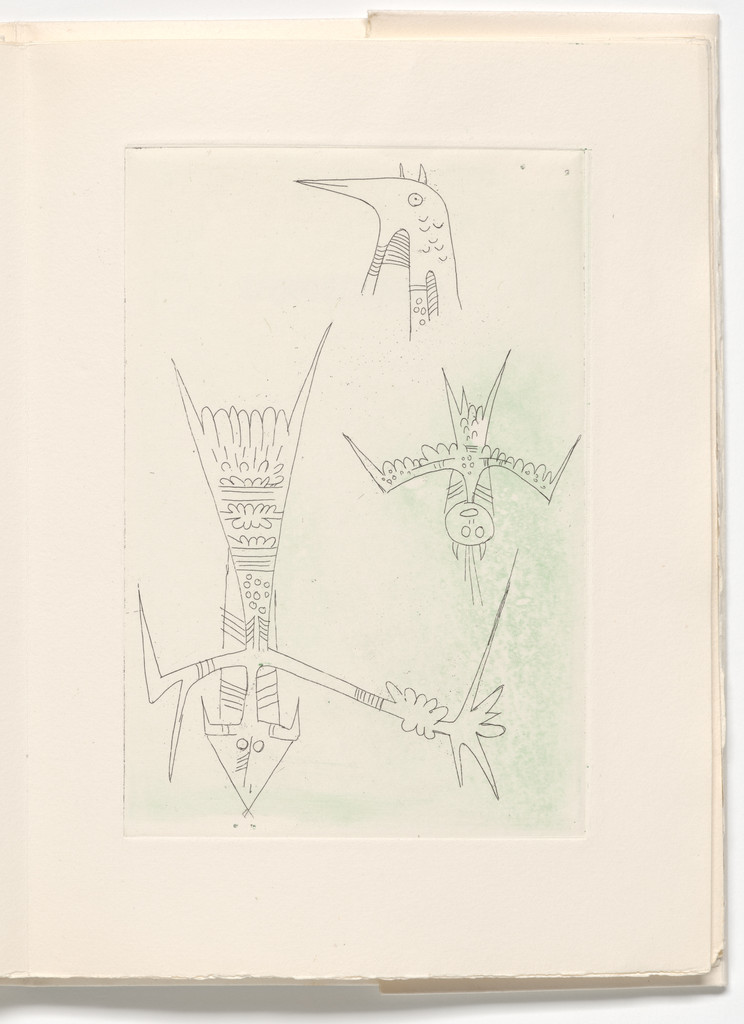
Plate (page 25) from Le Rempart de brindilles (The Rampar...
Wifredo Lam
1953
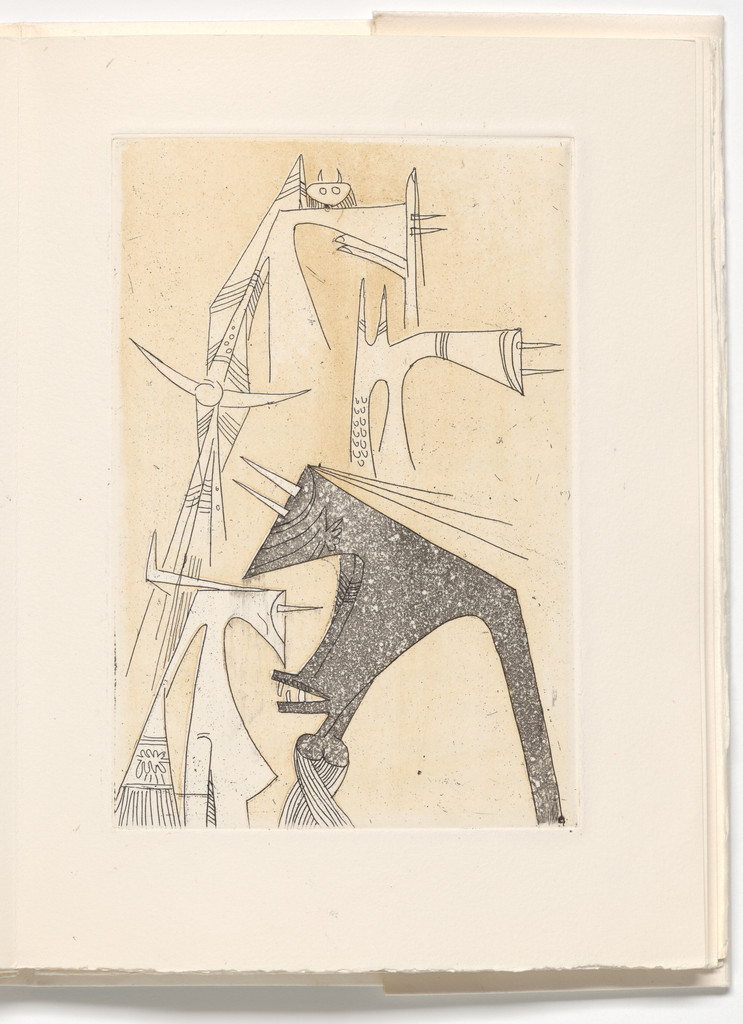
Plate (page 33) from Le Rempart de Brindilles (The Rampar...
Wifredo Lam
1953
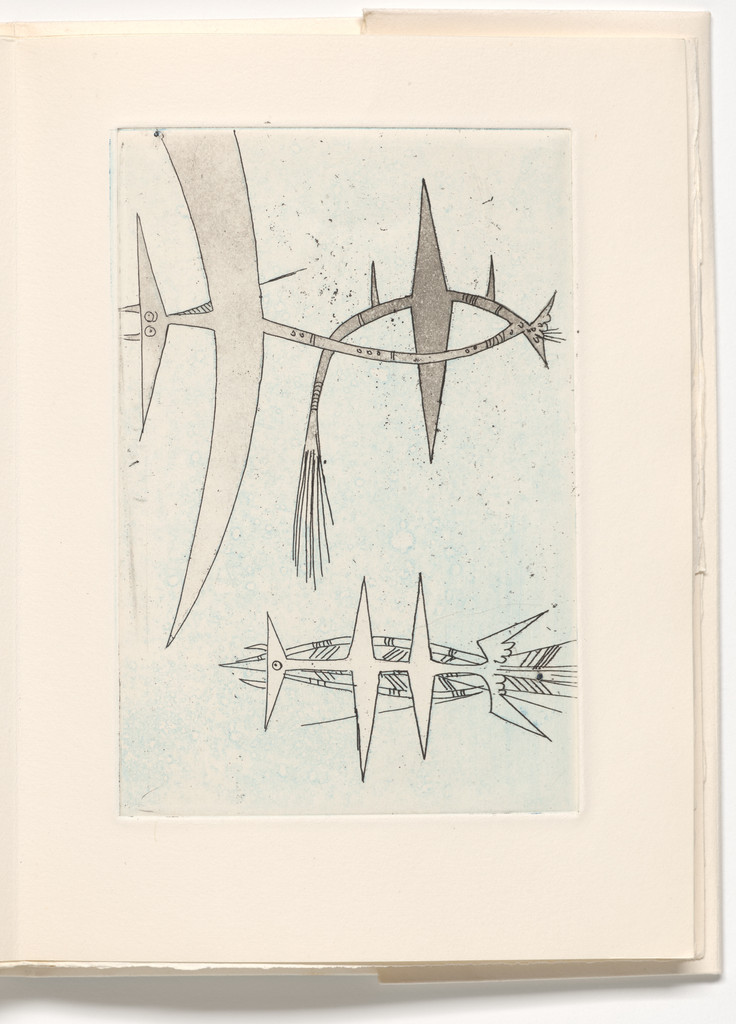
Plate (page 41) from Le Rempart de brindilles (The Rampar...
Wifredo Lam
1953
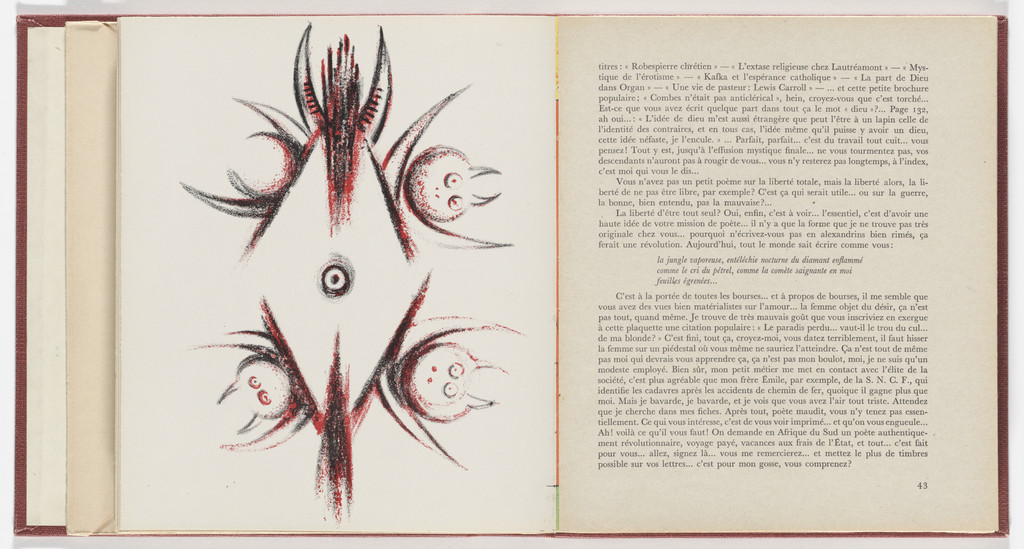
Plate from Le Surréalisme en 1947
Wifredo Lam
1947
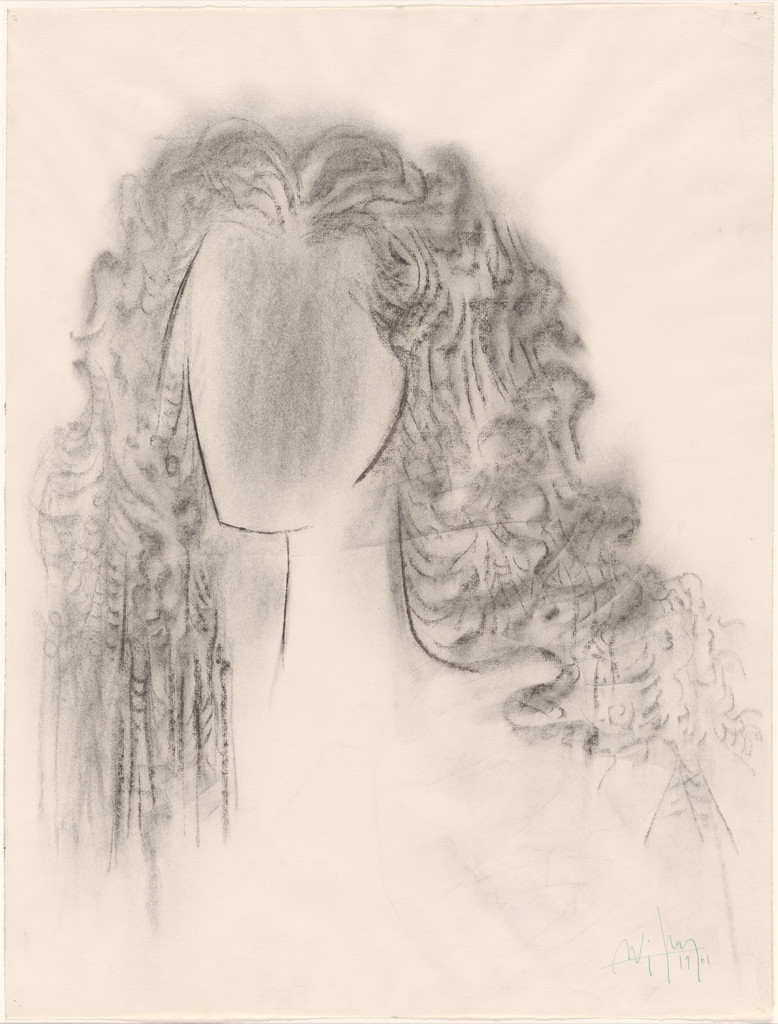
Portrait of Iris Clert (Portrait d’Iris Clert)
Wifredo Lam
1961
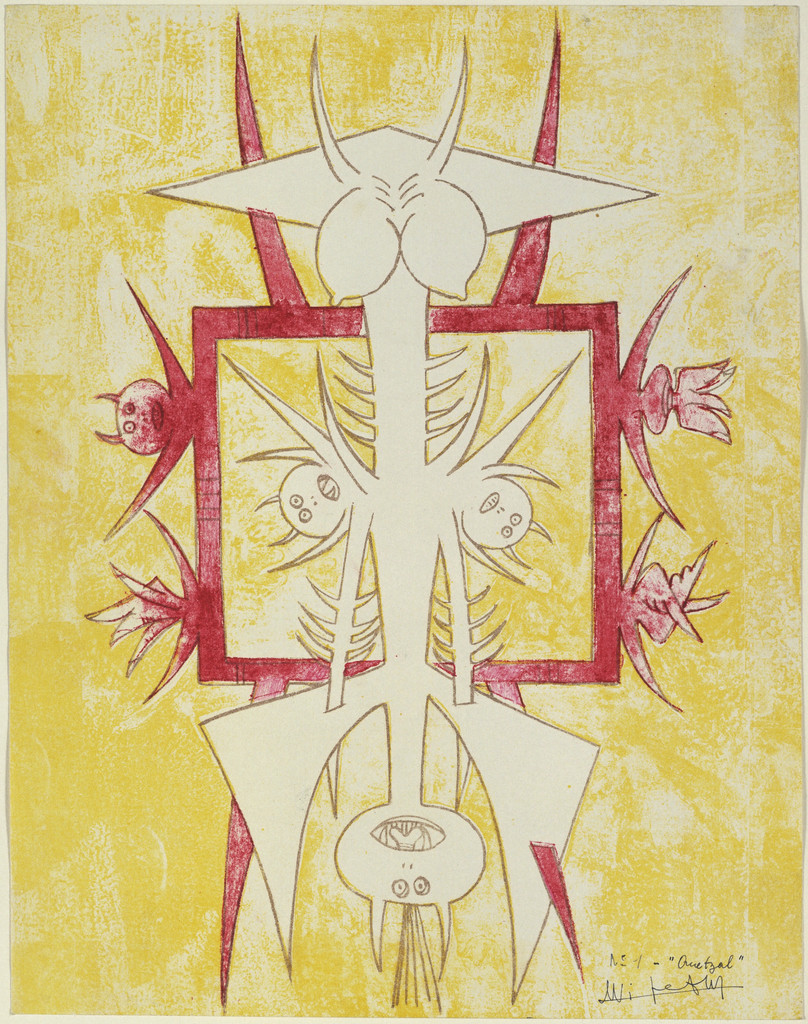
Quetzal from Brunidor Portfolio, No. 1
Wifredo Lam
1947
Satan
Wifredo Lam
1942
Title page from Fata Morgana
Wifredo Lam
1941
Untitled
Wifredo Lam
1953
Untitled
Wifredo Lam
1946
Exhibitions
17 exhibitionsJan 13, 1942 – Feb 15, 1942
New Acquisitions: Latin-American Art
6 artists
Mar 31, 1943 – Jun 06, 1943
The Latin-American Collection of the Museum of Modern Art
154 artists · 1 curator
Jun 20, 1945 – Feb 13, 1946
The Museum Collection of Painting and Sculpture
174 artists
Feb 19, 1946 – May 05, 1946
The Museum Collection of Painting
67 artists
Jul 02, 1946 – Sep 12, 1954
Paintings, Sculpture, and Graphic Arts from the Museum Collection
112 artists · 1 curator
Apr 01, 1947 – May 04, 1947
Large-Scale Modern Paintings
16 artists · 1 curator
May 10, 1949 – Jul 10, 1949
Master Prints from the Museum Collection
132 artists · 2 curators
Aug 29, 1950 – Oct 15, 1950
Painting and Sculpture from the Museum Collection
72 artists · 1 curator
Sep 08, 1954 – Nov 28, 1954
American Prints of the 20th Century
111 artists · 1 curator
Oct 19, 1954 – Feb 06, 1955
XXVth Anniversary Exhibition: Paintings from the Museum Collection
260 artists
May 27, 1964
Painting and Sculpture from the Museum Collection
169 artists
Mar 27, 1968 – Jun 09, 1968
Dada, Surrealism and their Heritage
94 artists · 1 curator
May 28, 1969 – Sep 01, 1969
Twentieth-Century Art from the Nelson Aldrich Rockefeller Collection
119 artists · 1 curator
Dec 09, 1975 – Mar 07, 1976
A Museum Menagerie
57 artists · 1 curator
Dec 15, 1977 – Mar 05, 1978
Arp on Paper
22 artists · 1 curator
Apr 28, 1978 – Jul 04, 1978
A Treasury of Modern Drawing: The Joan and Lester Avnet Collection
89 artists · 1 curator
Aug 06, 1987 – Dec 08, 1987
Surrealist Prints from the Collection of The Museum of Modern Art
29 artists · 1 curator