
“I do not look upon the story of the Blacks in America as a separate experience to the American culture but as a part of the American heritage and experience as a whole.” — Jacob Lawrence
“I do not look upon the story of the Blacks in America as a separate experience to the American culture but as a part of the American heritage and experience as a whole,” the artist Jacob Lawrence said in 1943. Though he came of age before the Civil Rights Movement brought African Americans the rights they had long been denied, Lawrence forged a prominent career as an artist, chronicling the story of Black life in America through his paintings. Born in New Jersey and raised from the age of 13 in Harlem, this Northeast native had southern roots. He was the child of migrants who moved, together with millions of other African Americans, from the rural South to urban, industrialized Midwestern and Northeastern cities during the mass relocation known as the Great Migration (1915–1950s). Lawrence maintained that he was “a child of the Great Migration,” which shaped the course of his own and his fellow African Americans’ lives. If the Great Migration provided him with geographical advantages, it was Harlem, then in the midst of the cultural and intellectual outpouring known as the Harlem Renaissance (1920s–1930s), that inspired him to make art. As he once described his beloved neighborhood: “All these people on the street, various colors, so much pattern, so much movement, so much color, so much vitality, so much energy.” The textures of Harlem, and the narrative dynamism of the songs, Bible stories, sermons, and tales of his neighbors’ journeys north that he witnessed in church, shaped Lawrence’s approach to art making. He realized that through painting he, too, could give voice to the experiences of his people. In the early 1930s, he enrolled in his first art classes. By the time he was 23, he had completed five narrative series on major people and events in Black history, including Toussaint L’Ouverture, the leader of the Haitian Revolution, abolitionist Frederick Douglass, and Harriet Tubman, the former slave and abolitionist who smuggled others to freedom on the Underground Railroad. He used descriptive titles, vibrant patterns and blocks of color, and simplified, angular figures and forms to distill epic narratives into powerfully direct images. This style, applied to topics ranging from neighborhood life to the experiences of Black industrial laborers to the Civil Rights Movement, characterized his work throughout his career. Between 1940 and 1941, while World War II raged and Harlem continued absorbing newly arriving Black southerners, Lawrence was busy studying, listening, and painting a narrative series about the Great Migration. Before putting brush to panel, he spent months at the library, researching this mass relocation. He also listened to his parents, family, and neighbors tell the tales of their own northward journeys. And he wrote, completing the text for the short narratives that would serve as both titles and captions for the 60 individual paintings that together comprise his celebrated Migration Series. “I worked very fast,” Lawrence explained. “From the concept and the drawings to the completion of the works… that may have taken six to eight months.” His materials—quick-drying tempera paint and hardboard panels—were inexpensive and suited to his working method. Spreading out all of the panels simultaneously, he sketched images and scenes with a pencil. He then filled in his sketches with a limited range of colors, working with only one color at a time and applying it across all 60 panels. In his words: “I had a very simple palette. I went through all the panels painting yellows, greens, blues, so they’re all the same. I didn’t mix color. I left it pure, as it was, ’cause I wanted the series to be a unit. I consider it one work, not 60 works.” Lawrence focused on the people at the heart of the Great Migration, breaking apart this mass relocation of millions into intimate vignettes, often centered upon human figures. Each one is spare, in keeping with the artist’s belief that a lot of information could be conveyed through limited visual means. In the panel titled In the North the Negro had better educational facilities, three young girls stand side-by-side facing a chalkboard, their right arms outstretched as they practice writing numbers. The scene is composed of geometric shapes, with rectangles forming the gray chalkboard and the brown walls of the classroom, triangles forming the girls’ braids, and a combination of these shapes forming their pastel-colored dresses. Like the girls, Lawrence benefitted from the better education made possible by his elders’ migration north. In turn, he educated others—Black and white—when he embarked on the making of the Migration Series as both an artist and a teacher. In 1942, with segregation in full force, he broke a racial barrier by becoming the first African American artist whose work was acquired by The Museum of Modern Art. Through his vivid, accessible visual storytelling, Lawrence presented the richness and complexities of African American history and culture both to his own community and to the larger world.
Karen Kedmey, independent scholar, 2021
Works in Collection
38 works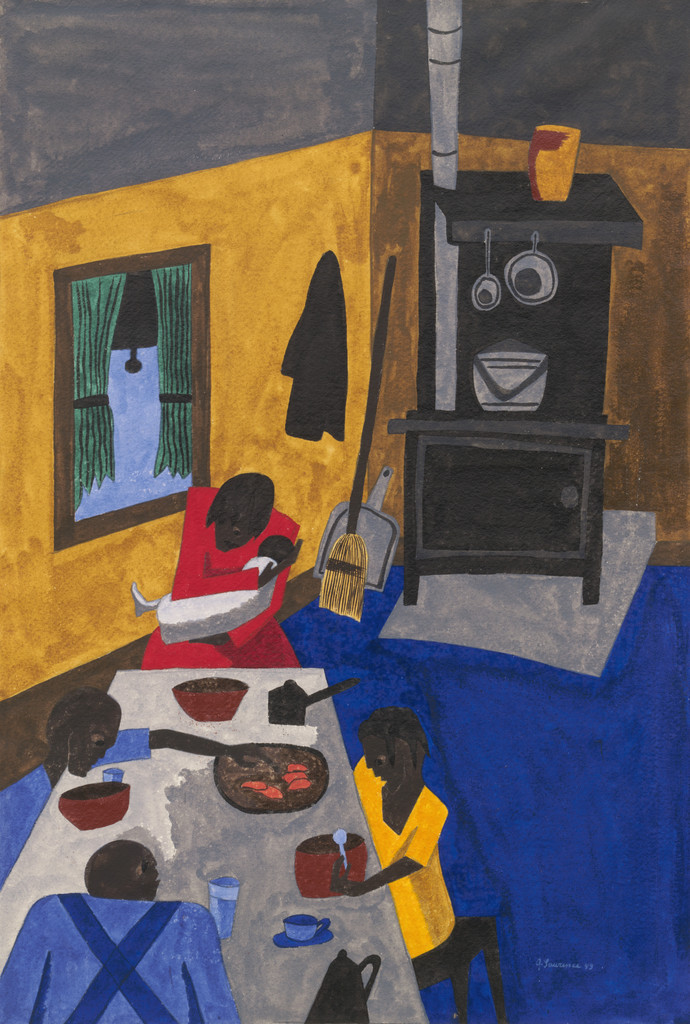
A Family
Jacob Lawrence
1943
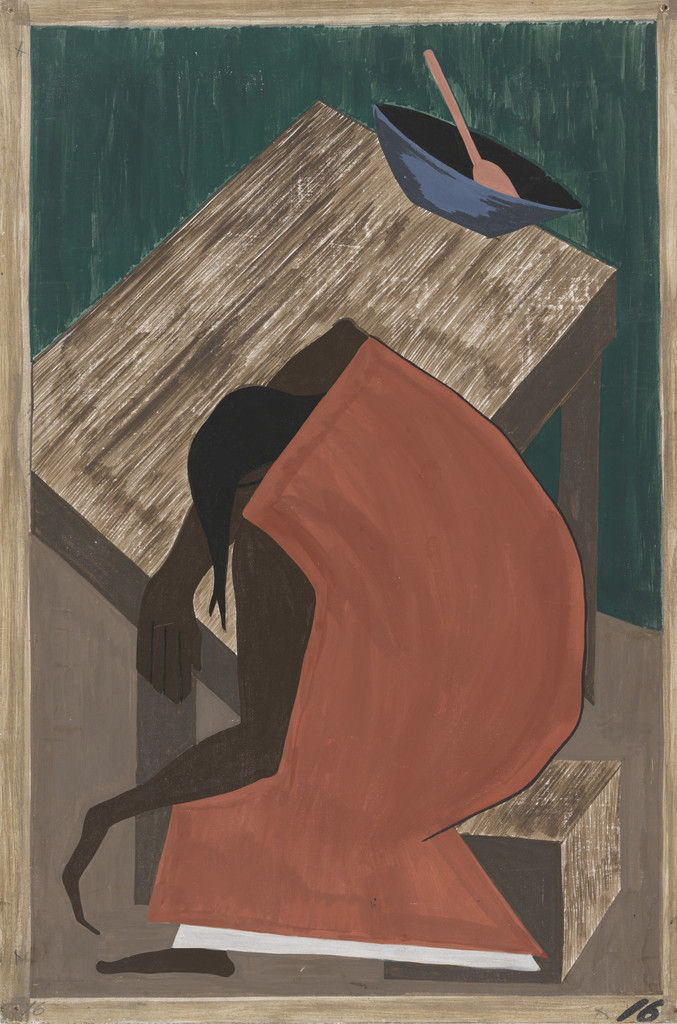
Although the Negro was used to lynching, he found this an...
Jacob Lawrence
1940-41
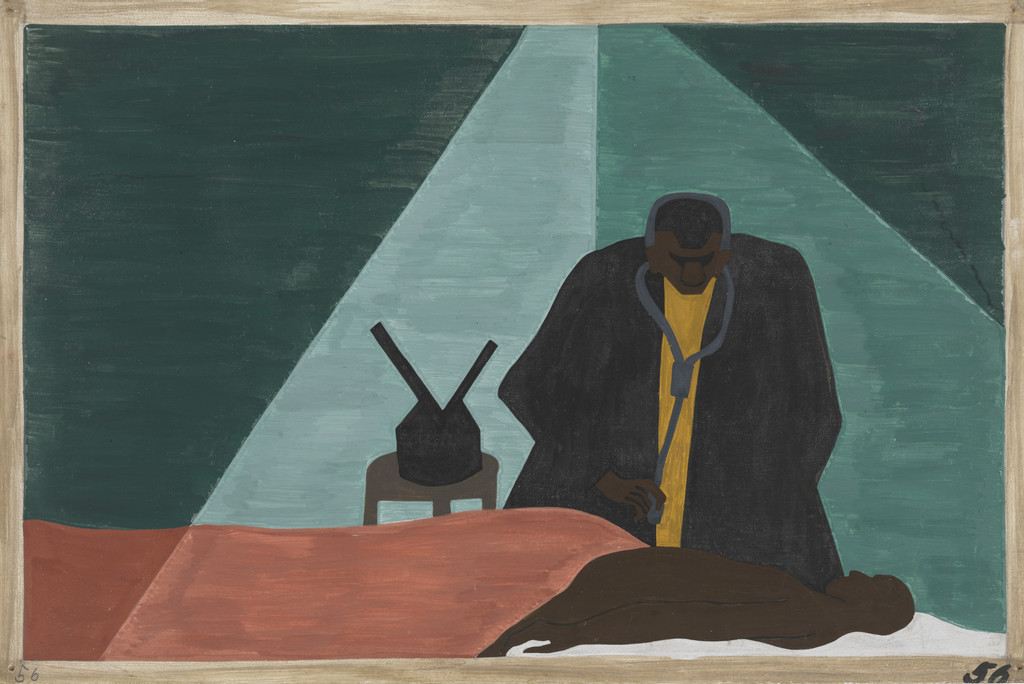
Among one of the last groups to leave the South was the N...
Jacob Lawrence
1940-41
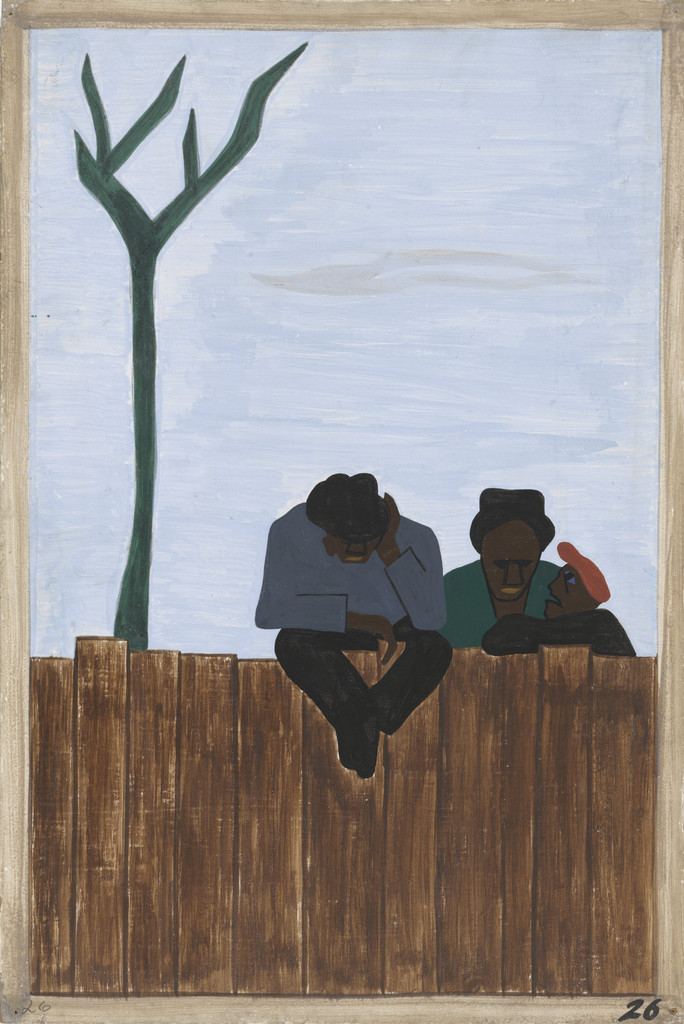
And people all over the South began to discuss this great...
Jacob Lawrence
1940-41
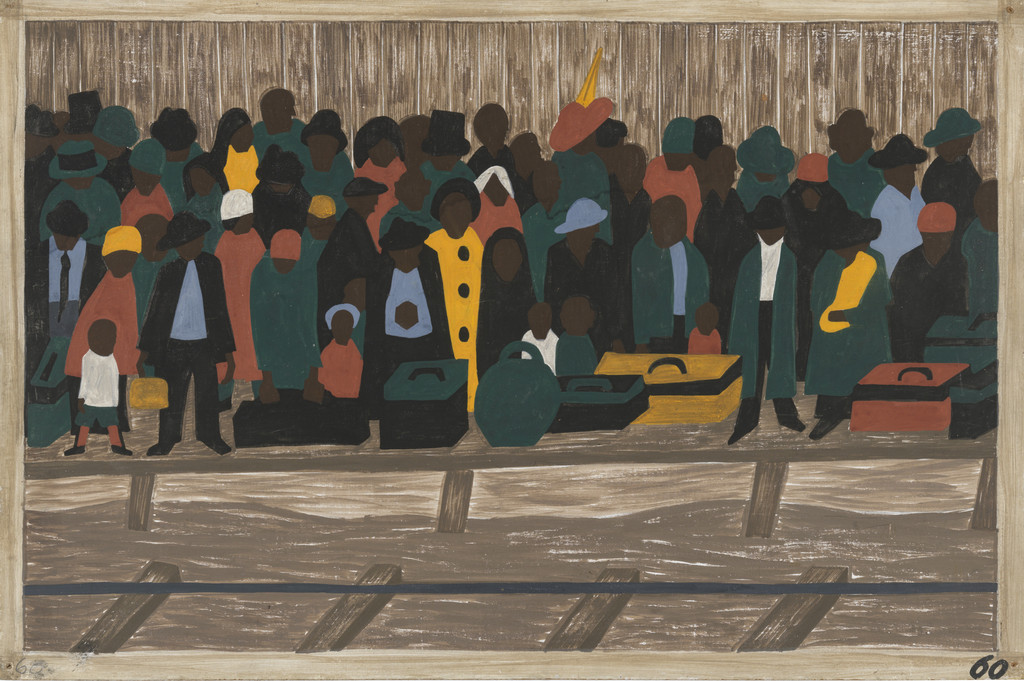
And the migrants kept coming
Jacob Lawrence
1940-41
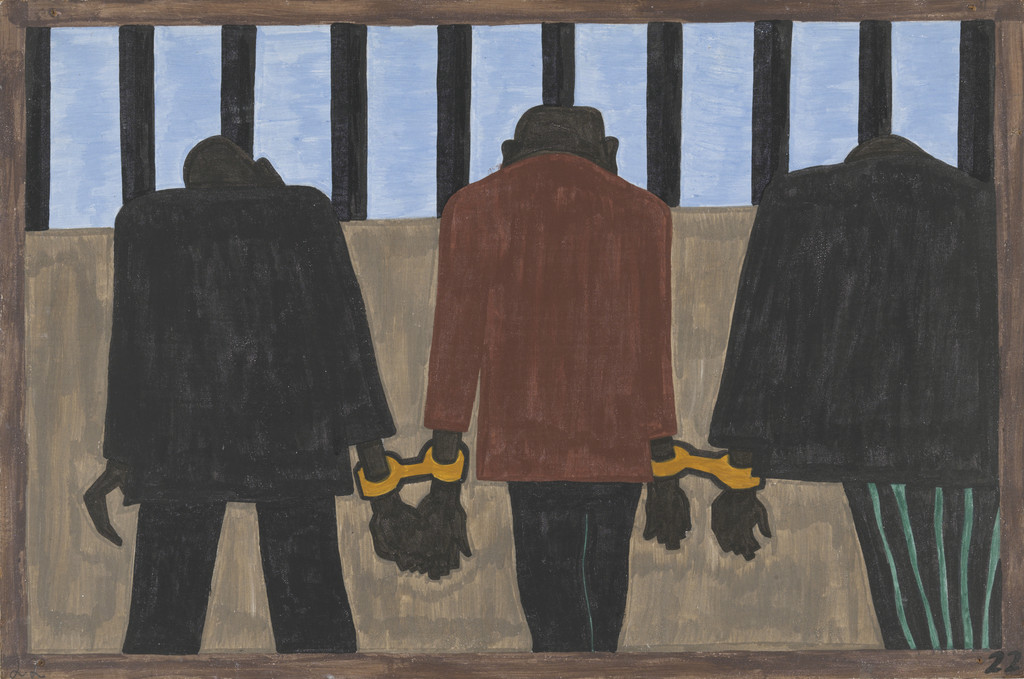
Another of the social causes of the migrants' leaving was...
Jacob Lawrence
1940-41
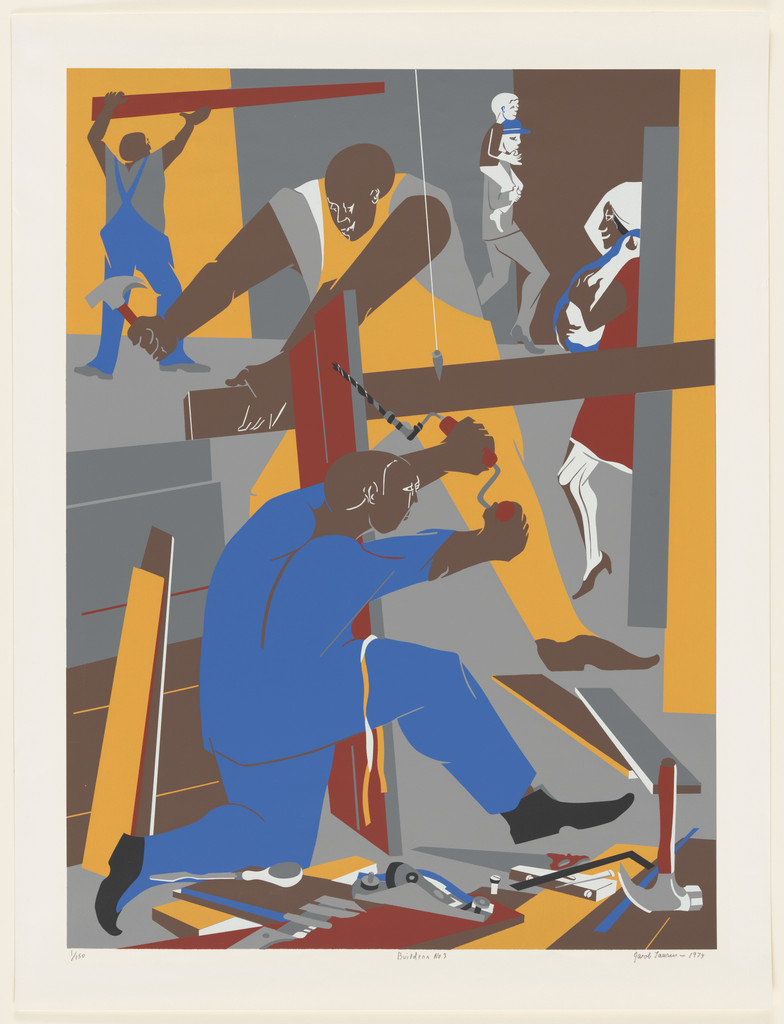
Builders No.3
Jacob Lawrence
1974
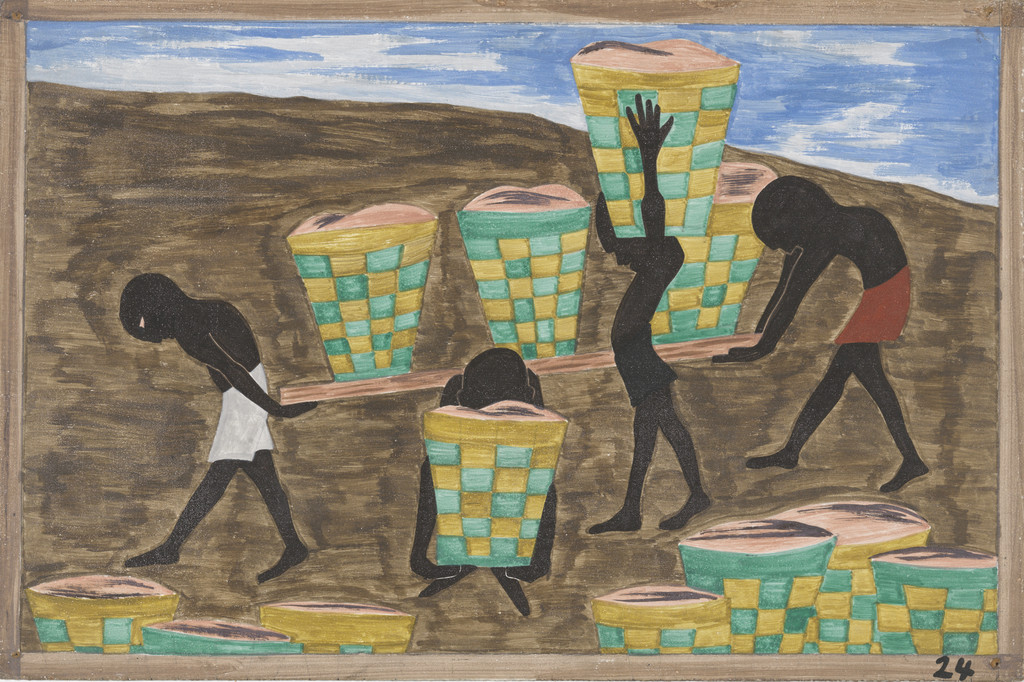
Child labor and a lack of education was one of the other ...
Jacob Lawrence
1940-41
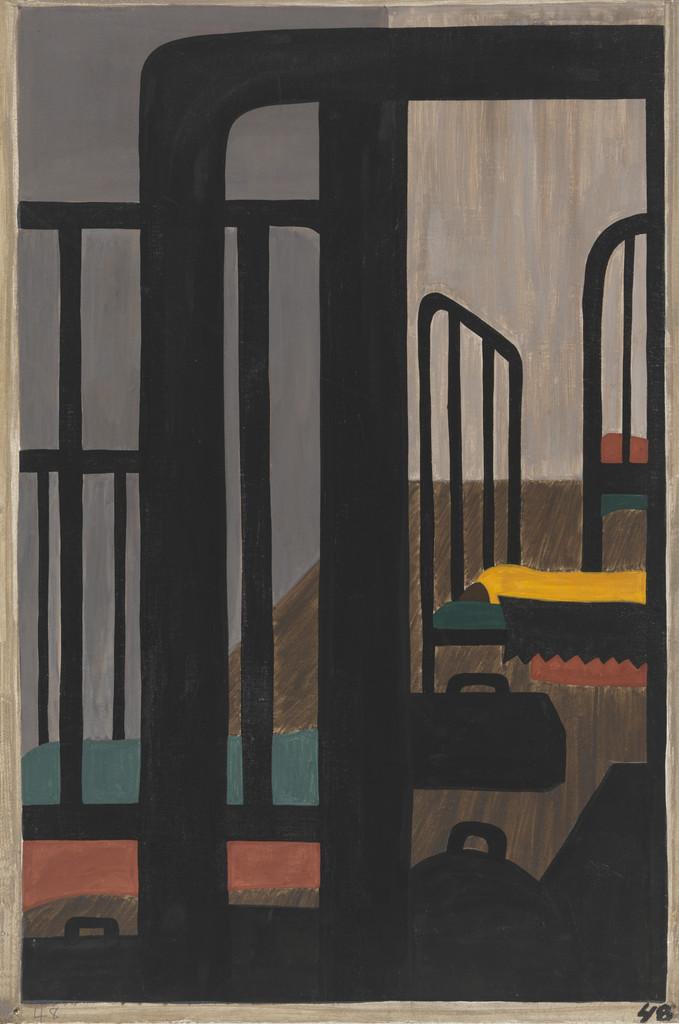
Housing for the Negroes was a very difficult problem
Jacob Lawrence
1940-41
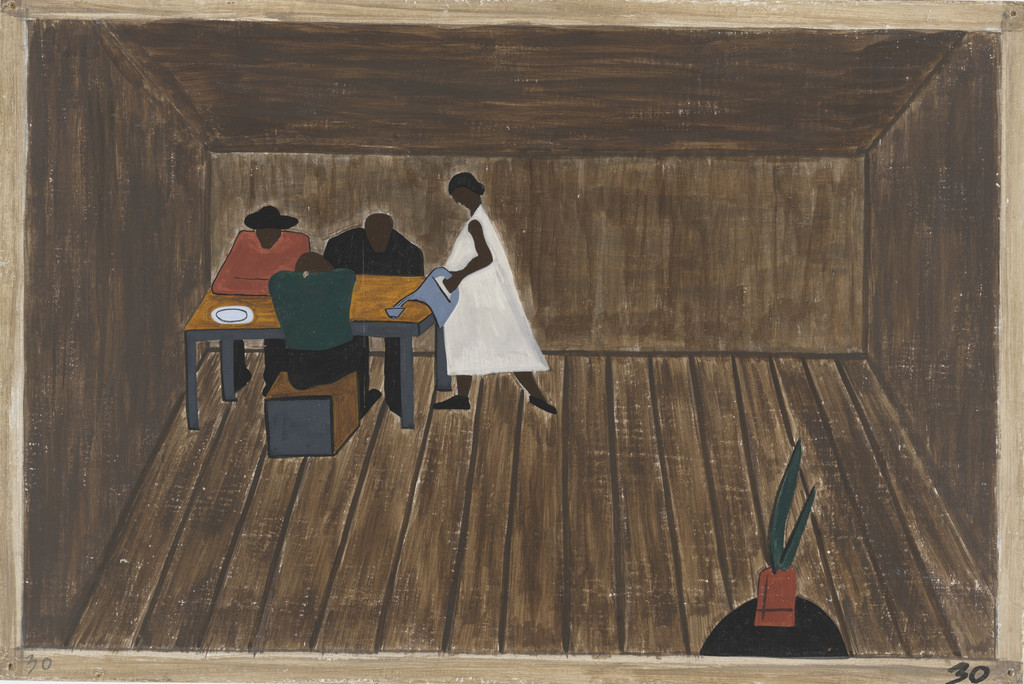
In every home people who had not gone North met and tried...
Jacob Lawrence
1940-41
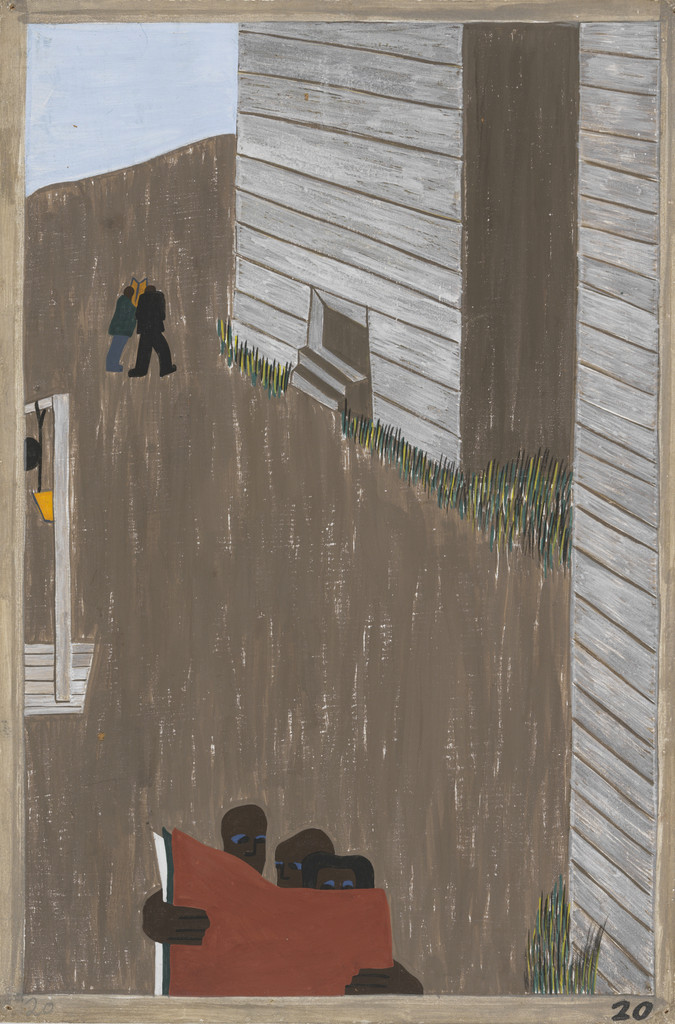
In many of the communities the Negro press was read conti...
Jacob Lawrence
1940-41
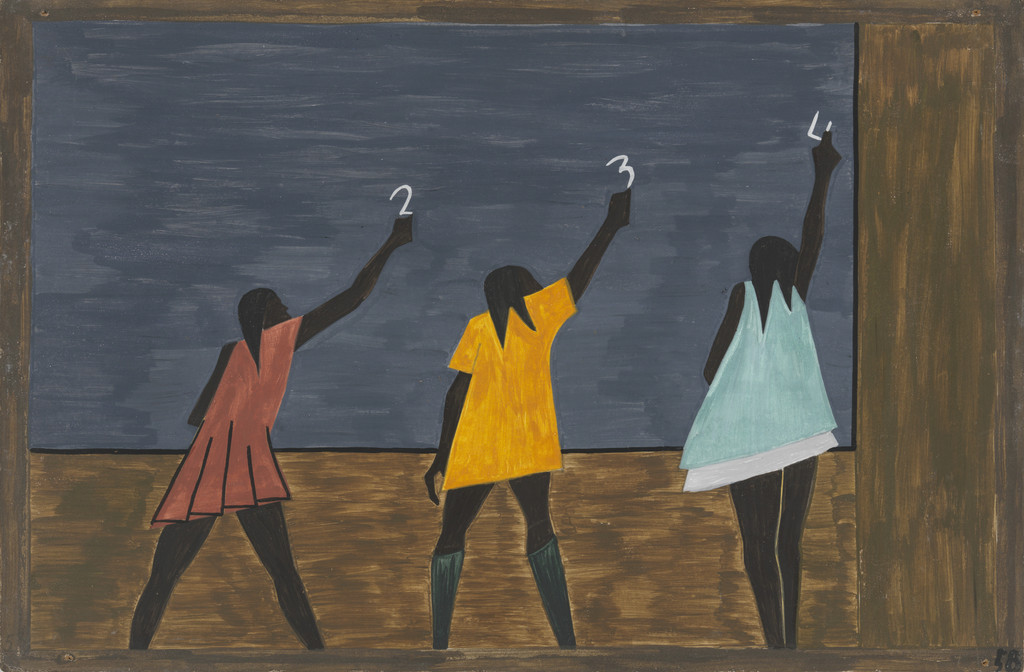
In the North the Negro had better educational facilities
Jacob Lawrence
1940-41
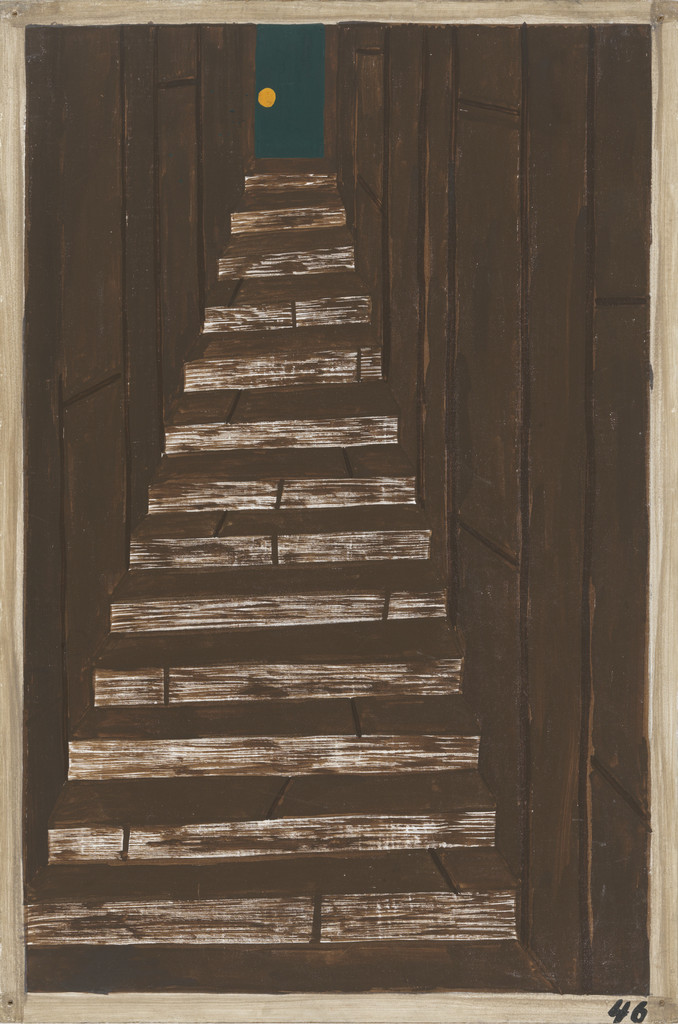
Industries attempted to board their labor in quarters tha...
Jacob Lawrence
1940-41
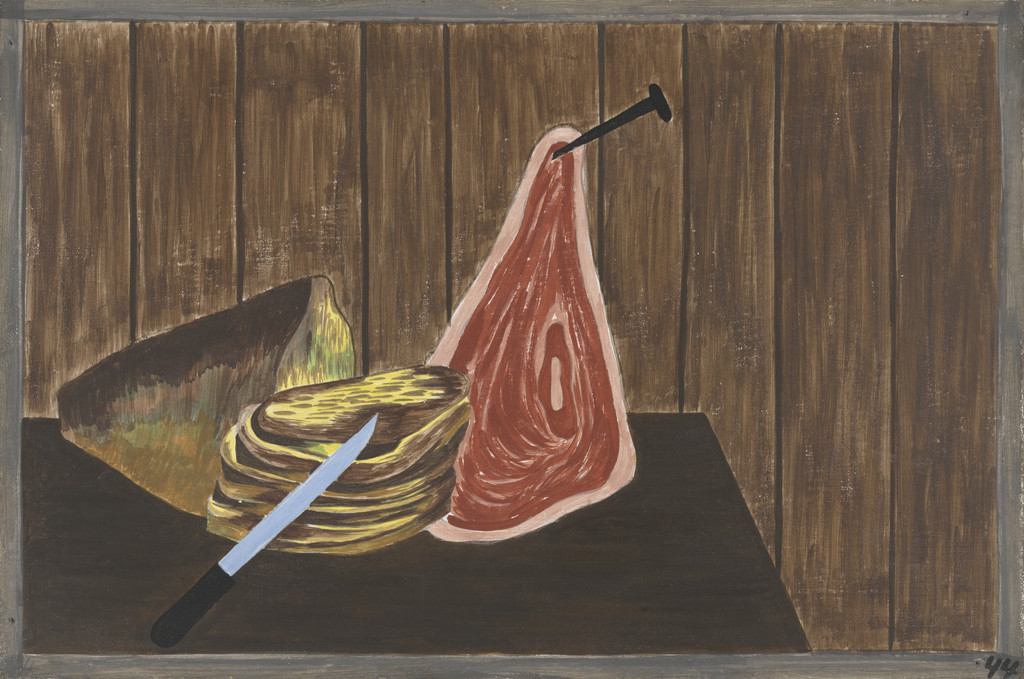
Living conditions were better in the North
Jacob Lawrence
1940-41
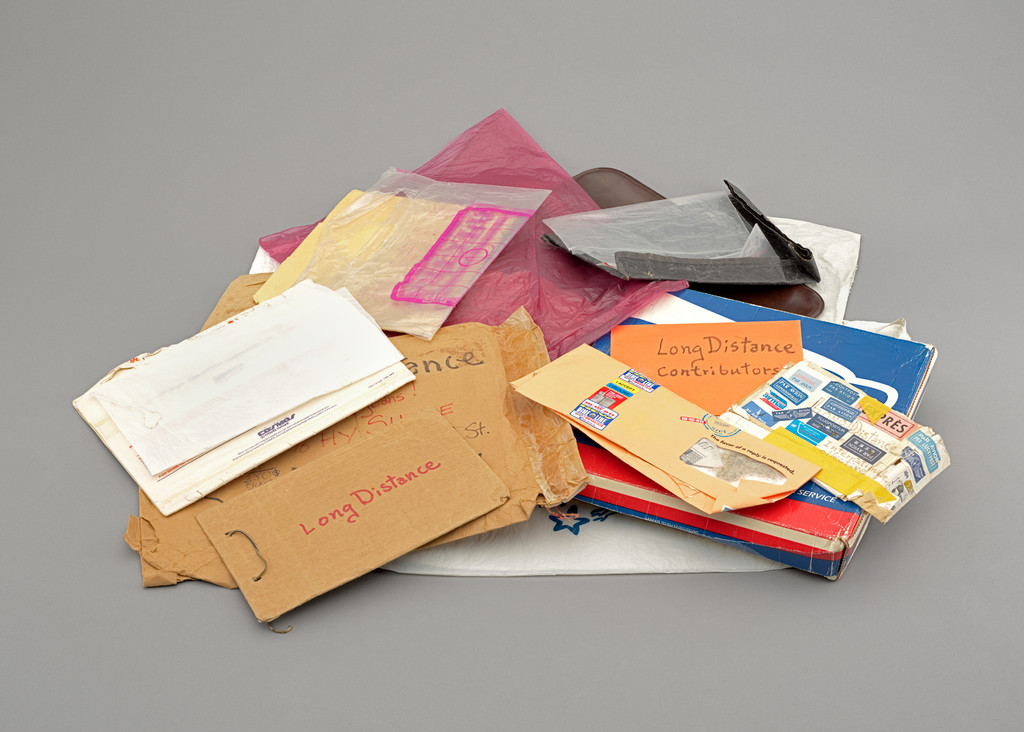
Long Distance
Jim Amaral
1976–2005
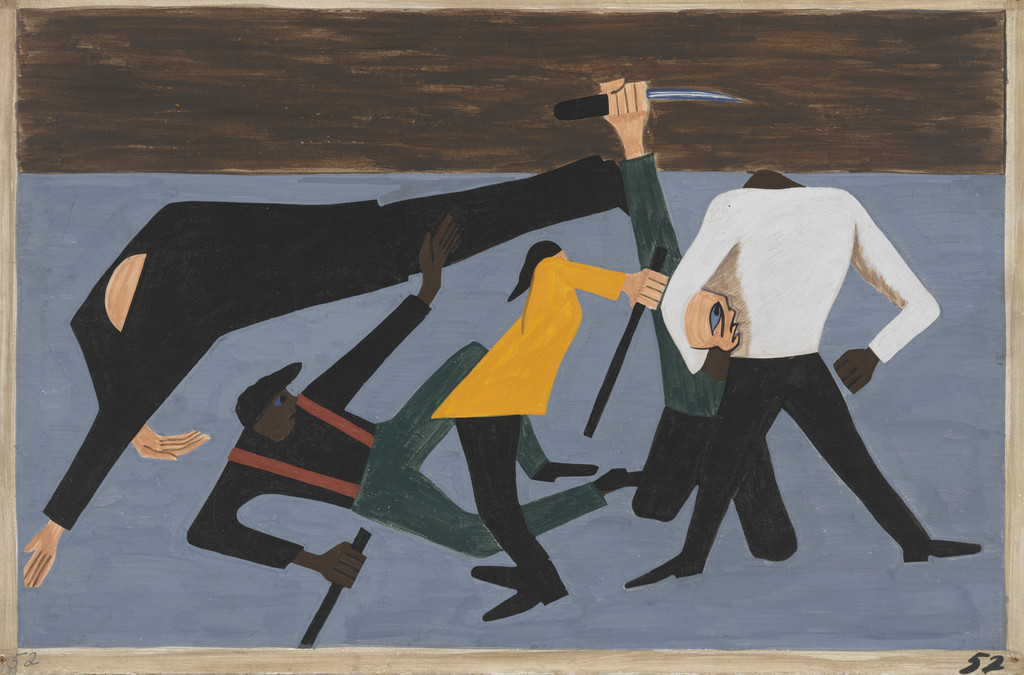
One of the largest race riots occurred in East St. Louis
Jacob Lawrence
1940-41
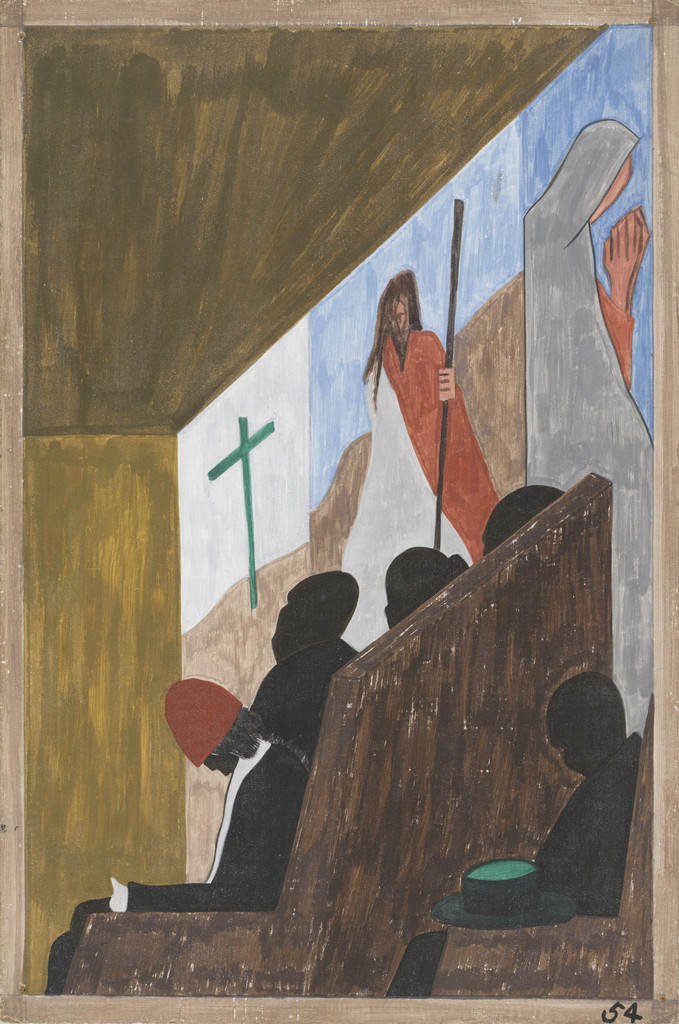
One of the main forms of social and recreational activiti...
Jacob Lawrence
1940-41
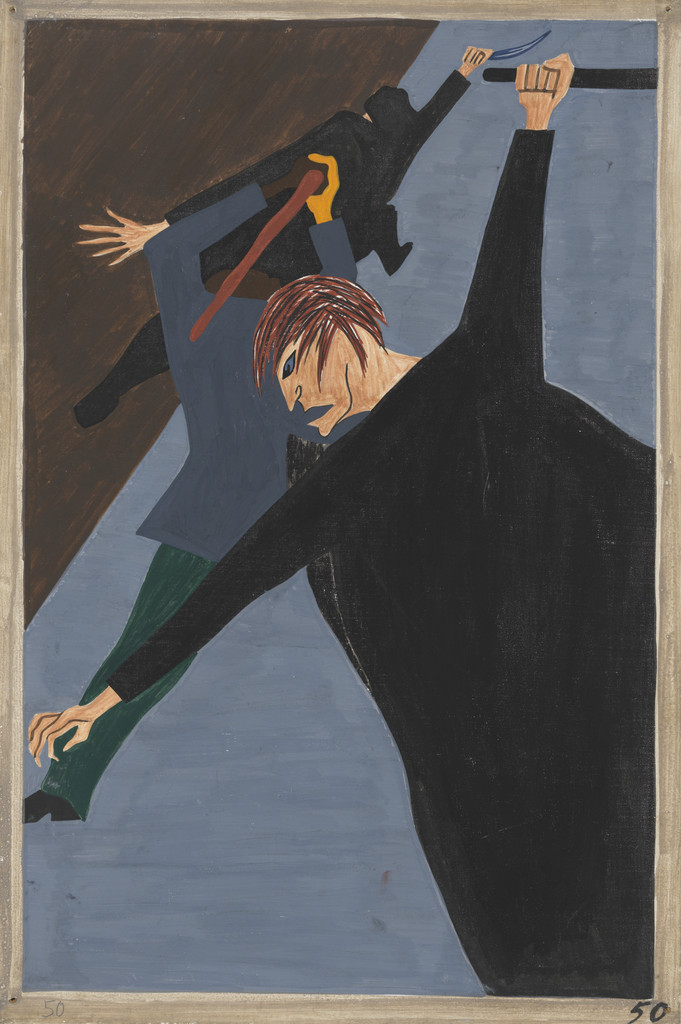
Race riots were very numerous all over the North because ...
Jacob Lawrence
1940-41
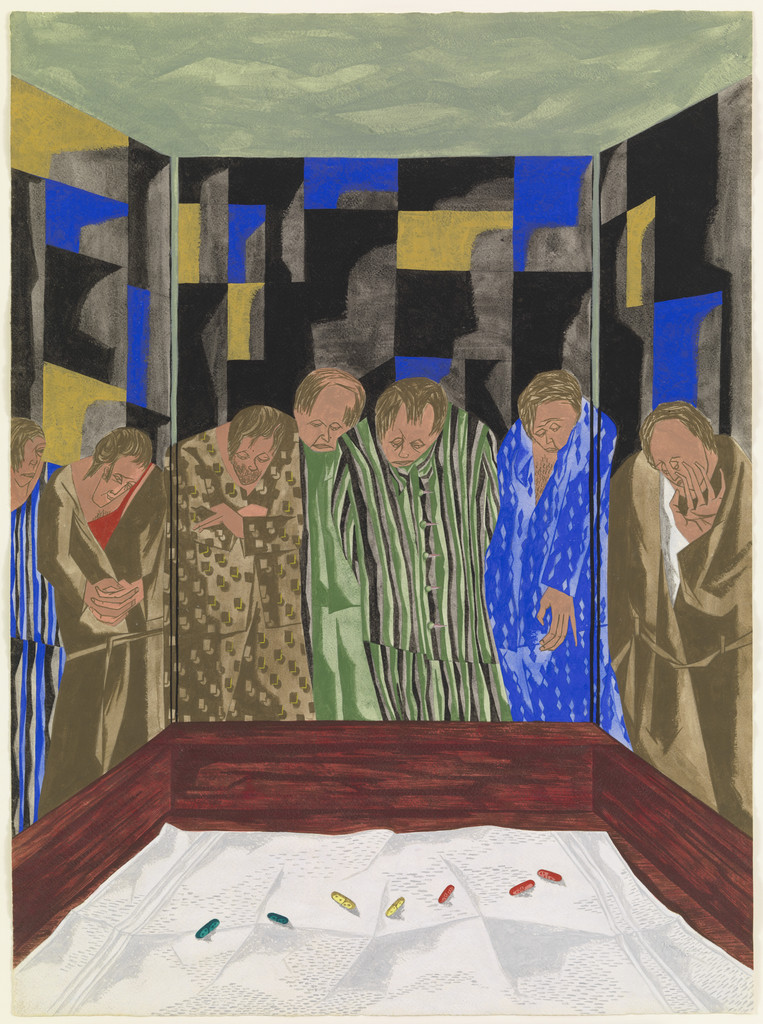
Sedation
Jacob Lawrence
1950
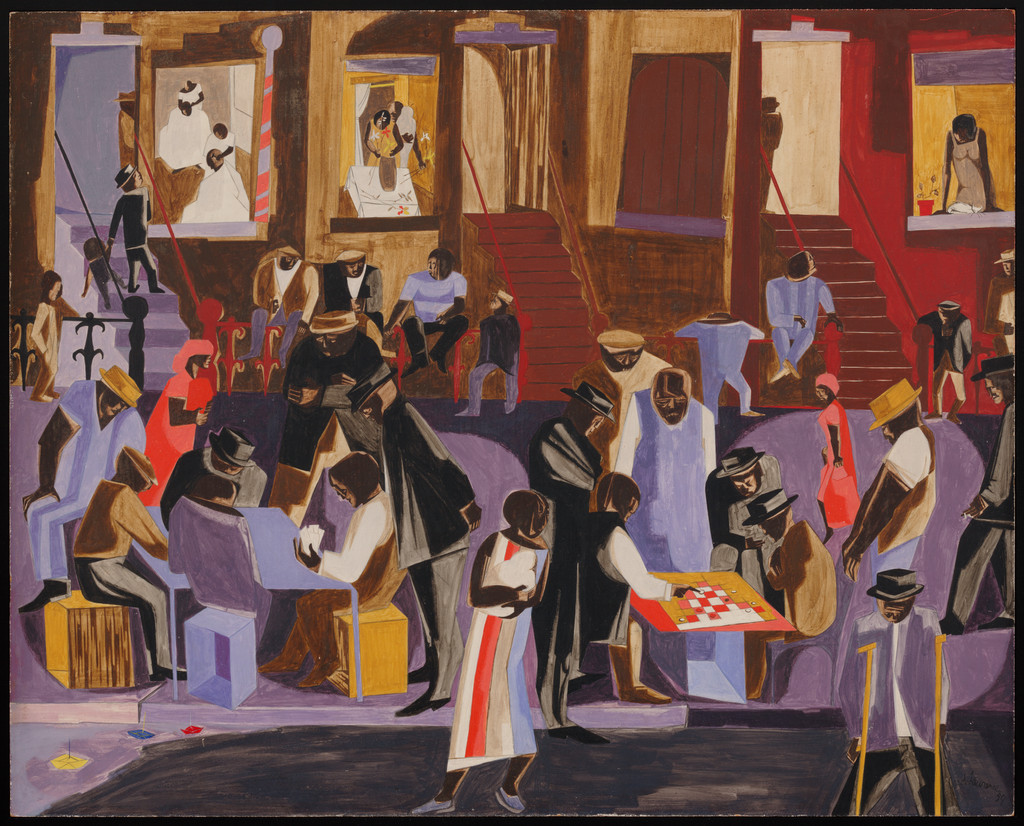
Street Shadows
Jacob Lawrence
1959
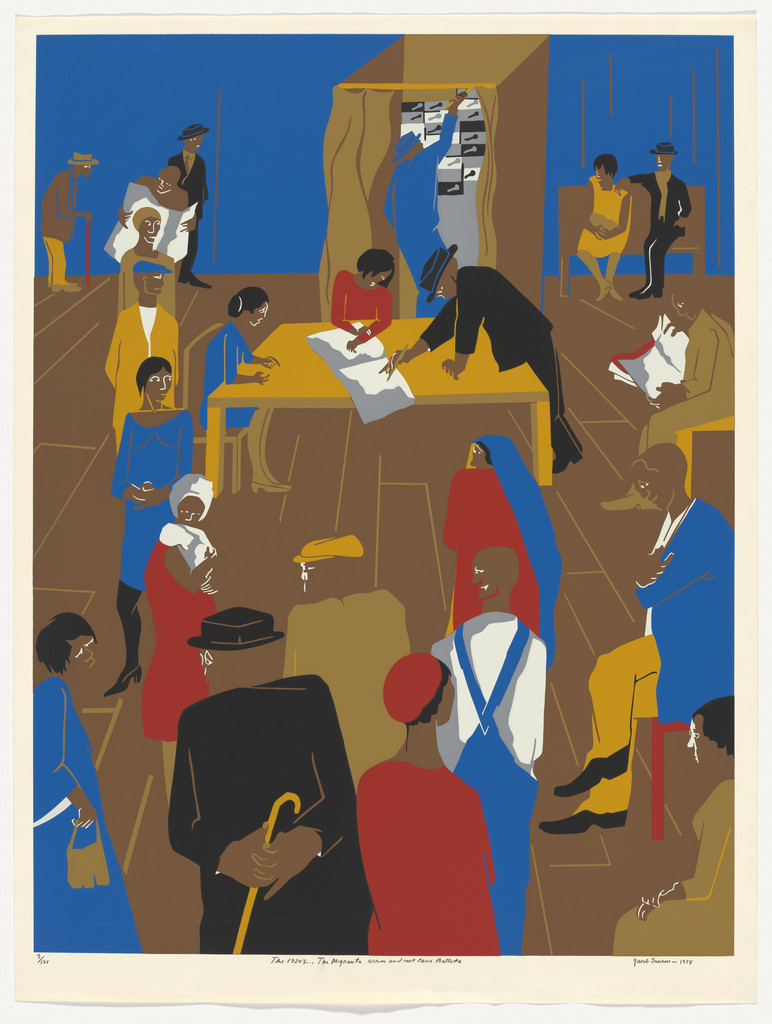
The 1920's ... The Migrants Arrive and Cast Their Ballots...
Jacob Lawrence
1974, published 1975
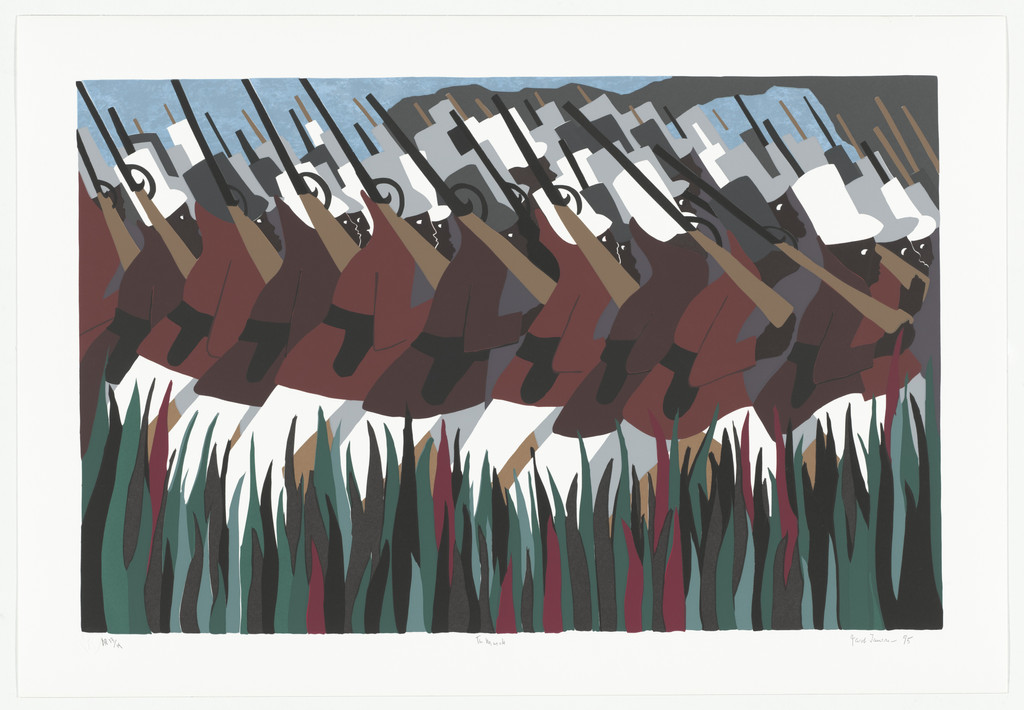
The March from the series The Life of Toussaint L'Ouverture
Jacob Lawrence
1995
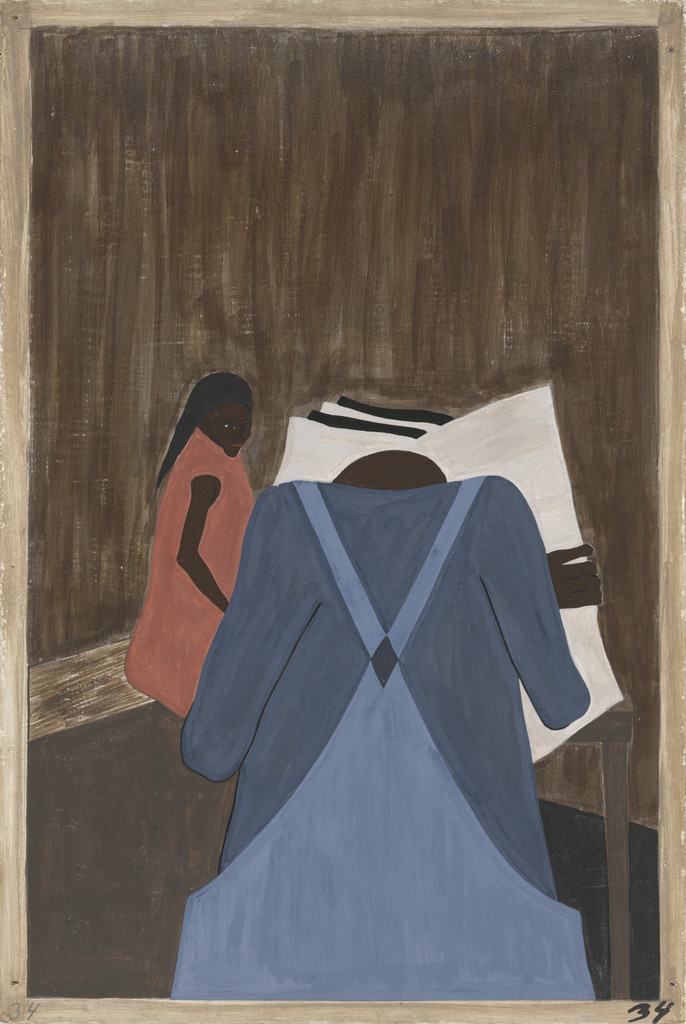
The Negro press was also influential in urging the people...
Jacob Lawrence
1940-41
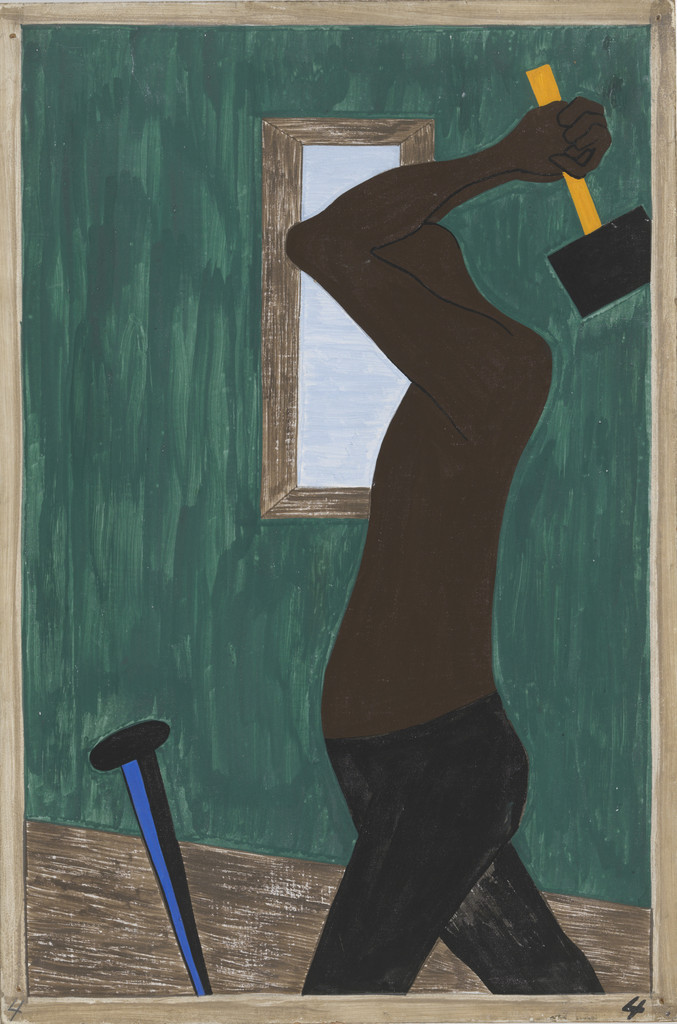
The Negro was the largest source of labor to be found aft...
Jacob Lawrence
1940-41
Exhibitions
8 exhibitionsOct 10, 1944 – Nov 05, 1944
Paintings by Jacob Lawrence
1 artist
Jun 20, 1945 – Feb 13, 1946
The Museum Collection of Painting and Sculpture
174 artists
Dec 23, 1948 – Mar 13, 1949
American Paintings from the Museum Collection
115 artists · 1 curator
Feb 13, 1951 – May 13, 1951
Recent Acquisitions
14 artists · 1 curator
Oct 19, 1954 – Feb 06, 1955
XXVth Anniversary Exhibition: Paintings from the Museum Collection
260 artists
Apr 25, 1961 – Aug 07, 1961
America Seen: Between The Wars
34 artists
Jul 01, 1971 – Sep 27, 1971
The Artist as Adversary
140 artists · 1 curator
Jan 31, 1988 – Apr 19, 1988
Committed to Print
125 artists · 1 curator