
“I felt the great scream in nature.” — Edvard Munch
For Edvard Munch, 1893 was a year of screams. In the fall, the Norwegian artist produced two versions of The Scream, his now iconic image of personal and universal anguish. “You know my picture, The Scream?” he later wrote. “I was being stretched to the limit—nature was screaming in my blood—I was at a breaking point.” The same year, Munch painted The Storm. Set in a coastal village south of Kristiania (now Oslo), where the artist spent many of his summers, the canvas depicts a windswept landscape in which several women stand with their hands pressed against their faces in the same manner as the tormented figure in The Scream. Common to both compositions is a keen interest in the relationship between inward and outward realities. In The Scream, the figure’s silent shriek seems to reverberate through the undulating streaks of brilliant pigment that define the surrounding hills, bay, and sky. Likewise, the gusts of air that sweep across the shoreline in The Storm appear to be at once physical and metaphysical, atmospheric and psychic. In each case, Munch poses a question that he would pursue until his death in 1944: To what extent can artists convey their innermost thoughts and feelings using lines, forms, and colors? By 1893, Munch had contemplated this question for over a decade. Following a difficult childhood in which his mother and sister died of tuberculosis and he himself was often ill, the teenage Munch studied to become an engineer at his father’s urging. Despite excelling in mathematics, physics, and chemistry, it was technical drawing that thrilled him. Eventually, he left the professional school where he had been enrolled, writing in his diary in 1880, “I have decided to become an artist.” Then living in Kristiania, Munch enrolled at the Royal School of Art and Design and soon began to show his paintings alongside the city’s small but dynamic avant-garde. Travels outside of Norway followed, allowing Munch to participate in international exhibitions from Belgium to France to Germany while immersing himself in the art of his predecessors and contemporaries at museums, galleries, studios, and academies throughout Europe. “Here I am in Paris,” the artist wrote to his aunt during one such trip. “I think I’ll go to the Louvre and the Salon today,” he added, referring to the French national art museum and annual art exhibition, respectively. While in Paris, Munch relished his encounters with the works of Pierre Puvis de Chavannes, Paul Gaugin, Vincent van Gogh, Georges Seurat, and others. It was in France in late 1889 and early 1890 that Munch, grieving his father’s death in Norway, outlined his artistic convictions in a passionate manifesto. Art, he declared, should strive to portray subjective experiences—experiences of the most profound joy and pain, the most intense pleasure and sorrow. “Interiors should no longer be painted, no people reading and women knitting,” he wrote, dismissing the late-19th-century taste for neat, tidy pictures of neat, tidy sitting rooms. “They should be living people who breathe and feel, suffer and love.” The representation of “living people,” Munch believed, would resonate with viewers who felt alienated by modern, urban life. “People would understand the holy, the powerful in this and they would take off their hat as if in a church,” he predicted. “I want to depict a series of such pictures.” The artist embarked on this series right away, producing a web of interrelated works that he eventually would refer to as “The Frieze of Life.” Returning continuously to select subjects—embracing couples, alluring women, despondent men—Munch sought to delineate the course of romantic love as he saw it, from desire to despair. Printmaking was vital to Munch’s Frieze of Life, and to his artistic practice more broadly. He produced his first print, Puberty (The Young Model), in 1894, as artists around the world were developing new printmaking techniques and revisiting existing ones. Munch would do both during his career, ultimately creating over 750 distinct graphic compositions through an array of processes. Like his peers, Munch was attracted to the possibility of generating multiple printed impressions from a single matrix: a physical surface, such as a metal plate, a wooden block, or a lithographic stone, that transfers ink to paper. The Frieze of Life, he realized, could reach a wider audience through prints than through paintings. Moreover, moving between mediums and materials allowed Munch to continually repeat, revise, and reimagine his favorite subjects, articulating the ever-shifting emotions that he considered central to art and life. In a lithographic rendition of The Scream from 1895, for instance, Munch abandoned the screeching hues of his other versions in pastel, oil, tempera, and crayon in favor of simple black stripes. Somber and stark, these marks accentuate the visual meld between the figure and the barren landscape beyond, a quality underscored by the handwritten caption below the image: “I felt the great scream in nature.” For Munch, this was the premise of all great art—“I felt.”
Annemarie Iker, independent scholar, 2020
Works in Collection
73 works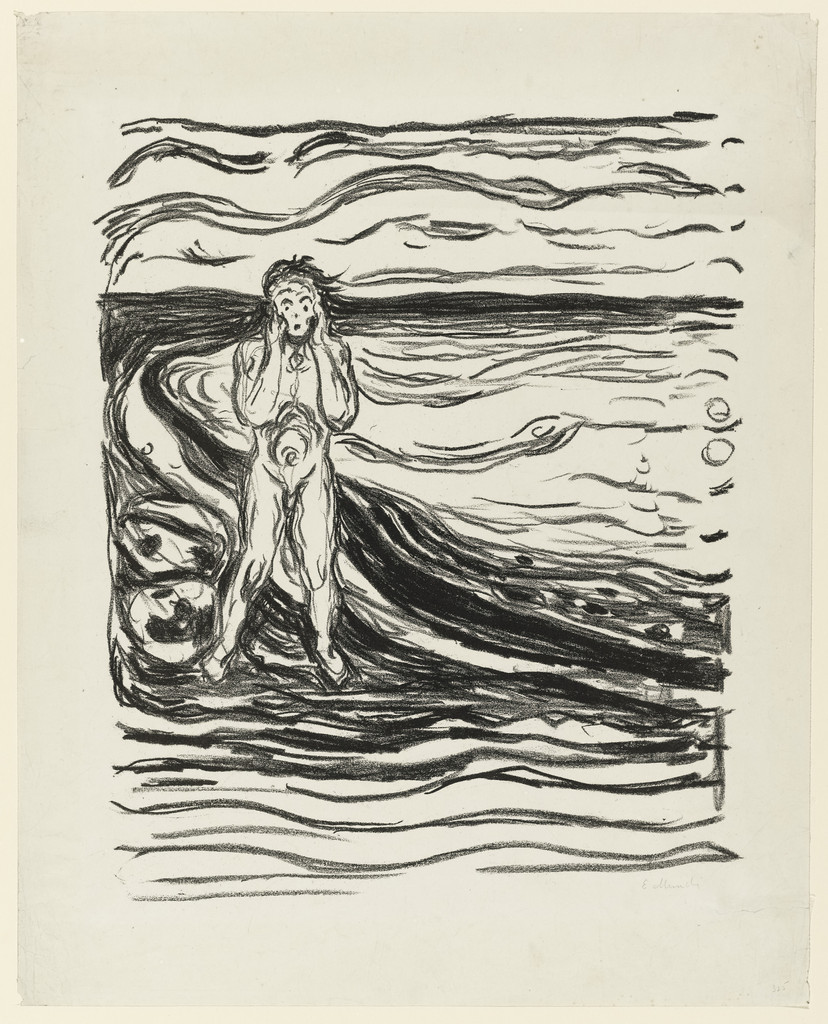
Alpha's Despair (Alfas fortvilelse)
Edvard Munch
1908-09
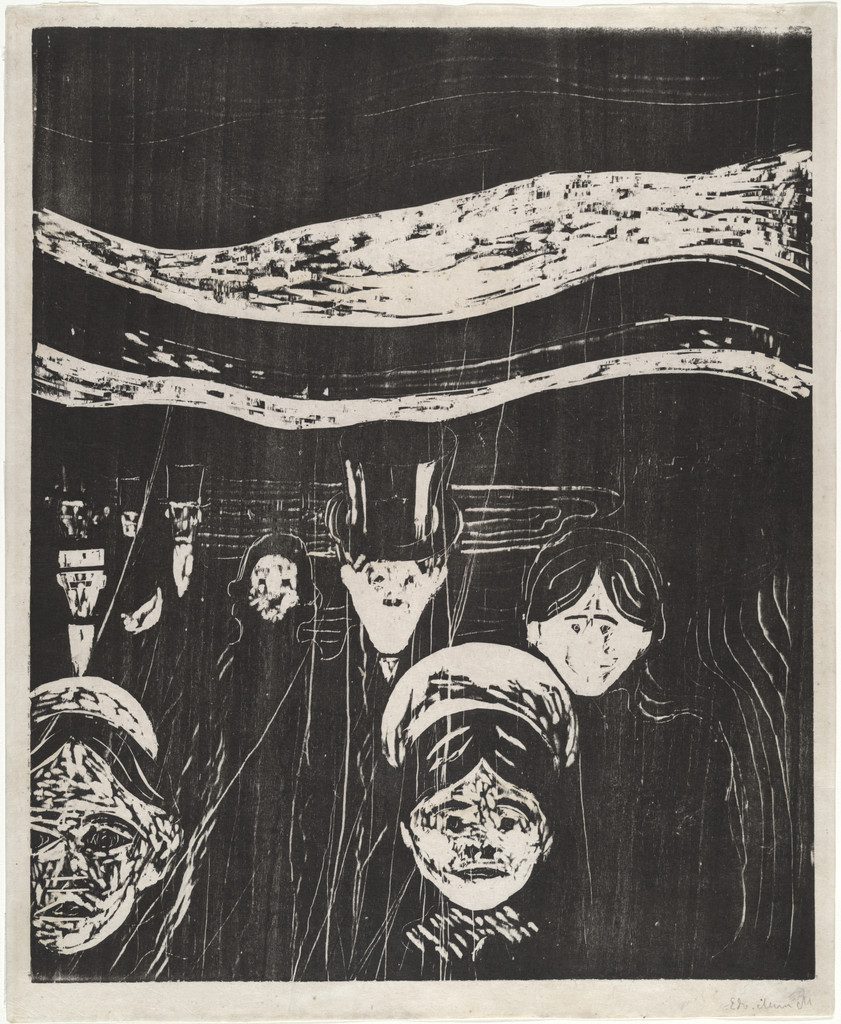
Angst
Edvard Munch
1896
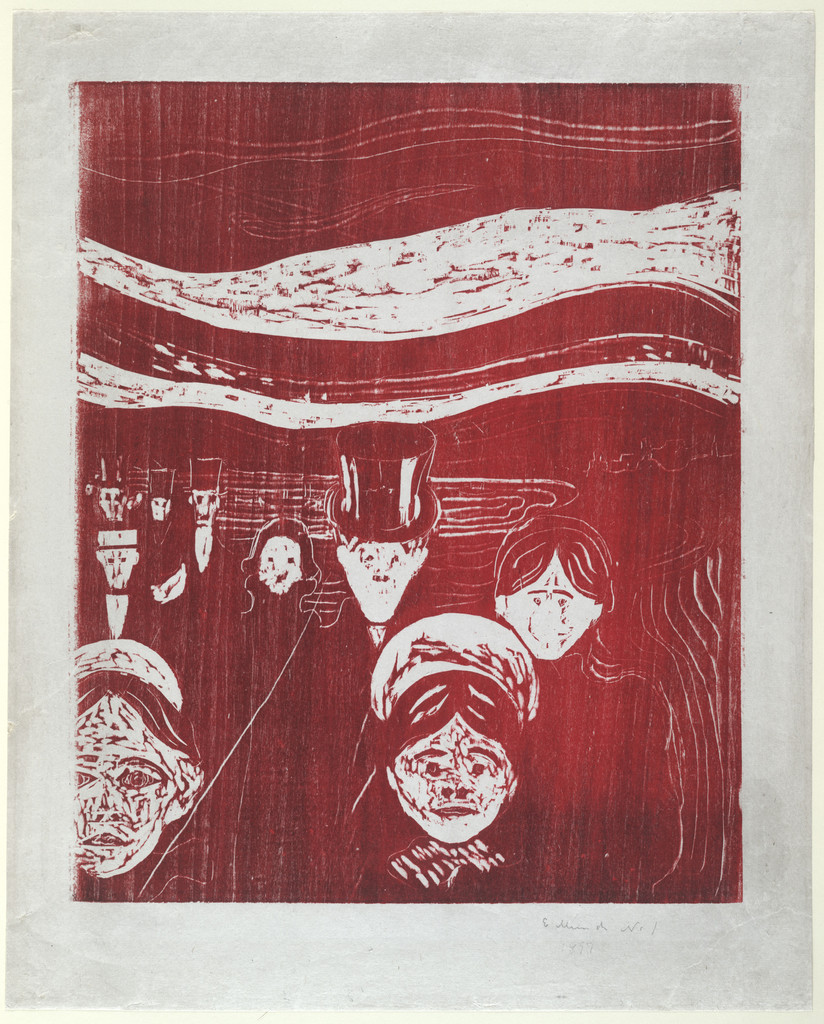
Angst
Edvard Munch
1896, signed 1897
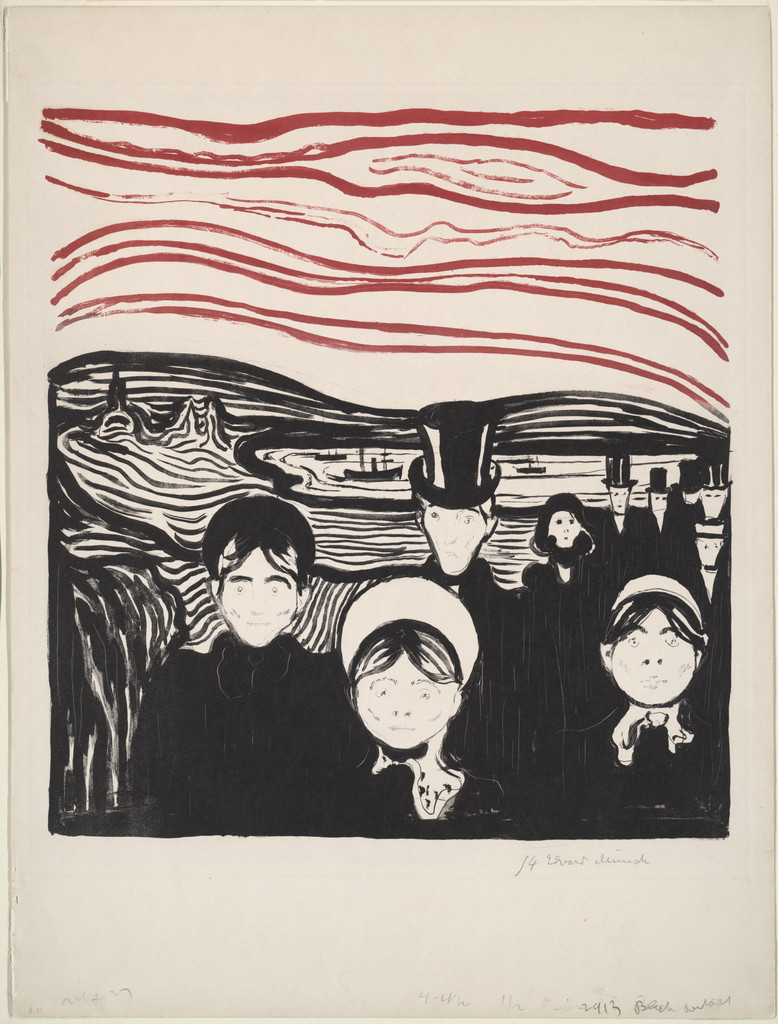
Anxiety
Edvard Munch
1896
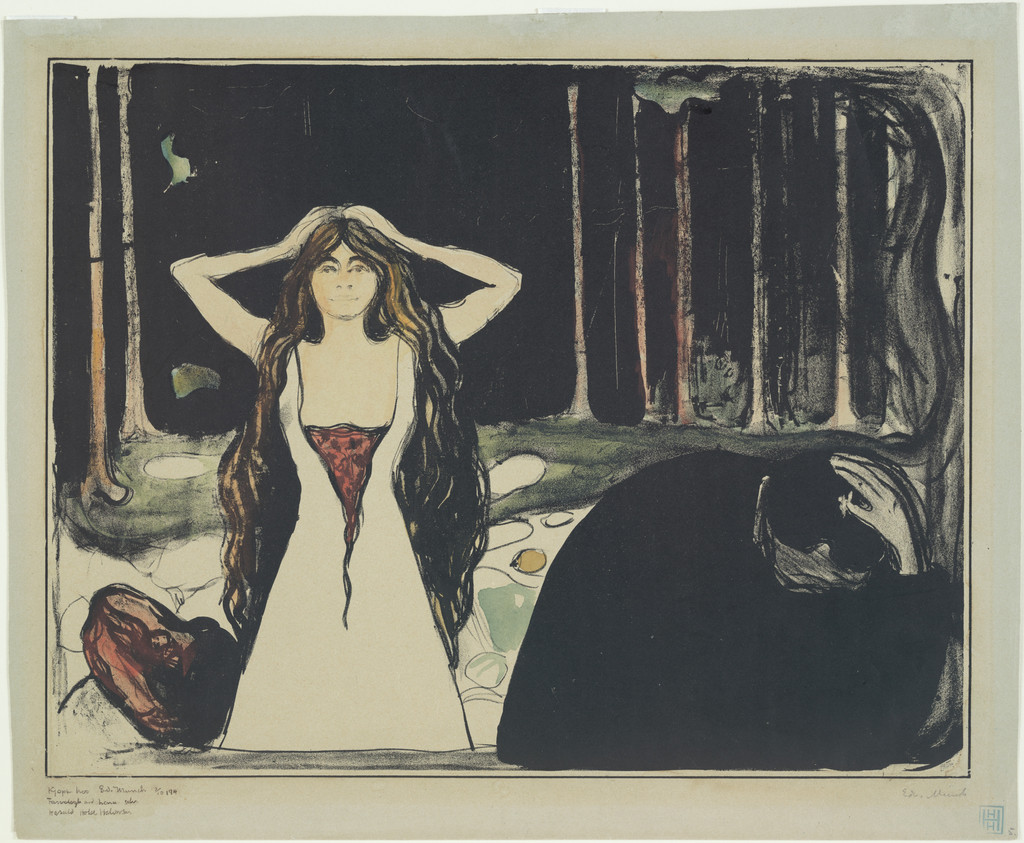
Ashes II (Aske II)
Edvard Munch
1899
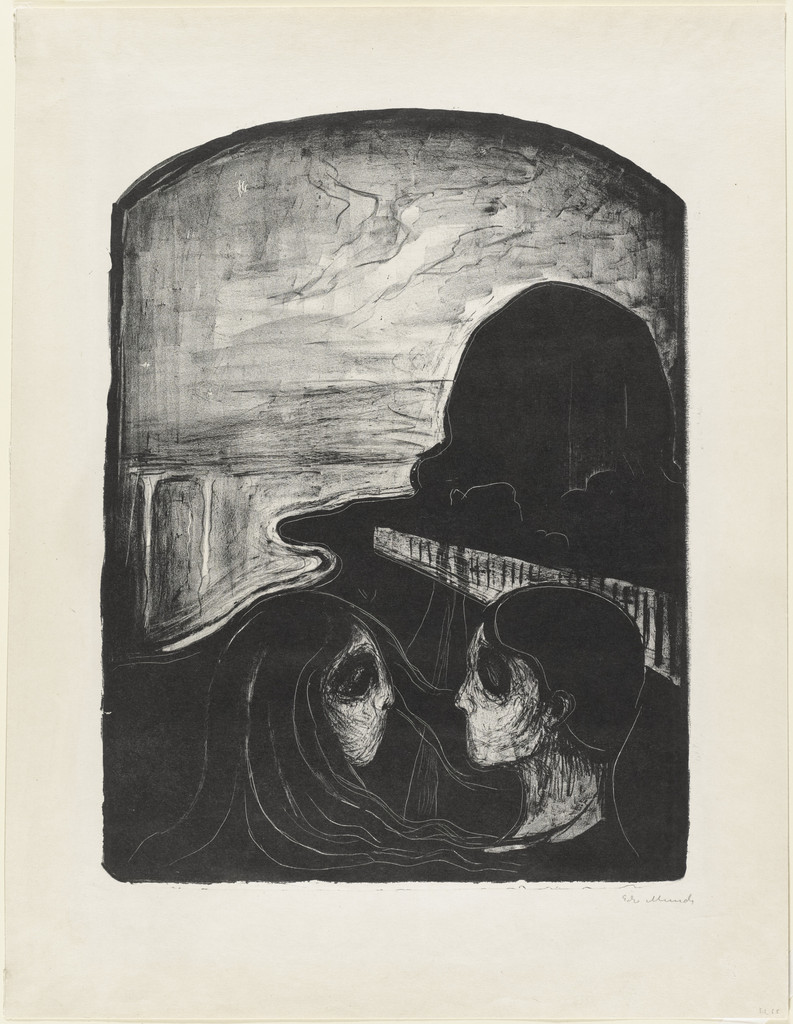
Attraction I (Tiltrekning I)
Edvard Munch
1896
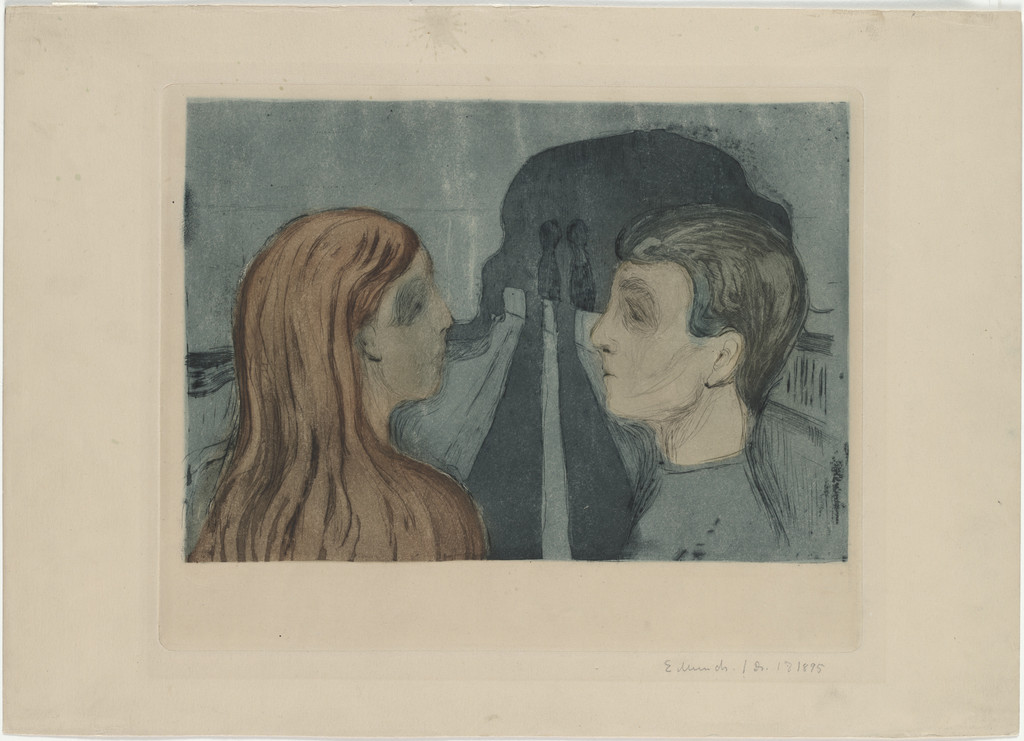
Attraction II (Tiltrekning II)
Edvard Munch
1895
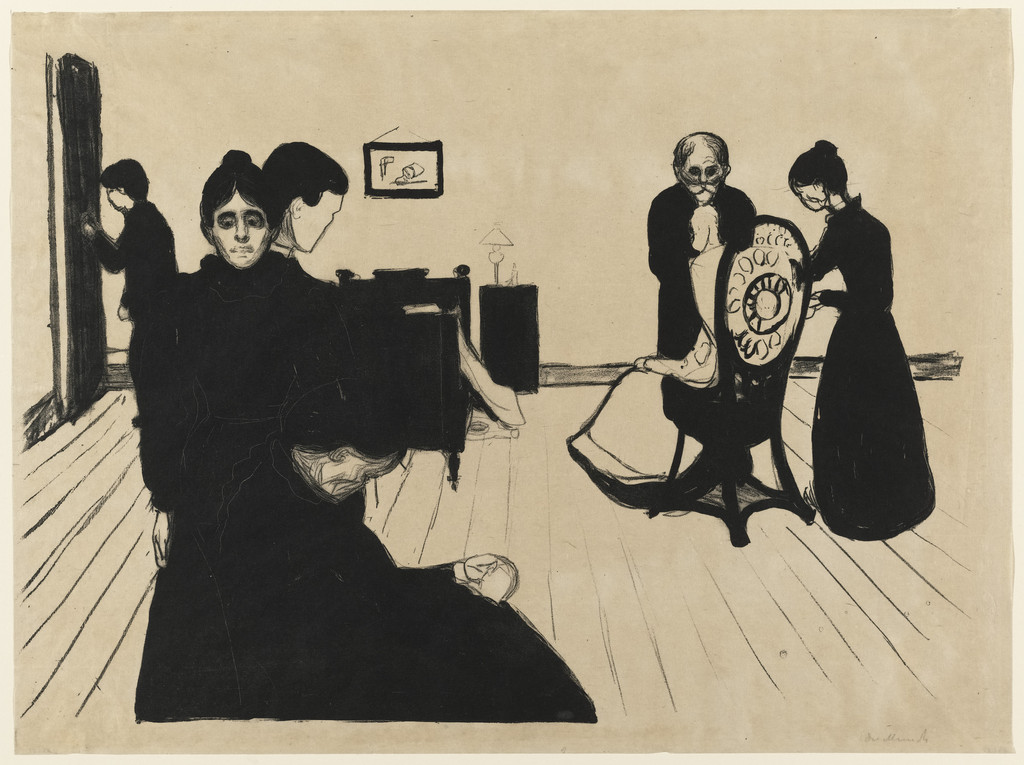
Death in the Sickroom (Døden i sykeværelset)
Edvard Munch
1896
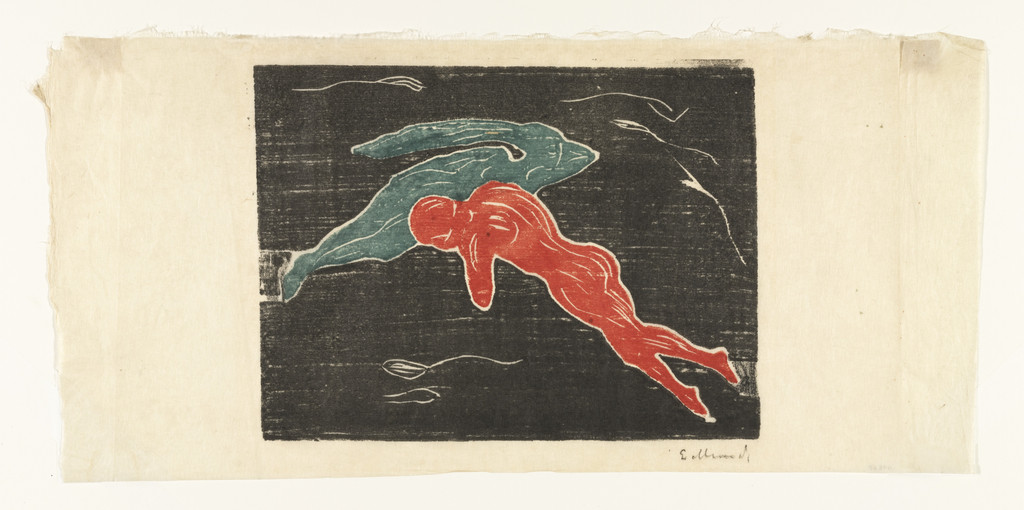
Encounter in Space (Møte i verdensrommet)
Edvard Munch
1898–99
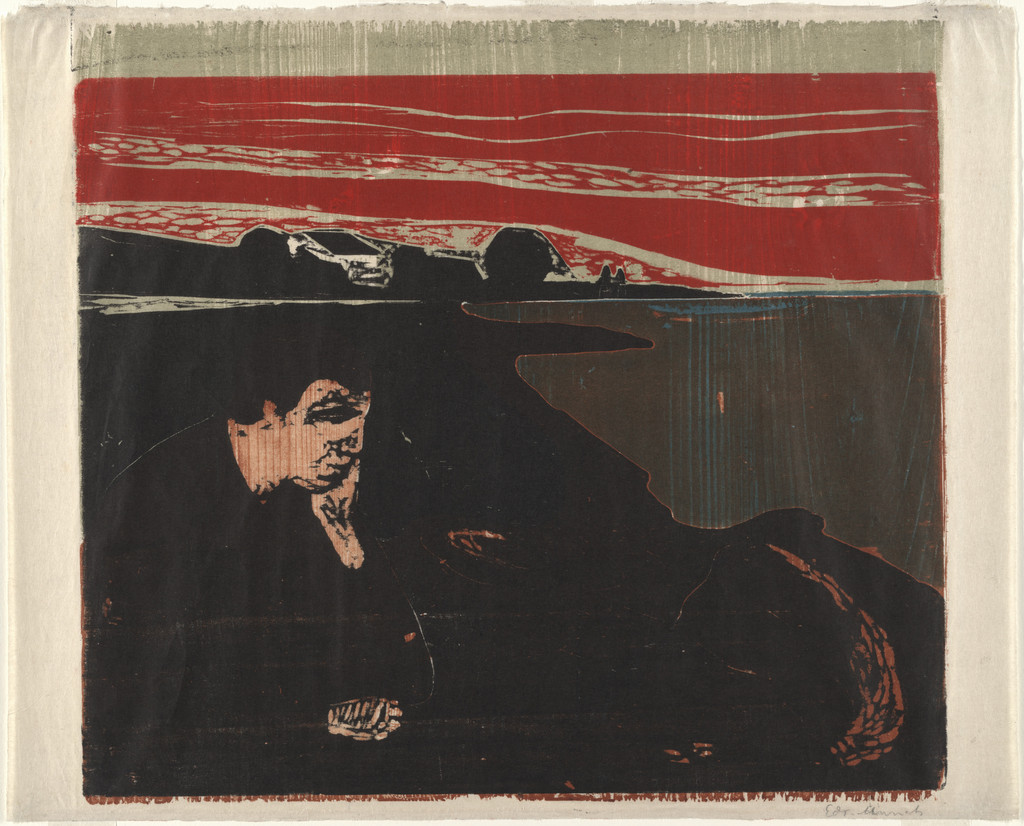
Evening. Melancholy I (Aften. Melankoli I)
Edvard Munch
1896
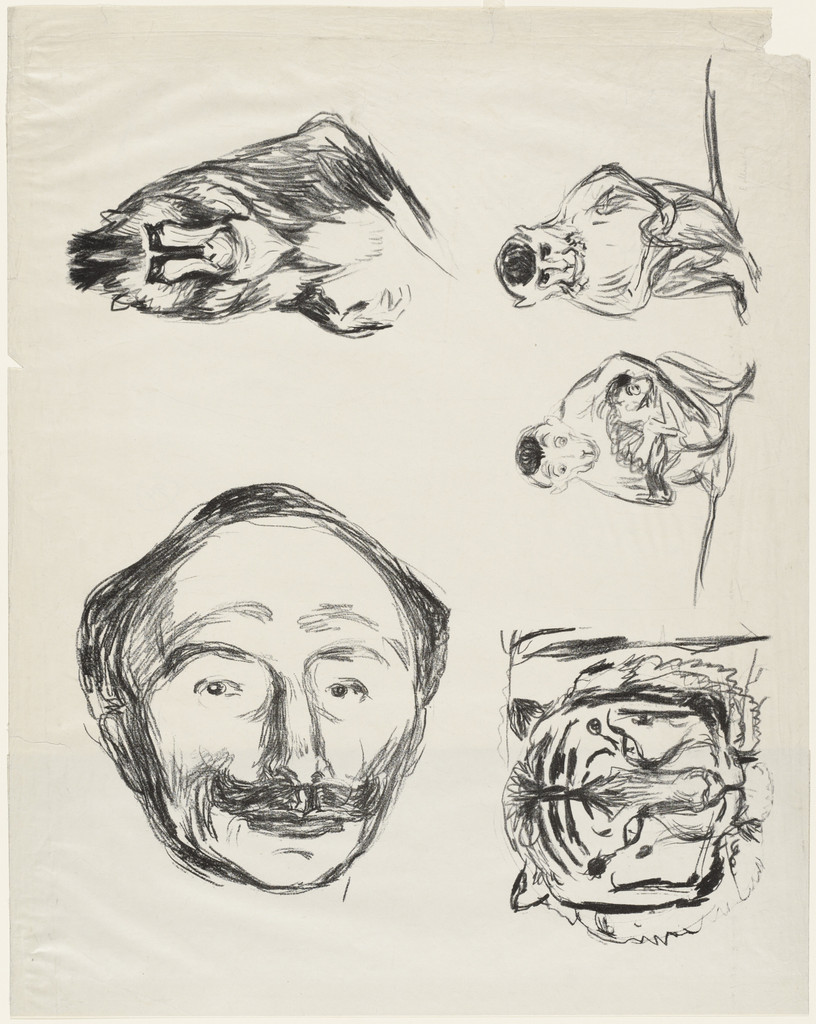
Four Studies (Portrait of Goldstein, Gorilla, Family of M...
Edvard Munch
1908-09
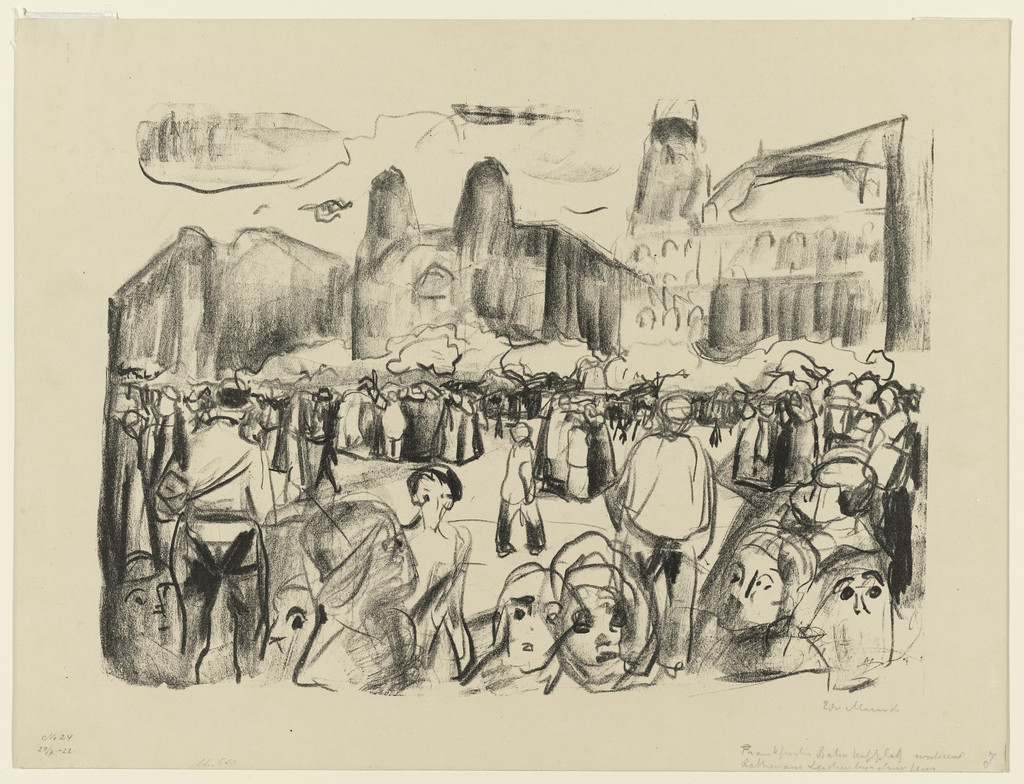
Frankfurter Bahnhofsplatz during Rathenau's Funeral
Edvard Munch
1920
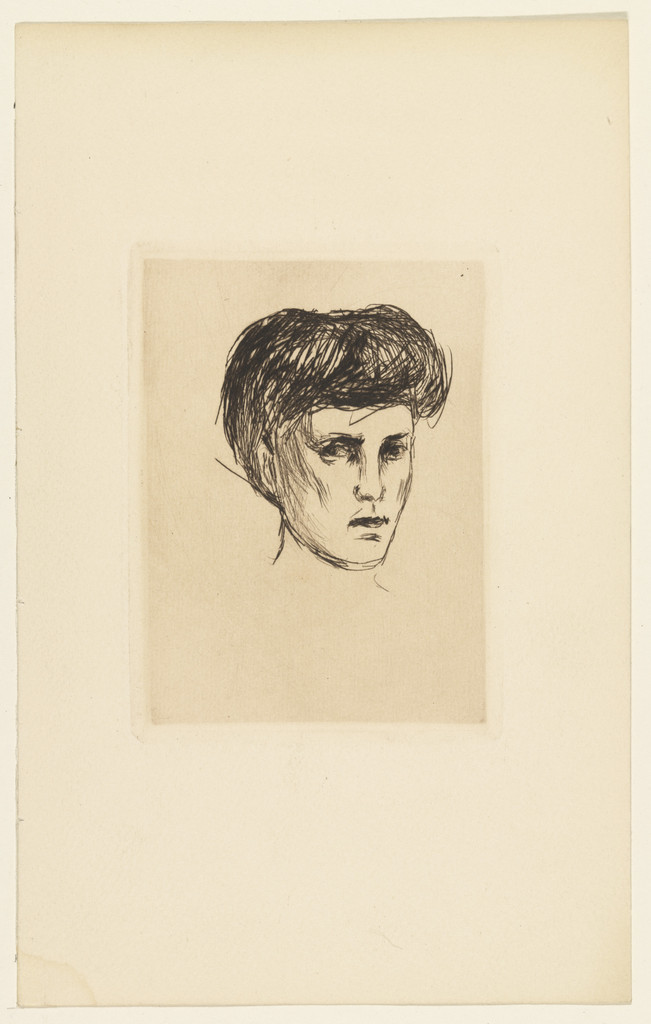
Head of a Girl
Edvard Munch
1907
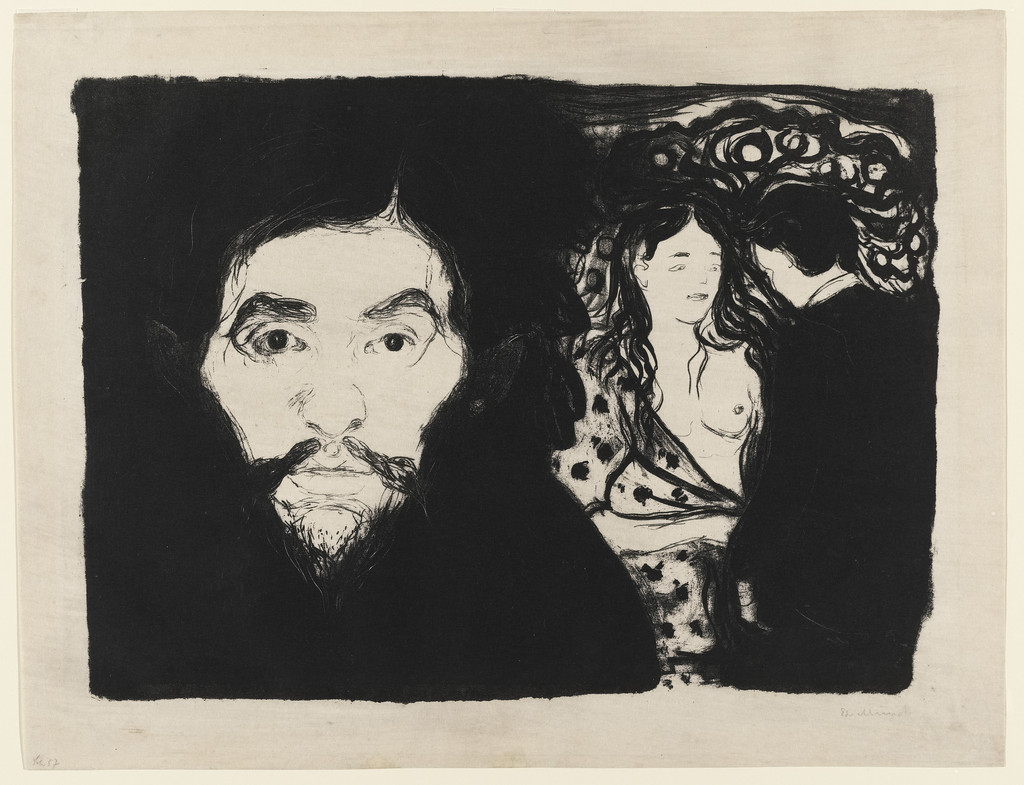
Jealousy I (Sjalusi I)
Edvard Munch
1896
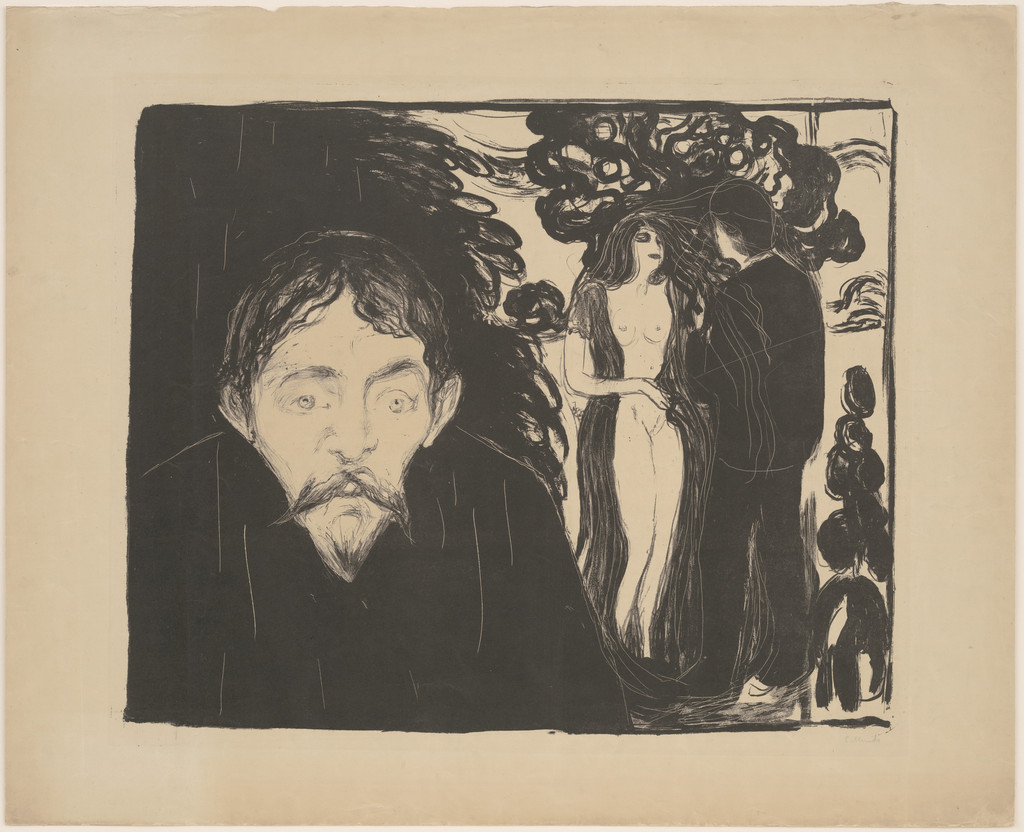
Jealousy II (Sjalusi II)
Edvard Munch
1896
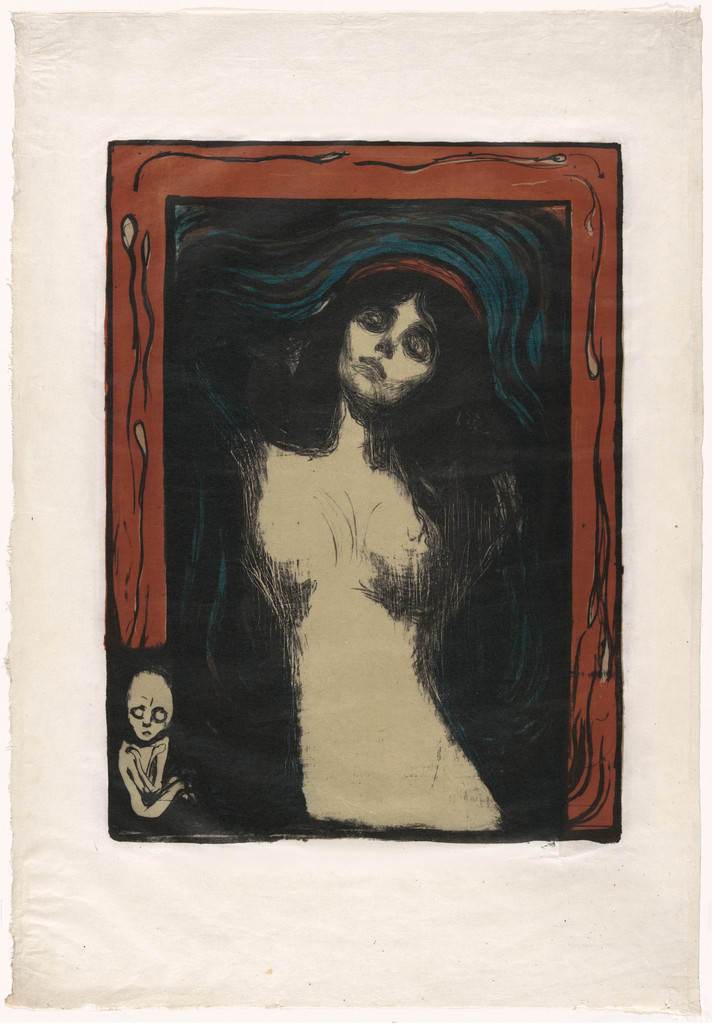
Madonna
Edvard Munch
1895–1902
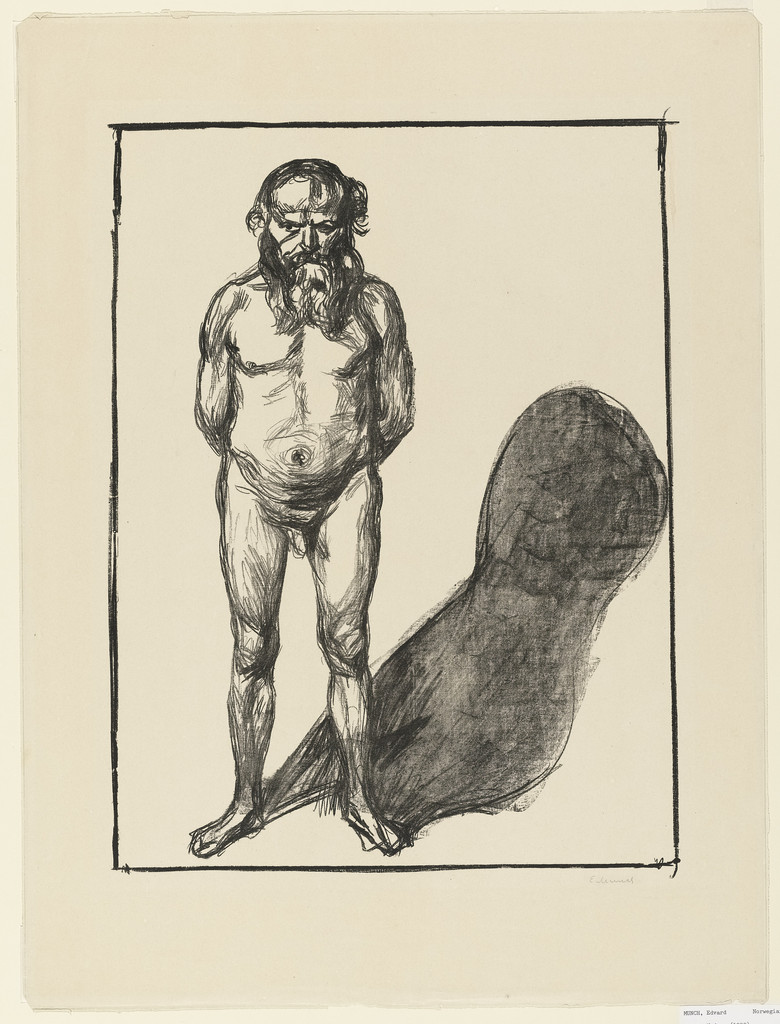
Male Nude (Mannsakt)
Edvard Munch
1902
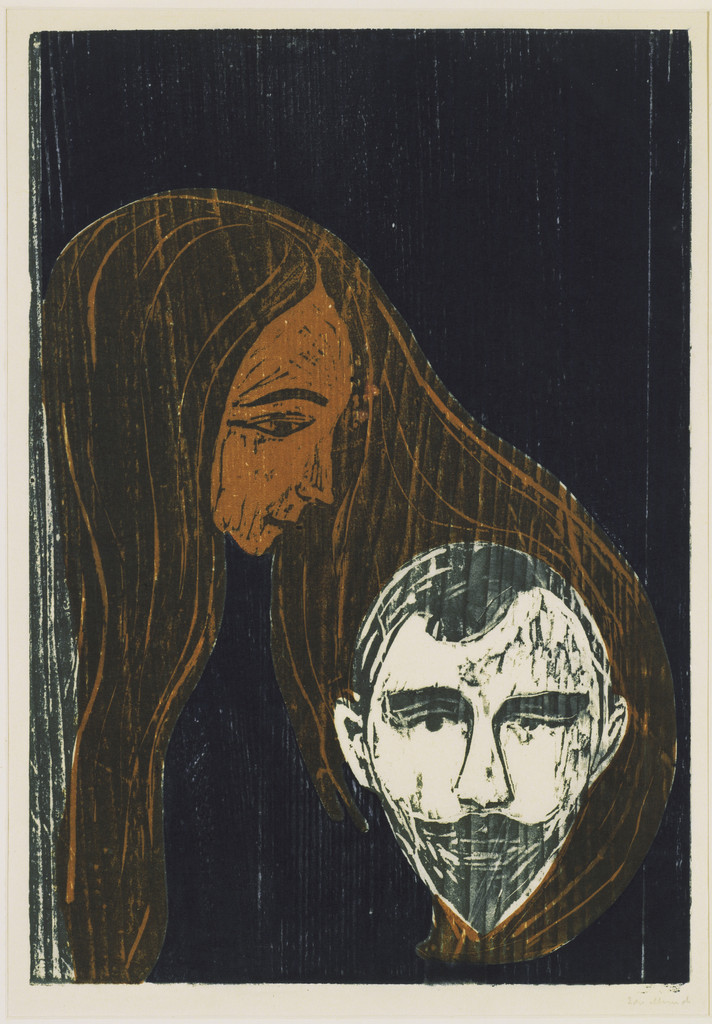
Man's Head in Woman's Hair (Mannshode i Kvinnehår)
Edvard Munch
1896
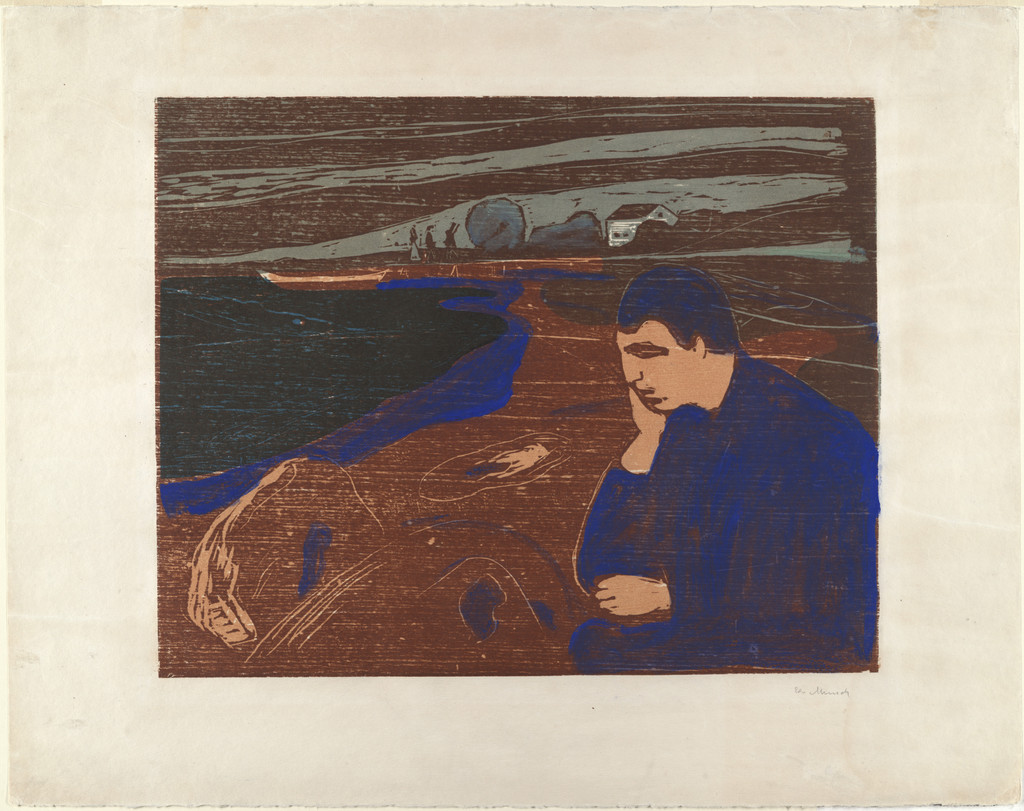
Melancholy III (Melankoli III)
Edvard Munch
1902
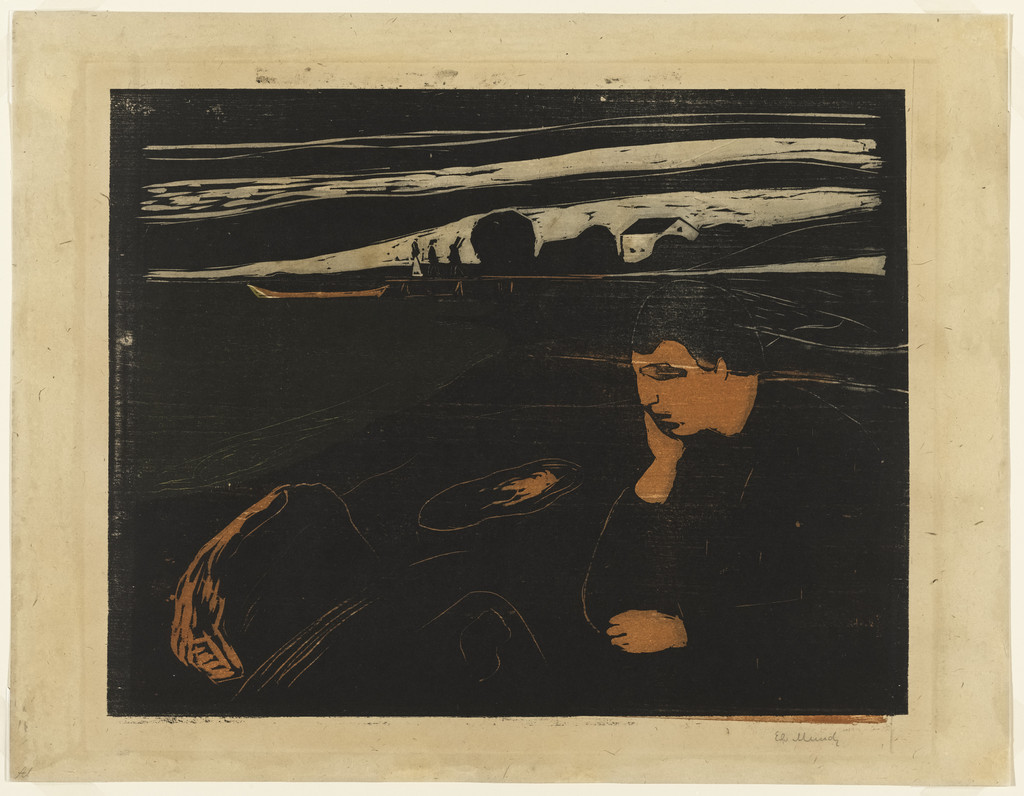
Melancholy III (Melankoli III)
Edvard Munch
1902
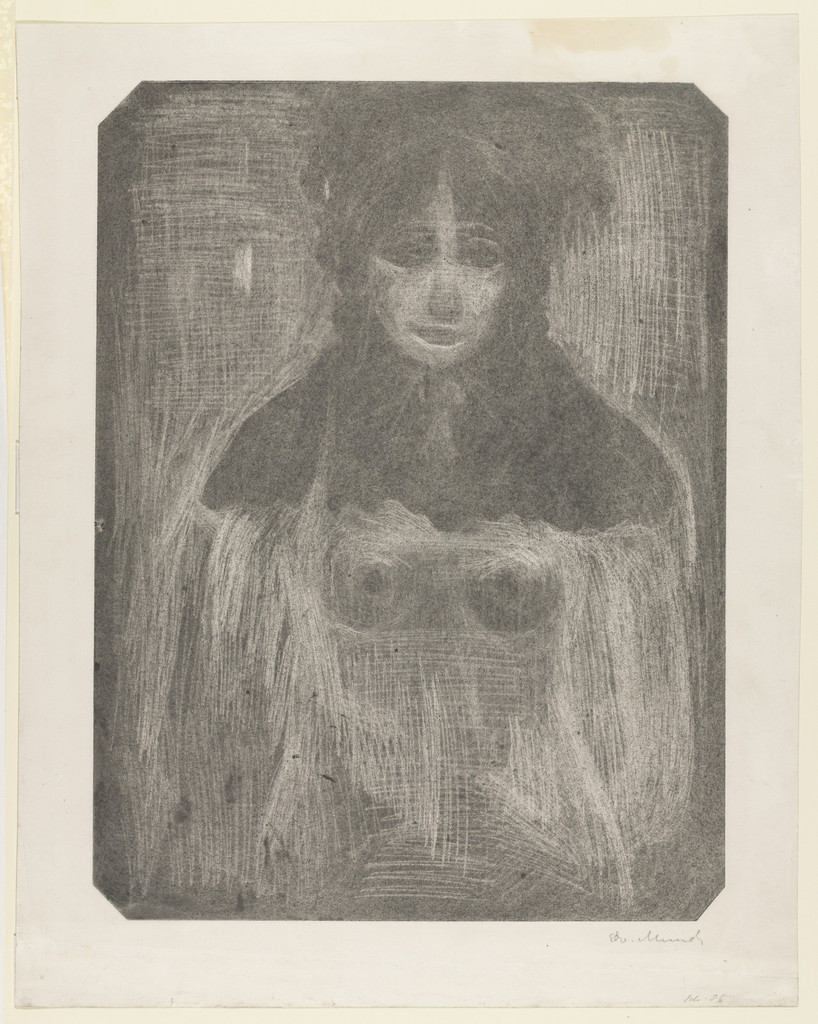
Model with Hood and Collar
Edvard Munch
1897
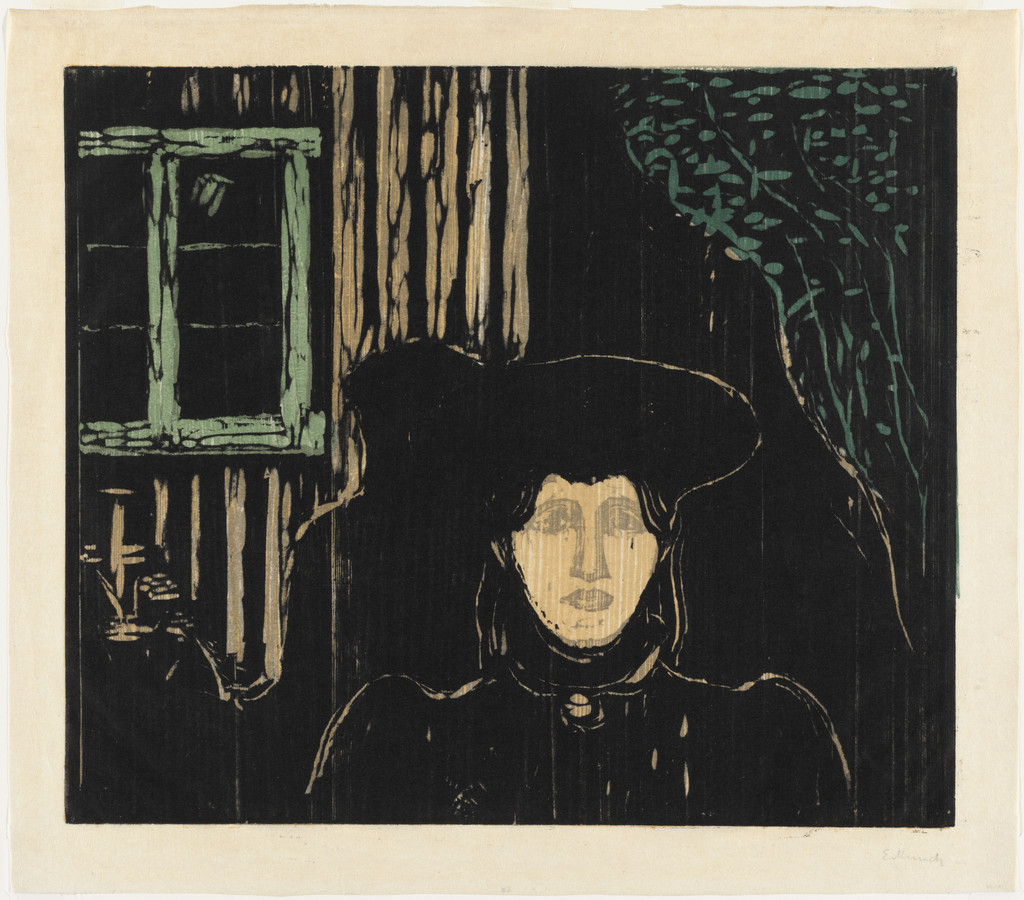
Moonlight I (Måneskinn I)
Edvard Munch
1896
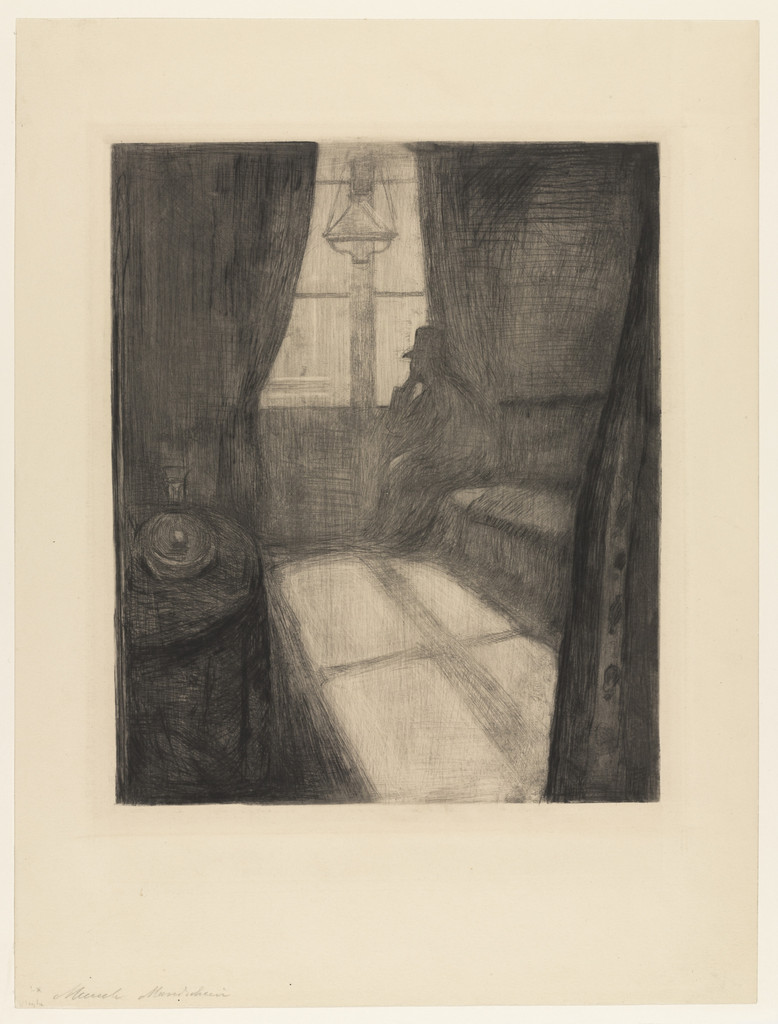
Moonlight. Night in St. Cloud (Måneskinn. Natt i St. Cloud)
Edvard Munch
1895
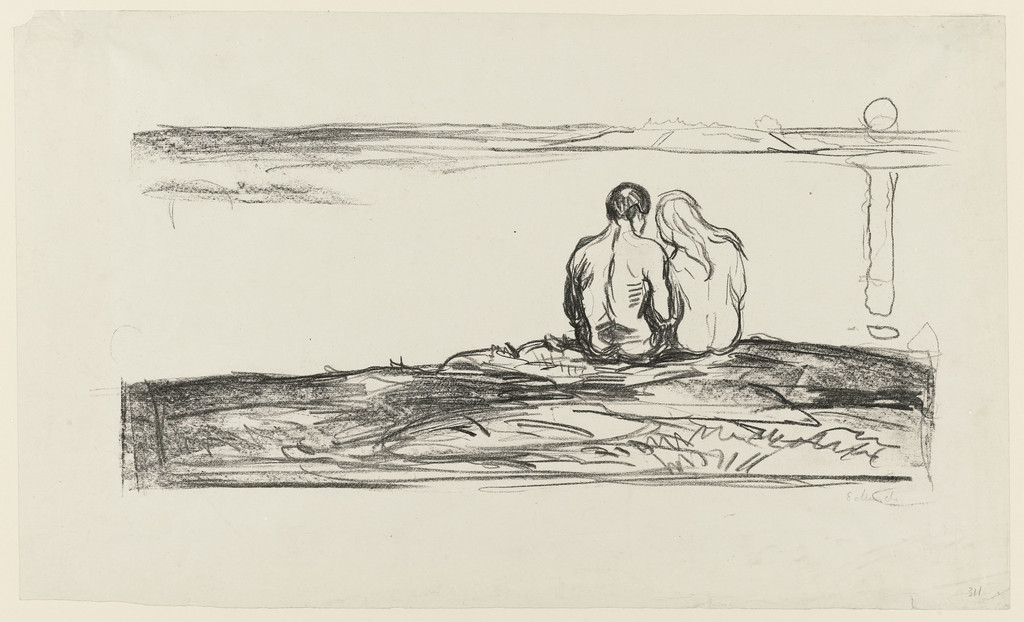
Moonrise (Mäneoppgang)
Edvard Munch
1908-09
Exhibitions
39 exhibitionsMay 10, 1939 – Sep 30, 1939
Painting, Sculpture, Prints
154 artists
May 24, 1944 – Oct 15, 1944
Painting, Sculpture, Prints
133 artists · 1 curator
Jun 01, 1948 – Sep 06, 1948
Portraits in Prints
29 artists · 1 curator
Nov 16, 1948 – Jan 23, 1949
Timeless Aspects of Modern Art
21 artists · 1 curator
May 10, 1949 – Jul 10, 1949
Master Prints from the Museum Collection
132 artists · 2 curators
Jul 12, 1949 – Sep 05, 1949
Art Nouveau from the Museum Collection
7 artists
Jun 30, 1950 – Aug 12, 1950
Edvard Munch
1 artist
Jul 11, 1950 – Sep 05, 1950
Three Modern Styles
94 artists
Dec 07, 1954 – Feb 01, 1955
Modern Masterprints of Europe
72 artists · 1 curator
Nov 08, 1955 – Jan 08, 1956
Prints by Nolde and Kirchner
11 artists · 1 curator
Feb 06, 1957 – Mar 03, 1957
The Graphic Work of Edvard Munch
1 artist
Apr 23, 1958 – May 18, 1958
50 Selections from the Collection of Mr. and Mrs. Walter Bareiss
41 artists · 1 curator
Dec 31, 1958 – Feb 23, 1959
Ten European Artists
10 artists · 1 curator
Jun 08, 1960 – Sep 06, 1960
Art Nouveau
118 artists · 3 curators
Dec 21, 1960 – Feb 05, 1961
Recent Acquisitions
222 artists · 3 curators
Aug 19, 1961 – Jan 30, 1962
Modern Allegories
20 artists · 1 curator
May 27, 1964 – Mar 23, 1965
Prints by Seventeen Artists
17 artists · 1 curator
Mar 03, 1966
Paul J. Sachs Gallery Print Re-installation
28 artists
Apr 28, 1967 – Apr 30, 1967
The Artist as His Subject
46 artists · 2 curators
Jun 06, 1967 – Sep 17, 1967
The Artist as His Subject
49 artists
Jun 20, 1972 – Oct 10, 1972
Symbolism, Synthesists, and the Fin-de-Siècle
36 artists · 1 curator
Feb 13, 1973 – Apr 29, 1973
The Prints of Edvard Munch
1 artist · 1 curator
Mar 07, 1975 – Jun 08, 1975
Points of View
29 artists · 1 curator
Apr 18, 1975 – Jun 22, 1975
Five Recent Acquisitions
5 artists · 1 curator
May 14, 1976 – Aug 08, 1976
Narrative Prints
8 artists · 1 curator
May 14, 1976 – Aug 08, 1976
Prints from the Collection
30 artists
Dec 17, 1976 – Mar 01, 1977
European Master Paintings from Swiss Collections: Post-Impressionism to World War II
35 artists · 1 curator
Jun 06, 1977 – Sep 06, 1977
Impresario: Ambroise Vollard
44 artists · 1 curator
Feb 16, 1978 – Mar 12, 1978
Selections from the Collections
11 artists · 1 curator
Mar 15, 1979 – Apr 24, 1979
The Masterworks of Edvard Munch
1 artist · 1 curator
Nov 14, 1979 – Jan 22, 1980
Art of the Twenties
167 artists · 1 curator
Dec 22, 1980 – Mar 10, 1981
The Symbolist Aesthetic
47 artists · 1 curator
Mar 03, 1983 – May 15, 1983
Prints from Blocks: Gauguin to Now
128 artists · 1 curator
May 17, 1984
Selections from the Permanent Collection: Prints and Illustrated Books
99 artists · 2 curators
May 06, 1985 – Dec 18, 1985
The Expressionist Idiom
43 artists · 1 curator
May 29, 1986 – Sep 30, 1986
Naked/Nude
63 artists · 1 curator
Nov 20, 1987 – Mar 08, 1988
Master Prints from the Collection
66 artists · 1 curator
Apr 06, 1989 – Aug 08, 1989
Master Prints from the Collection
102 artists · 1 curator
Nov 16, 1989 – Mar 13, 1990
Prints: Proofs and Variants
25 artists · 1 curator