
“We are going to find out everything that photography can teach us about animal movement.” — Eadweard Muybridge
In the summer of 1878, Eadweard Muybridge filed for a patent. “The principal object,” the photographer and inventor explained in his application, “is to take photographic views of horses that are moving rapidly under speed, in order to determine the posture, position, and relation of their limbs in different portions of their step or stride.” Muybridge’s interest in the “step” and “stride” of horses dated to 1872, the year the railroad tycoon Leland Stanford asked him to resolve a debate among horse enthusiasts: When a horse was trotting (or galloping), did all four of its hooves leave the ground simultaneously? The answer, as Muybridge proved in a photographic project that stretched from 1872 to 1879, was yes. Using an array of cameras equipped with electric shutters, Muybridge settled a dispute that could not be settled by the human eye. His horse photographs demonstrated the artistic, scientific, and industrial potential of photography as a medium; they also made him famous, and launched his lifelong study of animal movement. Muybridge was born Edward James Muggeridge in 1830, in a town south of London. But he would reinvent himself on multiple occasions, changing his name, profession, and city as he searched for new opportunities. In 1852, he moved to New York, where he became Edward Muggridge; in 1855, he moved to San Francisco, where he became E. J. Muggridge, then E. J. Muygridge, and finally, Eadweard Muybridge. Movement, for Muybridge, was central to his work and his identity alike. Following a career as a bookseller in New York and San Francisco, Muybridge devoted himself to photography. He made his name—by the 1870s, “Muybridge”—with photographs of California’s growing cities, as well as its striking coast and rugged interior. One of his most successful expeditions was to Yosemite Valley in 1872. The area’s granite mountains, towering waterfalls, giant sequoias, and lush meadows had been painted and photographed previously, leading Muybridge to seek out new terrain. In some prints, he depicted remote cliffs and cataracts from vantages that seem to defy gravity; in others, he depicted smooth-as-glass rivers that reflect distant peaks. In both cases, the photographer focused on rock and water—the two essential elements of Yosemite’s unique geology. Muybridge left California for Central America in 1875, aboard a ship owned by the Pacific Mail Steamship Company. For over a year, he traveled from Panama to Mexico, with lengthy stops in El Salvador and Guatemala. All the while, Muybridge photographed bays and valleys, churches and cathedrals, palaces and fortifications, plazas and cemeteries, and markets and coffee plantations. “The subjects are all original, and have never been photographed before,” he boasted in the preface to an 1876 album containing many of the Central American prints. Muybridge, whose travels were funded by the Pacific Mail Steamship Company, was candid about the aim of these prints: to promote, in his words, “profitable enterprise” in Central America. (“Profitable” for foreigners, not locals.) Yet he also wished to celebrate the region’s physical beauty and cultural traditions, from the “remarkable volcanoes, lakes, mountain scenery, and luxuriant vegetation of Guatemala” to the “picturesque costumes and dwellings” of its Maya, Garífuna, and Xinca inhabitants. As these comments suggest, the Central American photographs—similar to the Yosemite photographs before them—are bound up with the imperialist context of their making. Upon returning to California, Muybridge resumed work with Stanford. But the two had a falling out, and the photographer relocated to Philadelphia to advance his studies of animal movement at the University of Pennsylvania. After years of research and thousands of photographs, Muybridge published his results in an 11-volume book, Animal Locomotion (1887). As he wrote, the book’s 781 plates “comprise more than 20,000 figures of men, women, and children, animals and birds, all actively engaged in walking, galloping, flying, working, playing, fighting, dancing, or other actions incidental to every-day life.” He did not mention that his human subjects were local models, athletes, students, and hospital patients, and photographing them nude proved controversial. Moreover, it reinforced stereotypes. Muybridge, the scholar Sarah Gordon has argued, juxtaposed the bodies of men and women, young and old, healthy and unhealthy, in ways that suggest “human hierarchies based on gender and physical ability.” Since it first appeared in the late 19th century, Animal Locomotion has found readers ranging from artists to scientists, doctors, and engineers. In this vast compendium of motion, Muybridge captured an astonishing variety of bodies and activities: men throw disks and lay bricks; women jump over stools and open parasols; horses trot, lions stride, and birds soar. “A work for the Art Connoisseur, the Scientist, the Artist and the Student of Art or of Nature,” Muybridge declared in an advertisement for his book. Like the photographer himself, Animal Locomotion was big, brash, and irreducible to a single field of knowledge.
Note: Opening quote is from Sarah Gordon, Indecent Exposures: Eadweard Muybridge’s Animal Locomotion Nudes (New Haven: Yale University Press, 2015), 36.
Annemarie Iker, independent scholar, 2023
Works in Collection
170 works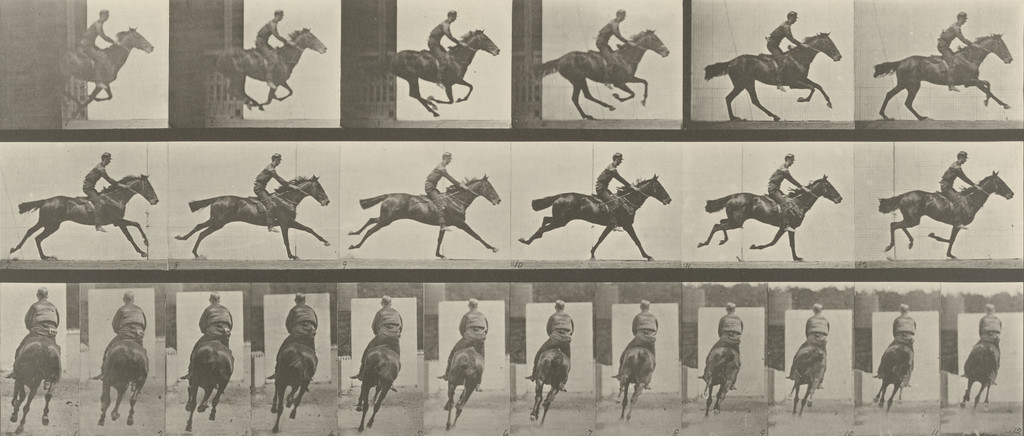
"Bouquet" Galloping, Saddled: Plate 633 from Animal Locom...
Eadweard J. Muybridge
1884-86
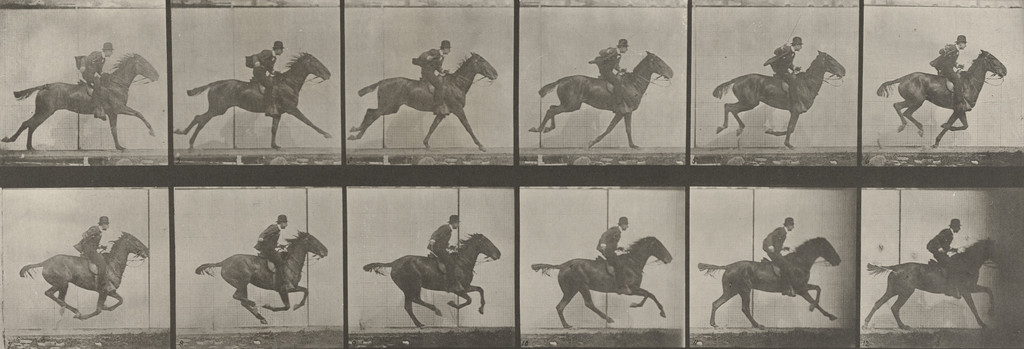
"Daisy" Galloping, Saddled: Plate 624 from Animal Locomot...
Eadweard J. Muybridge
1884-86
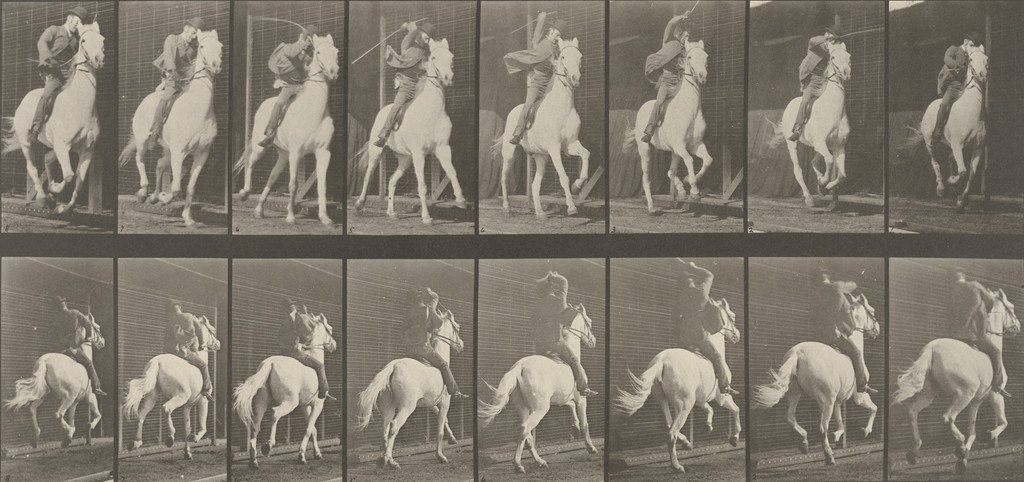
"Dan" Galloping, Saddled: Plate 634 from Animal Locomotio...
Eadweard J. Muybridge
1884-86
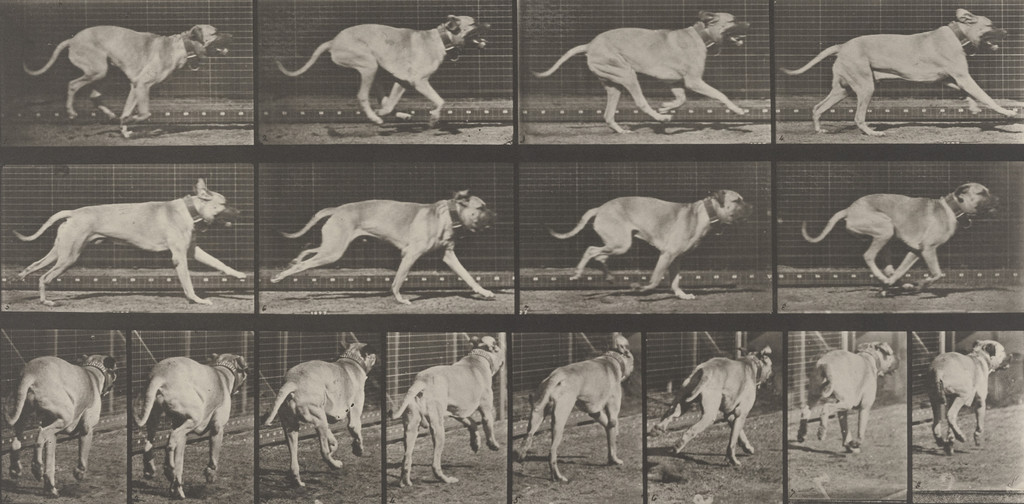
"Dread" Galloping: Plate 707 from Animal Locomotion (1887)
Eadweard J. Muybridge
1884-86
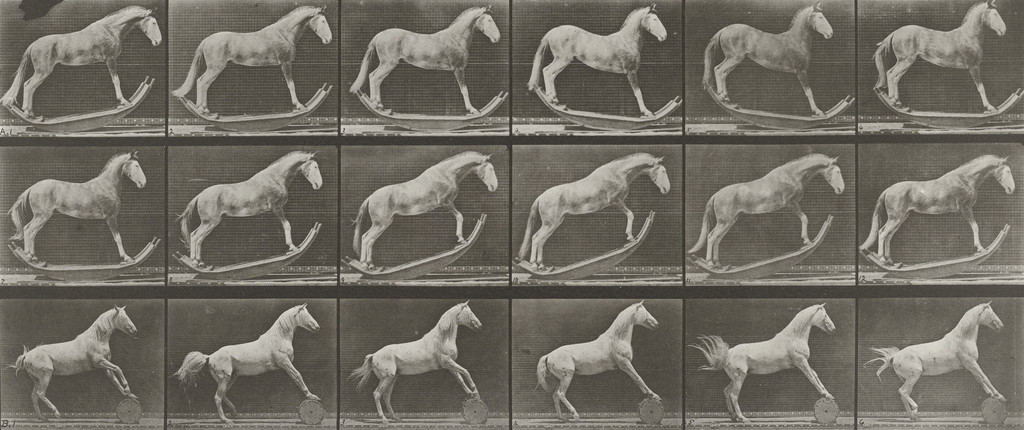
"Hornet" Rocking; "Eagle" Rolling a Barrel: Plate 649 fro...
Eadweard J. Muybridge
1884-86
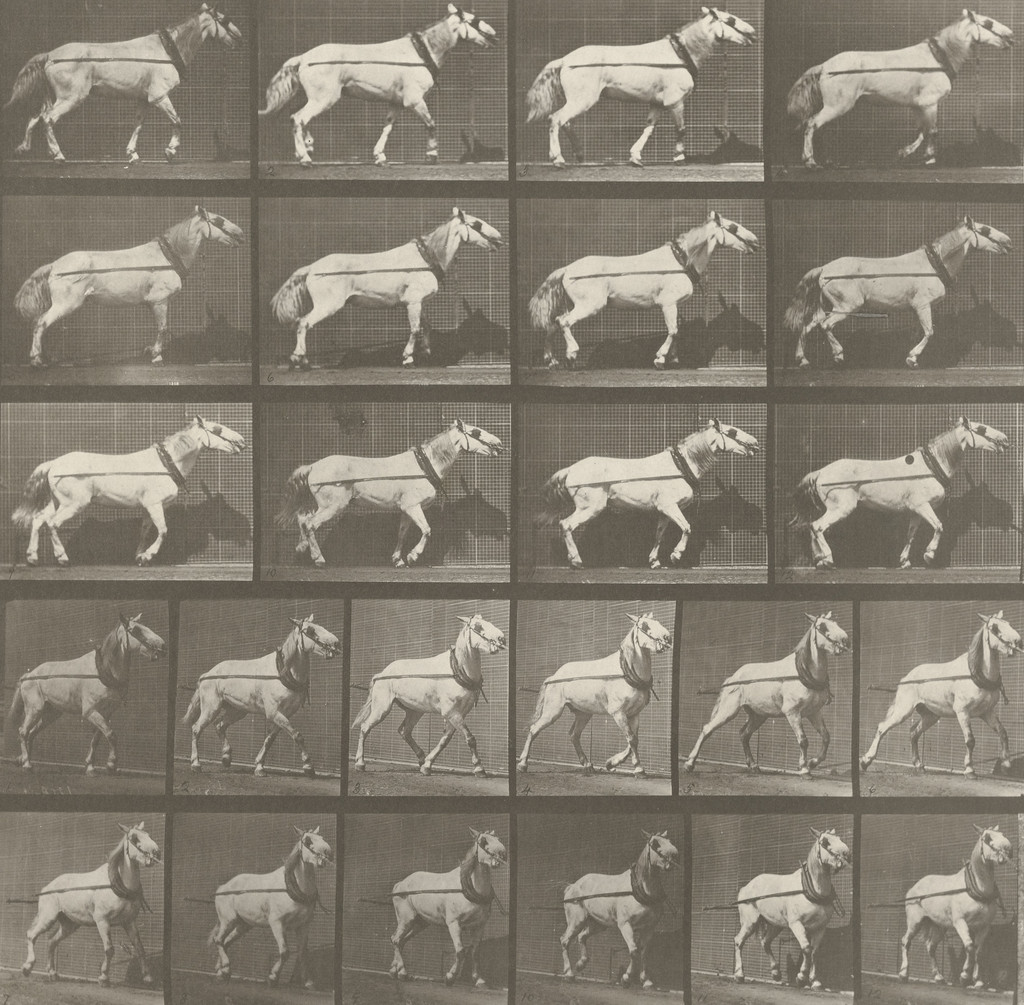
"Johnson" Hauling, Head Being Pulled: Plate 572 from Anim...
Eadweard J. Muybridge
1884-86
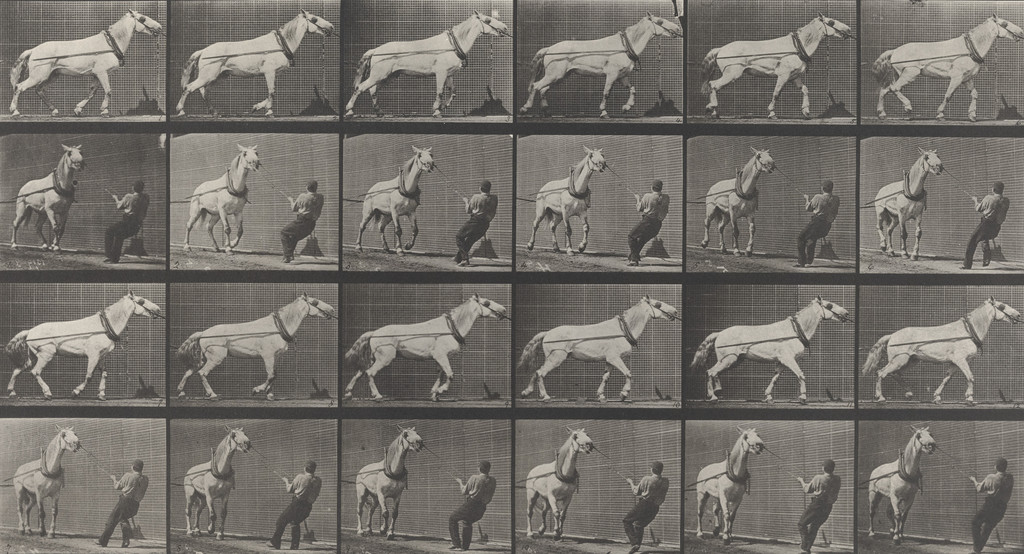
"Johnson" Hauling, Man Pulling at Head: Plate 573 from An...
Eadweard J. Muybridge
1884-86
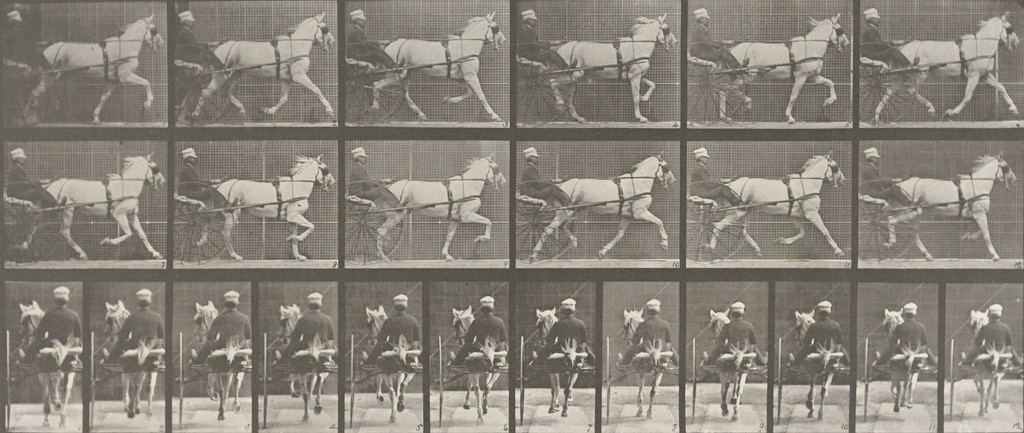
"Katydid" Trotting, Harnessed to Sulky: Plate 611 from An...
Eadweard J. Muybridge
1884-86
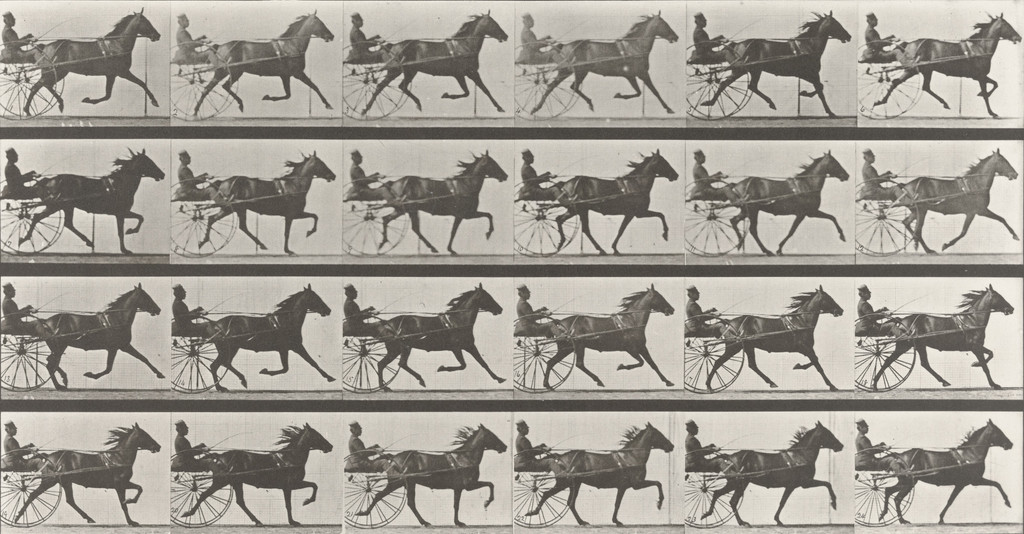
"Lizzie M." Trotting, Harnessed to Sulky: Plate 609 from ...
Eadweard J. Muybridge
1884-86
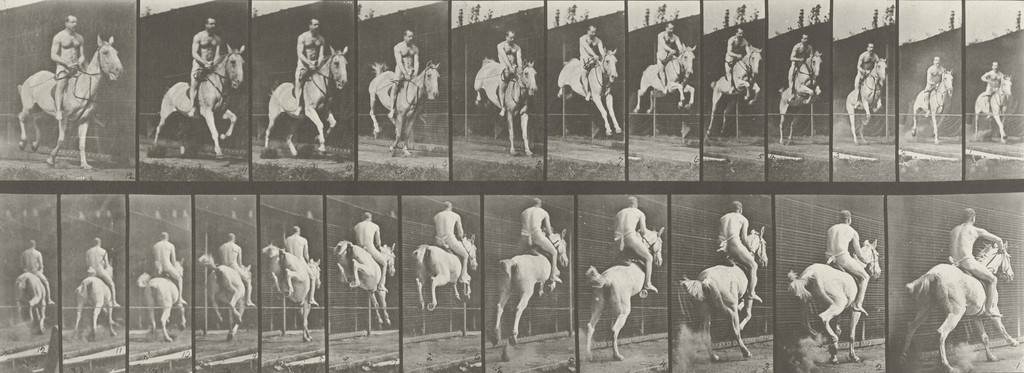
"Pandora" Jumping a Hurdle, Bareback; Rider Nude: Plate 6...
Eadweard J. Muybridge
1884-86
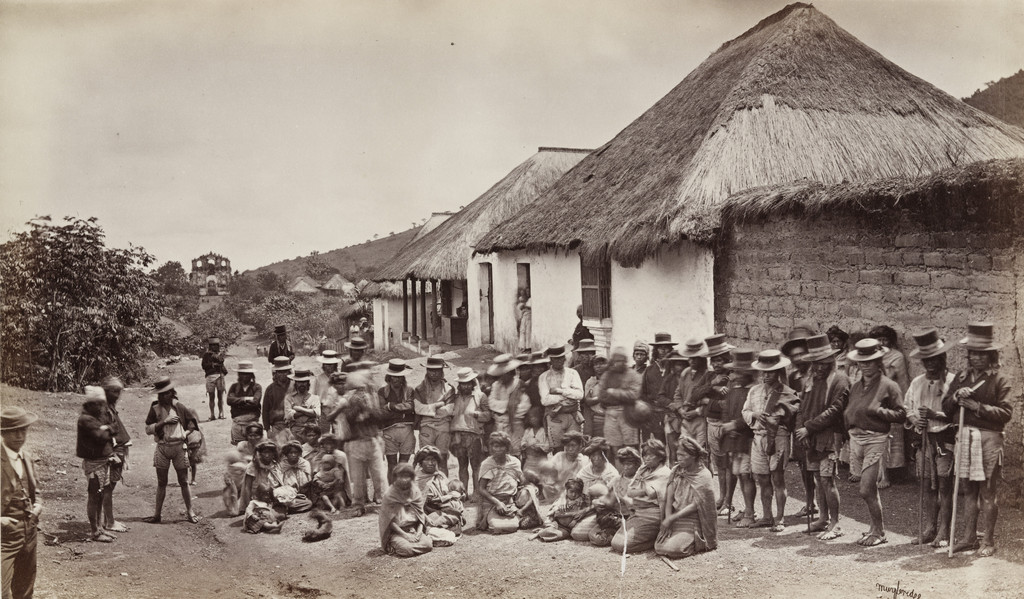
A Fete Day with the Coffee Pickers, Santa Maria
Eadweard J. Muybridge
1875
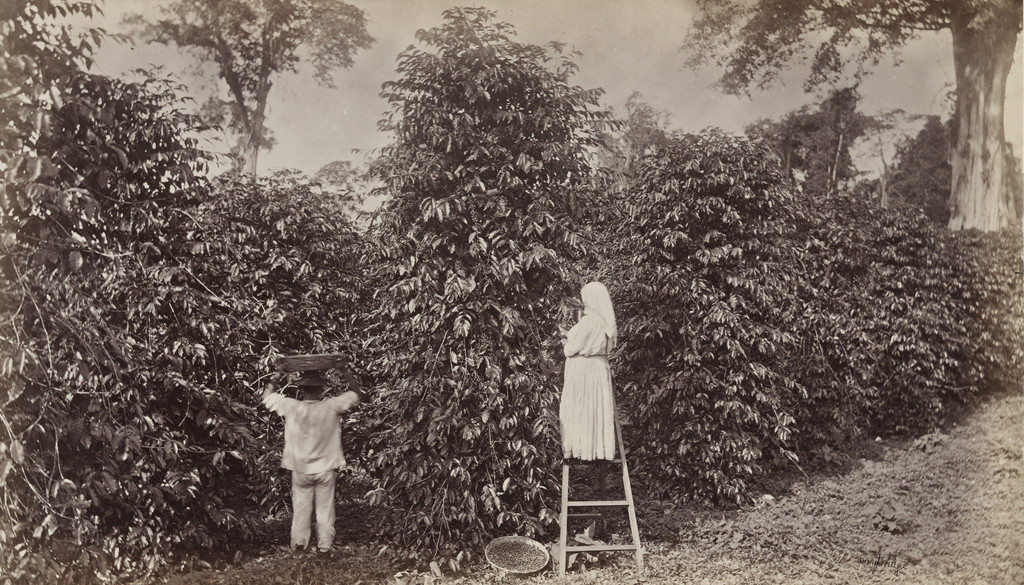
A Full Grown Coffee Tree (Its Berries), Las Nubes
Eadweard J. Muybridge
1875
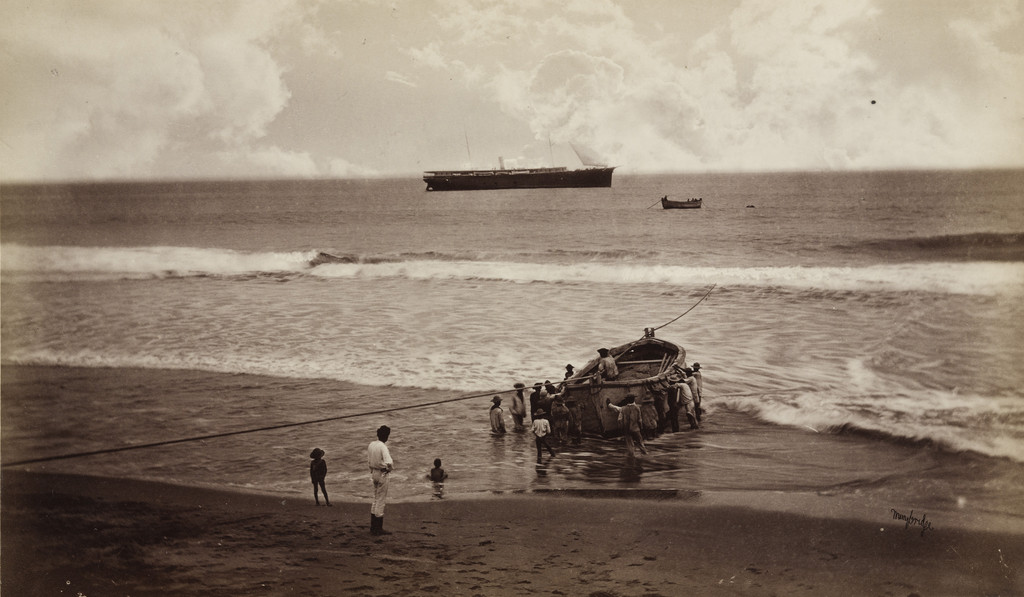
A Loaded Launch and an Ebb Tide, Champerico
Eadweard J. Muybridge
1875
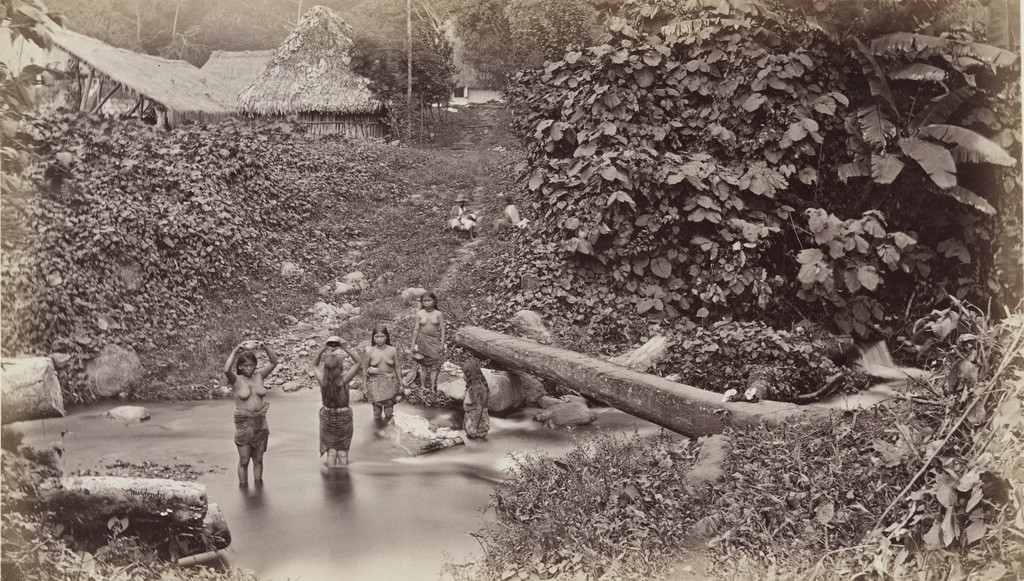
A Roadside Scene, San Isidro
Eadweard J. Muybridge
1875
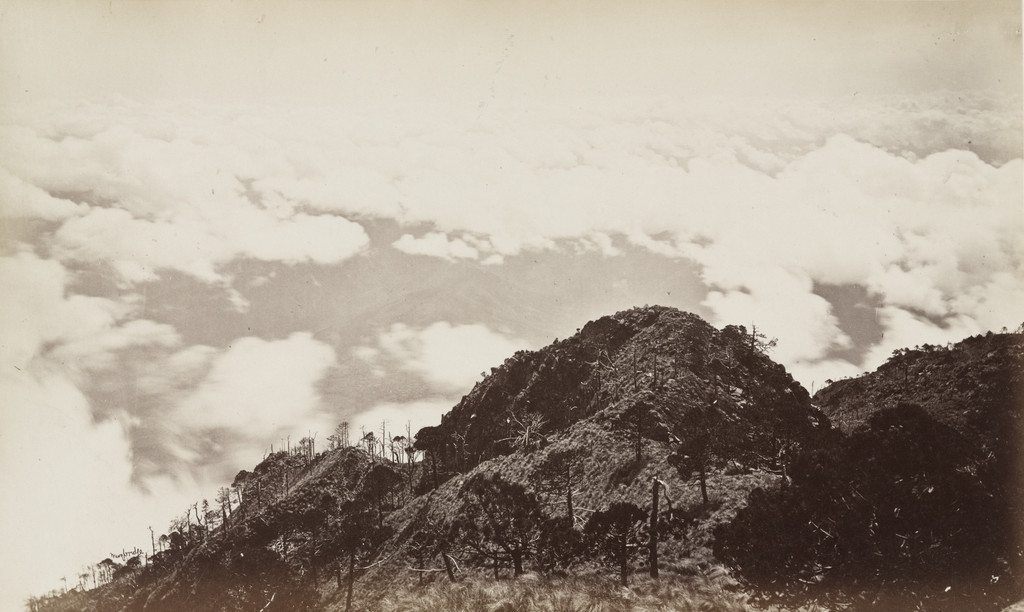
A Sea of Clouds from Volcan Agua
Eadweard J. Muybridge
1875
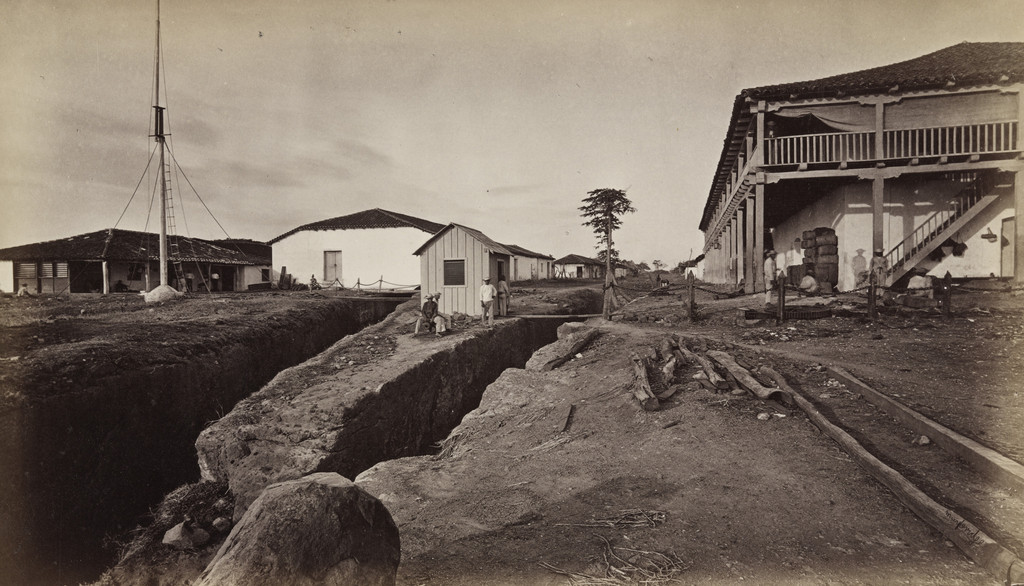
Acajutla
Eadweard J. Muybridge
1875
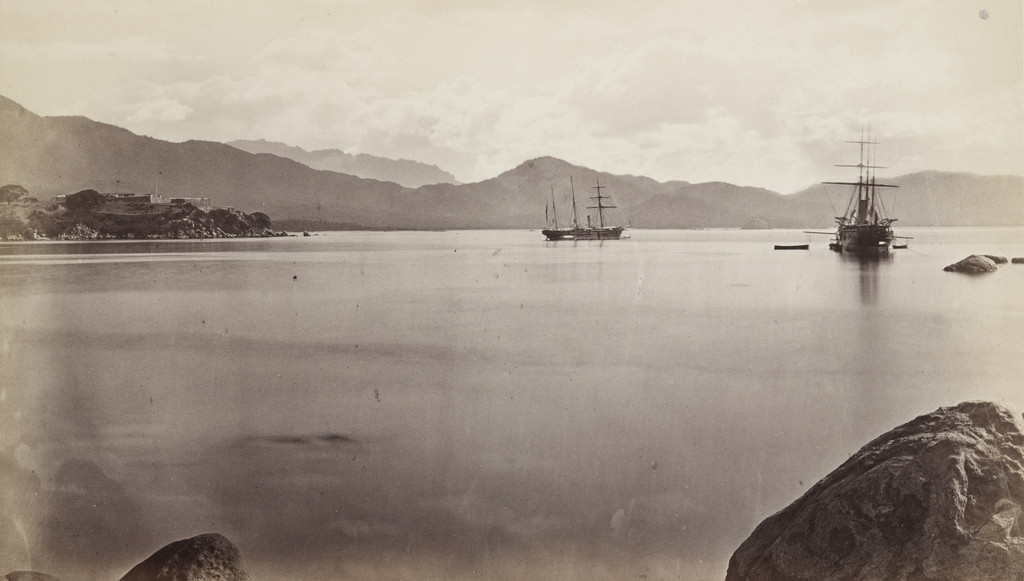
Acapulco
Eadweard J. Muybridge
1875
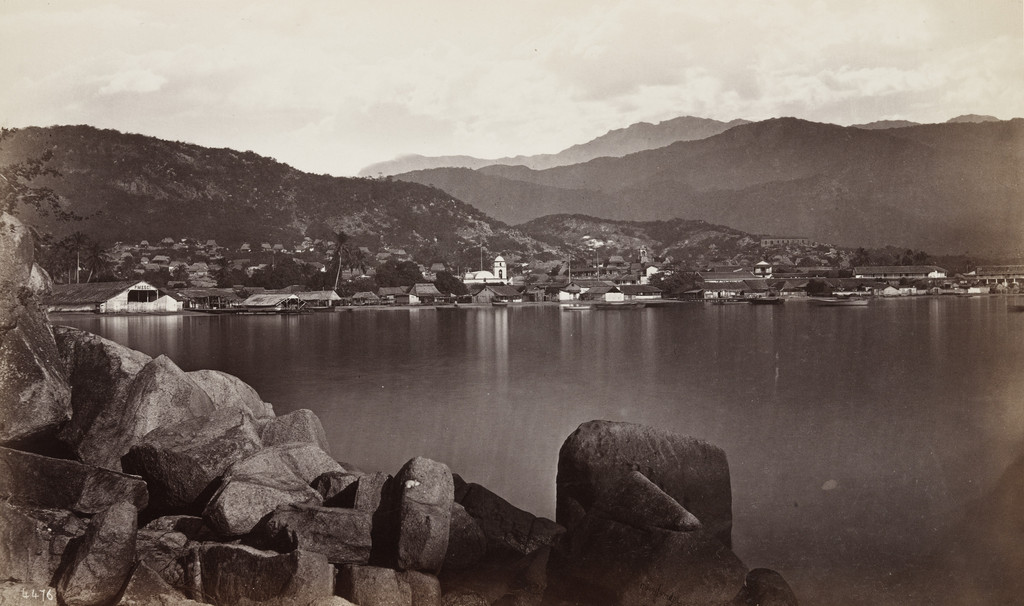
Acapulco
Eadweard J. Muybridge
1875
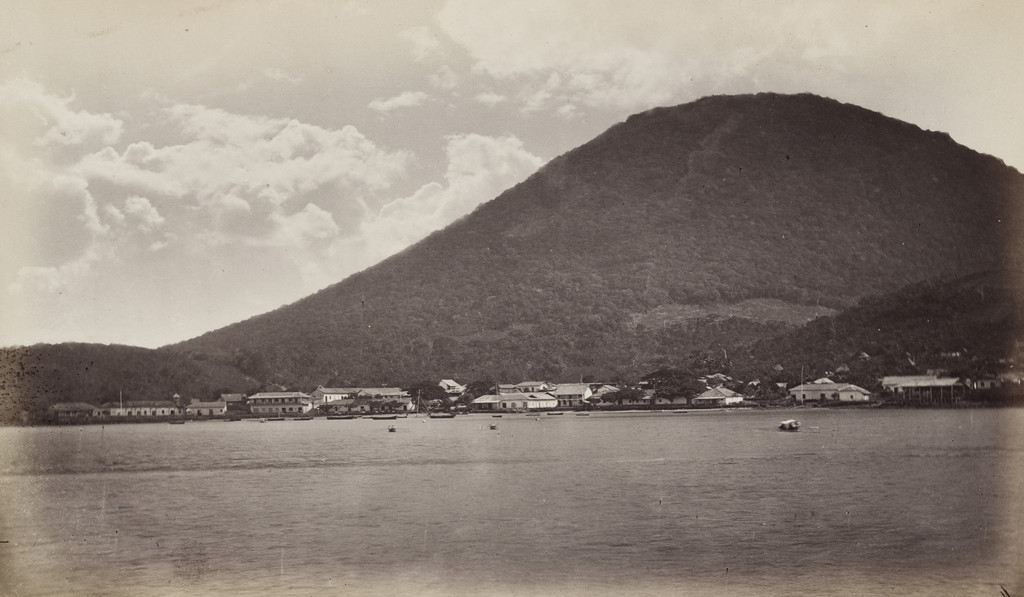
Amapala
Eadweard J. Muybridge
1875
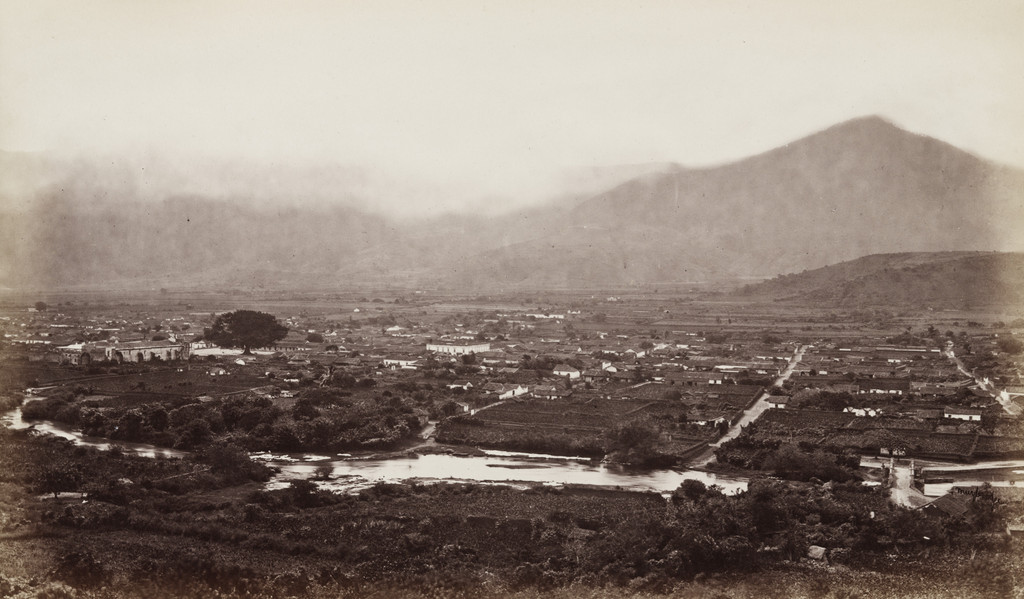
Amatitlán
Eadweard J. Muybridge
1875
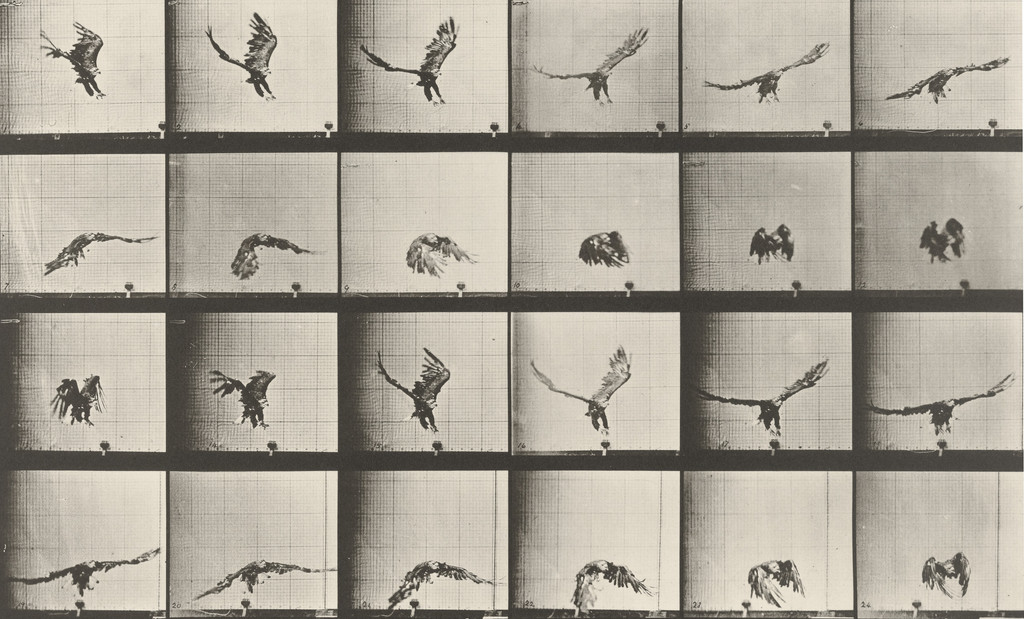
American Eagle Flying Near the Ground: Plate 771 from Ani...
Eadweard J. Muybridge
1884-86
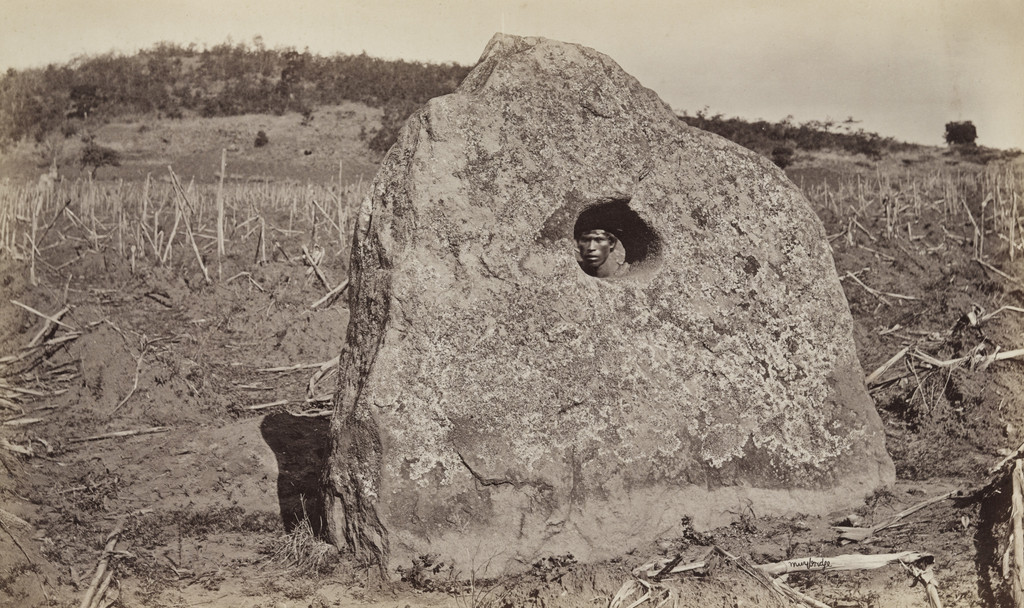
Ancient Sacrificial Stone, Naranjo
Eadweard J. Muybridge
1875
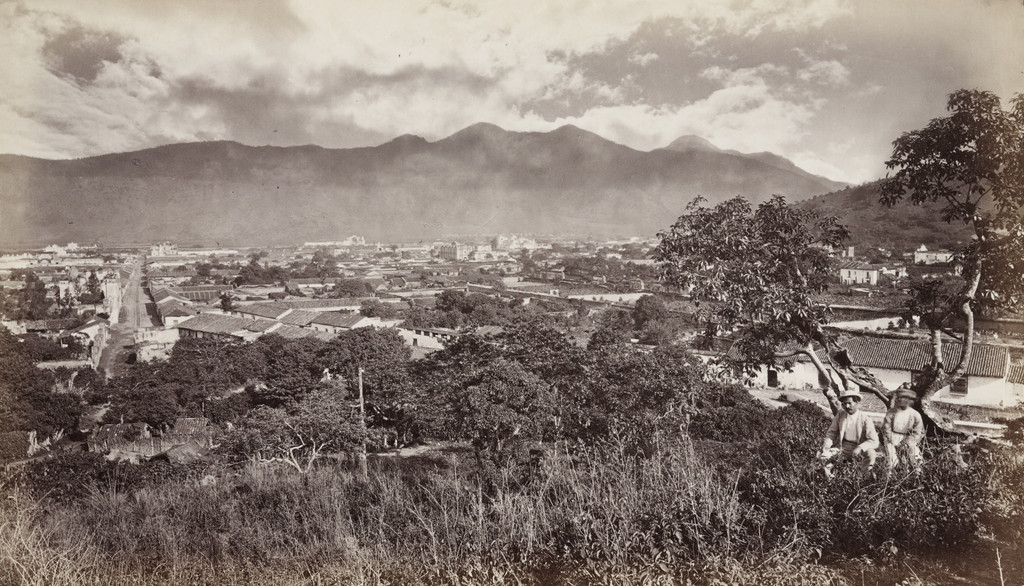
Antigua de Guatemala
Eadweard J. Muybridge
1875
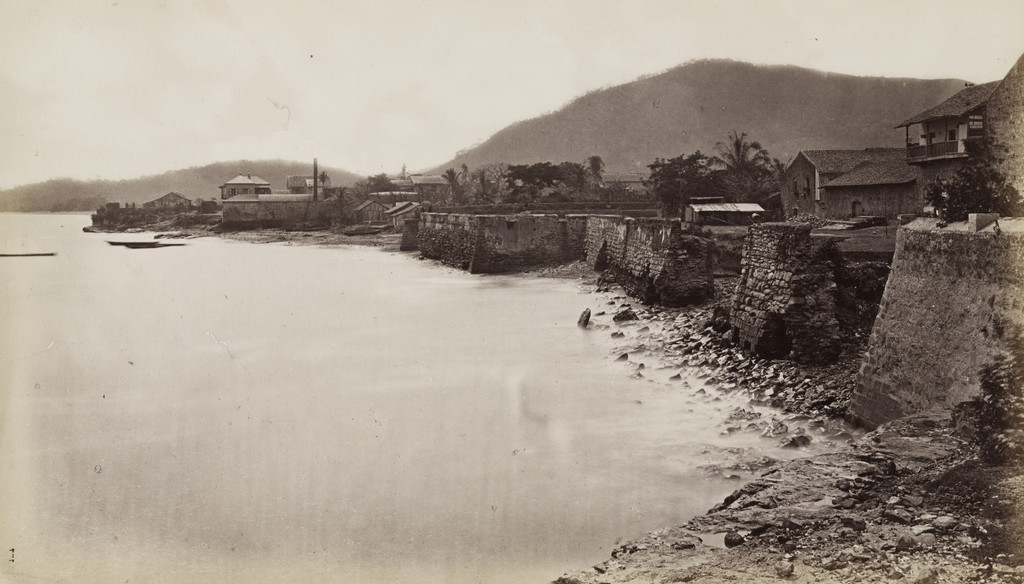
Around the Walls, Panama
Eadweard J. Muybridge
1875
Exhibitions
16 exhibitionsMar 17, 1937 – Apr 18, 1937
Photography 18391937
243 artists · 1 curator
May 24, 1938 – Jul 31, 1938
Three Centuries of American Art
247 artists · 7 curators
Aug 18, 1943 – Sep 19, 1943
Action Photography
44 artists · 1 curator
May 24, 1944 – Sep 17, 1944
Photography
63 artists · 1 curator
Jul 27, 1948 – Sep 26, 1948
50 Photographs by 50 Photographers
50 artists · 1 curator
Nov 26, 1958 – Jan 18, 1959
Photographs from the Museum Collection
273 artists · 1 curator
Nov 18, 1959 – Nov 29, 1959
30th Anniversary Special Installation - Towards the "New" Museum
140 artists
May 27, 1964
Edward Steichen Photography Center
130 artists · 1 curator
May 27, 1964 – Aug 23, 1964
The Photographer's Eye
105 artists · 1 curator
Jun 20, 1967 – Sep 11, 1967
Once Invisible
80 artists · 2 curators
Oct 25, 1967
Steichen Gallery Reinstallation
77 artists
Apr 03, 1968 – Jul 28, 1968
Photographs Before Surrealism
22 artists
Dec 21, 1979
Edward Steichen Photography Center Reinstallation
102 artists · 1 curator
Oct 23, 1980
Reinstallation of the Collection
129 artists
Nov 07, 1985 – Jan 07, 1986
Self Portrait: The Photographer's Persona, 18401985
58 artists · 1 curator
Nov 24, 1988 – Jan 10, 1989
Recent Acquisitions
22 artists · 1 curator