
“The aspiration...to start from scratch, to paint as if painting never existed before....That made painters out of painters.” — Barnett Newman
Painter and theorist Barnett Newman was one of the most intellectual artists of the New York School. He was born and raised in New York, the son of Polish Jewish immigrants. His approach to art making was shaped by his studies in philosophy at The City College of New York and his political activism. In 1933, he ran for mayor of his city on a write-in ticket with a cultural platform, and he maintained a keen awareness of such modern horrors as Nazism and the atomic bomb. For him, art was an act of self-creation and a declaration of political, intellectual, and individual freedom. Master of witticisms, he once quipped: “aesthetics is to artists as ornithology is to the birds.” Newman’s artistic career was late-blooming and began in fits and starts. He was around 30 when he started painting, having spent the previous decade teaching, writing, studying, and working in his father’s menswear store. He deemed much of his early work unworthy of consideration and destroyed it. It was not until 1944 that he considered his work mature. In 1948, with the completion of a painting titled Onement, I, Newman found his voice. It was in this work that he hit upon what would become the signature motif that defined all of his paintings to come: a vertical band connecting the upper and lower margins of the painting that he called a “zip.” His zips streak through fields of color in spare compositions that prompted critics to dub him a Color Field painter and Minimalists to look to his work for inspiration. But call him what they would, Newman maintained his own view of his abstractions. Claiming that he sought “to start from scratch, to paint as if painting never existed before,” he saw his compositions as forms of thought, as expressions of the universal experience of being alive and individual. Though he concentrated primarily on painting, Newman also made sculpture. It was not until the 1960s, the last decade of his life, that he achieved public acclaim for his work. His anarchic independence and uncompromising stance may have contributed to his slow acceptance, but these deep-seated forces within him also shaped his art. Reflecting on his work towards the end of his life, he declared, “One of its implications is its assertion of freedom…if [it were read] properly it would mean the end of all state capitalism and totalitarianism.”
Karen Kedmey, independent art historian and writer, 2017
Works in Collection
60 works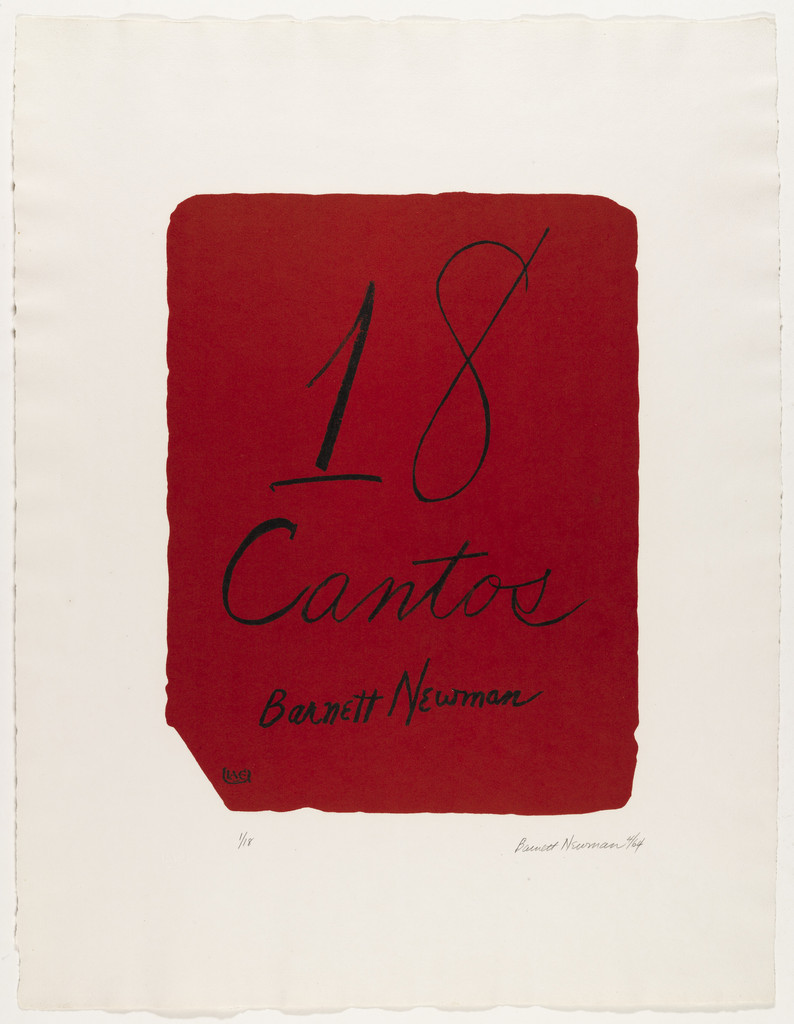
18 Cantos
Barnett Newman
1963–64, published 1964
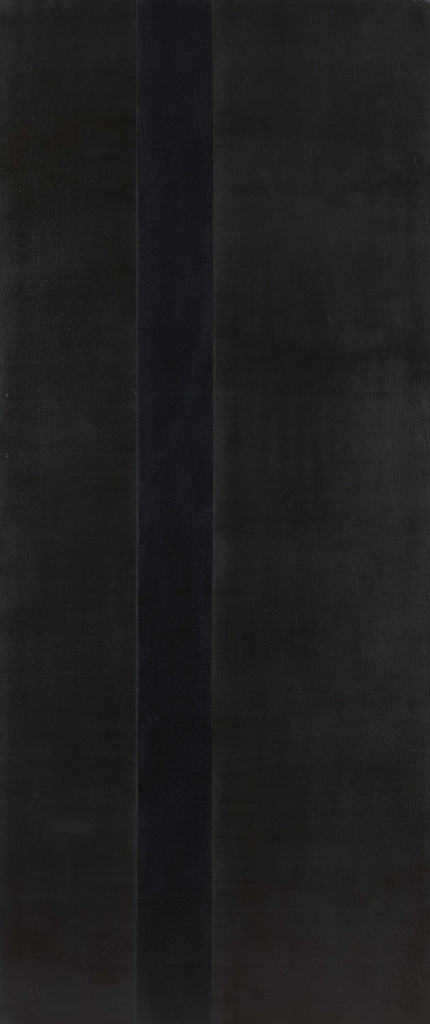
Abraham
Barnett Newman
1949
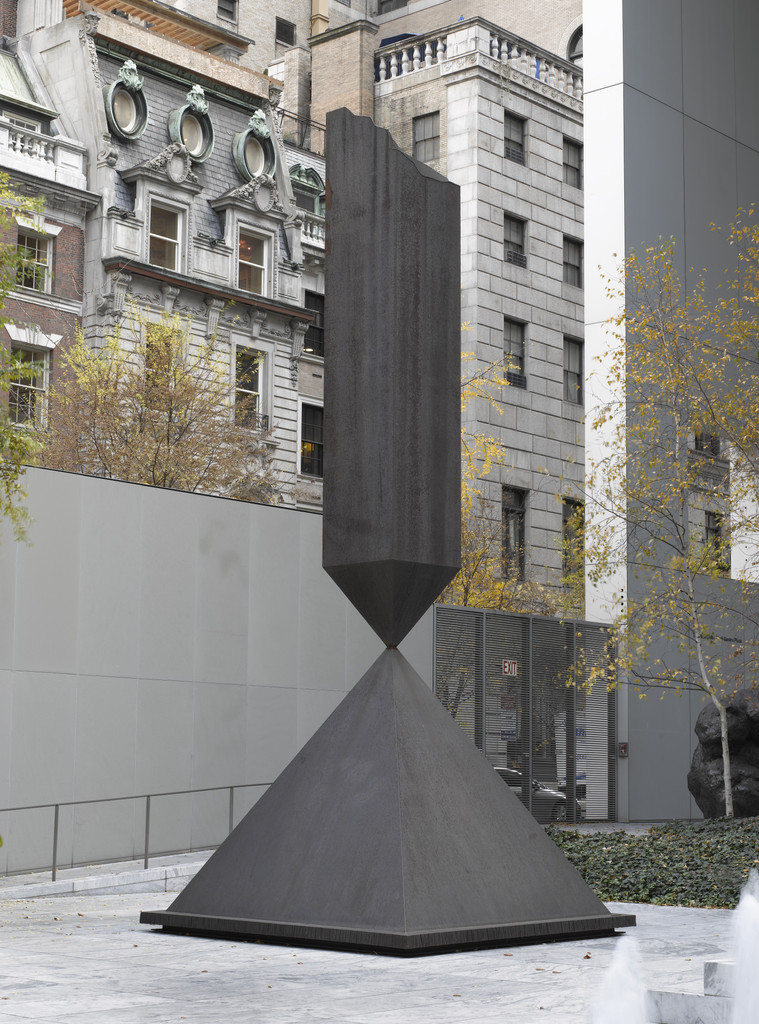
Broken Obelisk
Barnett Newman
1963-69
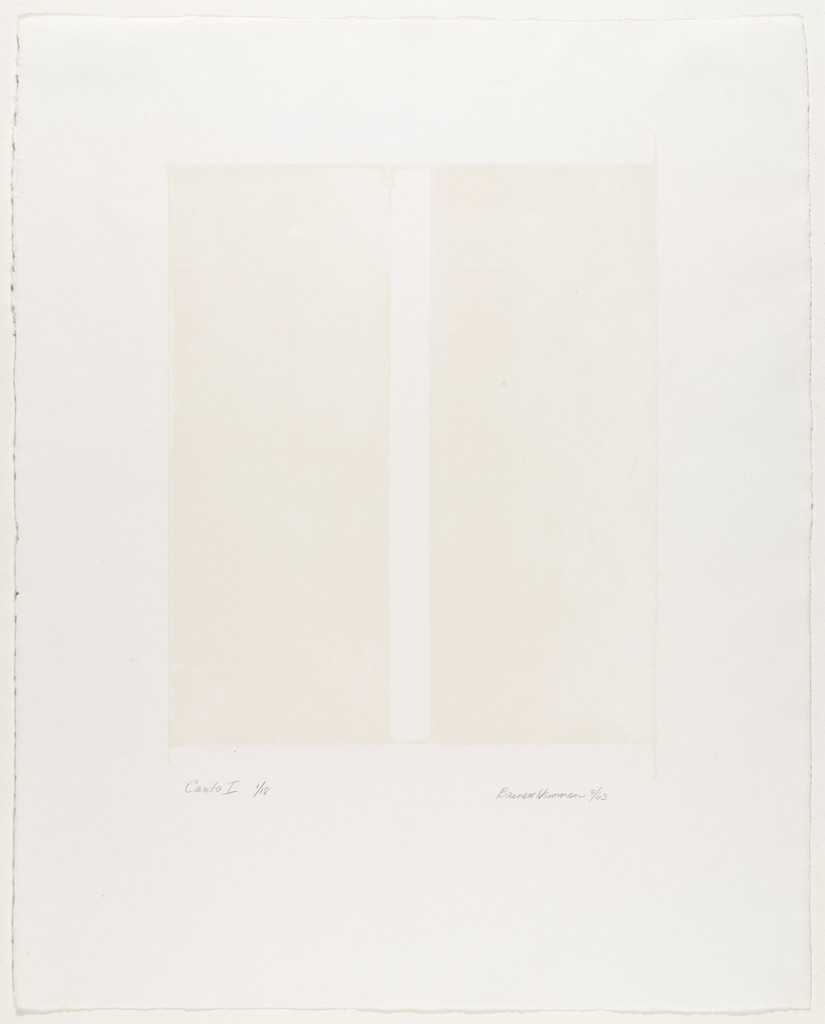
Canto I from 18 Cantos
Barnett Newman
1963
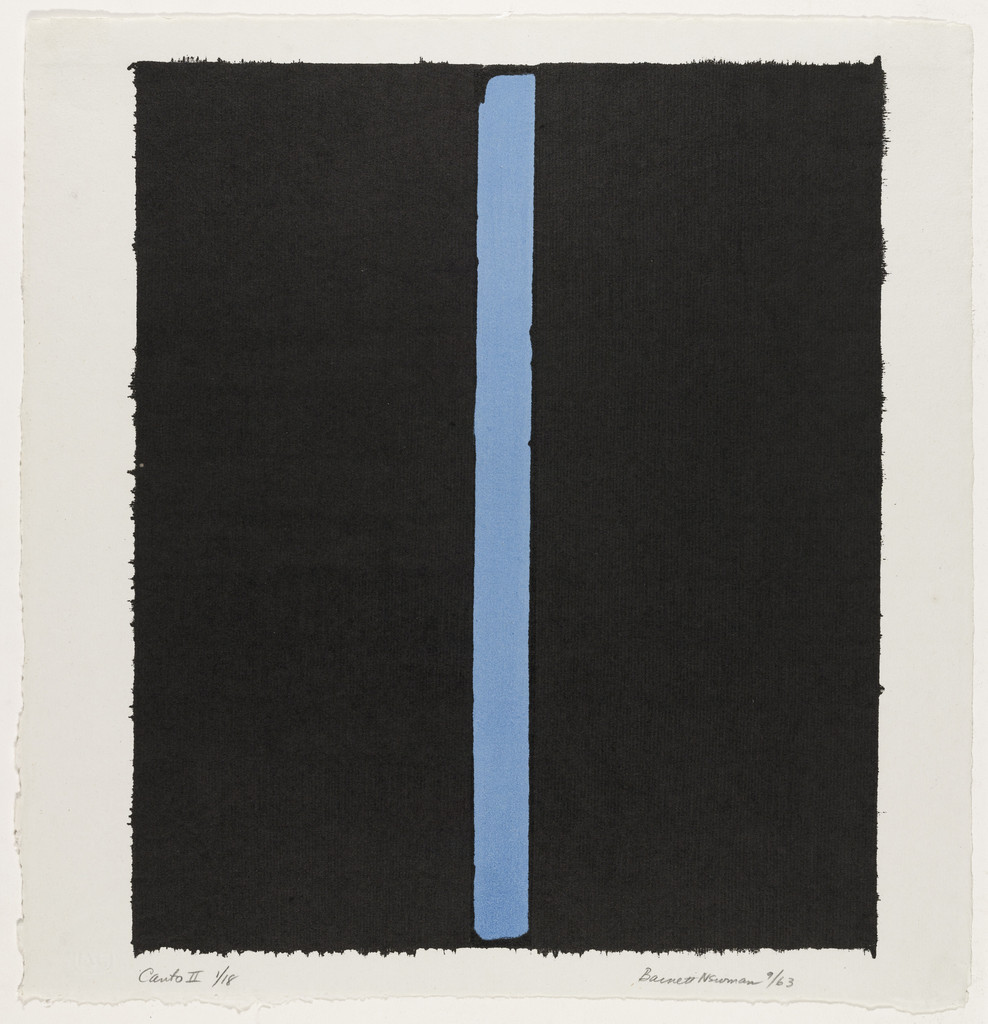
Canto II from 18 Cantos
Barnett Newman
1964
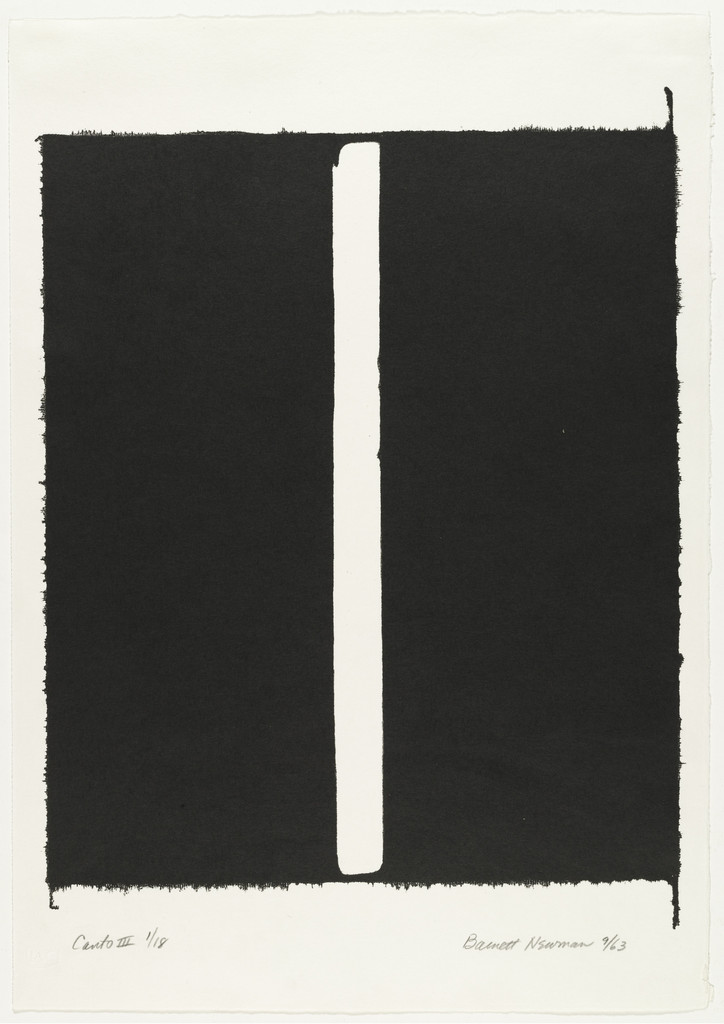
Canto III from 18 Cantos
Barnett Newman
1963
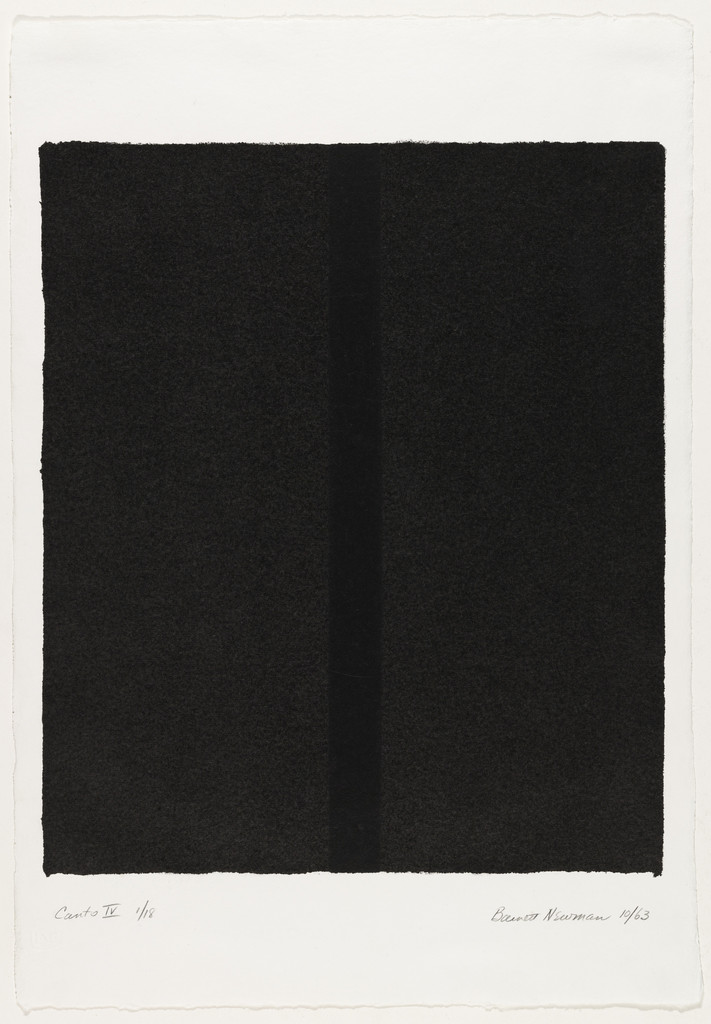
Canto IV from 18 Cantos
Barnett Newman
1963
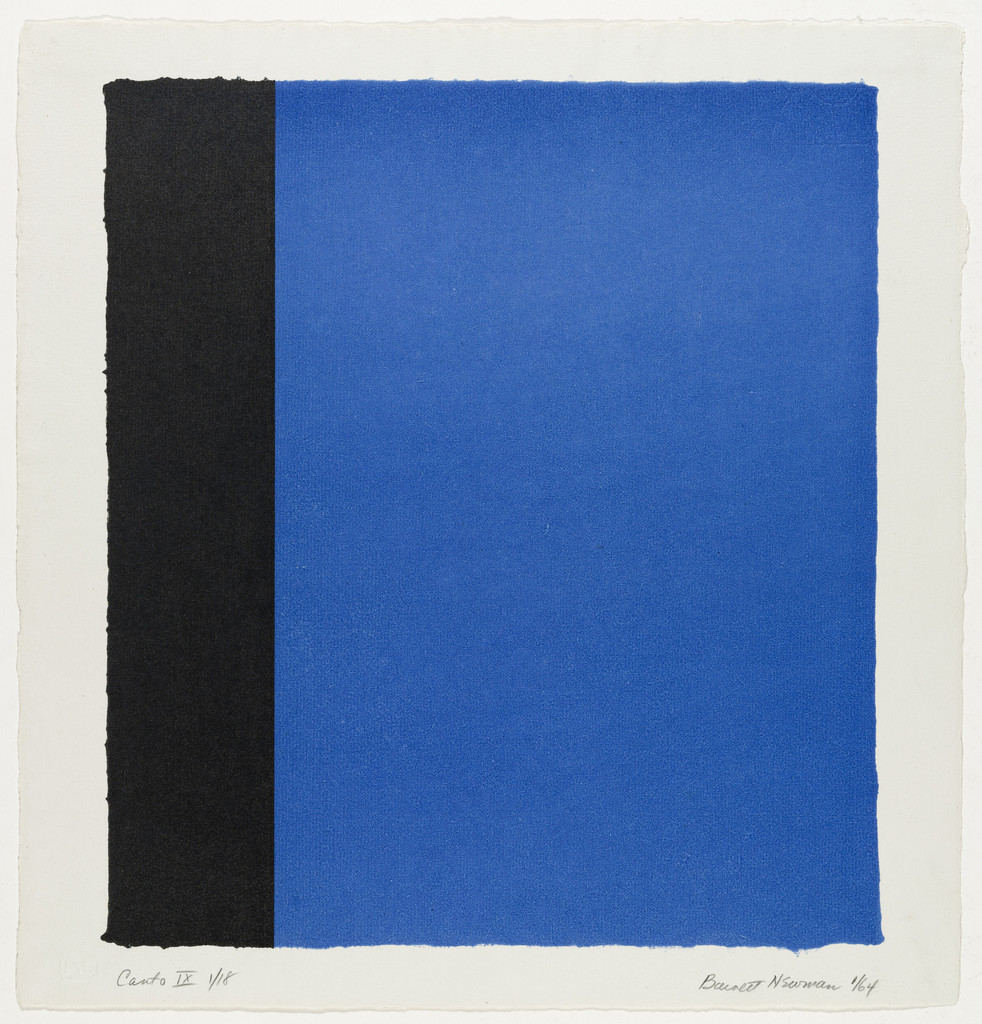
Canto IX from 18 Cantos
Barnett Newman
1964
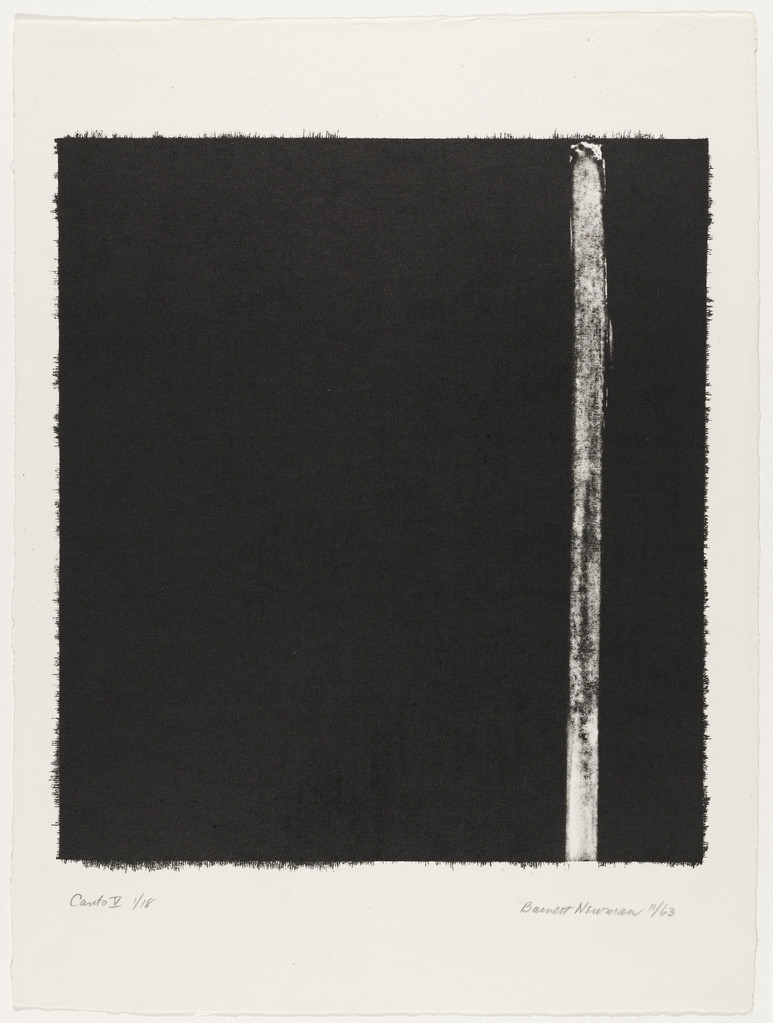
Canto V from 18 Cantos
Barnett Newman
1963
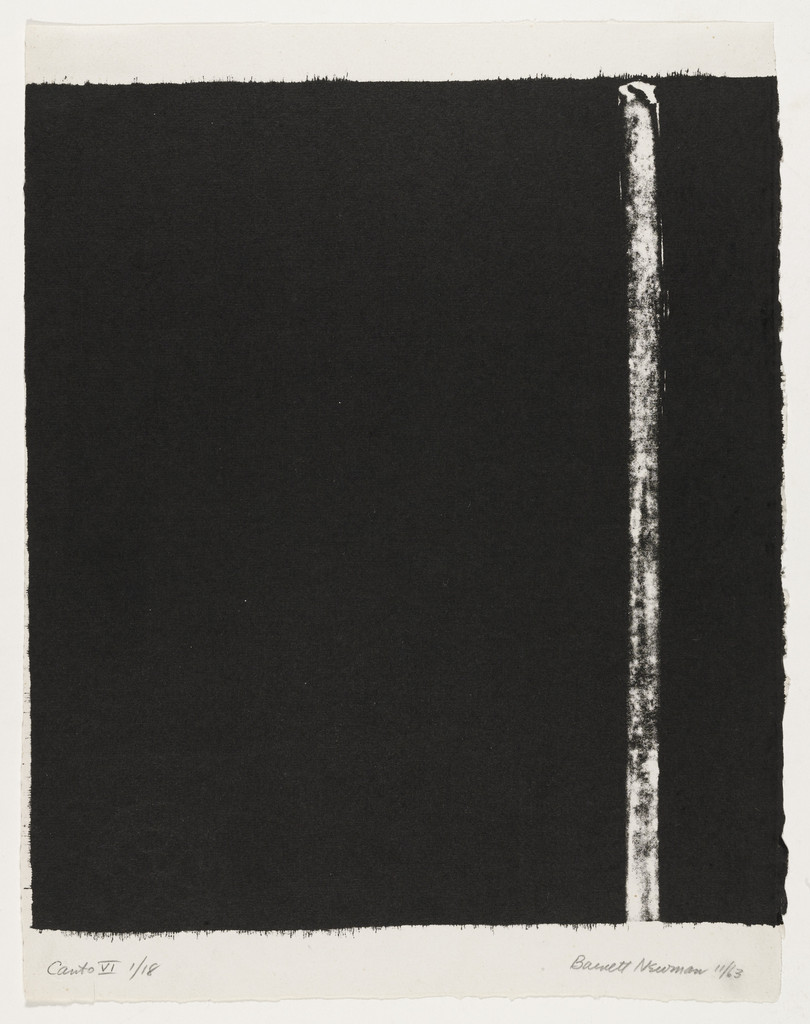
Canto VI from 18 Cantos
Barnett Newman
1963
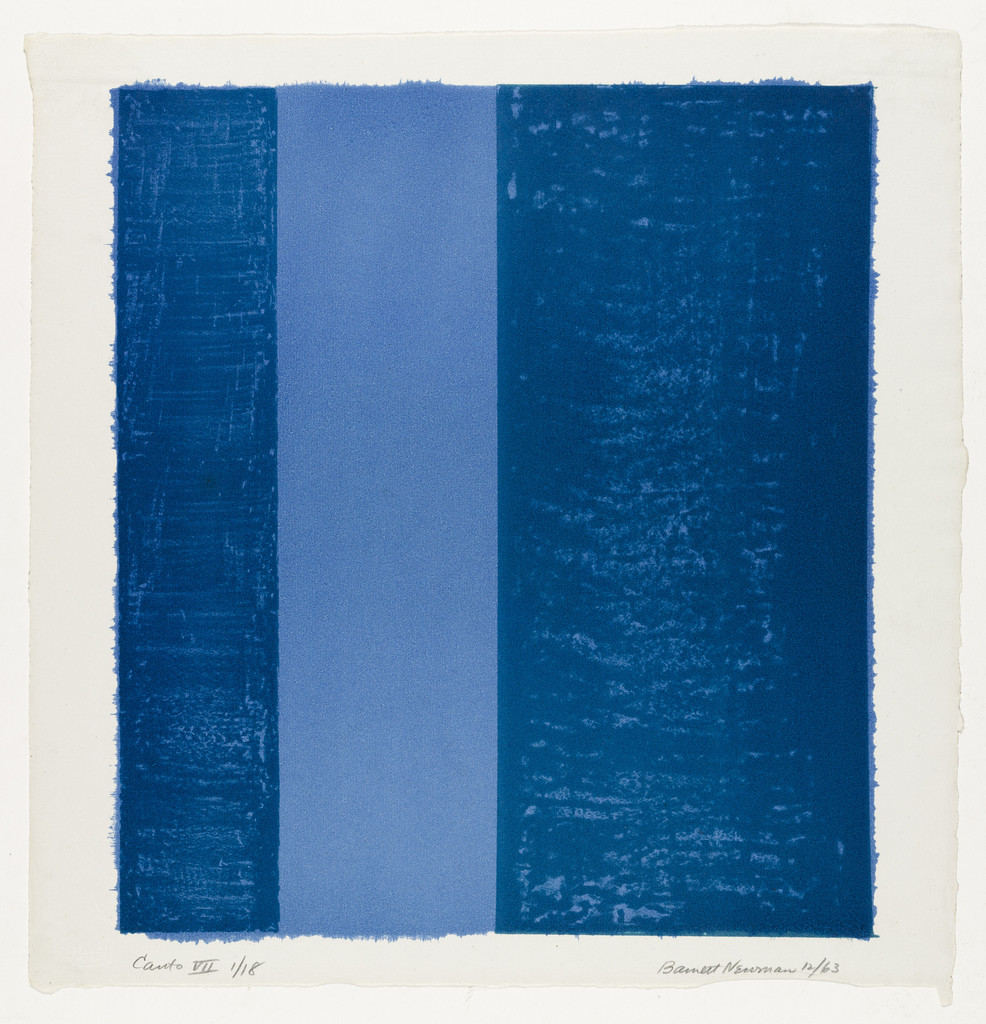
Canto VII from 18 Cantos
Barnett Newman
1963
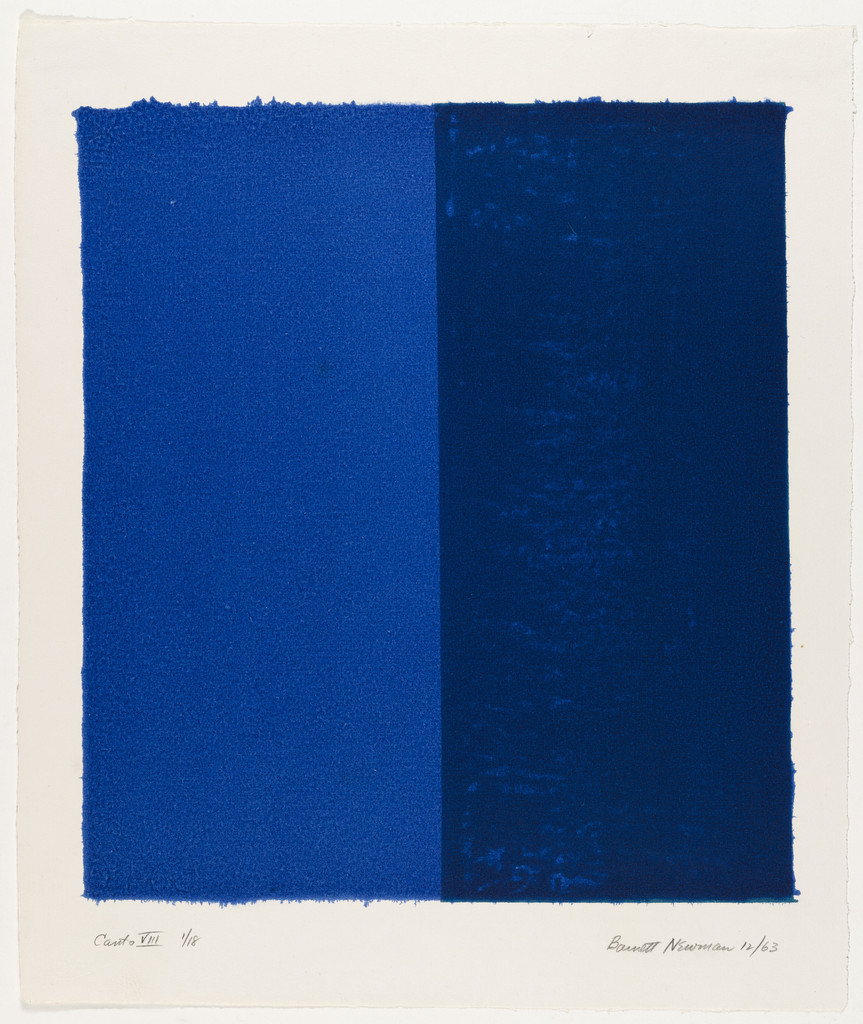
Canto VIII from 18 Cantos
Barnett Newman
1963
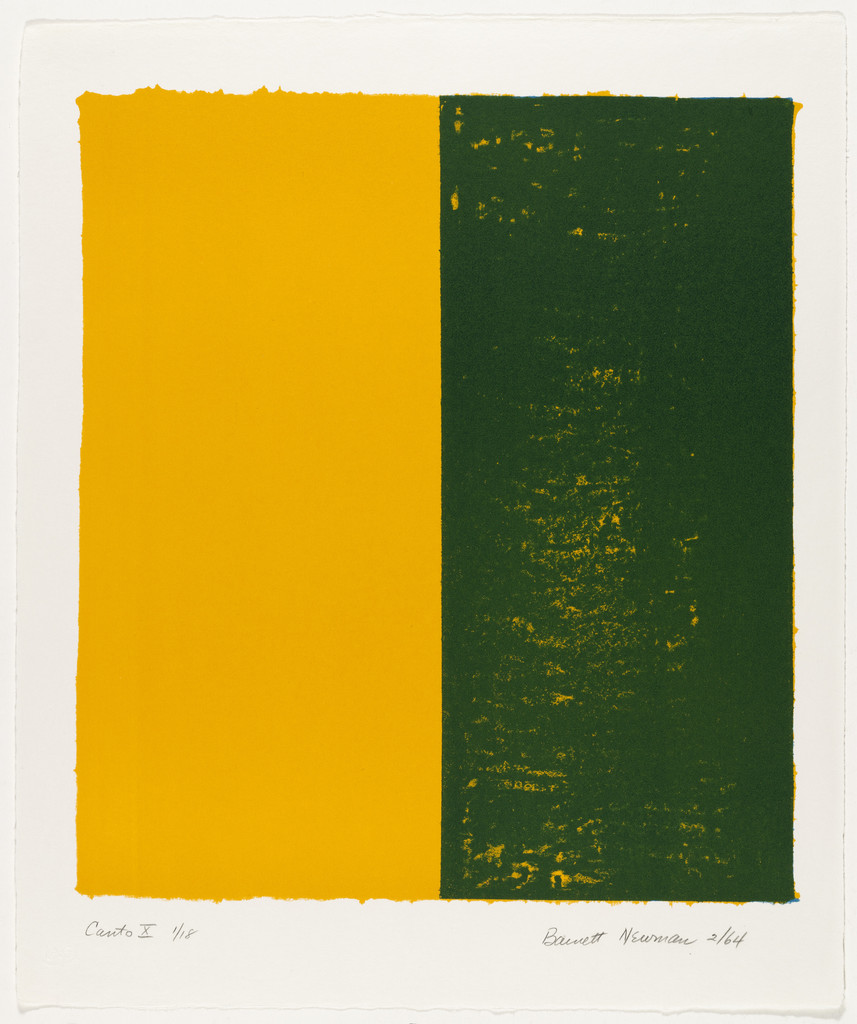
Canto X from 18 Cantos
Barnett Newman
1964
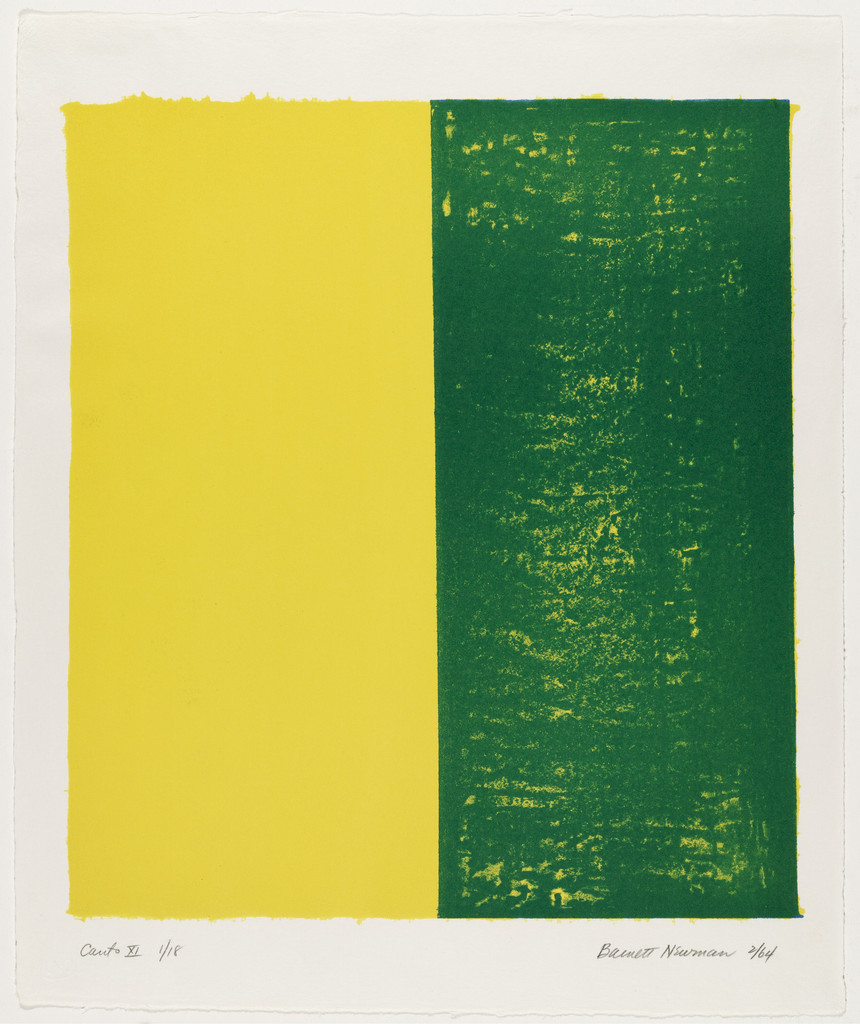
Canto XI from 18 Cantos
Barnett Newman
1964
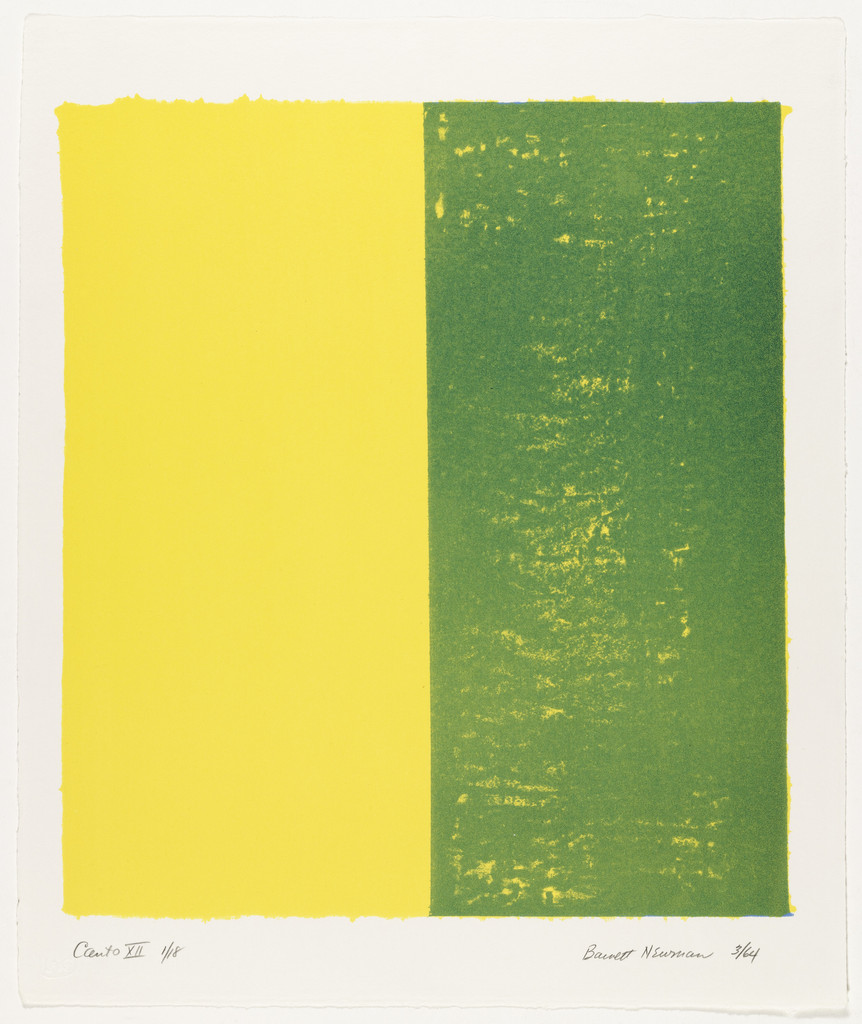
Canto XII from 18 Cantos
Barnett Newman
1964
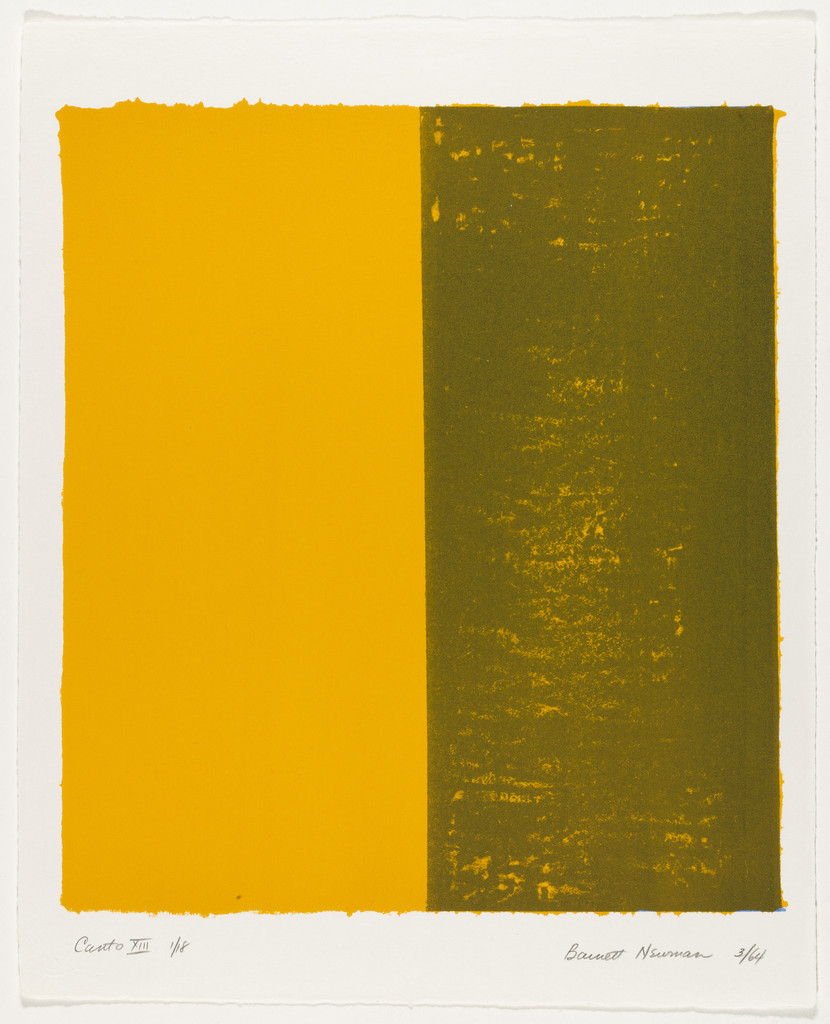
Canto XIII from 18 Cantos
Barnett Newman
1964
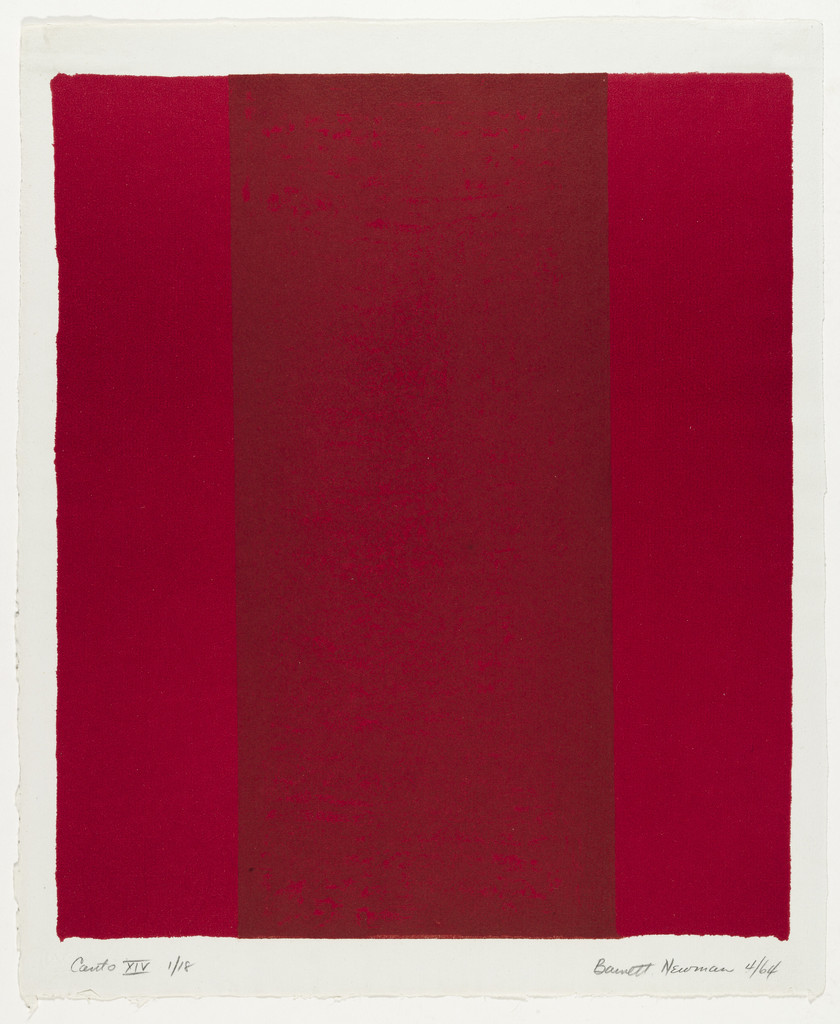
Canto XIV from 18 Cantos
Barnett Newman
1964
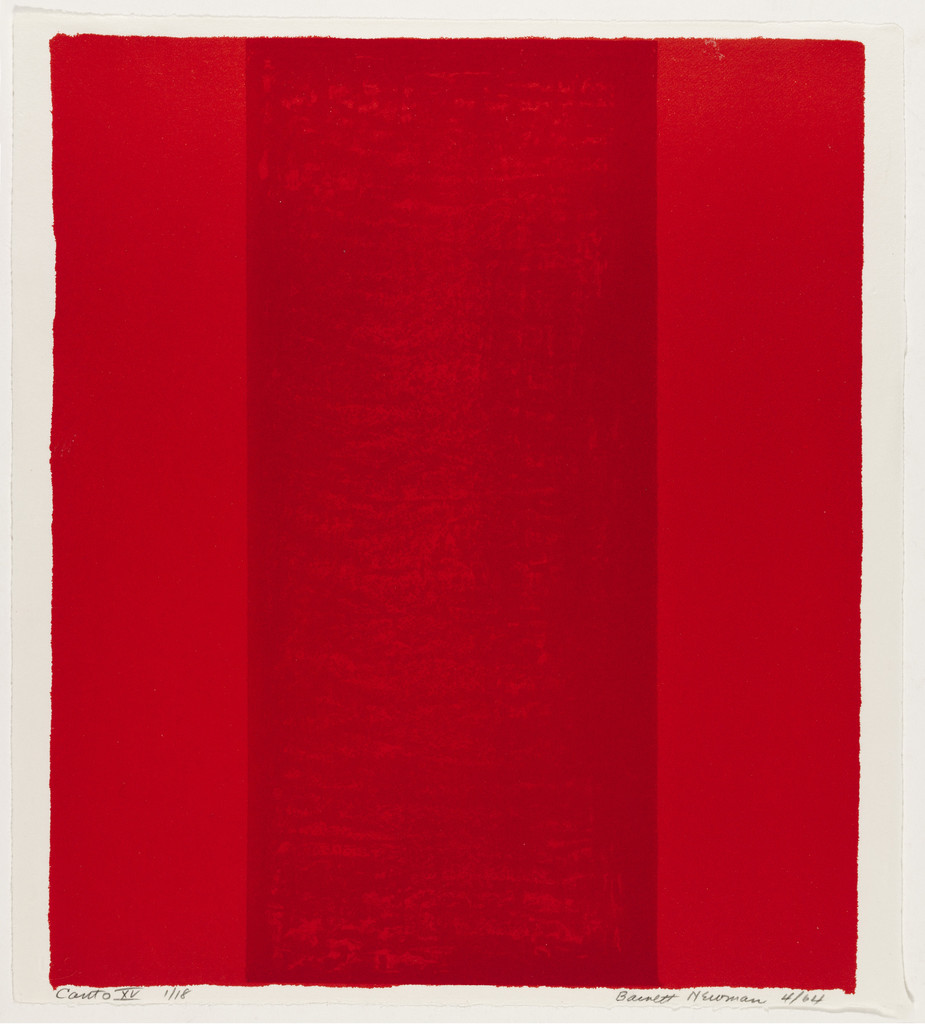
Canto XV from 18 Cantos
Barnett Newman
1964
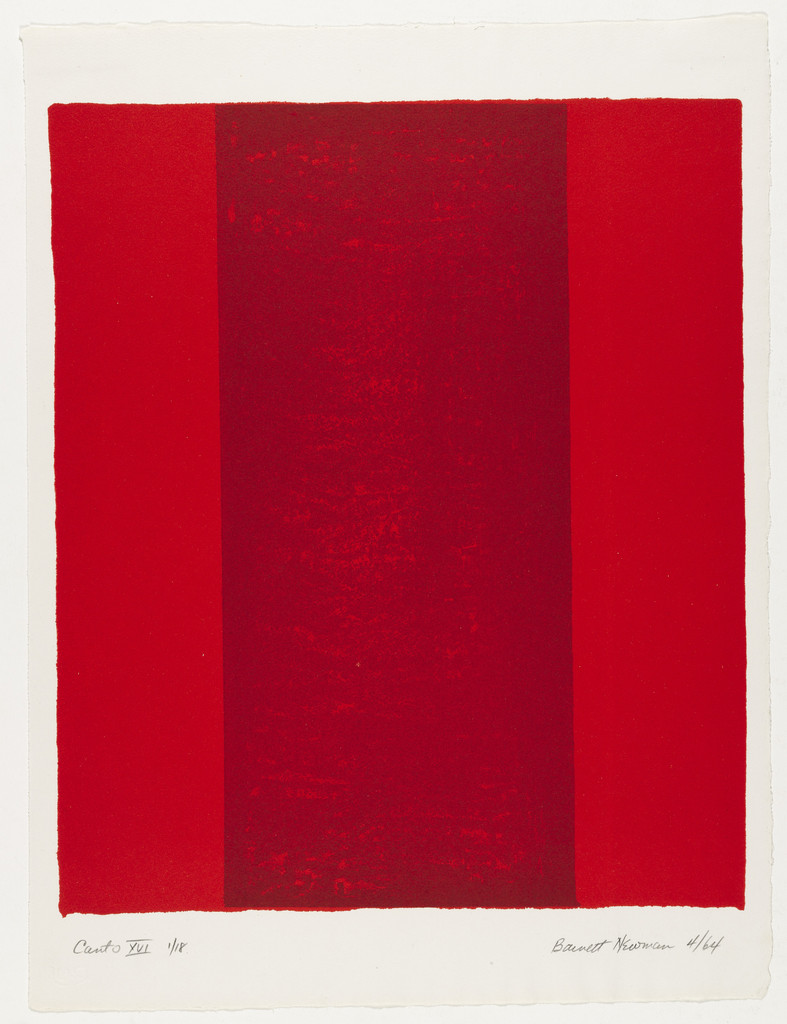
Canto XVI from 18 Cantos
Barnett Newman
1964
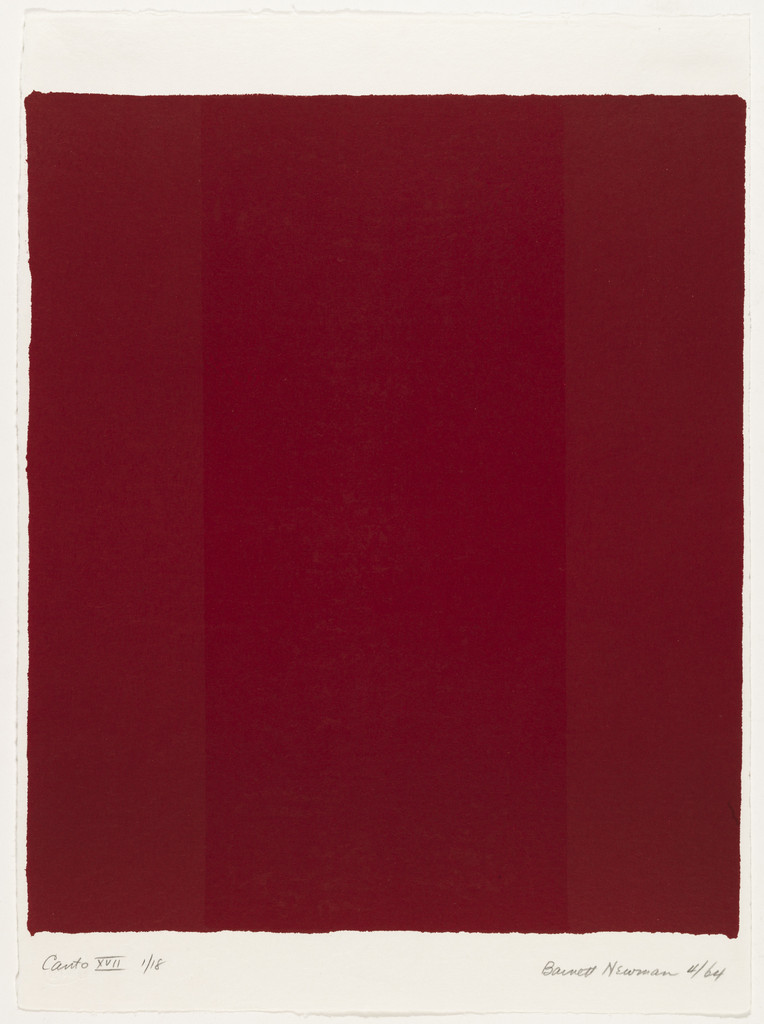
Canto XVII from 18 Cantos
Barnett Newman
1964
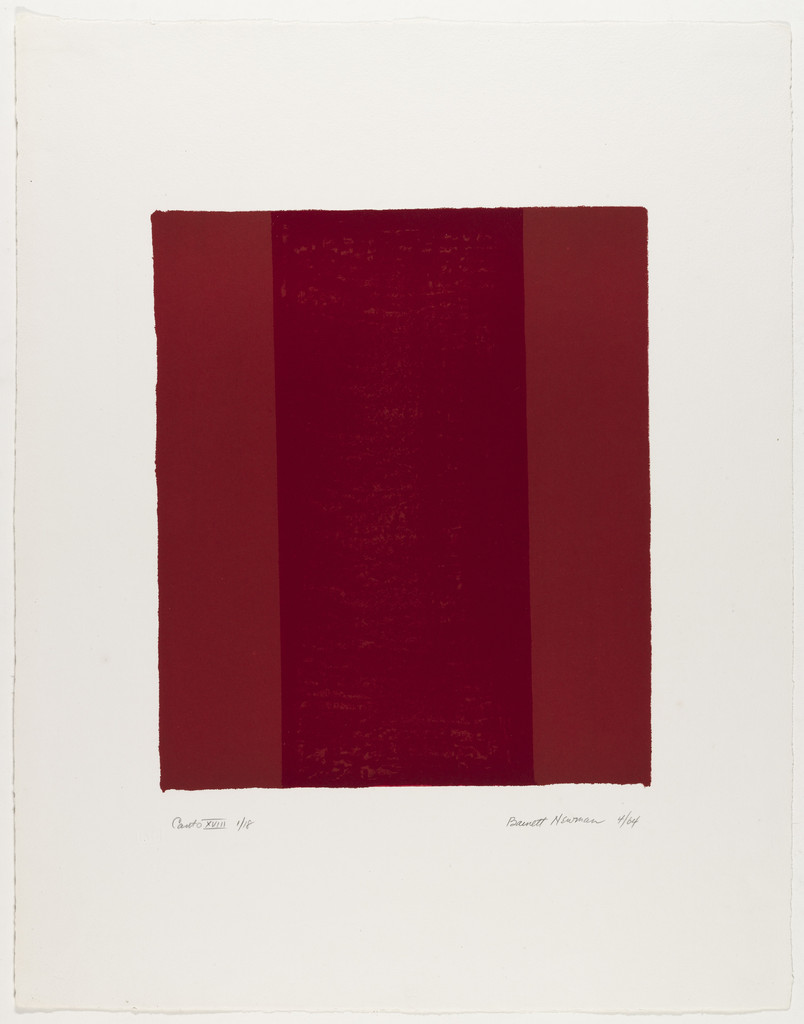
Canto XVIII from 18 Cantos
Barnett Newman
1964
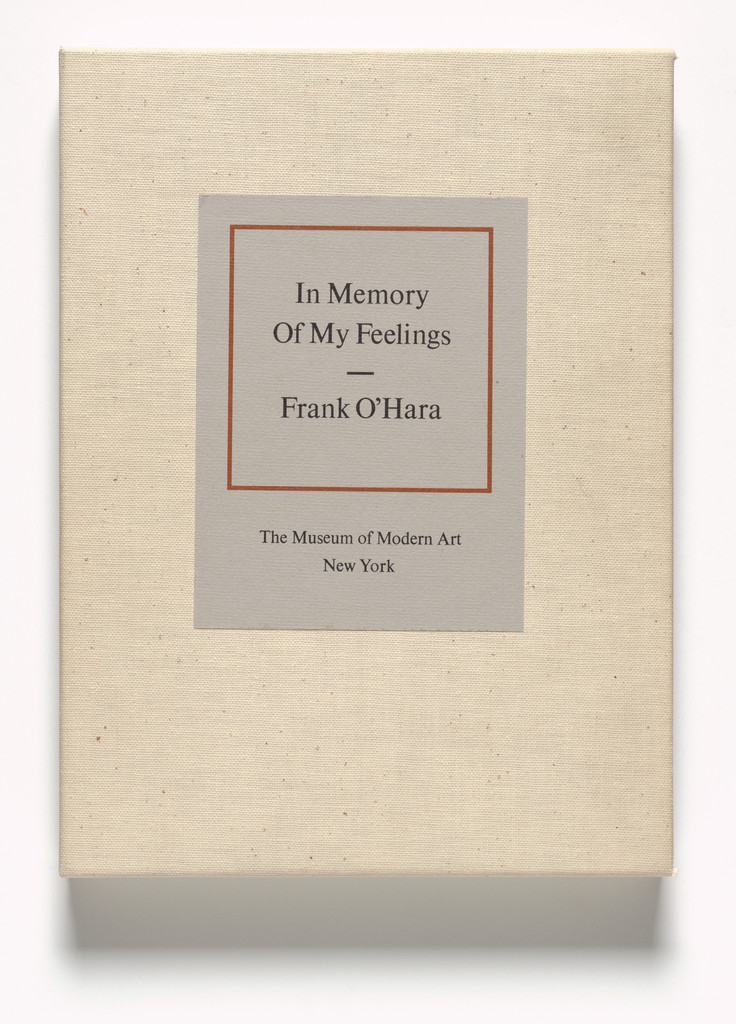
In Memory of My Feelings
Nell Blaine
1967
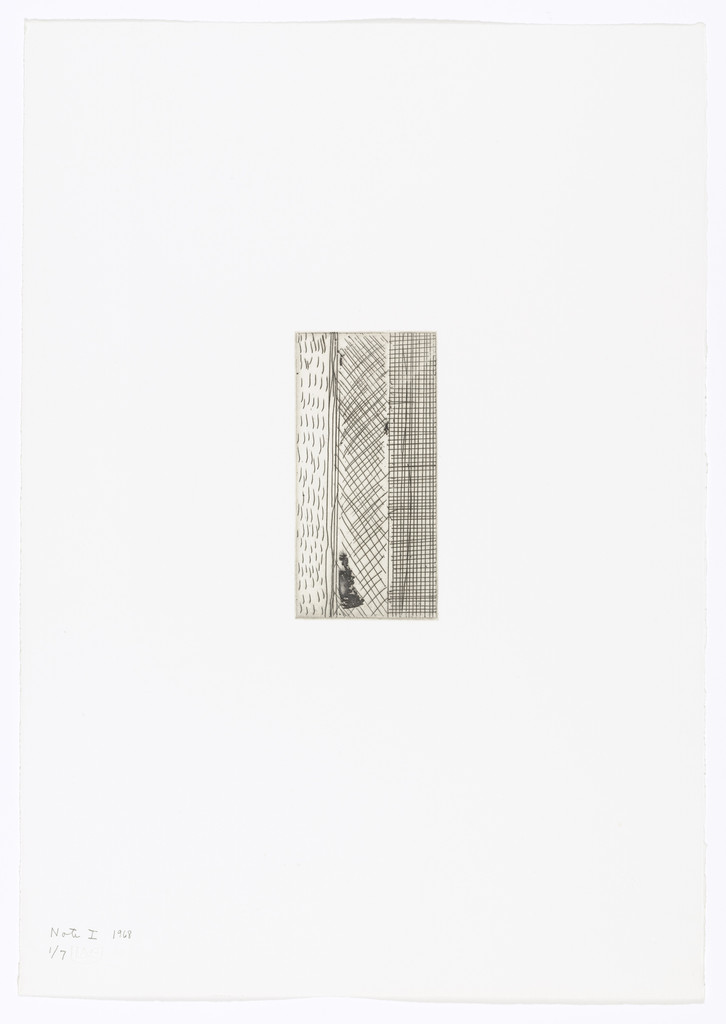
Note I from Notes
Barnett Newman
1968
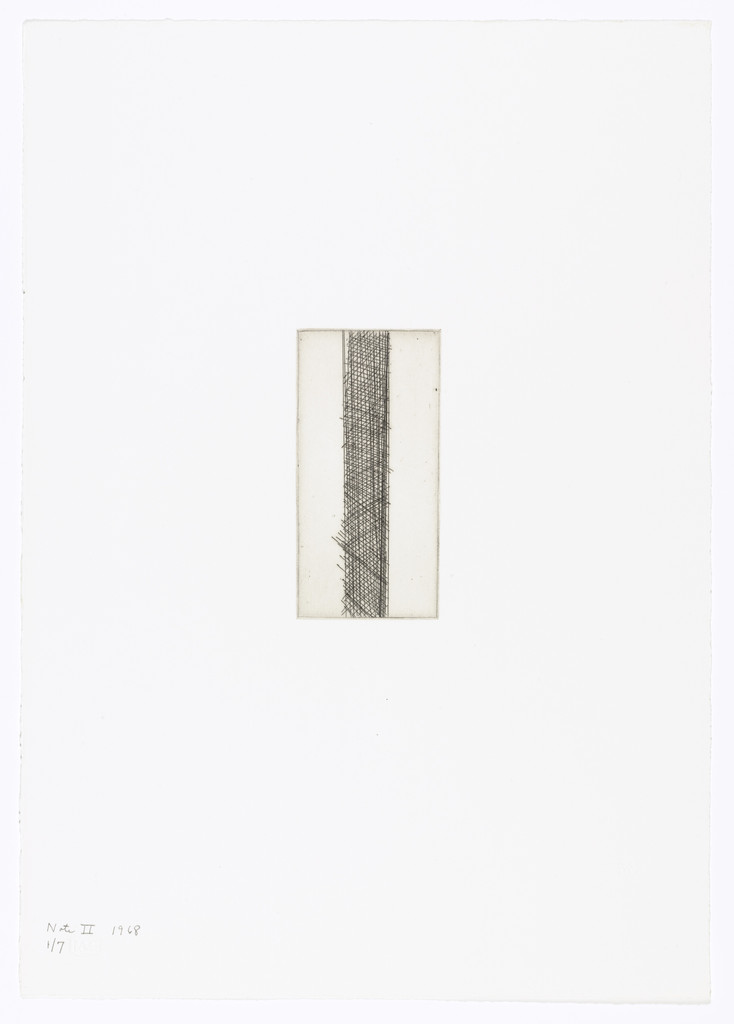
Note II from Notes
Barnett Newman
1968
Exhibitions
24 exhibitionsMay 28, 1959 – Sep 08, 1959
The New American Painting as Shown in Eight European Countries 19581959
17 artists · 1 curator
Dec 03, 1959 – Jan 31, 1960
Recent Acquisitions
49 artists · 1 curator
May 27, 1964 – Jul 29, 1964
American Painters as New Lithographers
11 artists · 1 curator
Sep 15, 1964 – Oct 24, 1964
Contemporary Painters and Sculptors as Printmakers
92 artists · 1 curator
Dec 04, 1967 – Sep 10, 1968
Frank O'Hara/In Memory of My Feelings
31 artists · 2 curators
Jan 17, 1968 – Mar 04, 1968
The Sidney and Harriet Janis Collection
55 artists · 1 curator
Mar 27, 1968 – Jun 09, 1968
Dada, Surrealism and their Heritage
94 artists · 1 curator
Jul 03, 1968 – Sep 08, 1968
Art of the Real
19 artists · 1 curator
Jun 18, 1969 – Oct 05, 1969
The New American Painting and Sculpture: The First Generation
43 artists · 2 curators
Jul 21, 1970 – Sep 08, 1970
Barnett Newman, 19051970
1 artist · 2 curators
Oct 21, 1971 – Jan 10, 1972
Barnett Newman
1 artist · 2 curators
Dec 03, 1974 – Mar 03, 1975
American Prints: 19131963
84 artists · 2 curators
Sep 29, 1976 – Nov 30, 1976
The Natural Paradise: Painting in America 18001950
67 artists · 1 curator
Sep 12, 1978 – Nov 26, 1978
Recent Acquisitions: Painting and Sculpture
13 artists · 1 curator
Feb 13, 1980 – Apr 01, 1980
Printed Art: A View of Two Decades
82 artists · 1 curator
Oct 15, 1981 – Jan 03, 1982
Prints: Acquisitions 19771981
74 artists · 1 curator
Jun 17, 1982 – Oct 14, 1982
For 25 Years: Prints from ULAE
19 artists · 1 curator
May 17, 1984
Selections from the Permanent Collection: Prints and Illustrated Books
99 artists · 2 curators
Apr 10, 1985 – Oct 27, 1985
Philip Johnson: Selected Gifts
20 artists · 2 curators
Sep 12, 1985 – Feb 04, 1986
Tatyana Grosman Gallery Inaugural Installation
19 artists · 1 curator
Nov 21, 1985 – Apr 01, 1986
Contemporary Works from the Collection
40 artists · 1 curator
Nov 20, 1987 – Mar 08, 1988
Master Prints from the Collection
66 artists · 1 curator
Nov 17, 1988 – Mar 26, 1989
Abstractions
77 artists · 1 curator
Apr 06, 1989 – Aug 08, 1989
Master Prints from the Collection
102 artists · 1 curator