
“I wasn’t breaking away from painting but trying to redefine what it was.” — Lynda Benglis
Asked to summarize her artistic ambitions in the 1960s, Lynda Benglis replied, “I wasn’t breaking away from painting but trying to redefine what it was.” She was raised in Louisiana and moved to New York in 1964, where she trained as a painter in the Abstract Expressionist vein. Benglis admired the gestural style of that older generation of artists, but quickly began to adapt their methods to more extravagant ends. Employing a broad range of materials in acid hues, her best-known works record the behavior of a fluid substance in action. Alongside peers like Eva Hesse, Alan Saret, and Richard Serra, she allowed the process of making to dictate the shape of her finished works, wielding pliant matter that “can and will take its own form.” Benglis invented a new format with her celebrated “pours,” which resembled paintings but came off the wall to occupy the space of sculpture. In Blatt and other similar works from 1969, she extended Jackson Pollock’s famed drip technique into three dimensions, spilling liquid rubber directly onto the floor. (A photographer for Life magazine once captured Benglis in mid-pour, lunging forward to sling pigmented latex straight from the can.) Blatt’s dayglo swirls retain a look of barely arrested motion, their colors gelled into a kind of psychedelic carpet. Rejecting vertical orientation—as well as canvas, stretcher, and brush—the “pours” push conventions of easel painting to the point of near collapse. Another viscous material is tested in Benglis’s wax reliefs of the late 1960s. In Embryo II (1967–76), layers of molten beeswax cling to a Masonite board, hardened into ridges and furrows in a spectrum of pastel hues. This pursuit of what the artist called “the frozen gesture” continues in her fabric knots—silvered coils of cotton bunting wrapped around a wire armature. Victor (1974) gleams with metallic paint, and other knots in the series are flecked with glitter and bright acrylic. That cosmetic finish—all spangle and flash—recalls the decorative arts, and mars pure abstraction with jarring materials that connote the lowbrow and the feminine. Benglis’s interest in gendered stereotypes extends to her pioneering videos. Works like Female Sensibility and Now (1973) play freely with arousal and submission, and questioned the role of the woman artist at the height of the feminist movement. More provocative still were the racy self-portraits she staged in the early 1970s: advertisements and gallery announcements in which she posed like a pinup or porn star. These “sexual mockeries,” as Benglis called them, satirized “the art-star system, and the way artists use themselves, their persona, to sell the work.”
Taylor Walsh, Curatorial Assistant, Department of Drawings and Prints, 2016
The research for this text was supported by a generous grant from The Modern Women’s Fund.
Works in Collection
17 works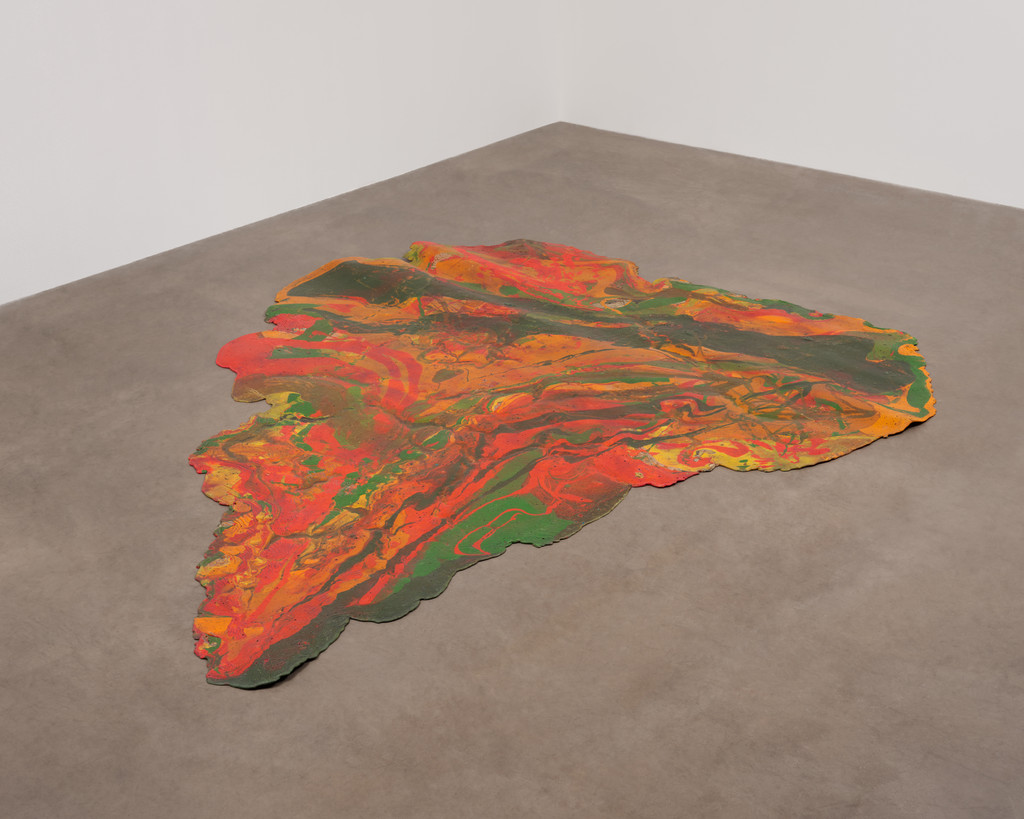
Blatt
Lynda Benglis
1969
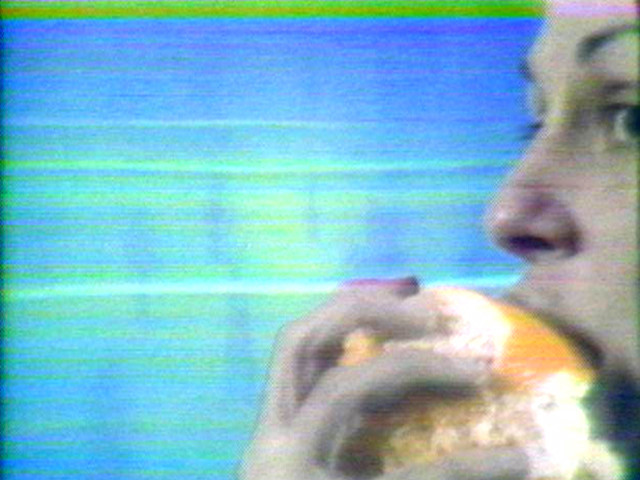
Collage
Lynda Benglis
1973
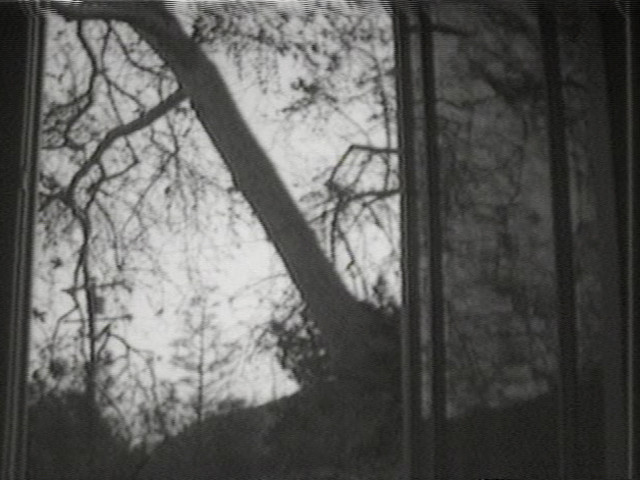
Discrepancy
Lynda Benglis
1973
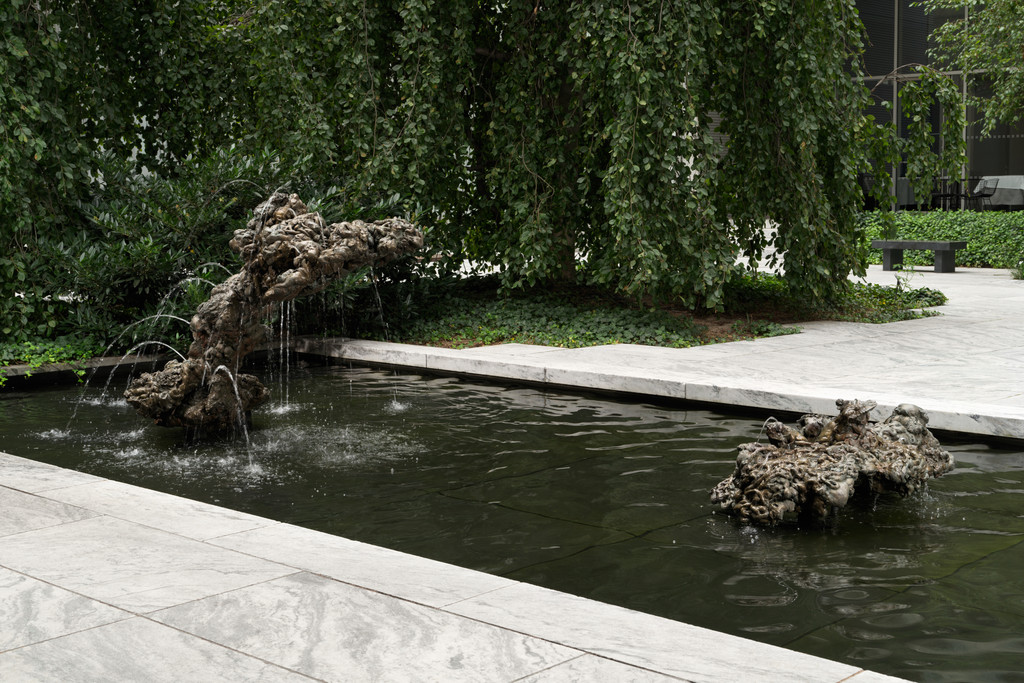
Double Fountain, Mother and Child
Lynda Benglis
2007
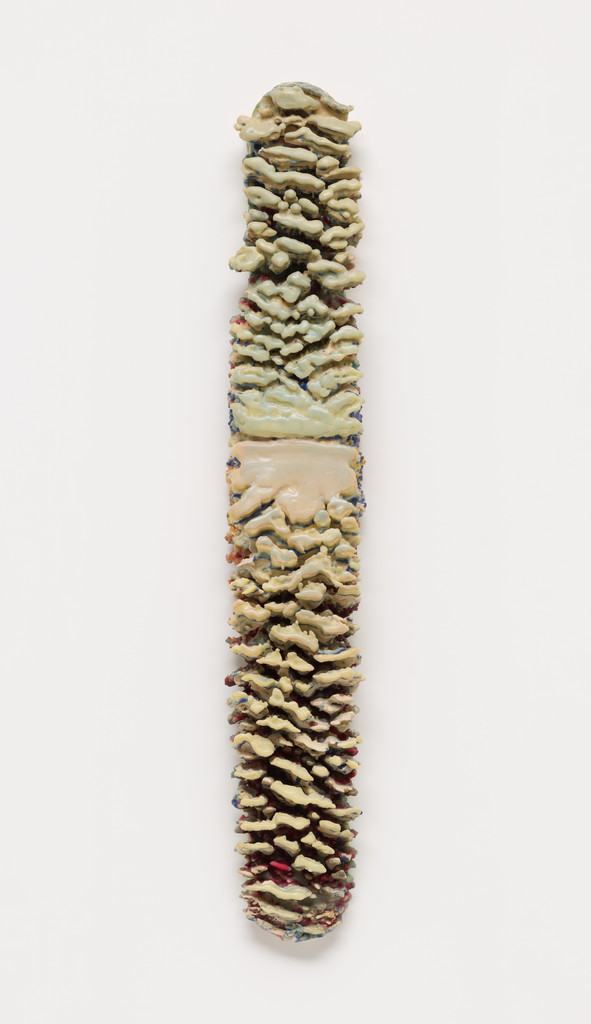
Embryo II
Lynda Benglis
1967-76
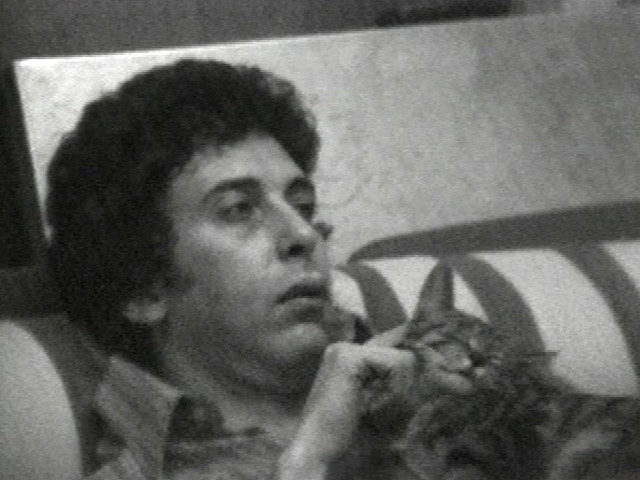
Enclosure
Lynda Benglis
1973
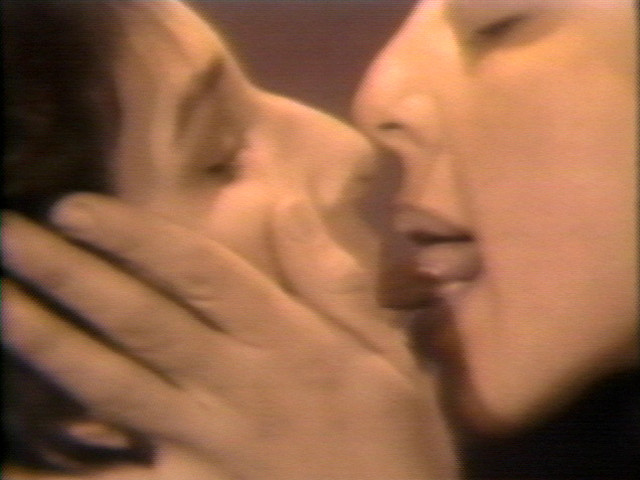
Female Sensibility
Lynda Benglis
1973
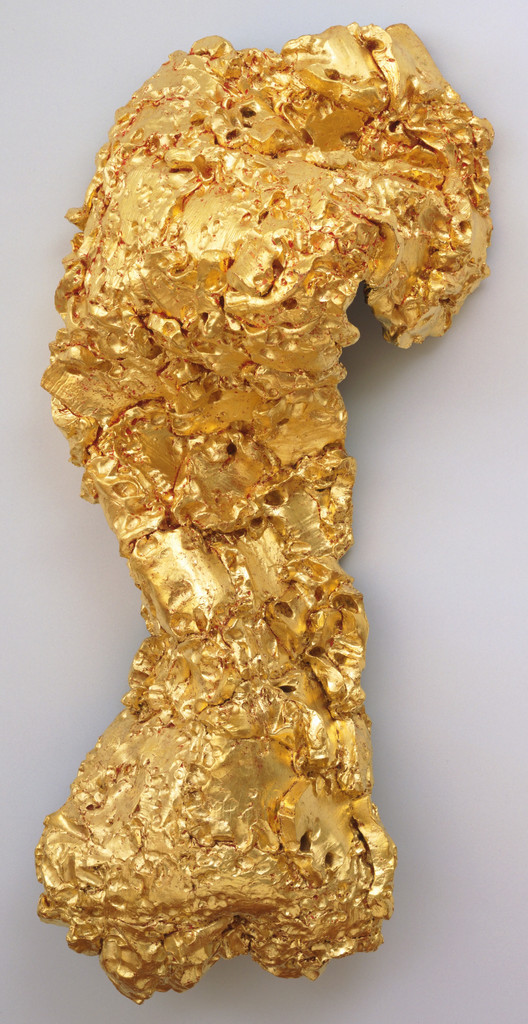
Ghost Dance/Pedmarks
Lynda Benglis
1998
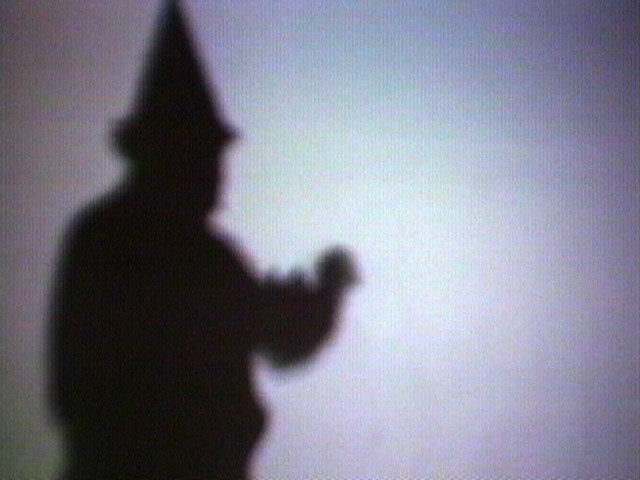
How's Tricks
Lynda Benglis
1976
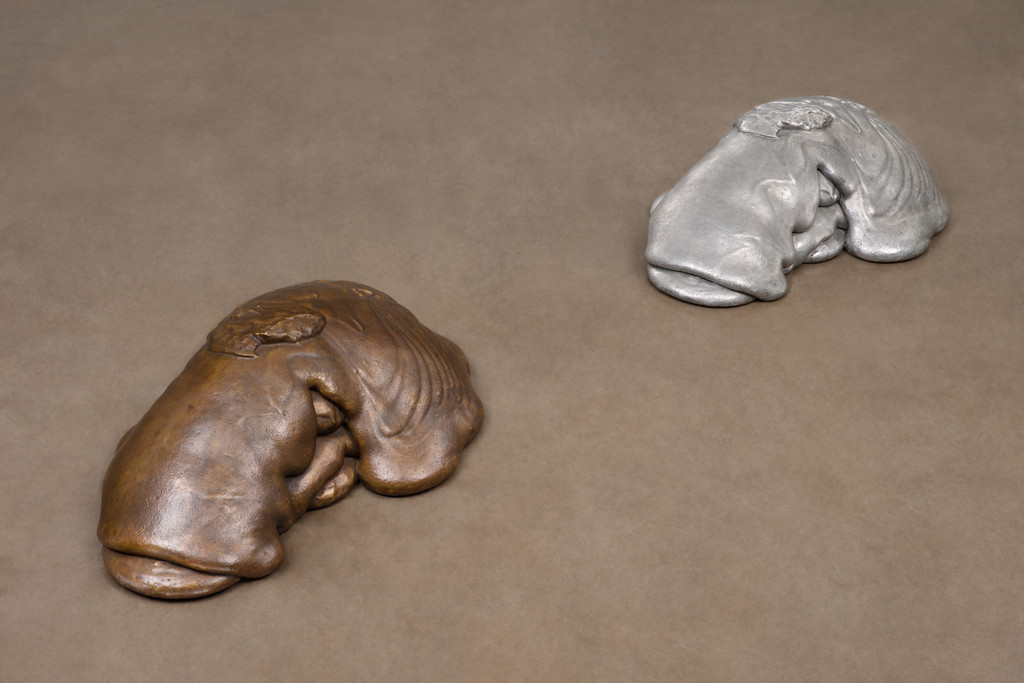
Modern Art (Pair)
Lynda Benglis
1974 (cast from 1970 foam sculpture)
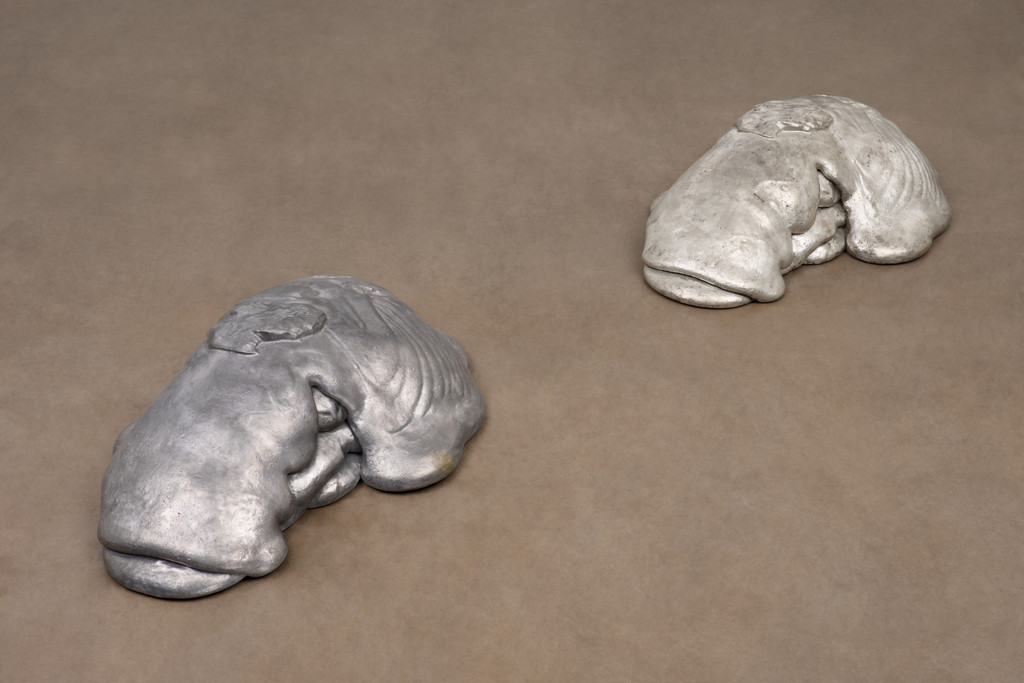
Modern Art (Pair)
Lynda Benglis
1975 (cast from 1970 foam sculpture)
Monitor
Lynda Benglis
1999
Mumble
Lynda Benglis
1972
Now
Lynda Benglis
1973
The Amazing Bow Wow
Lynda Benglis
1976
The Grunions are Running
Lynda Benglis
1973
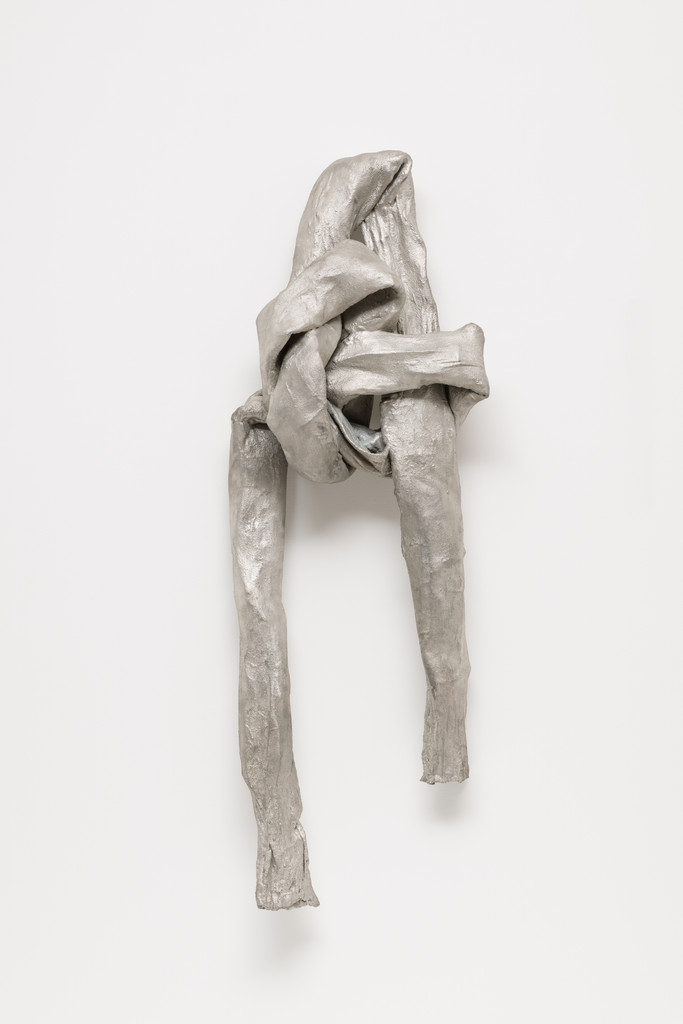
Victor
Lynda Benglis
1974
Exhibitions
8 exhibitionsAug 26, 1974 – Oct 31, 1974
Projects: Video I
6 artists · 1 curator
Jul 01, 1976 – Sep 30, 1976
Projects: Video IX
11 artists · 1 curator
Nov 20, 1978 – Feb 19, 1979
Gold
29 artists
May 18, 1979 – Aug 07, 1979
Contemporary Sculpture: Selections from the Collection of The Museum of Modern Art
55 artists · 1 curator
May 18, 1979 – Jun 06, 1979
Projects: Video XXVII
7 artists
Sep 23, 1985 – Oct 29, 1985
NEA Twentieth Anniversary
10 artists · 1 curator
Nov 08, 1985 – Jan 21, 1986
Made in India
20 artists · 1 curator
Nov 06, 1986 – Mar 31, 1987
Contemporary Works from the Collection
46 artists · 1 curator