“You have to fight yourself at every turn, so that you’re not repetitive or taking an easy solution.” — Susan Rothenberg
“You have to find things that interest you and find interesting ways of rendering them,” the artist Susan Rothenberg has said. “You have to fight yourself at every turn, so that you’re not repetitive or taking an easy solution.” Born in Buffalo, New York, in 1945, Susan Rothenberg became interested in art at an early age, inspired by her grandfather, a house painter, and trips to Buffalo’s Albright-Knox Art Gallery. After studying painting at Cornell University, she traveled, landing in New York, where she became involved in performance art, working with artist Joan Jonas. By 1974 Rothenberg painted her first picture of a horse, the animal that would soon become the subject of the iconic series of paintings she made over the next few years. “This image of a horse was also more emotionally charged,” she would later reflect. “People look at the image of a horse and they have associations—of power, movement, heaviness. It’s a living thing.” For the artist, the horse served as a device for undermining the prevailing conventions of painting. Though plainly representational, the subject allowed Rothenberg to experiment with new forms of abstraction, diverging from the largely minimalist and conceptual practices of her peers. In 1975, Rothenberg had her first solo exhibition at 112 Greene Street, an artist-run space that was a nexus for artists in Soho. Comprising three large horse paintings, the show proved to be pivotal for the artist and was widely acclaimed by critics, who recognized then and now that Rothenberg’s paintings “introduced symbolic imagery into Minimalist abstraction.” The exhibition marked the beginning of Rothenberg’s 45-year career, and established her ability to translate nearly any subject matter into an emotionally charged and aesthetically innovative painting language. By the 1980s, Rothenberg had expanded upon her horse motif and introduced new subjects, nearly always drawn from her surroundings: she painted disembodied heads and limbs, dancing figures, other animals, interior spaces. Throughout the decade she participated in many solo and group exhibitions, though never as the sole female artist: “I’m not going to tell them who they should put in,” she said in 1982. “But from now on I won’t be the only woman.” Rothenberg moved from New York to New Mexico in 1990, joining her husband Bruce Nauman, who was living outside of Santa Fe. There, Rothenberg incorporated a new perspective into her painting, introducing a high vantage point inspired by the landscape. In addition to painting her environment and what she saw out of her window, she also began basing paintings on memories of observed events. Rothenberg died in May 2020. Several years earlier, speaking to an interviewer about the public reception of her work, she remarked, “I certainly don’t expect to get a lot of applause for this. They getcha or they don’t.”
Lydia Mullin, Curatorial Assistant, Department of Painting and Sculpture, 2022
Works in Collection
40 works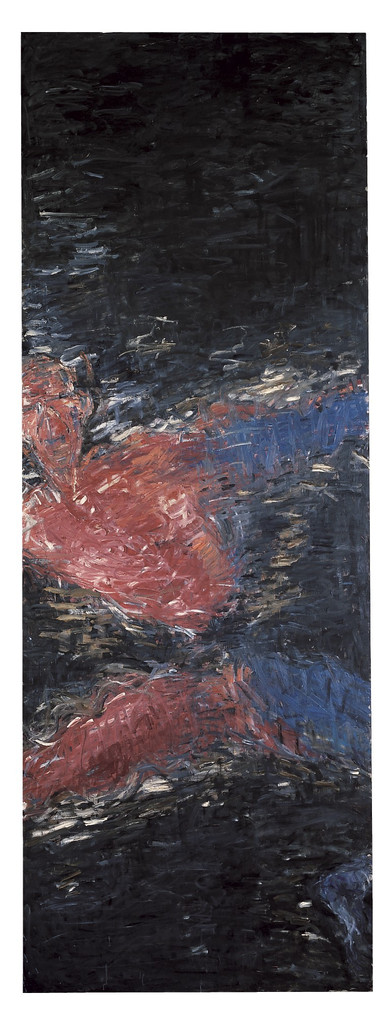
1, 2, 3, 4, 5, 6
Susan Rothenberg
1988
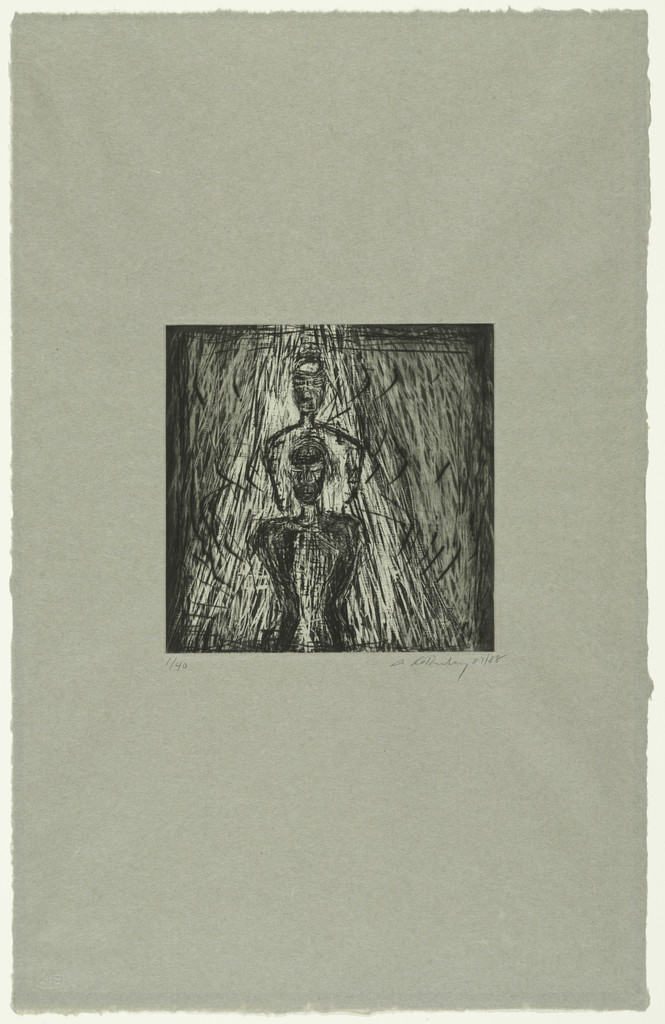
Alius
Susan Rothenberg
1987-88
Artists for Obama
John Baldessari
2008
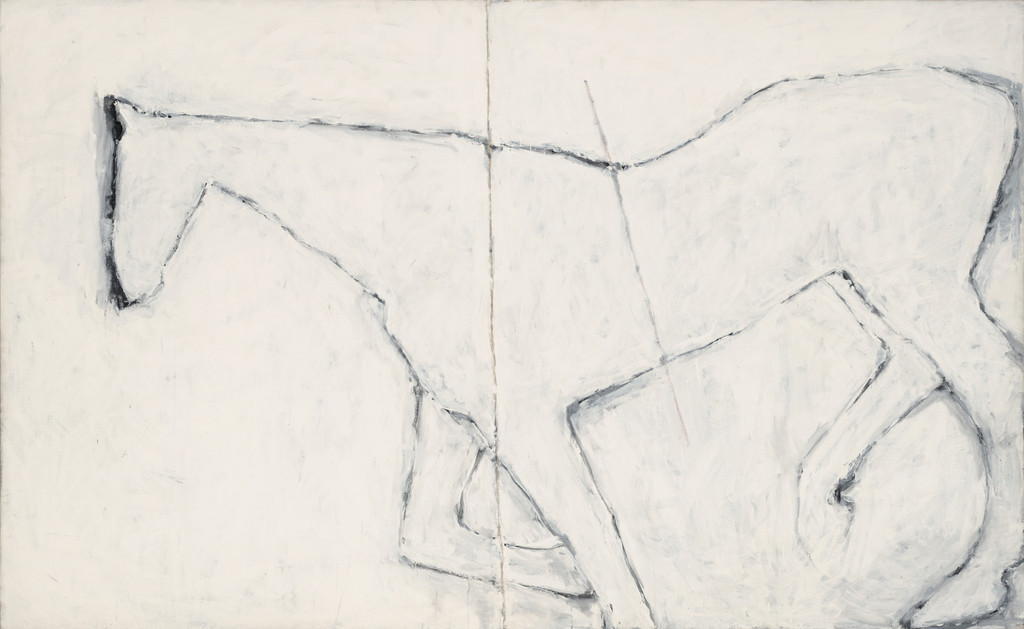
Axes
Susan Rothenberg
1976
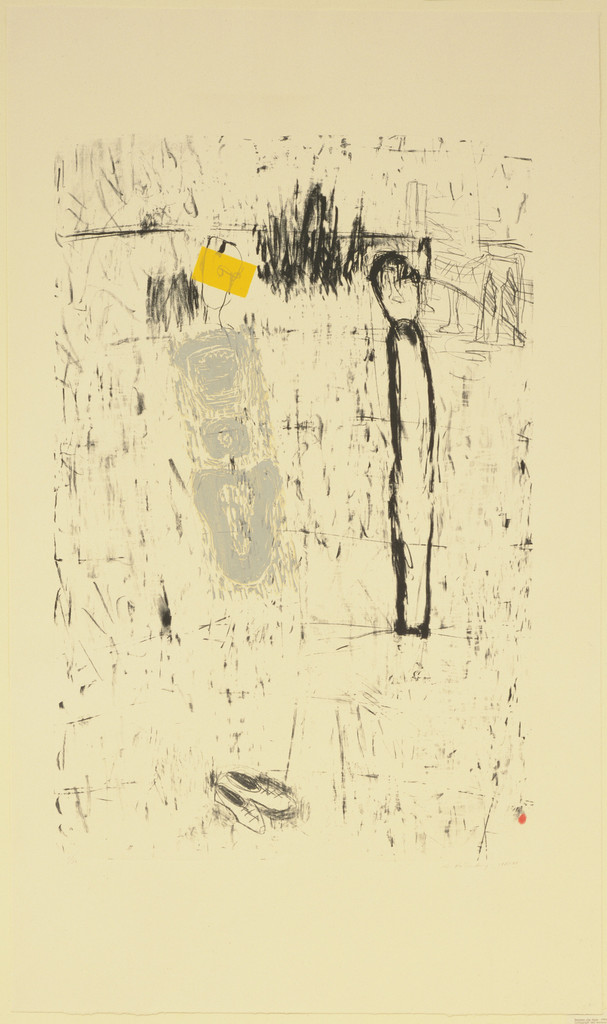
Between the Eyes
Susan Rothenberg
1983-84
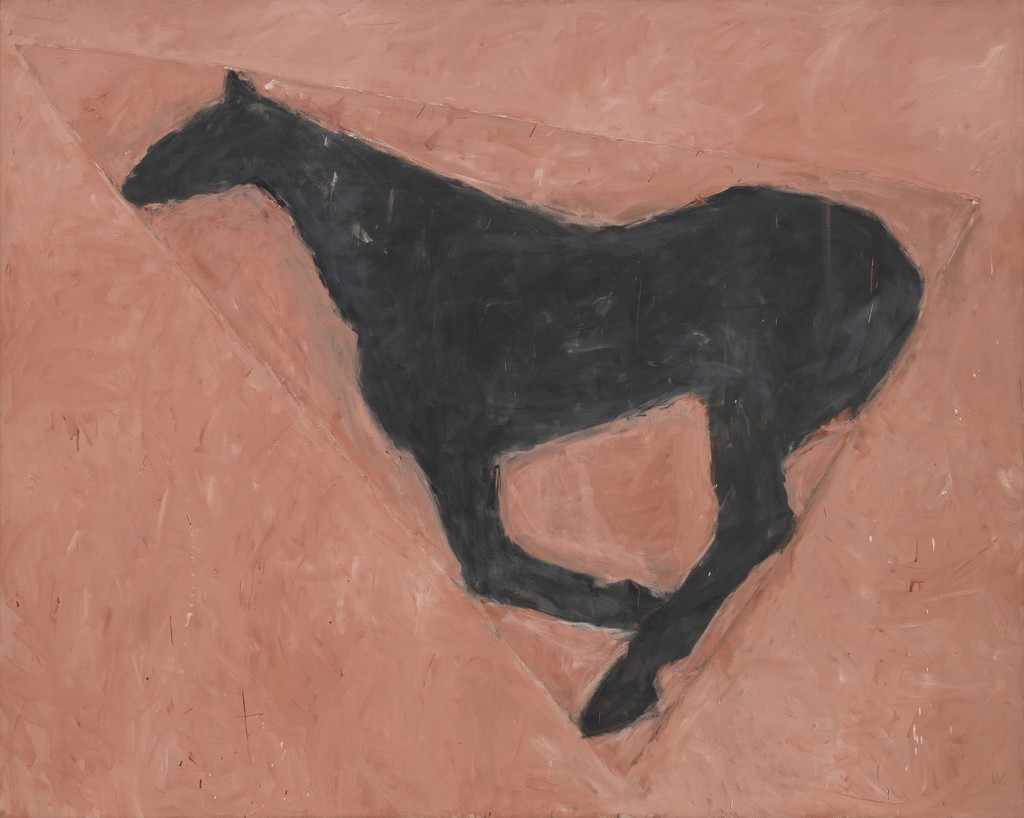
Black in Place
Susan Rothenberg
1976
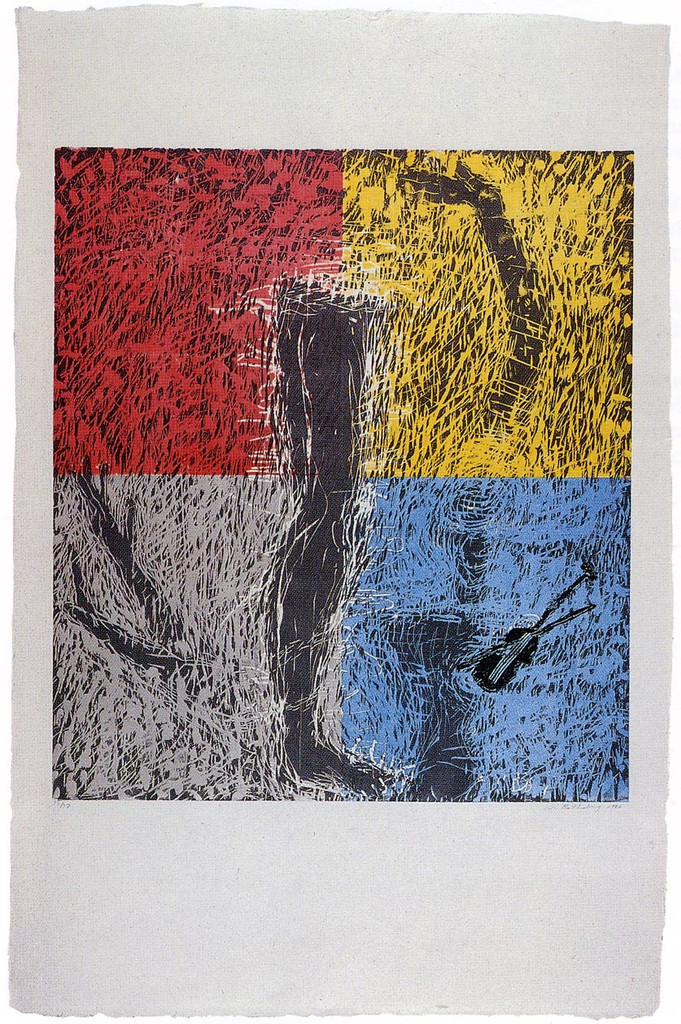
Blue Violin
Susan Rothenberg
1986
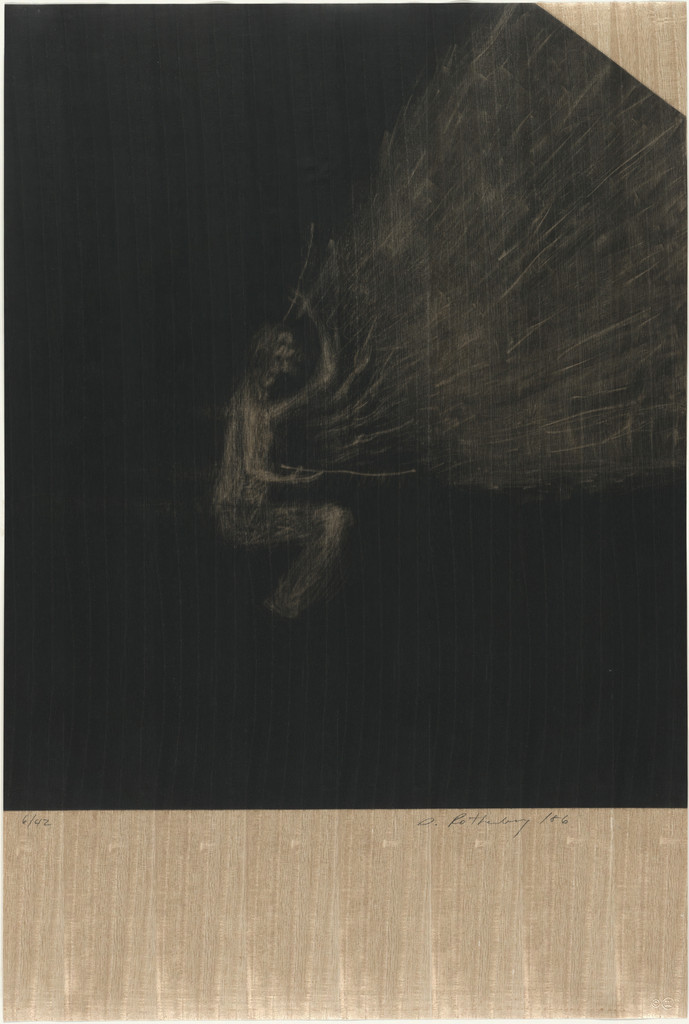
Boneman
Susan Rothenberg
1986
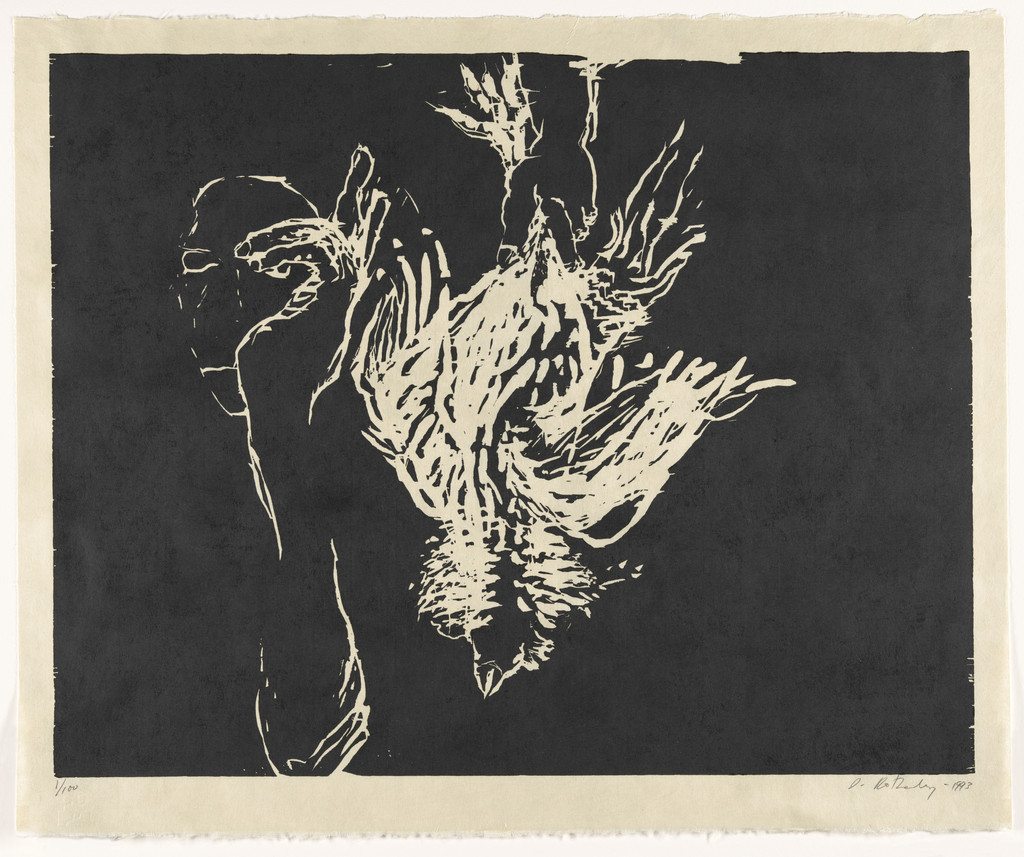
Dead Rooster #4
Susan Rothenberg
1993
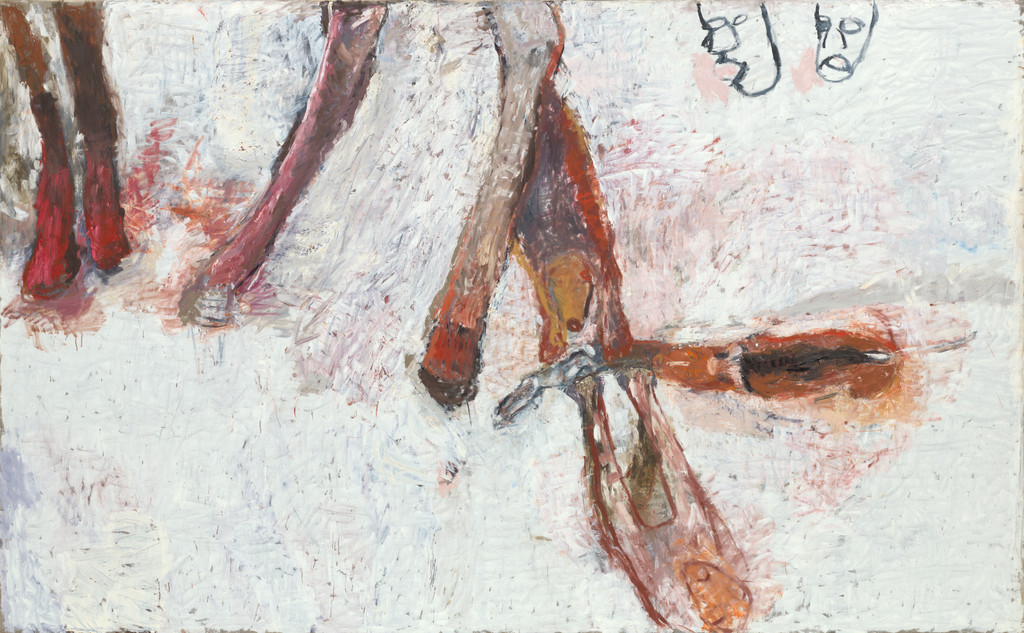
Dogs Killing Rabbit
Susan Rothenberg
1991-92
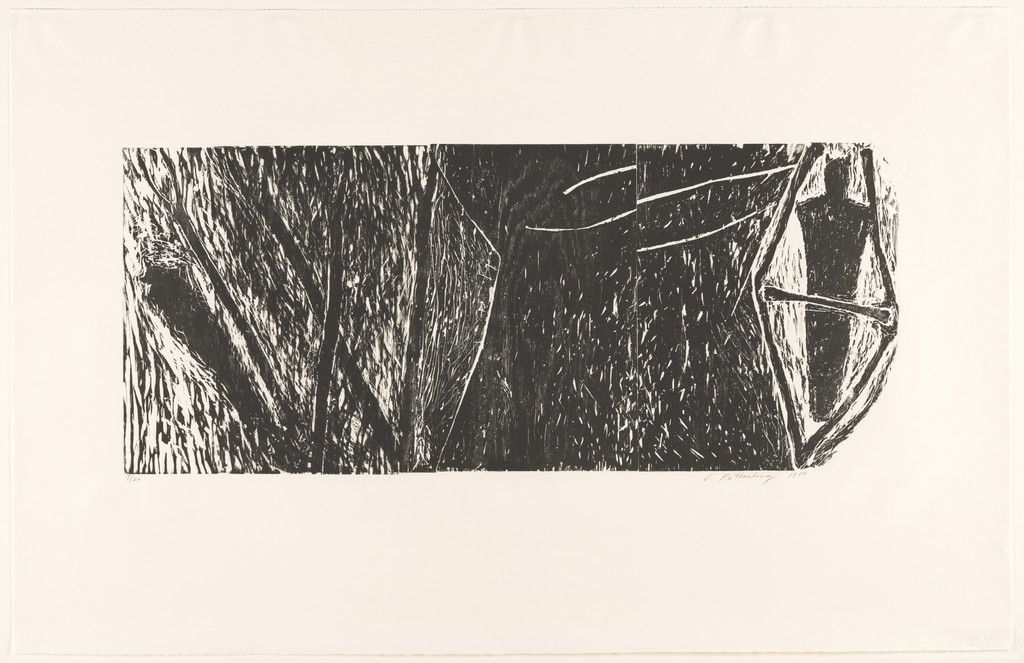
Doubles
Susan Rothenberg
1980
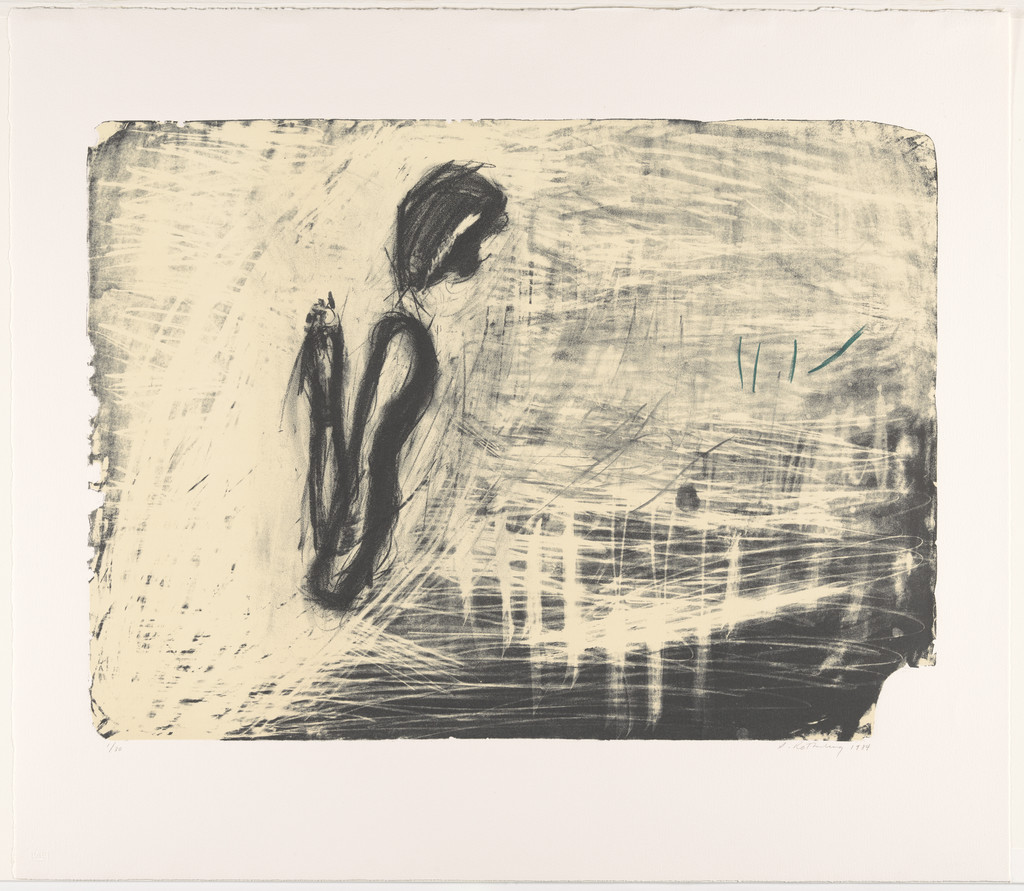
Four Green Lines
Susan Rothenberg
1984
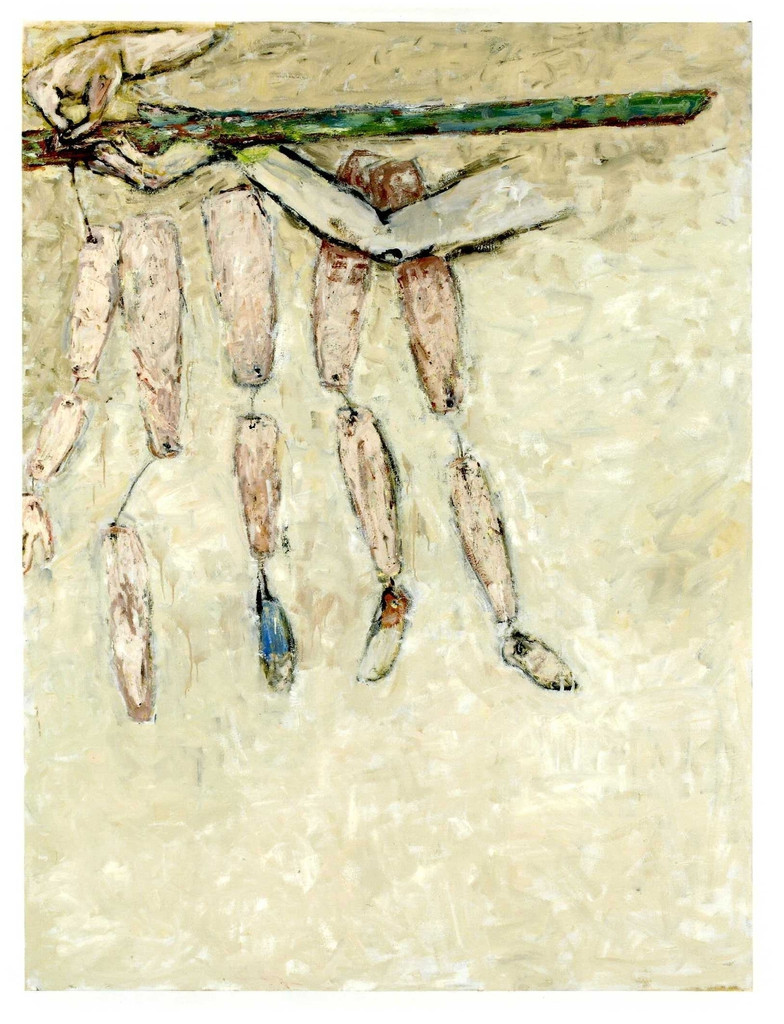
Green Bar
Susan Rothenberg
2008
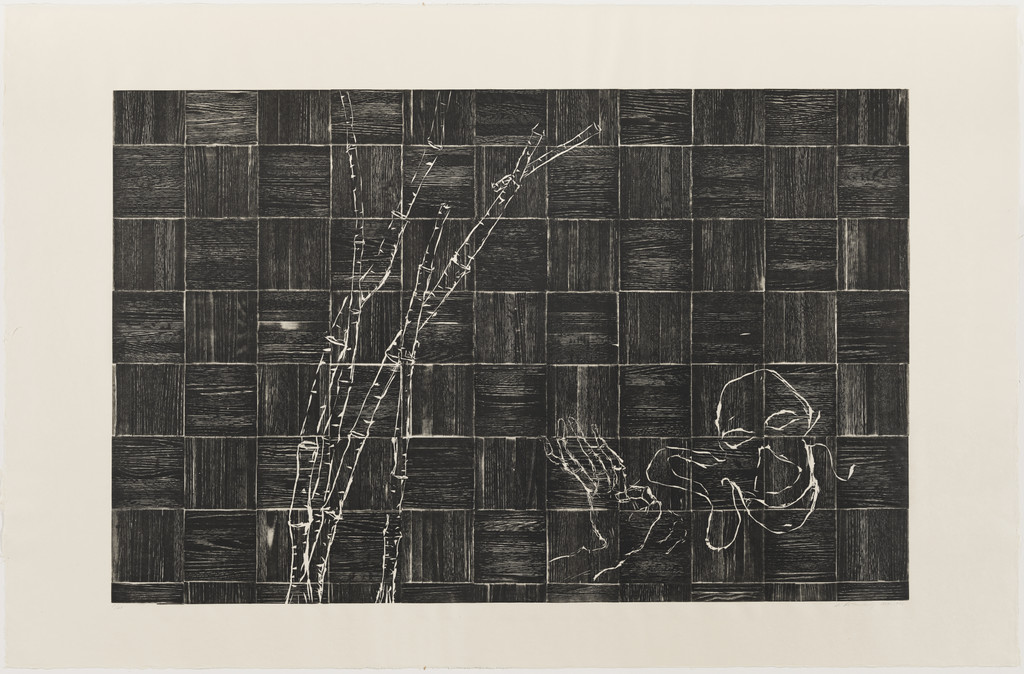
Listening Bamboo
Susan Rothenberg
1989-90
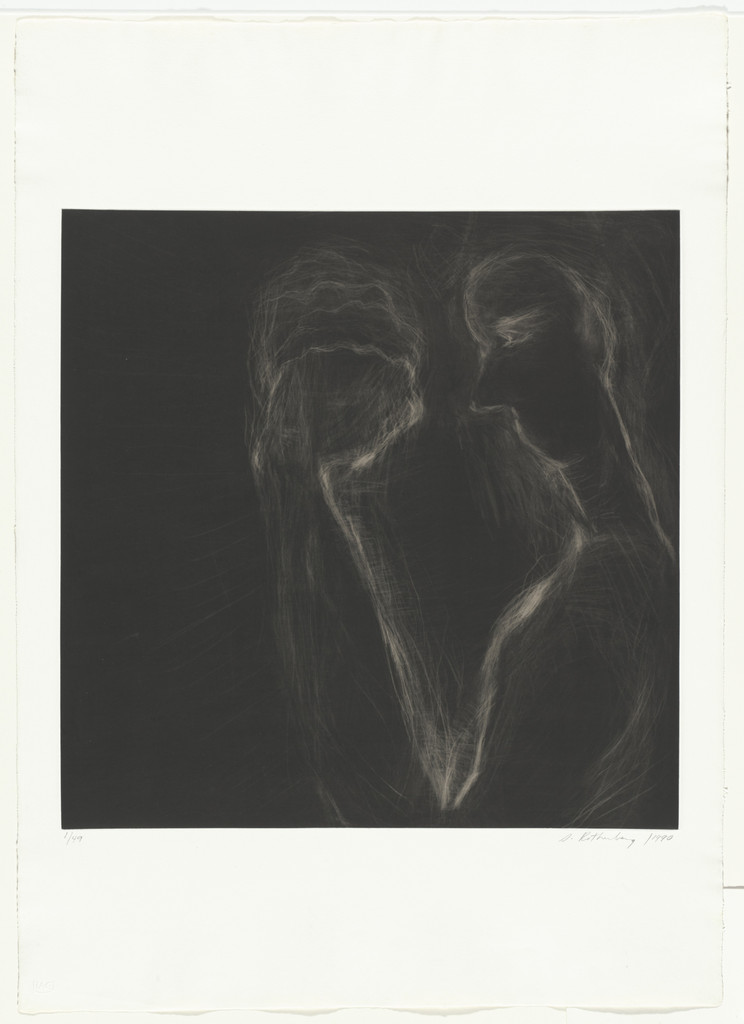
Mezzo Fist #1
Susan Rothenberg
1990
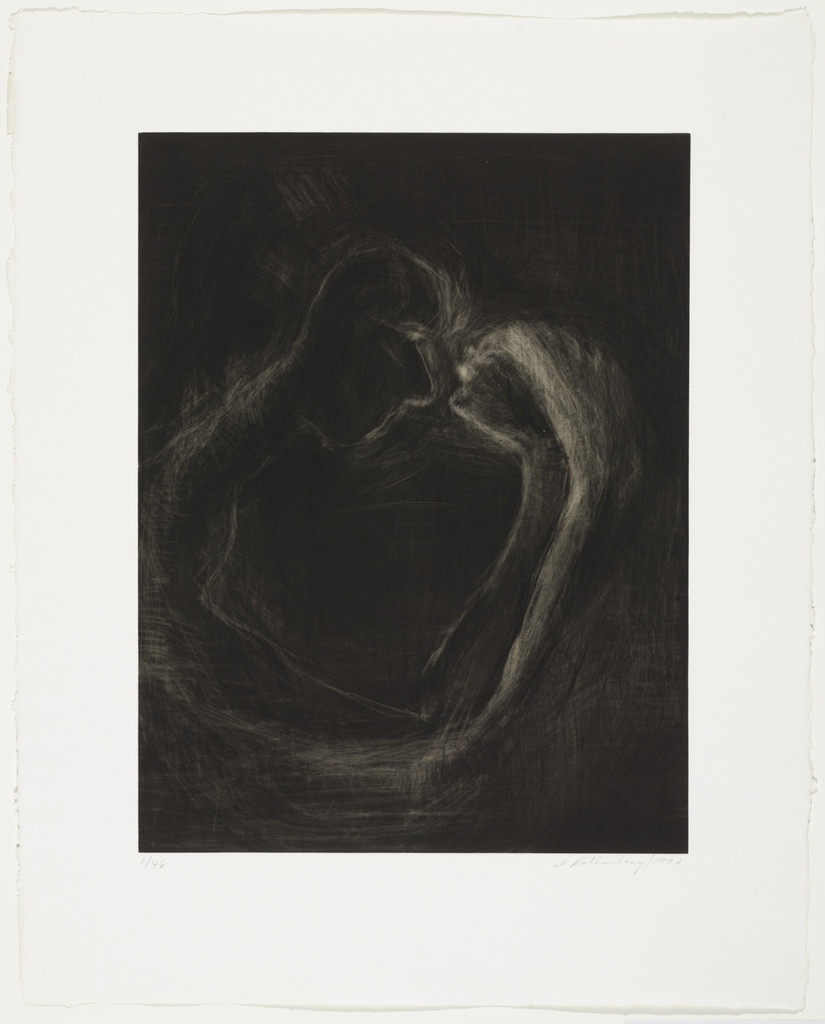
Mezzo Fist #2
Susan Rothenberg
1990
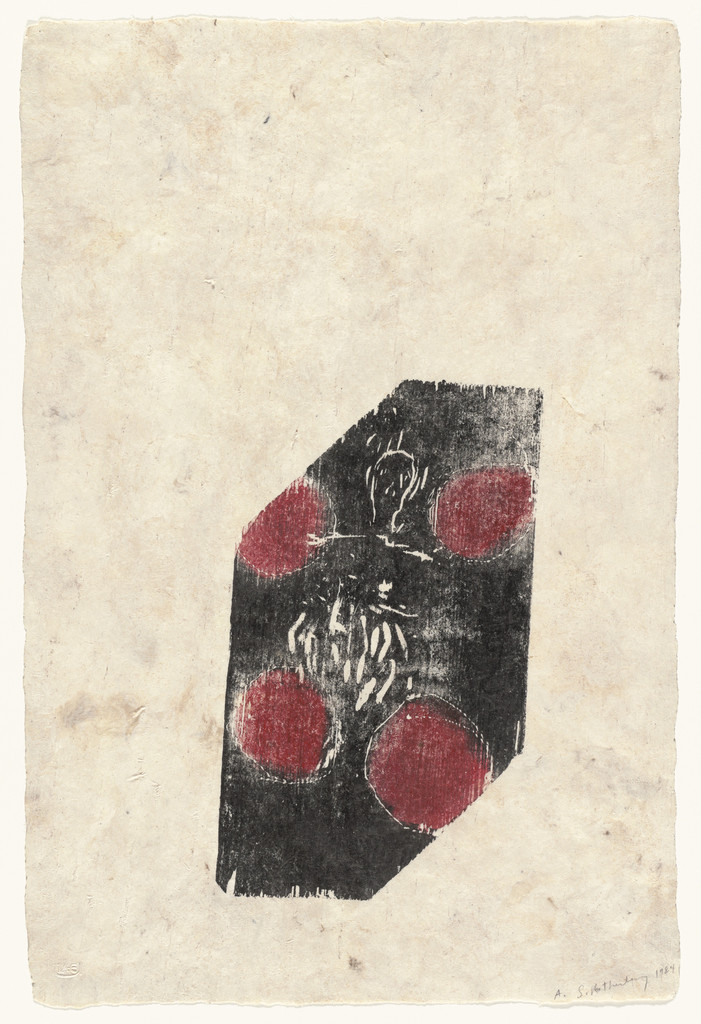
Missing Corners
Susan Rothenberg
1984
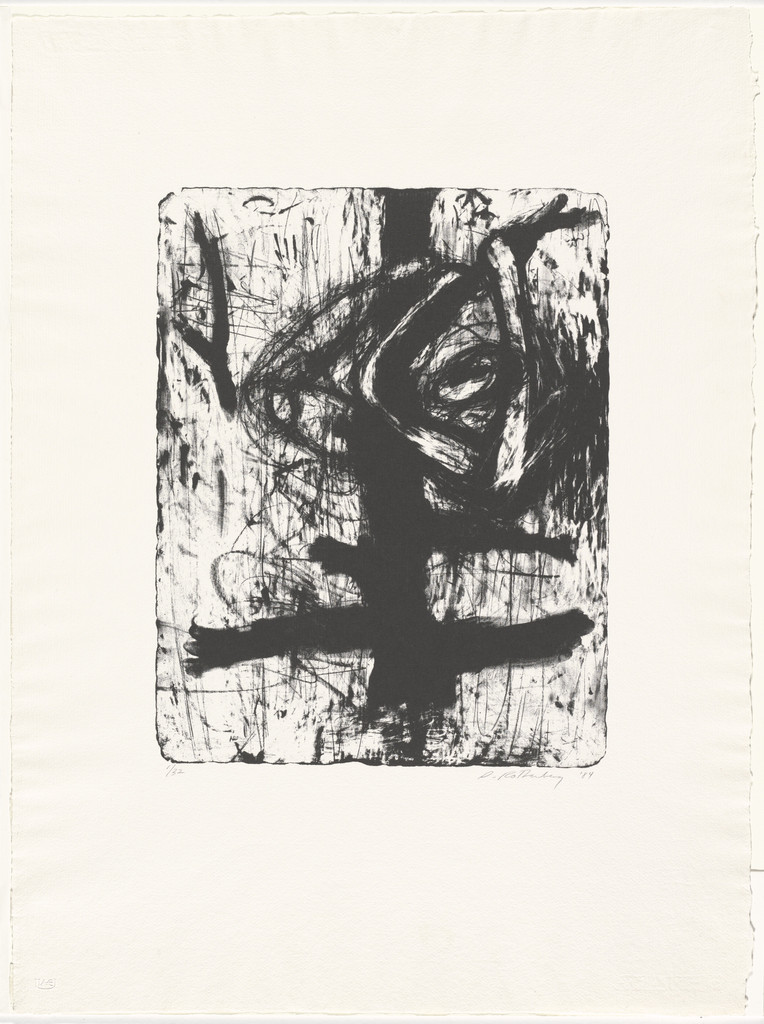
Monkey in a Tree
Susan Rothenberg
1984
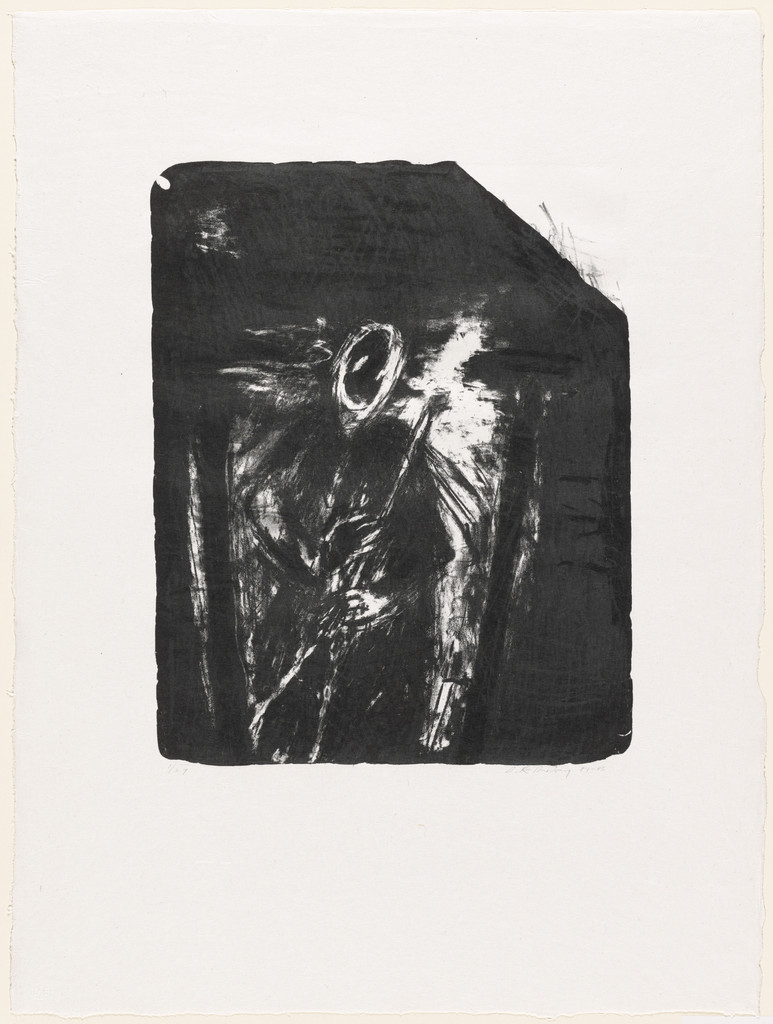
Otis
Susan Rothenberg
1984-85
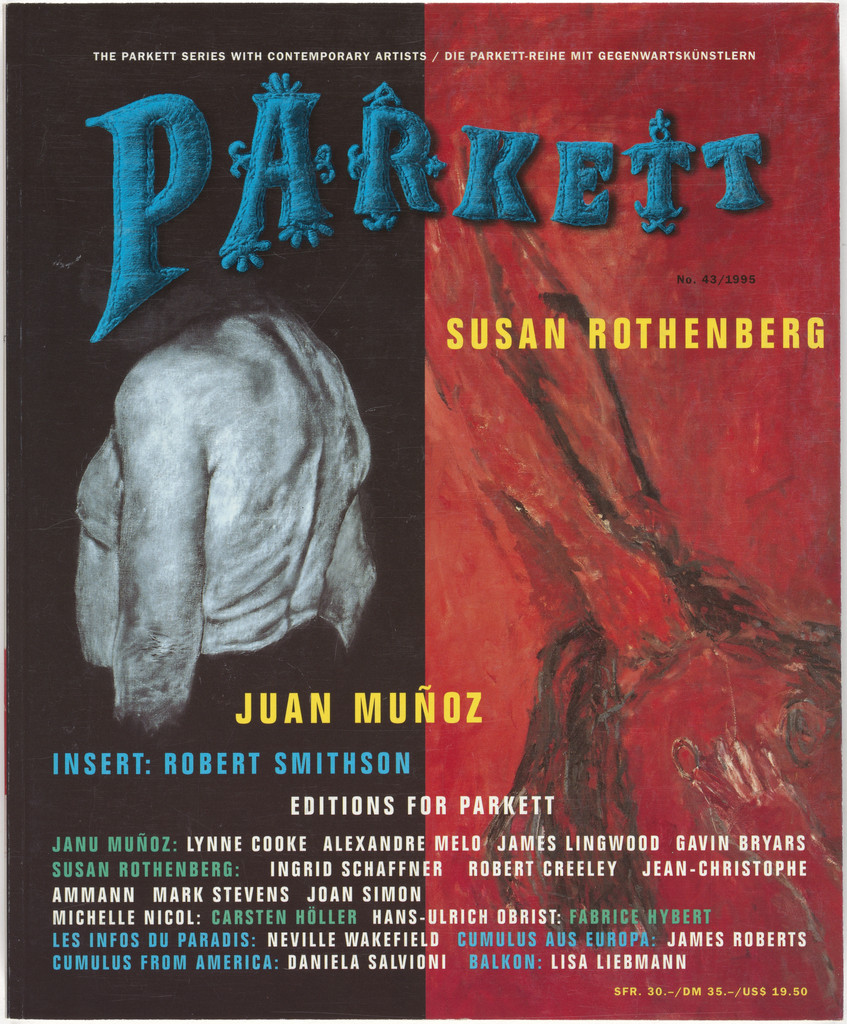
Parkett no. 43
Susan Rothenberg
1995
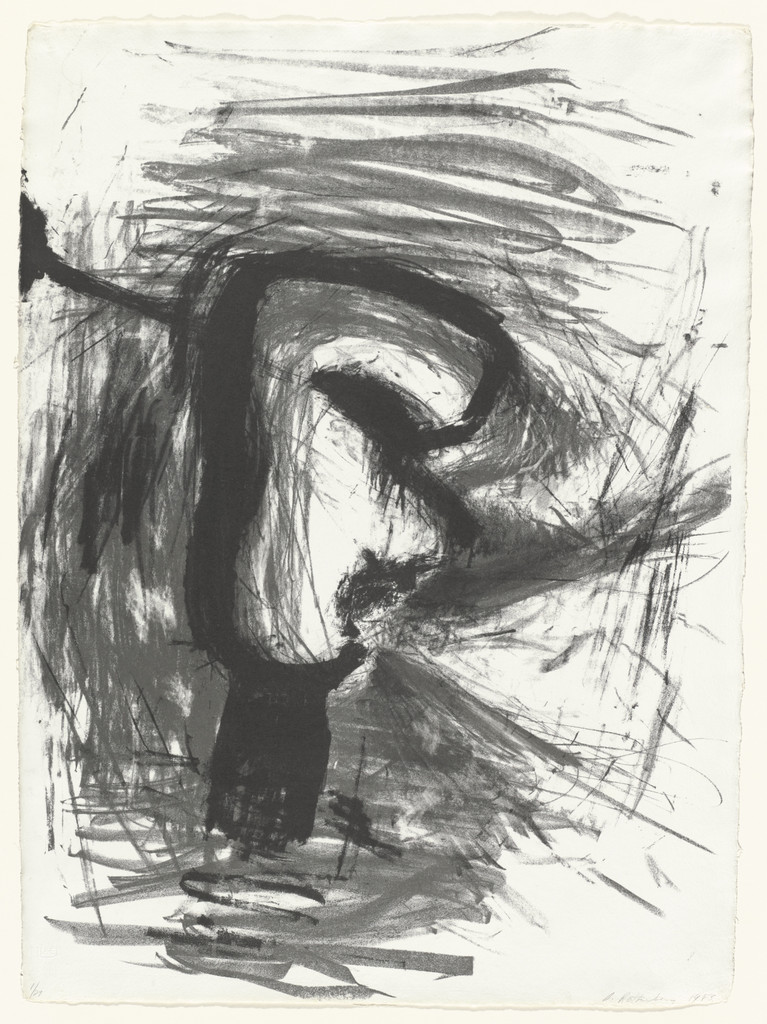
Plug
Susan Rothenberg
1983
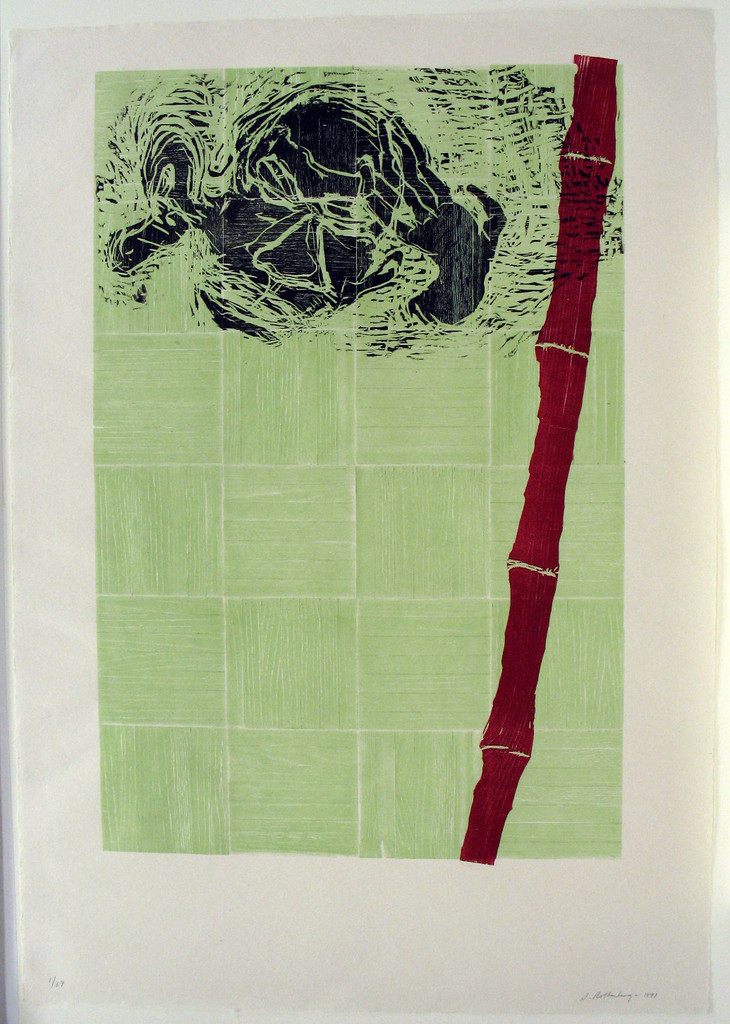
Red Bamboo
Susan Rothenberg
1991
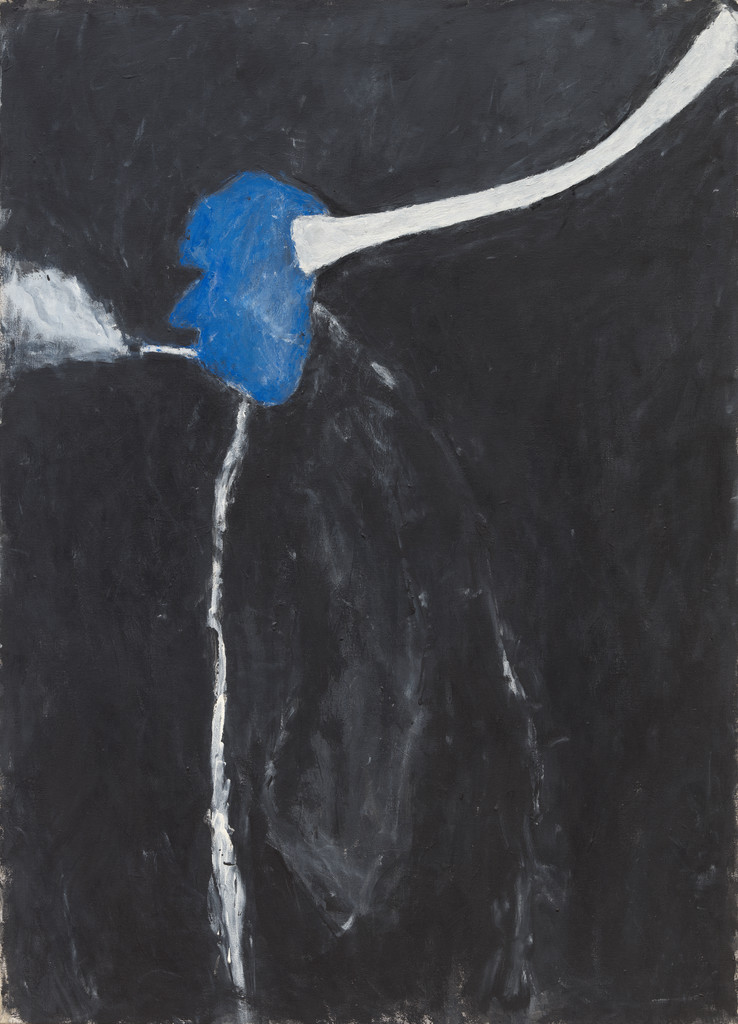
Smoker
Susan Rothenberg
1978-79
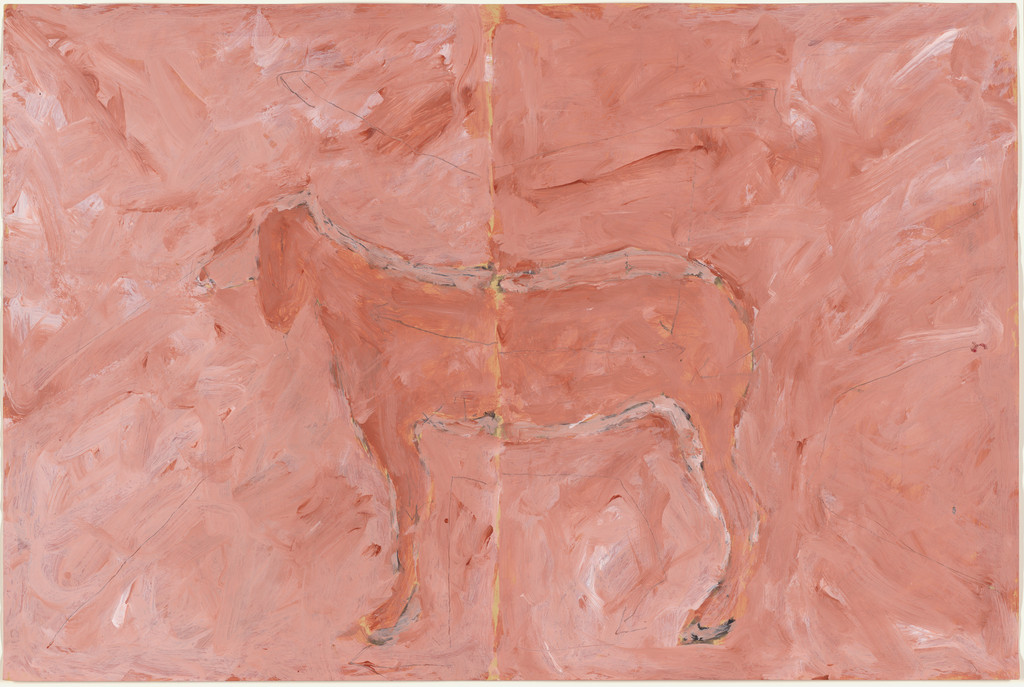
Study for Triphammer Bridge
Susan Rothenberg
1974
Exhibitions
21 exhibitionsJul 22, 1977 – Sep 20, 1977
Extraordinary Women
15 artists · 1 curator
Sep 20, 1977 – Dec 04, 1977
American Drawn and Matched
35 artists · 1 curator
Apr 17, 1978 – Jul 04, 1978
Art for Corporations
34 artists
Mar 23, 1980 – May 12, 1980
Selections from the Art Lending Service
20 artists
Oct 15, 1981 – Jan 03, 1982
Prints: Acquisitions 19771981
74 artists · 1 curator
Mar 03, 1983 – May 15, 1983
Prints from Blocks: Gauguin to Now
128 artists · 1 curator
May 17, 1984
Selections from the Permanent Collection: Prints and Illustrated Books
99 artists · 2 curators
May 17, 1984 – Aug 19, 1984
An International Survey of Recent Painting and Sculpture
165 artists · 1 curator
Jun 06, 1985 – Jun 24, 1985
Installation of Painting and Sculpture Department
13 artists
Sep 12, 1985 – Feb 04, 1986
Tatyana Grosman Gallery Inaugural Installation
19 artists · 1 curator
Sep 23, 1985 – Oct 29, 1985
NEA Twentieth Anniversary
10 artists · 1 curator
Nov 25, 1985 – Apr 15, 1986
Large Drawings
28 artists · 1 curator
Nov 06, 1986 – Mar 31, 1987
Contemporary Works from the Collection
46 artists · 1 curator
Nov 27, 1986 – Feb 10, 1987
Painting and Sculpture: Recent Acquisitions
16 artists · 1 curator
Jan 24, 1987 – Jun 14, 1987
Drawings Acquisitions
65 artists · 1 curator
May 22, 1987 – Jul 26, 1987
American Prints, 19601985
25 artists · 1 curator
Jun 25, 1987 – Oct 13, 1987
Drawing since 1940
58 artists · 1 curator
Dec 24, 1987 – Sep 12, 1988
Contemporary Works from the Collection
53 artists · 1 curator
Mar 24, 1988 – Jul 19, 1988
Contemporary Print Acquisitions, 19861988
28 artists · 1 curator
Apr 06, 1989 – Aug 08, 1989
Master Prints from the Collection
102 artists · 1 curator
Nov 09, 1989 – Feb 13, 1990
Drawings of the Eighties from the Collection, Part I
35 artists · 1 curator