
“I wouldn’t like to change so much the way we live, as what we live in, and how we live in it.” — Frank Lloyd Wright
A pragmatist, technical innovator, and independent thinker, Frank Lloyd Wright designed cities and buildings and their interior furnishings across a prolific 72-year career, reflecting his vision of an ideal American society. Raised in rural Wisconsin in a family of Unitarians, Wright relocated to Chicago and gained experience in various architectural practices, most notably with Louis Sullivan, who Wright referred to as his “Lieber Meister” (beloved master). In the office of Dankmar Adler and Sullivan, he absorbed an appreciation for technology and engineering—and for Sullivan’s exuberant organic ornament (as in Sullivan’s frieze paneling for the trading room of the former Chicago Stock Exchange, c. 1893). In 1893, Wright established his independent practice, eventually opening a studio in his home in suburban Oak Park, Illinois, and becoming the leading figure of the so-called Prairie School of architecture. His Ward W. Willits House (1902–03) and Frederick C. Robie House (1908–10) showcased open plans and broad horizontal lines and cantilevers that evoked the expanse of the flat Midwestern landscape. His ideas for an organic architecture were predicated on an integral relationship of a building to its site, and a unity in design of all of its interior furnishings and colorful art glass windows, which he also designed. While Wright shared the Arts and Crafts movement’s ethos of social reform and art and design having a role in improving society, he drew inspiration from many sources, including nature; Platonic geometric shapes underlying the theory and methods of the 19th-century educator Friedrich Froebel; and the abstraction inherent in the art and architecture of Japan, where he first traveled in 1905. He also embraced a lifelong interest in modern technology and materials, which could be applied toward system-built affordable housing (for example, his series of American Ready Cut Houses and Usonian houses), and which afforded possibilities for dramatic new formal expression, as in the daring cantilevers at Fallingwater, Edgar J. Kaufmann House (1934–37) , the dendriform concrete columns and Pyrex glass tube windows in the S. C. Johnson & Son building, and the central spiral of the Solomon R. Guggenheim Museum (1943–59). In 1909, Wright faced personal and professional crises that caused a rupture in his practice. Over the next two decades he spent time in Europe and had studios in Tokyo (where he designed a number of buildings, most notably the Imperial Hotel [completed 1923; demolished 1968]) and Los Angeles, where he produced a series of remarkable concrete block houses. He eventually settled at Taliesin (begun 1911), his home and studio at his family farm in Spring Green, Wisconsin, and later at a winter home and studio, Taliesin West (begun 1937), in Scottsdale, Arizona, where he established an apprentice program that remains an active school of architecture today. Wright’s complex relationship with the city and America’s agrarian past reached its most ambitious expression in his visionary, polemical Broadacre City model (1935). The 12' x 12' scale model and its accompanying text panels depicted a four-square-mile section of a utopian, decentralized city, made possible by new developments in transportation and telecommunications. Within a grid of roads and highways, gas stations, houses, schools, factories, shopping centers, and office buildings were dispersed across the landscape—Wright’s antidote to the congested city. Until his death in 1959, Wright remained prolific. In his many designs for houses, workplaces, and institutions such as schools, churches, and synagogues, he continued to explore materials and to expand his repertoire of planning devices, including designs based on hexagonal grids and circular elements. His efforts to reshape the modern city are evinced by large-scale civic and cultural-center projects for cities from Madison, Wisconsin, to Baghdad, Iraq, and in The Mile High Illinois skyscraper (1956), whose proposed height would far surpass that of any of today's tall buildings.
Note: Opening quote is from Frank Lloyd Wright Foundation, “A Man 100 Years Ahead of His Time: Excerpts from the Mike Wallace Interview.” August 20, 2019. https://franklloydwright.org/a-man-100-years-ahead-of-his-time-excerpts-from-the-mike-wallace-interview/.
Peter Reed, Senior Deputy Director for Curatorial Affairs, 2016
Works in Collection
98 works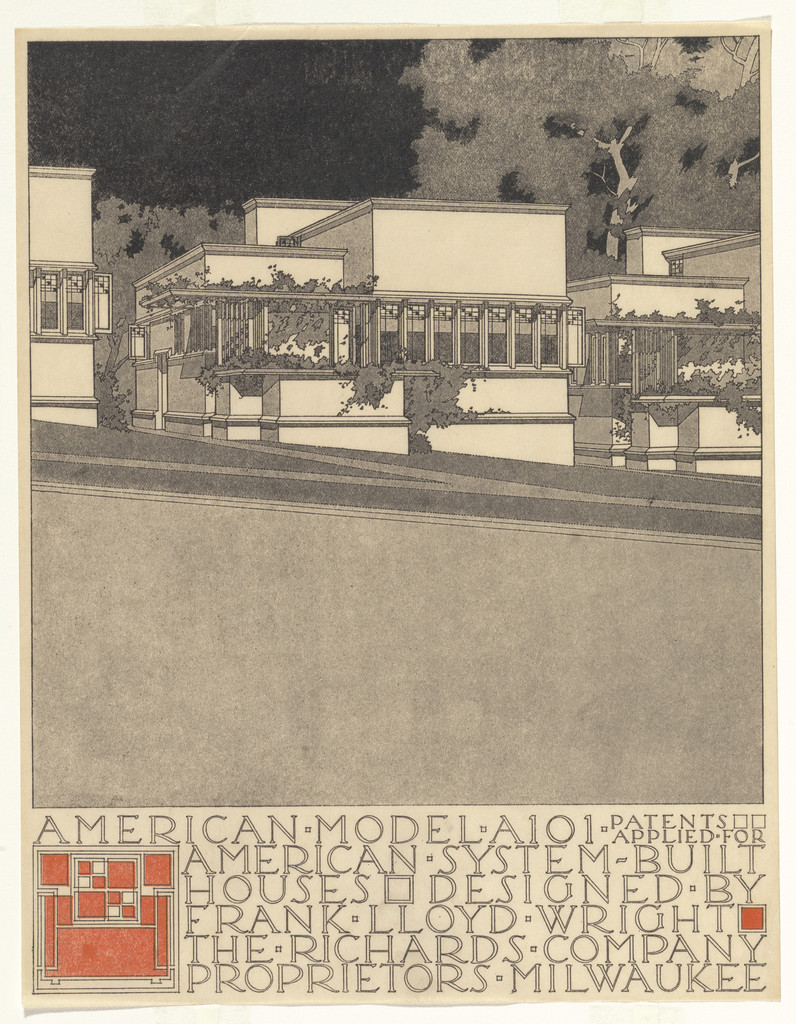
American System-Built Houses for The Richards Company pro...
Frank Lloyd Wright
1915–1917
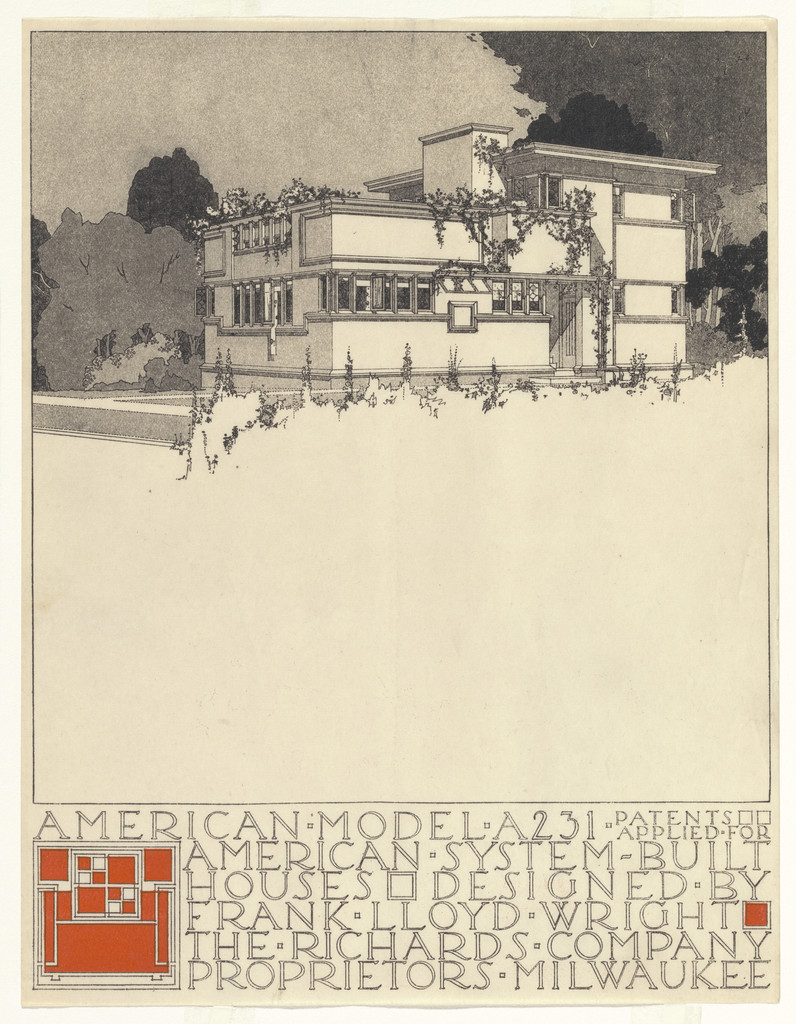
American System-Built Houses for The Richards Company pro...
Frank Lloyd Wright
1915–1917
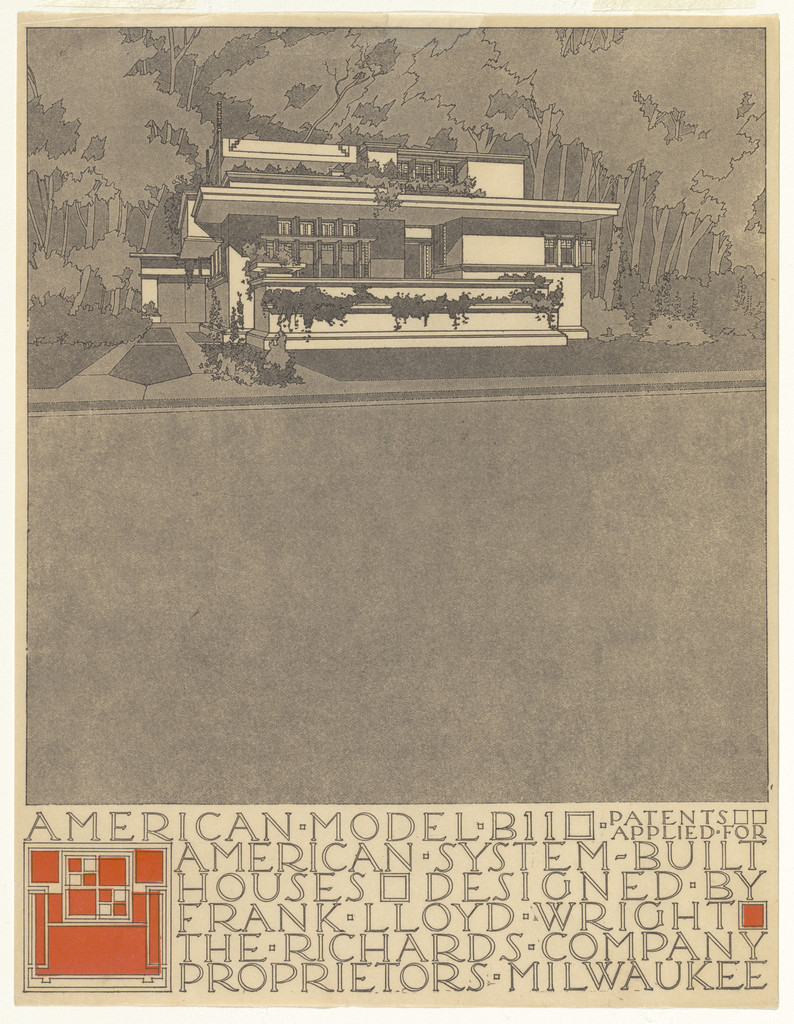
American System-Built Houses for The Richards Company pro...
Frank Lloyd Wright
1915–1917
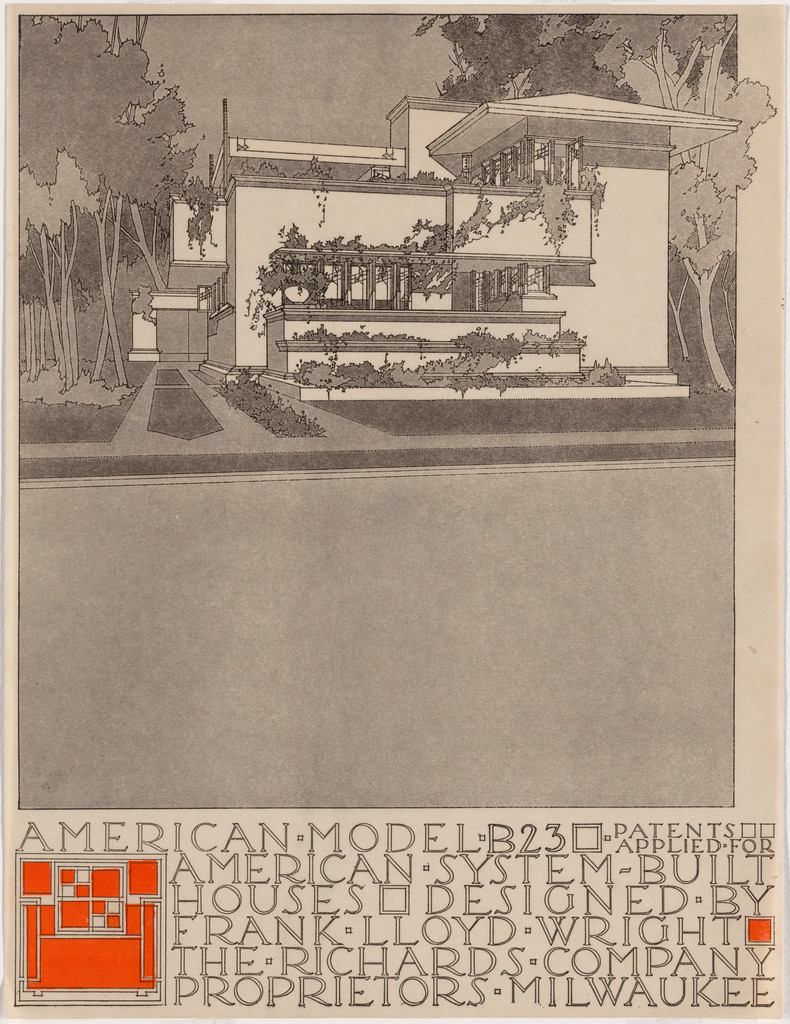
American System-Built Houses for The Richards Company pro...
Frank Lloyd Wright
1915–1917
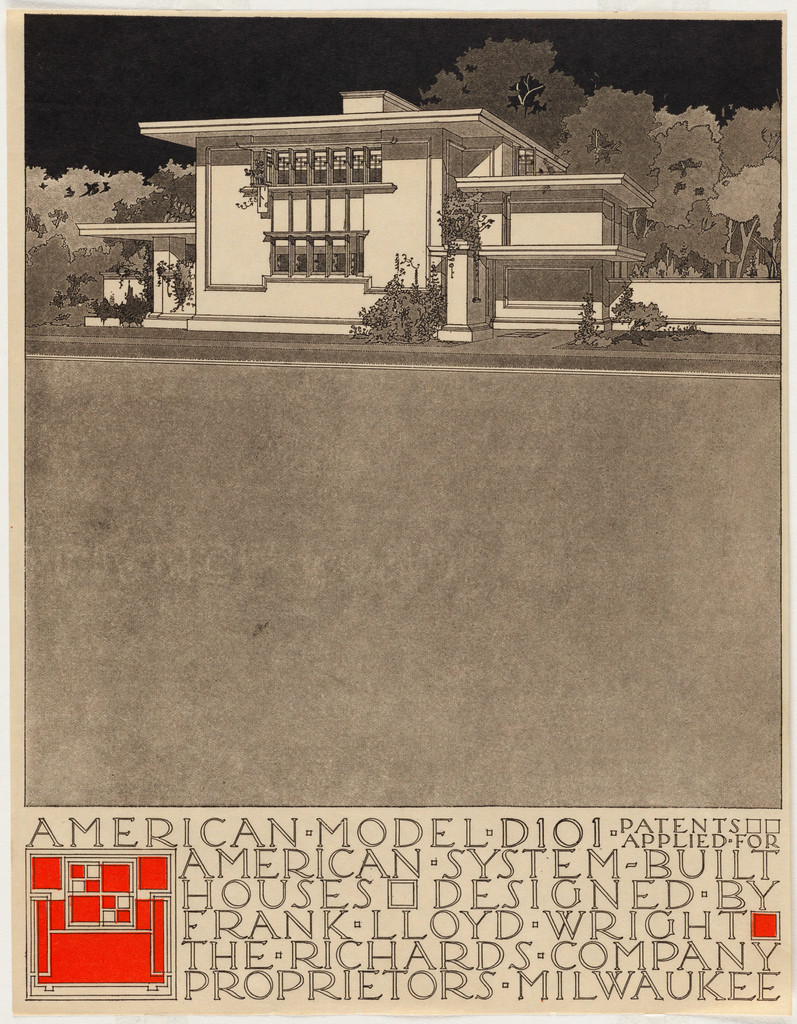
American System-Built Houses for The Richards Company pro...
Frank Lloyd Wright
1915–1917
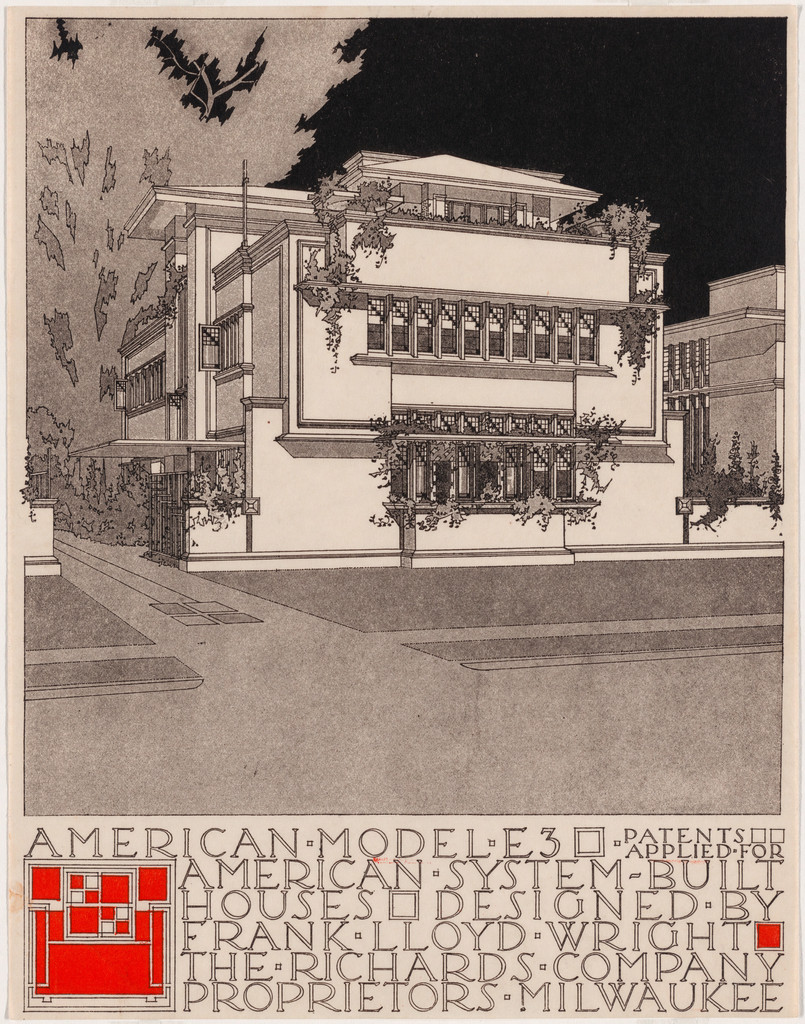
American System-Built Houses for The Richards Company pro...
Frank Lloyd Wright
1915–1917
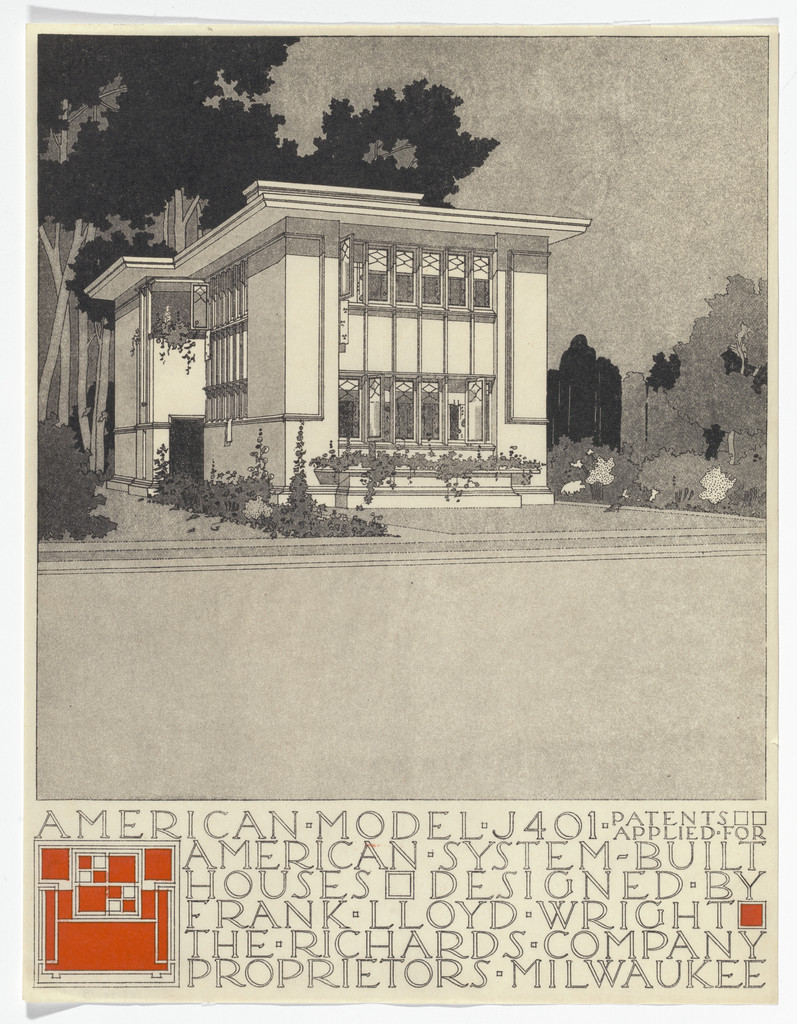
American System-Built Houses for The Richards Company pro...
Frank Lloyd Wright
1915–1917
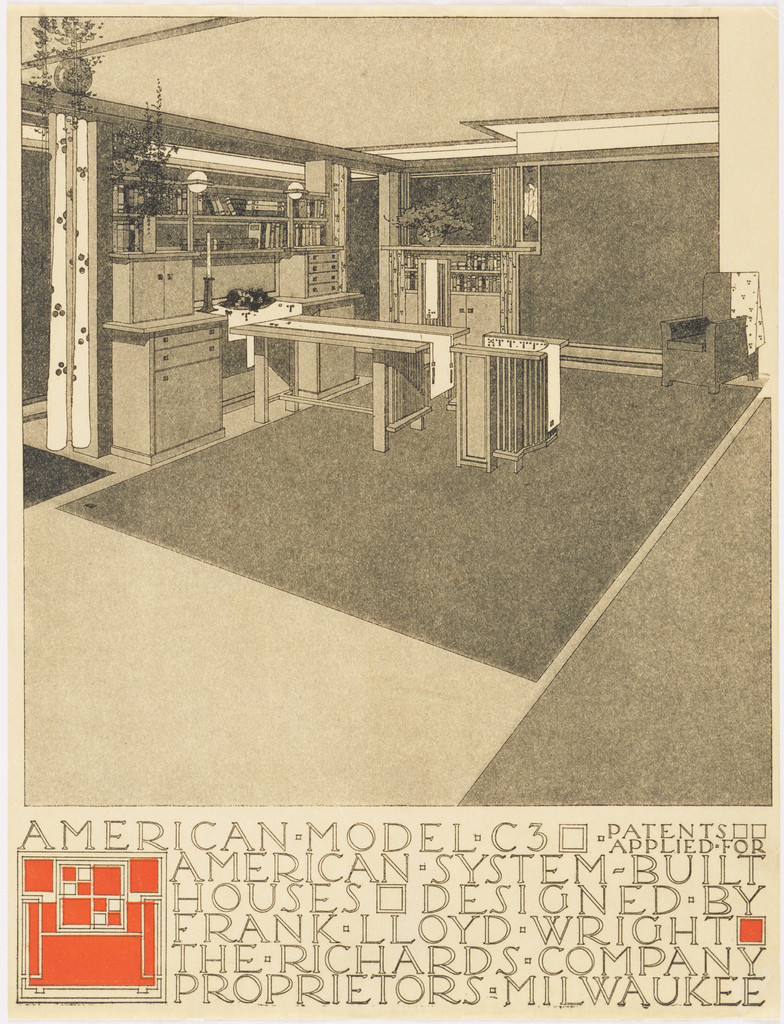
American System-Built Houses for The Richards Company pro...
Frank Lloyd Wright
1915–1917
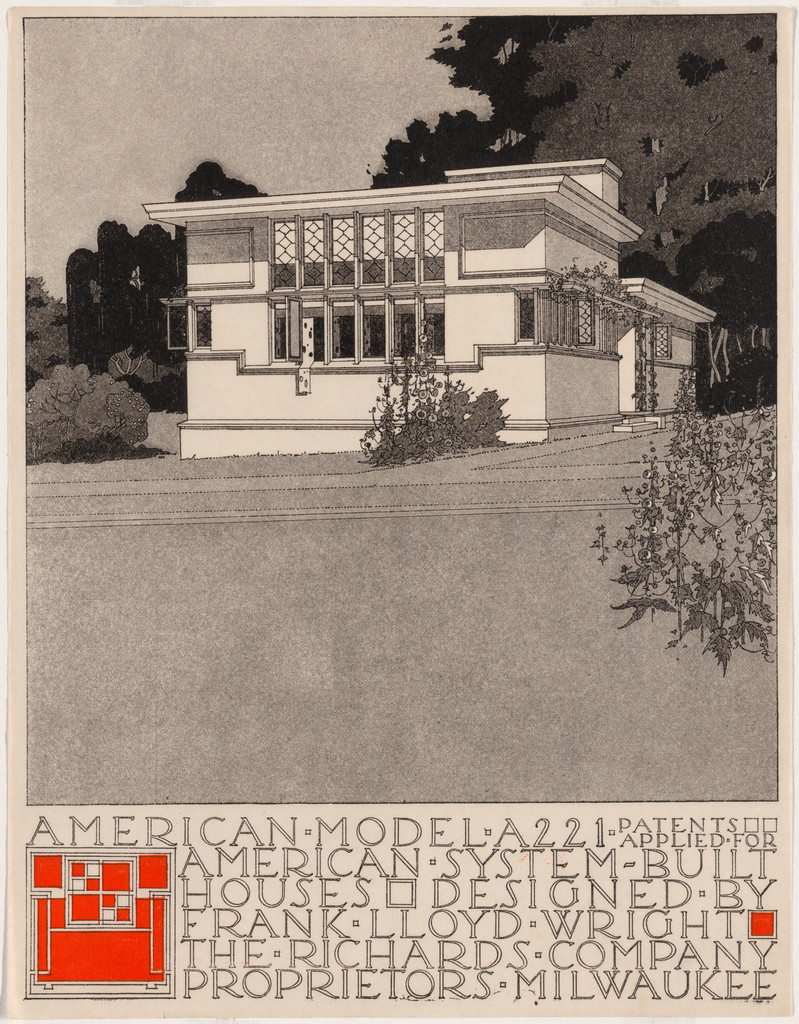
American System-Built Houses for The Richards Company pro...
Frank Lloyd Wright
1915–1917
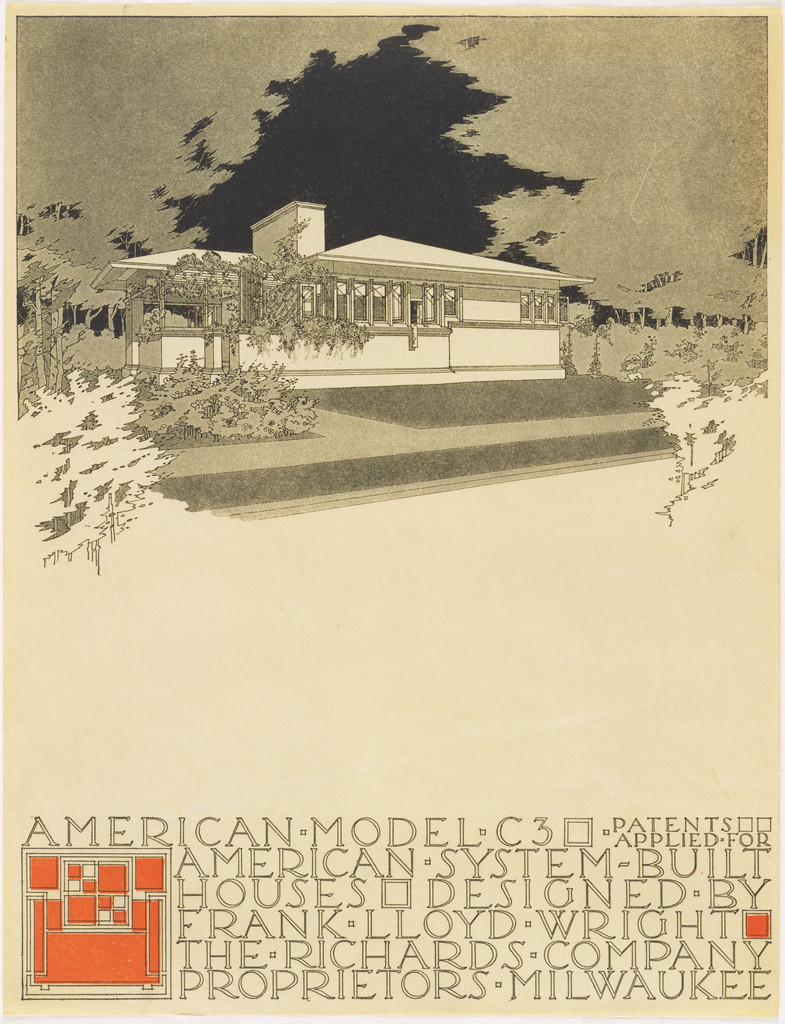
American System-Built Houses for The Richards Company pro...
Frank Lloyd Wright
1915–1917
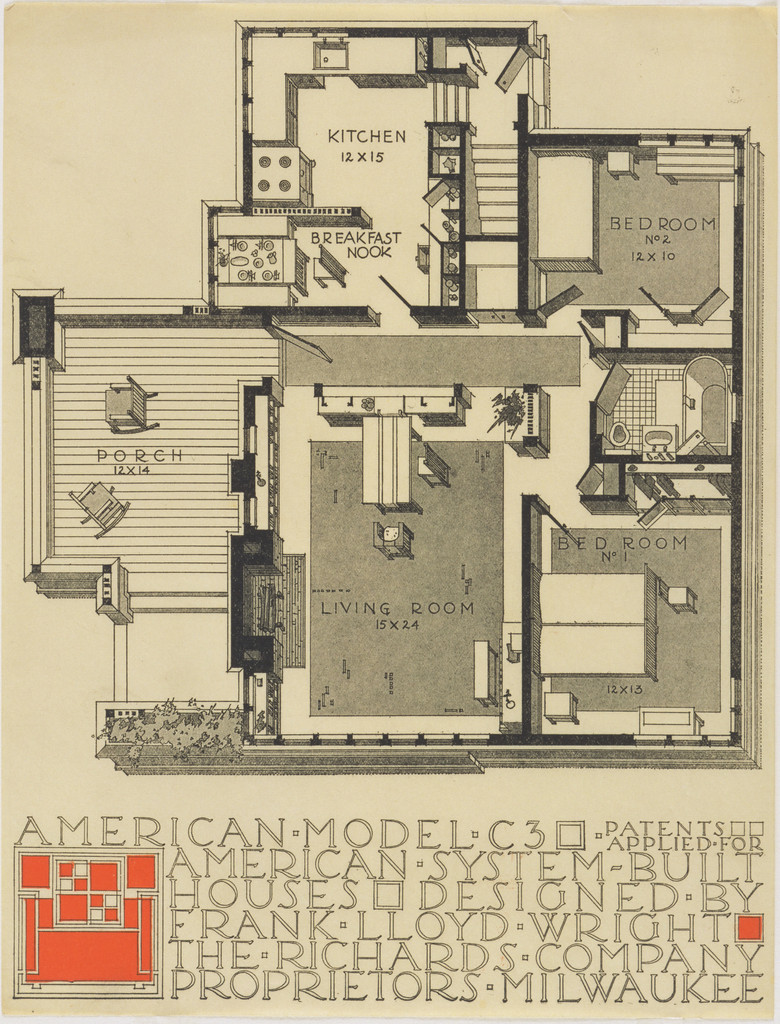
American System-Built Houses for The Richards Company pro...
Frank Lloyd Wright
1915–1917
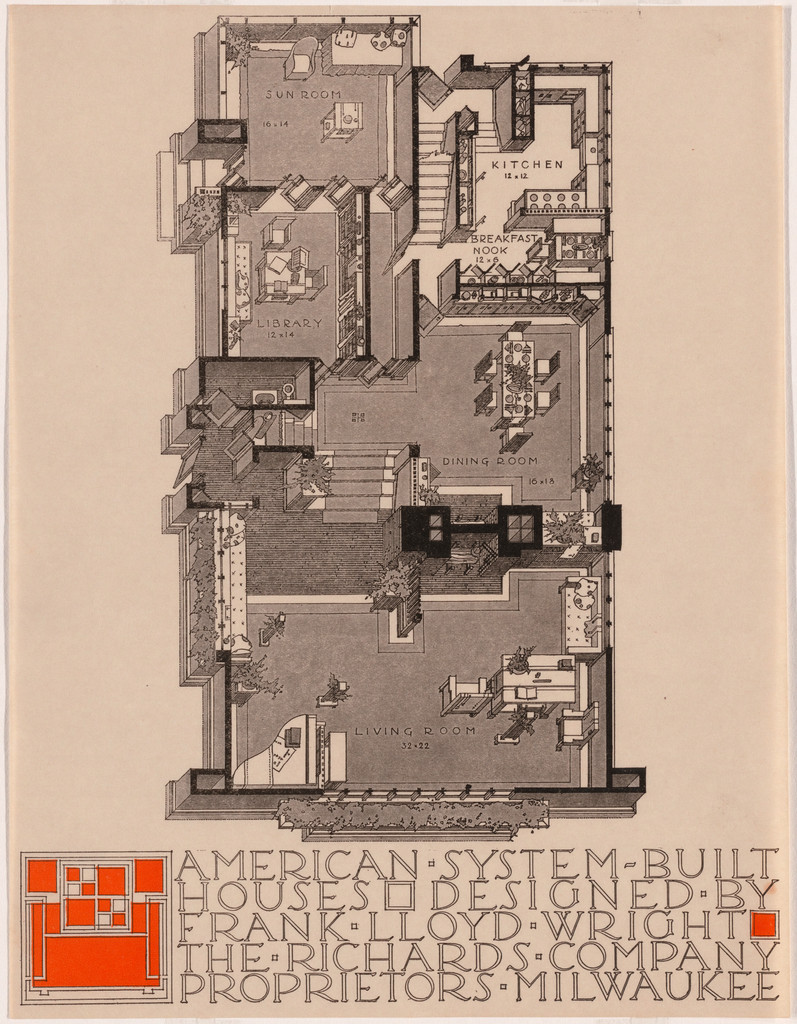
American System-Built Houses for The Richards Company pro...
Frank Lloyd Wright
1915–1917
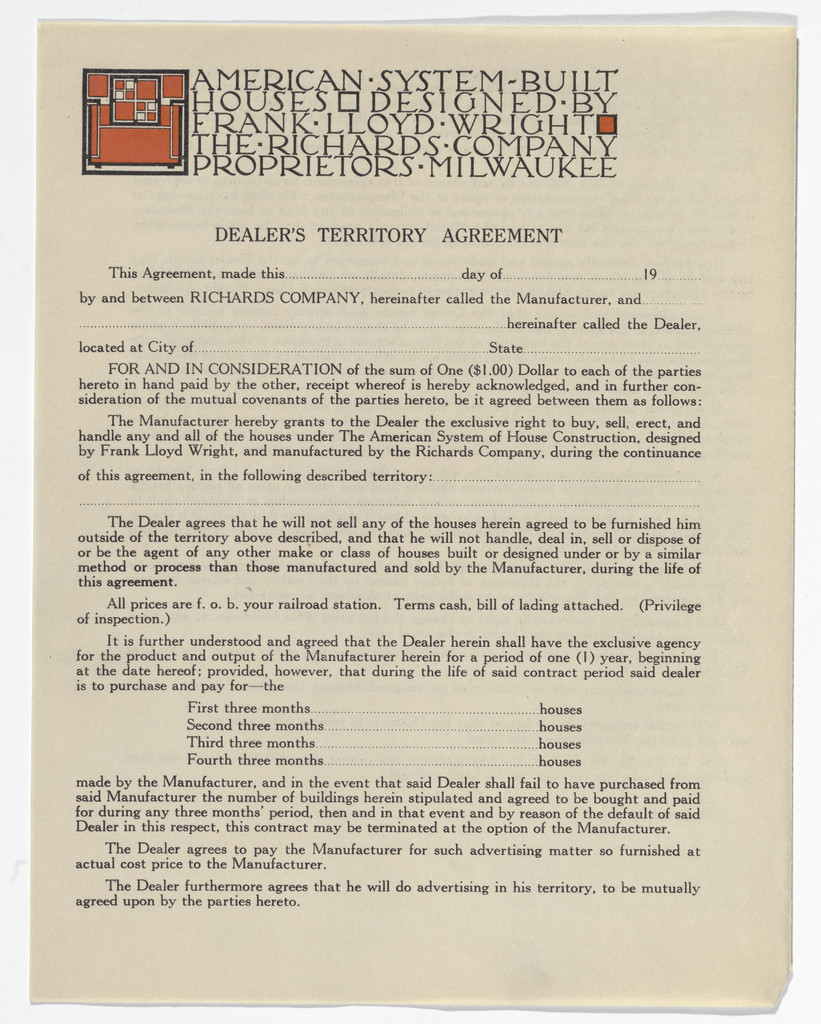
American System-Built Houses for The Richards Company pro...
Frank Lloyd Wright
1915-17
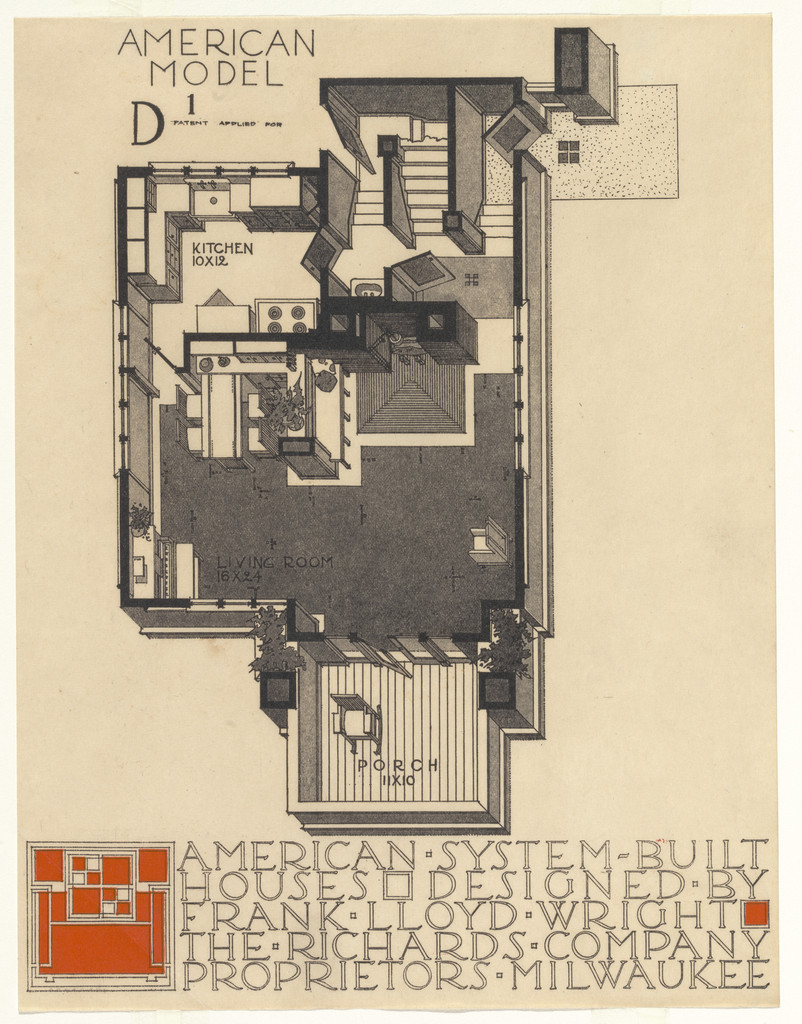
American System-Built Houses for The Richards Company pro...
Frank Lloyd Wright
1915-17
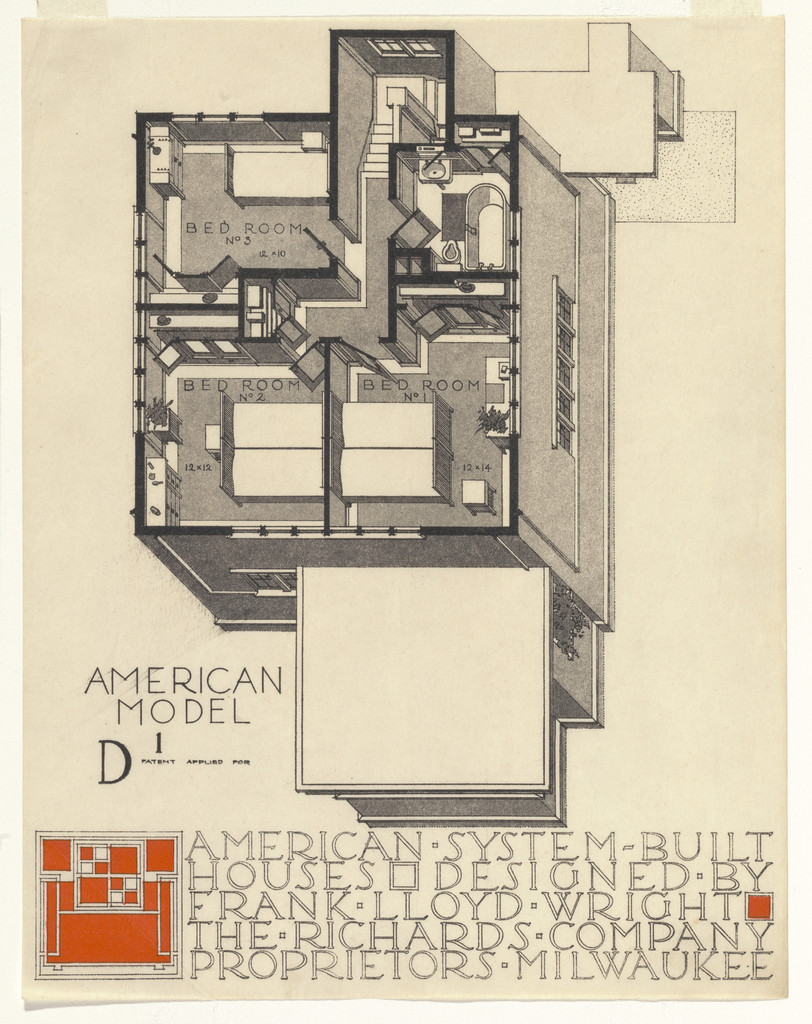
American System-Built Houses for The Richards Company pro...
Frank Lloyd Wright
1915-17
American System-Built Houses for The Richards Company pro...
Frank Lloyd Wright
1915-17
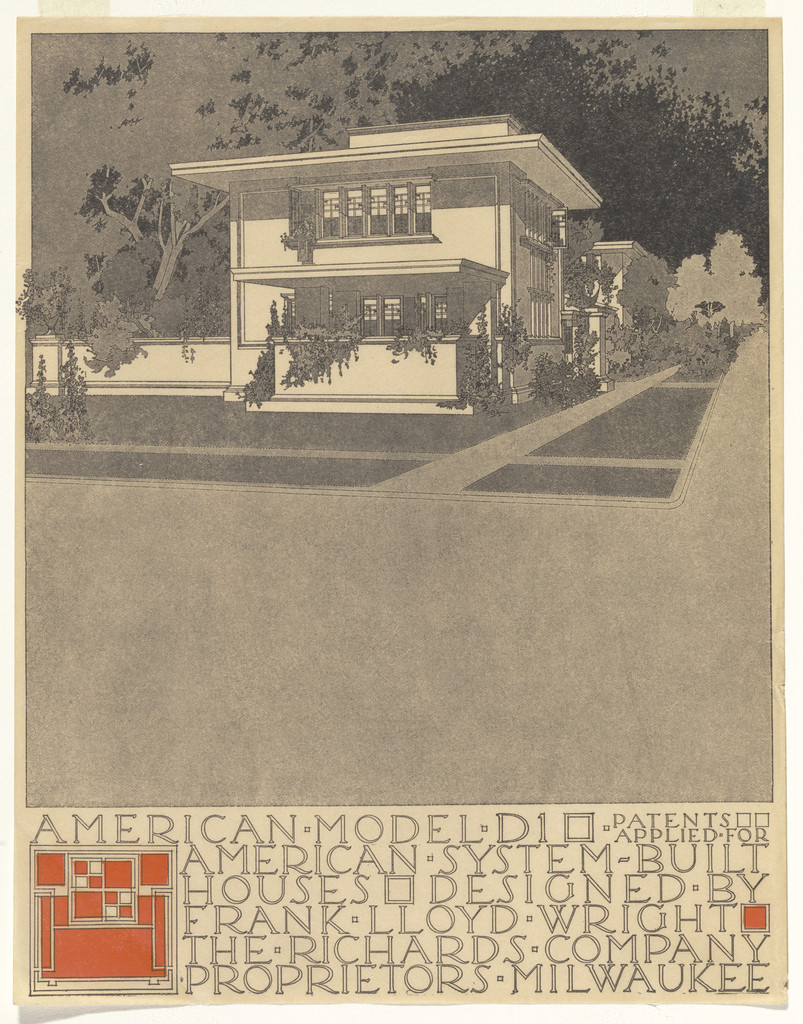
American System-Built Houses for The Richards Company pro...
Frank Lloyd Wright
1915-17
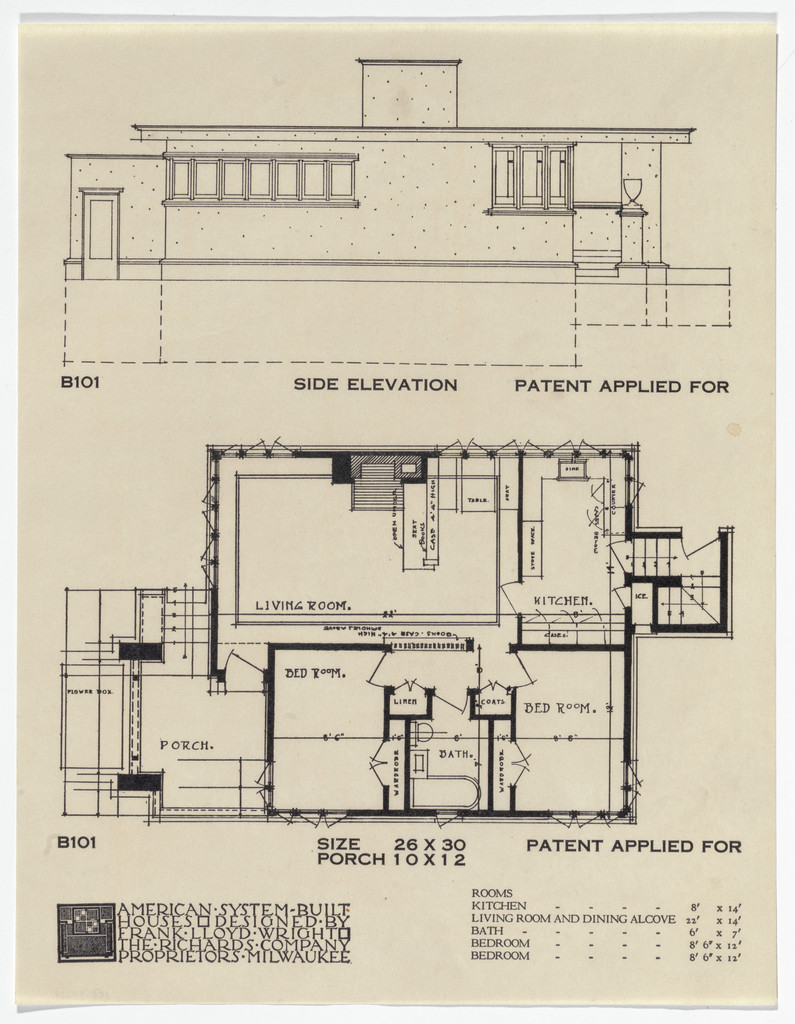
American System-Built Houses for The Richards Company pro...
Frank Lloyd Wright
1915-17
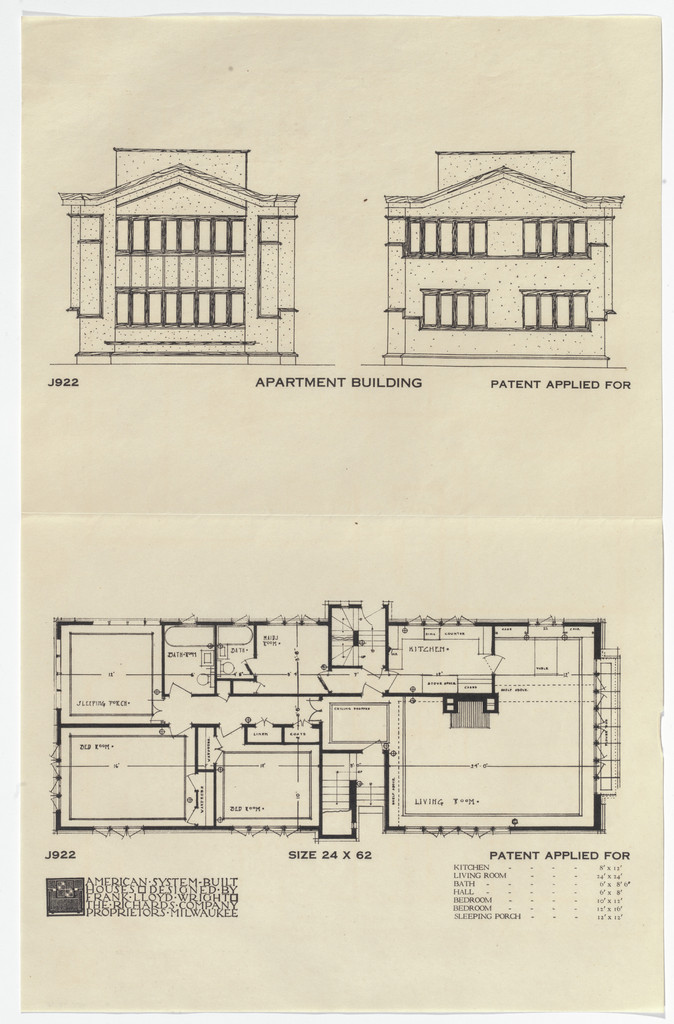
American System-Built Houses for The Richards Company pro...
Frank Lloyd Wright
1915-17
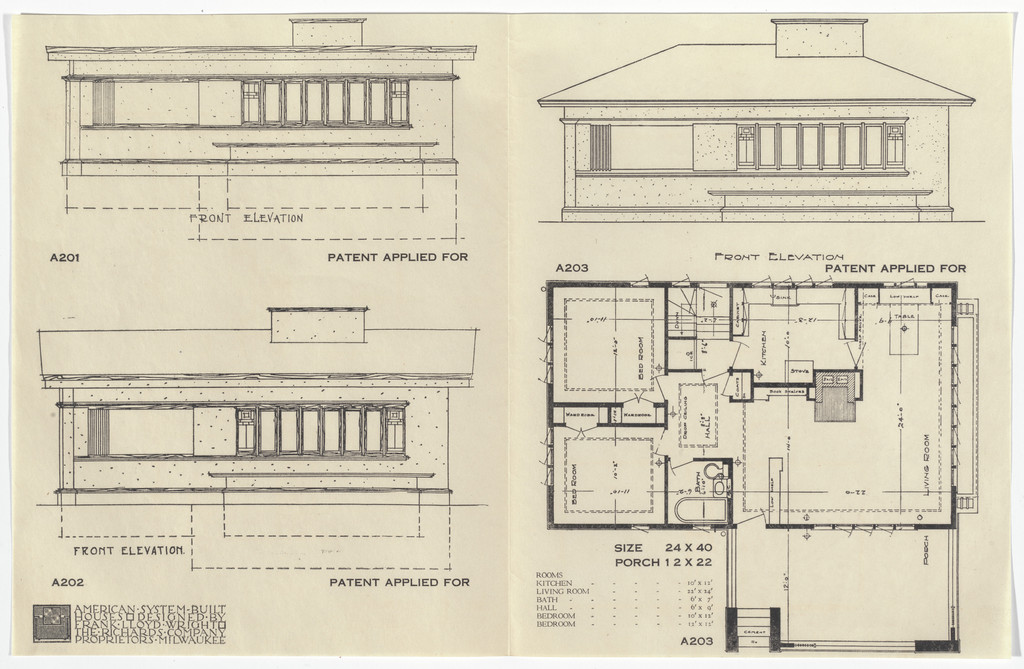
American System-Built Houses for The Richards Company pro...
Frank Lloyd Wright
1915-17
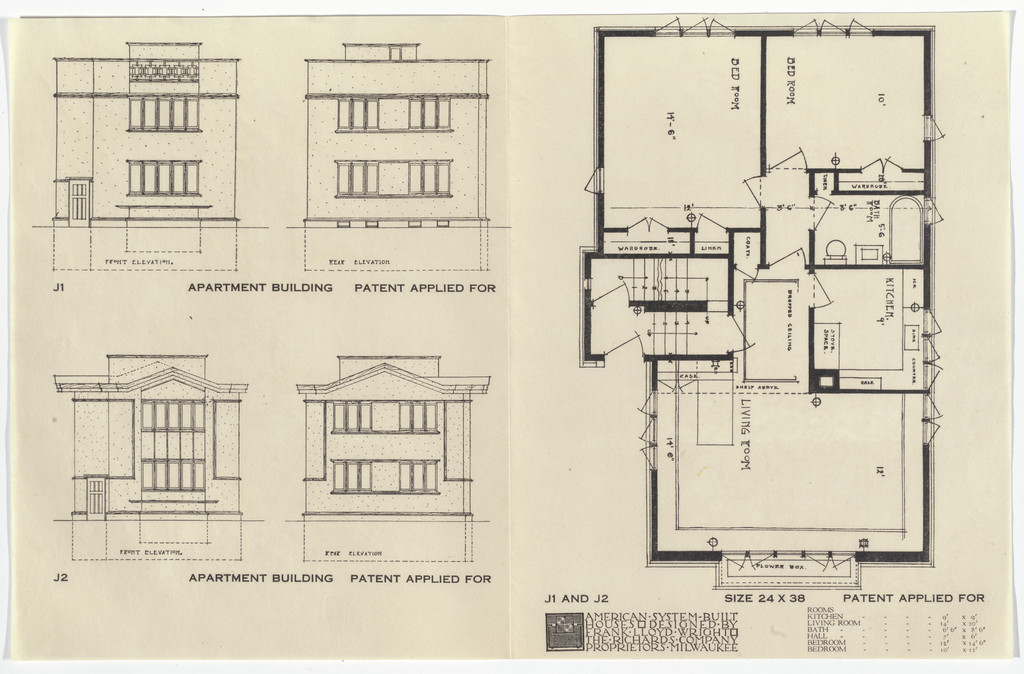
American System-Built Houses for The Richards Company pro...
Frank Lloyd Wright
1915-17
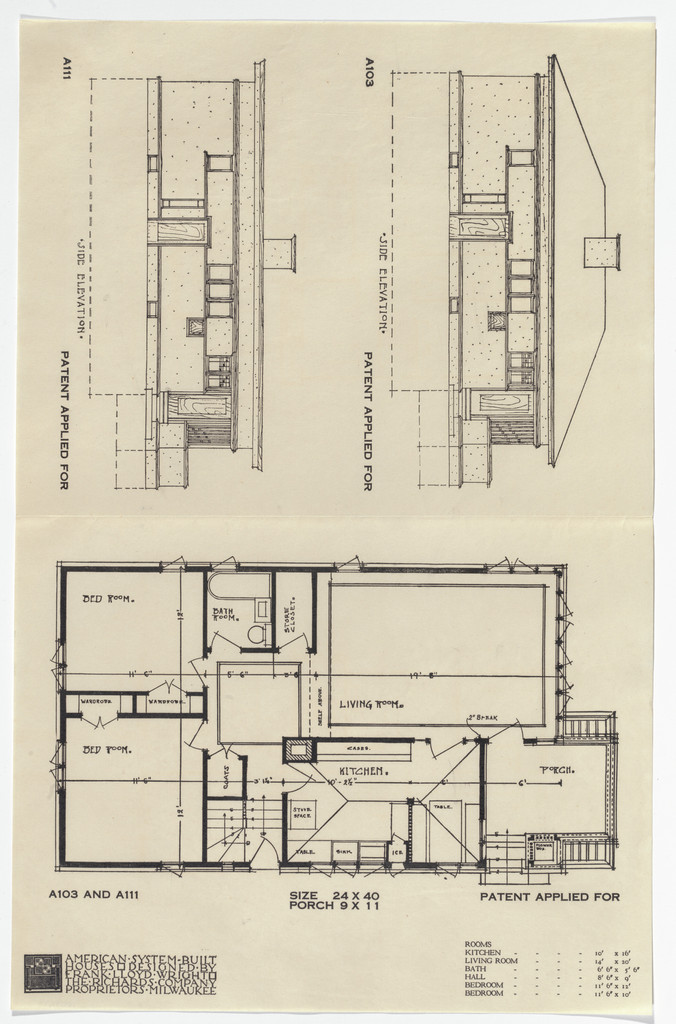
American System-Built Houses for The Richards Company pro...
Frank Lloyd Wright
1915-17
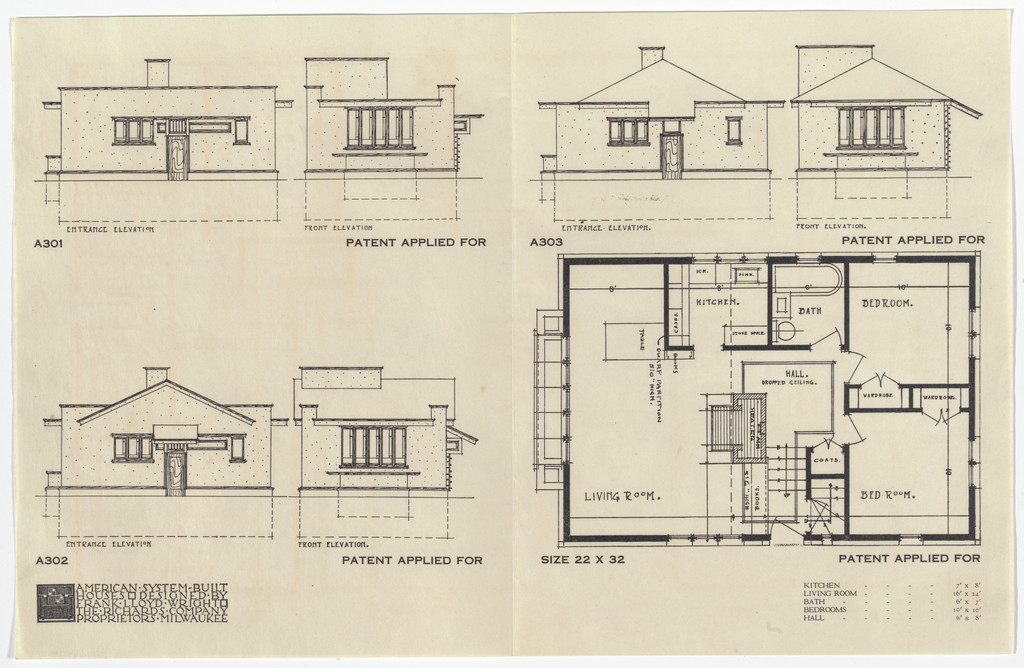
American System-Built Houses for The Richards Company pro...
Frank Lloyd Wright
1915-17
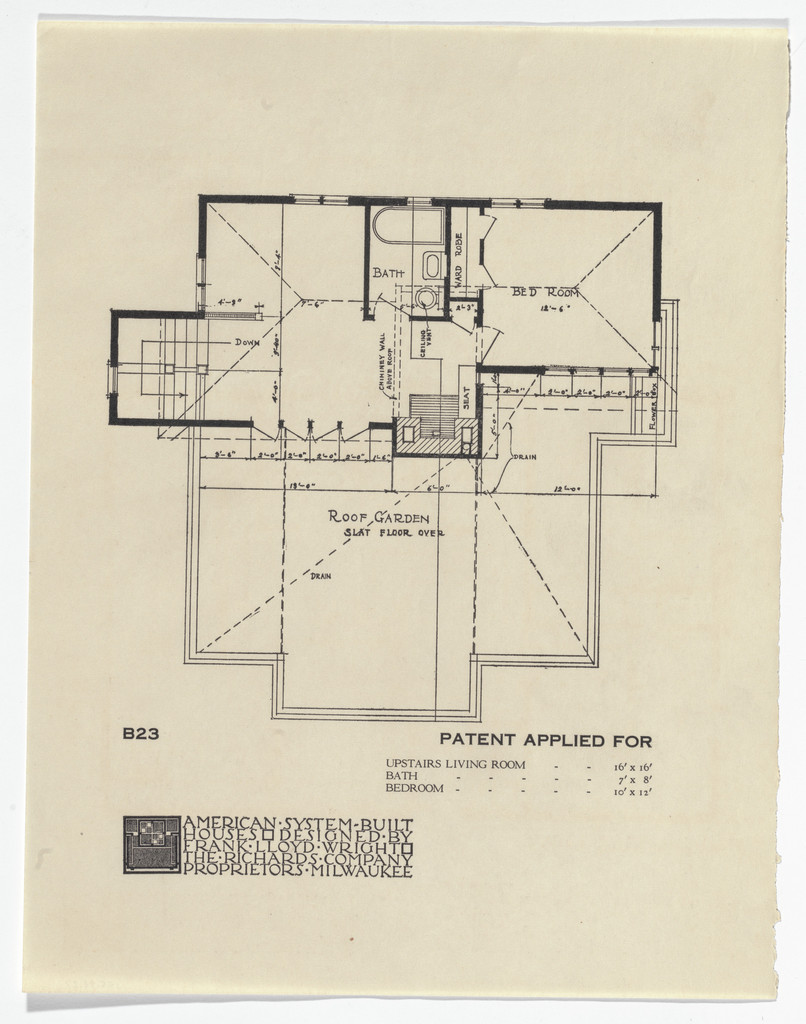
American System-Built Houses for The Richards Company pro...
Frank Lloyd Wright
1915-17
Exhibitions
29 exhibitionsFeb 09, 1932 – Mar 23, 1932
Modern Architecture: International Exhibition
67 artists · 1 curator
Jan 18, 1933 – Feb 23, 1933
Early Modern Architecture: Chicago 18701910
3 artists · 2 curators
Jan 25, 1938 – Mar 06, 1938
A New House by Frank Lloyd Wright
1 artist
Feb 15, 1939 – Mar 15, 1939
Three Centuries of American Architecture
54 artists · 2 curators
Nov 13, 1940 – Jan 05, 1941
Frank Lloyd Wright, American Architect
1 artist
Sep 09, 1941 – Sep 30, 1941
The Wooden House in America
10 artists
May 24, 1944 – Oct 22, 1944
Built in the U.S.A., 193244
58 artists · 1 curator
May 29, 1945 – Sep 30, 1945
Tomorrow's Small House: Models and Plans
14 artists · 2 curators
Jan 08, 1946 – Jan 30, 1946
If You Want to Build a House
17 artists · 1 curator
Jun 18, 1946 – Sep 03, 1946
A New Country House by Frank Lloyd Wright: Scale Model
1 artist
Nov 26, 1946 – Jan 26, 1947
Modern Rooms of the Last Fifty Years
26 artists
Apr 15, 1947 – Jun 15, 1947
Taliesin and Taliesin West
2 artists
Apr 05, 1949 – Apr 17, 1949
Frank Lloyd Wright: A New Theatre
1 artist
Aug 03, 1949 – Oct 02, 1949
Painting and Sculpture in Architecture
51 artists
Jul 11, 1950 – Sep 05, 1950
Three Modern Styles
94 artists
Jan 15, 1952 – Mar 16, 1952
Frank Lloyd Wright: Buildings for Johnson's Wax
1 artist · 1 curator
Jun 10, 1952 – Jul 27, 1952
Architecture in the New York Area
20 artists · 1 curator
Jan 20, 1953 – Mar 15, 1953
Built in USA: Post-War Architecture
34 artists · 1 curator
Oct 08, 1958 – Dec 15, 1958
Architecture Worth Saving
19 artists
Dec 17, 1958 – Feb 23, 1959
20th Century Design from the Museum Collection
257 artists · 2 curators
Sep 29, 1960 – Dec 04, 1960
Visionary Architecture
17 artists · 1 curator
Aug 14, 1961 – Sep 17, 1961
Roads
6 artists · 2 curators
Mar 14, 1962 – May 06, 1962
Frank Lloyd Wright Drawings
1 artist · 2 curators
Nov 01, 1963 – Dec 01, 1963
Fallingwater: A Frank Lloyd Wright House Revisited
2 artists
May 27, 1964
Philip L. Goodwin Galleries of Architecture and Design
23 artists · 1 curator
Sep 25, 1968 – Nov 11, 1968
Architecture of Museums
37 artists · 1 curator
Dec 01, 1970 – Jan 31, 1971
Recent Acquisitions: Design Collection
101 artists · 2 curators
Feb 01, 1974 – Sep 29, 1974
Architectural Models from the Collection
11 artists · 1 curator
Feb 07, 1975 – Apr 29, 1975
Furniture from the Design Collection: Thonet, Guimard, Wright, and Rietveld
4 artists · 1 curator