
“SURREALISM, n. Psychic automatism in its pure state, by which one proposes to express—verbally, by means of the written word, or in any other manner—the actual functioning of thought. Dictated by thought, in the absence of any control exercised by reason, exempt from any aesthetic or moral concern.” — André Breton
In 1924 André Breton declared, “Surrealism is based on the belief in the superior reality of certain forms of previously neglected associations, in the omnipotence of dream, in the disinterested play of thought.” As the self-proclaimed “pope of Surrealism,” Breton spearheaded a radical new movement that transformed the way artists engage with dreams, chance, and the unconscious.
Born in Tinchebray, France, in 1896, Breton trained in medicine and psychiatry before World War I brought him face-to-face with shell-shocked soldiers. Breton’s experience of war—and the disillusionment it left behind—fueled his desire to dismantle the restrictive structures of modern logic. Deeply inspired by Sigmund Freud’s emerging theories of the unconscious, and not quite satisfied with Dada’s nihilistic approach, Breton sought a more structured artistic and literary movement. In 1924 Breton published the first “Manifesto of Surrealism,” championing automatism as a means of exploring and expressing the psyche.
His work united a constellation of writers and artists, including René Magritte, Salvador Dalí, Max Ernst, and Joan Miró, who explored the unconscious with found objects, automatic drawings, hyperrealism, and erotic images. In Untitled (1935), for instance, ink is transferred onto paper through decalcomania, a transfer technique that allows chance to shape the work. In the resulting composition, light and dark shadows undulate across a celestial landscape, blurring the boundary between dream and reality. Breton also sought to promote Surrealism through publications and exhibitions. Alongside Man Ray, Marcel Duchamp, and Yves Tanguy, Breton contributed to Surrealist journals, including Littérature, Minotaure, and VVV. Co-organized with Paul Éluard, the 1938 Exposition Internationale du Surréalisme at the Galérie Beaux-Arts in Paris remains pivotal for its unconventional display, replete with mannequins, fantastical stagings, and coal bags suspended from the ceiling.
If Surrealism was criticized by some as self-indulgent, Breton’s vision of the movement was not purely aesthetic but also deeply political. Allying with Marxism in the 1930s, he saw Surrealism as a revolutionary force capable of dismantling oppressive systems. His numerous travels abroad are marked by a solidarity with political struggles, such as his liaison with political theorist Leon Trotsky, and artists Diego Rivera and Frida Kahlo in Mexico City, and with Aimé Cesaire, one of the founders of the Négritude movement, in New York. In 1945–46 Breton traveled to Haiti, considering Surrealism relative to the legacies of the Haitian Revolution and the works of painter Hector Hyppolite.
Beyond his aesthetic and literary pursuits, including Nadja (1928) and L’Amour fou (1937), Breton pursued work as an art advisor and developed a robust art collection. In 1924 he played a key role in the sale of Pablo Picasso’s Les Demoiselles d’Avignon to the French art collector Jacques Doucet. Breton’s Paris studio, located at 42 Rue Fontaine, was a microcosm of his Surrealist universe. Filled with Indigenous objects and artworks from around the world—with an emphasis on those from North America, including works made by the Hopi, Zuni, and Inuit peoples—it reflected his belief in the “marvelous,” the wondrous quality that could break through the ordinary. “It is living and ceasing to live that are imaginary solutions,” he wrote. “Existence is elsewhere.”
Adela Kim, Marron-Mellon Research Consortium Fellow, Department of Painting and Sculpture
Note: Opening quote is from André Breton, “Manifesto of Surrealism” (1924), in Manifestoes of Surrealism, translated by Richard Seaver, Helen R. Lane (The University of Michigan Press, 1969), p. 26.
Works in Collection
29 works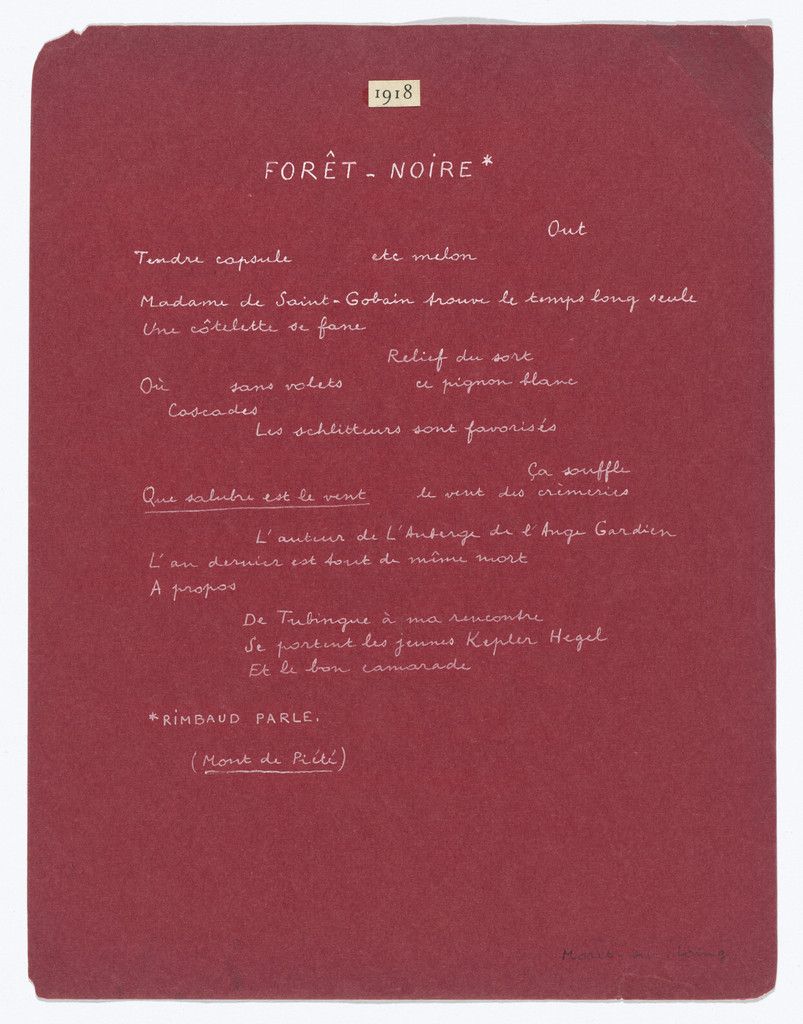
.a: Forêt - Noire (1918), .b: Poses Fatales (1919)
André Breton
1941
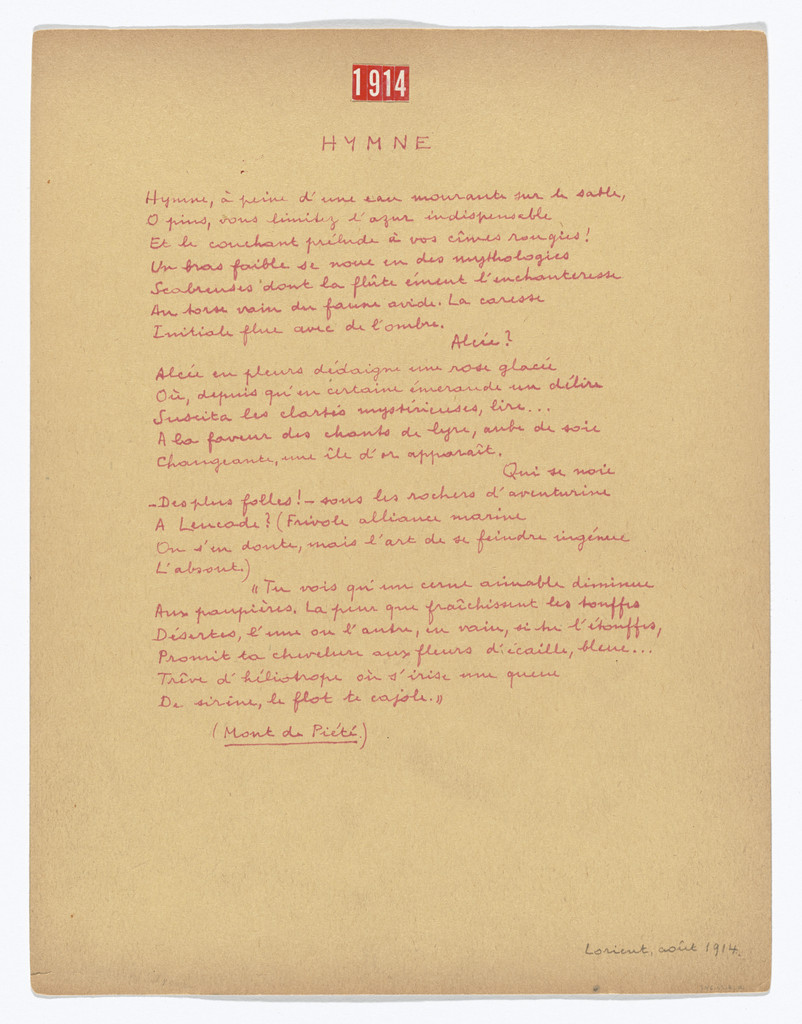
.a: Hymne (1914), .b: Façon (1915)
André Breton
1941
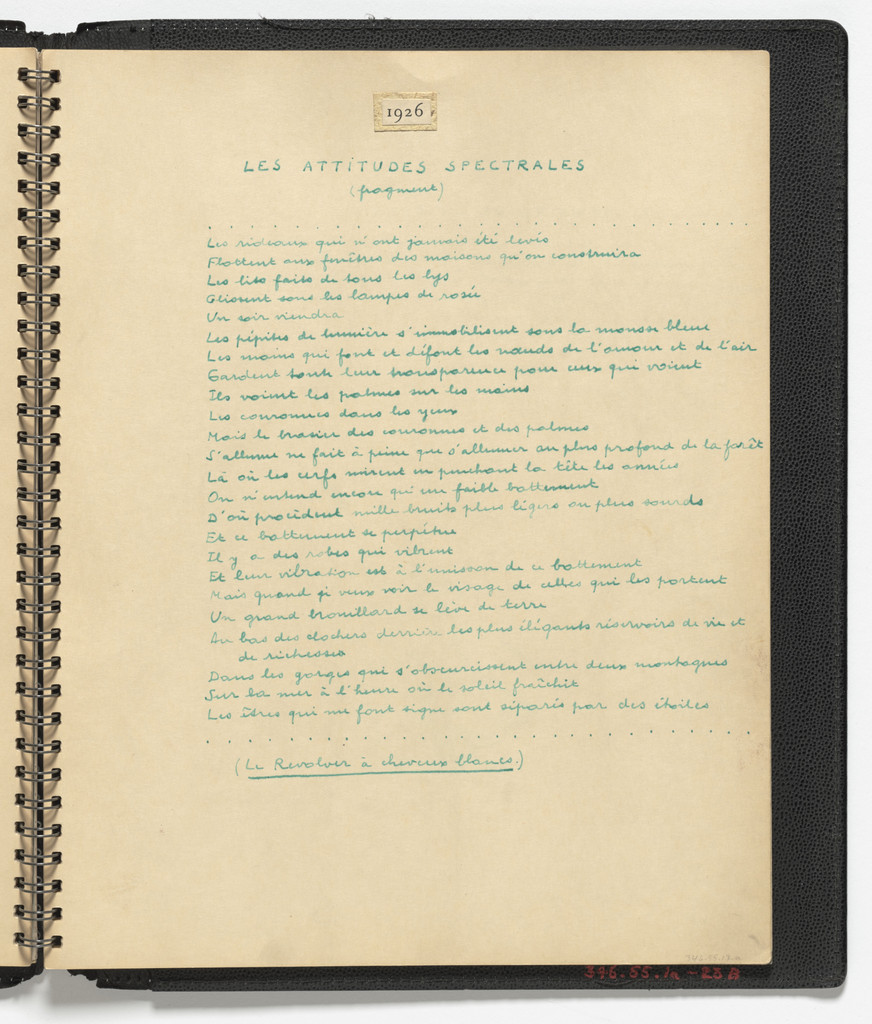
.a: Les Attitudes Spectrales (1926), .b: Cinquantenaire d...
André Breton
1941
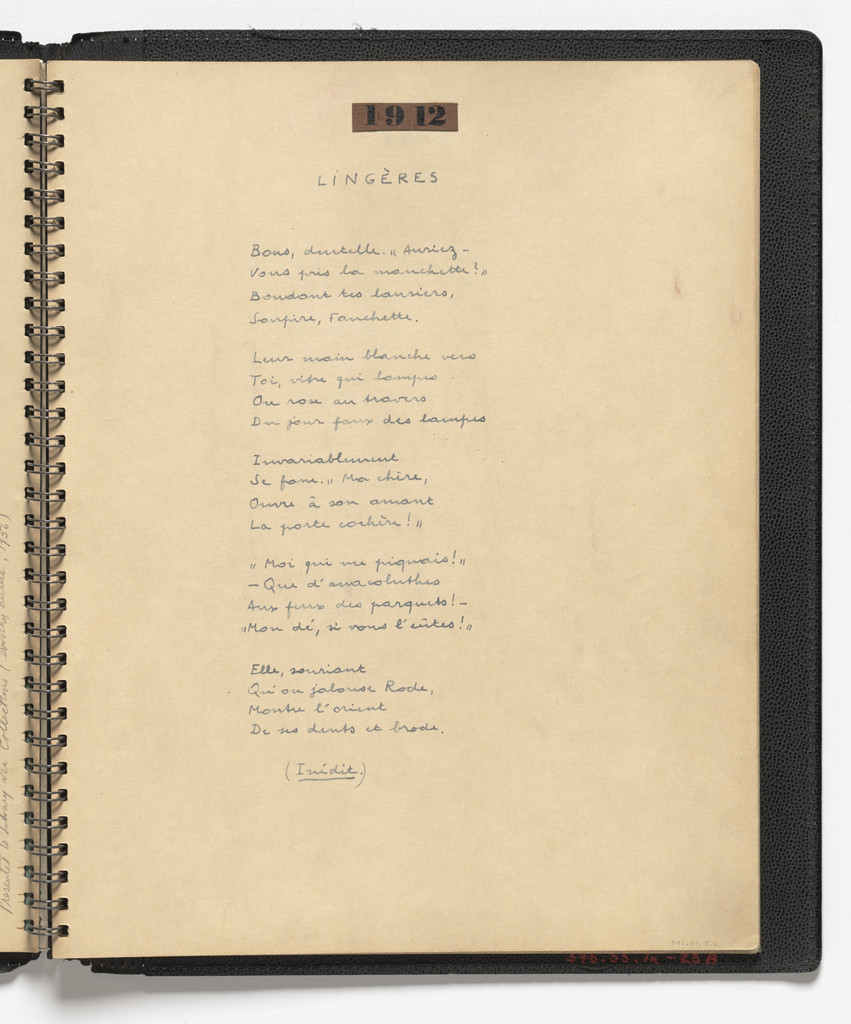
.a: Lingères (1912), .b: Hommage (1913)
André Breton
1941
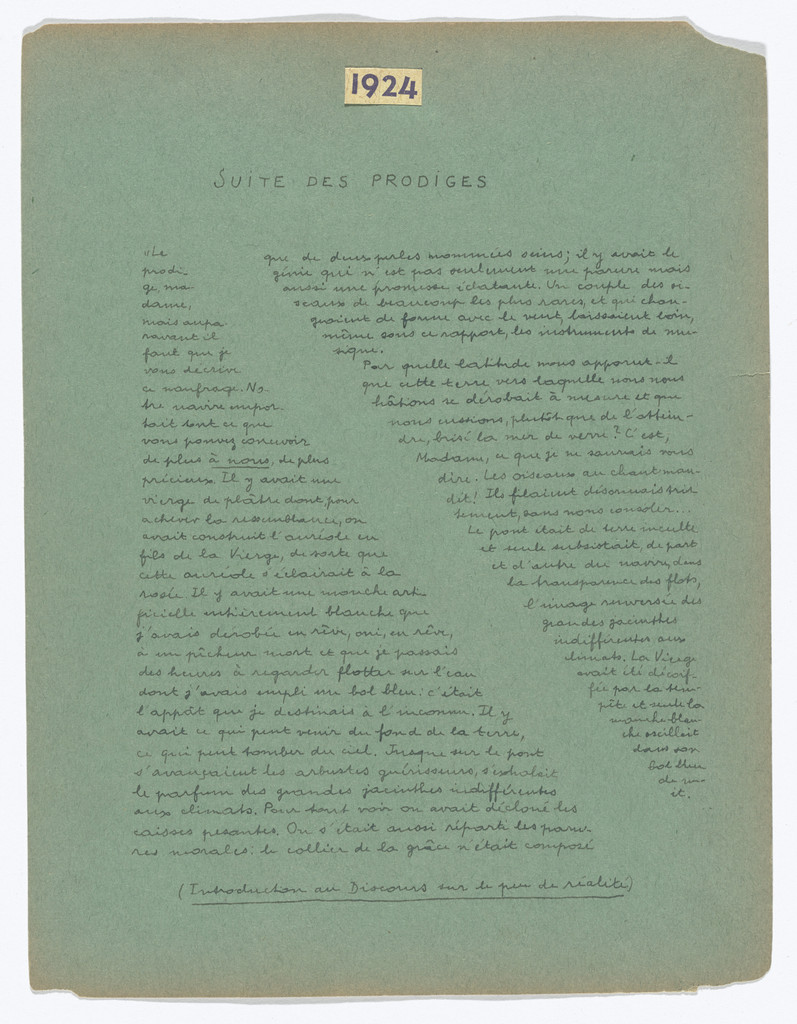
.a: Suite des Prodiges (1924), .b: Untitled (1925)
André Breton
1941
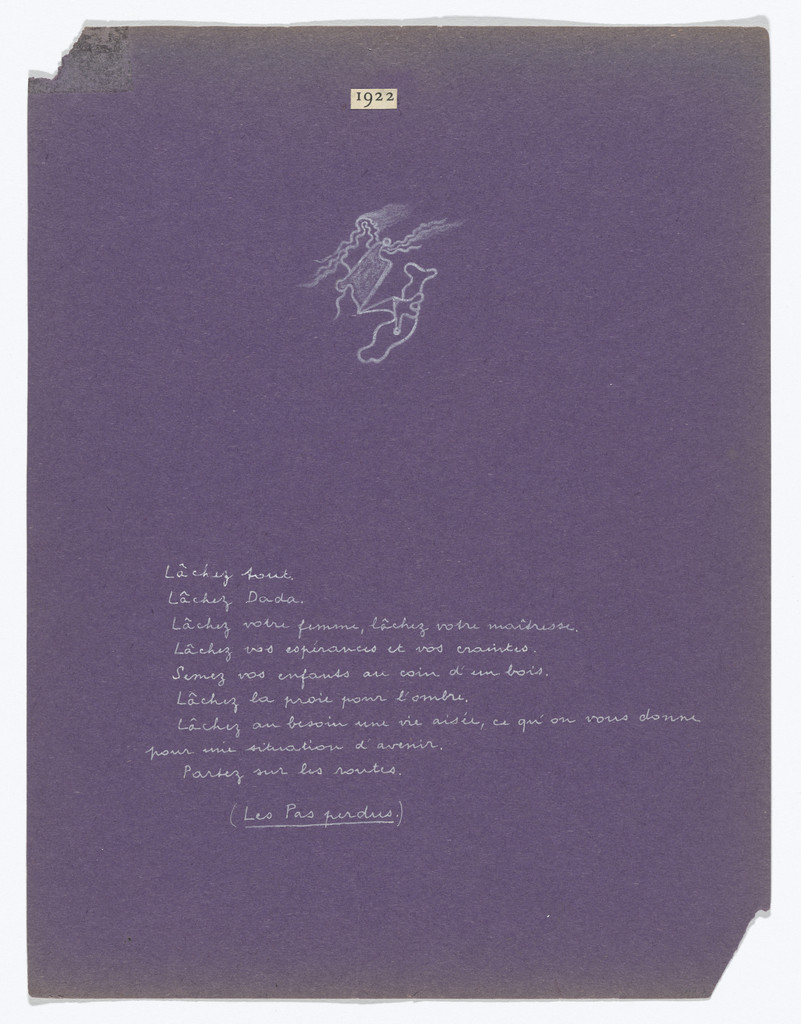
.a: Untitled (1922), .b: Le Buvard de Cendre (1923)
André Breton
1941
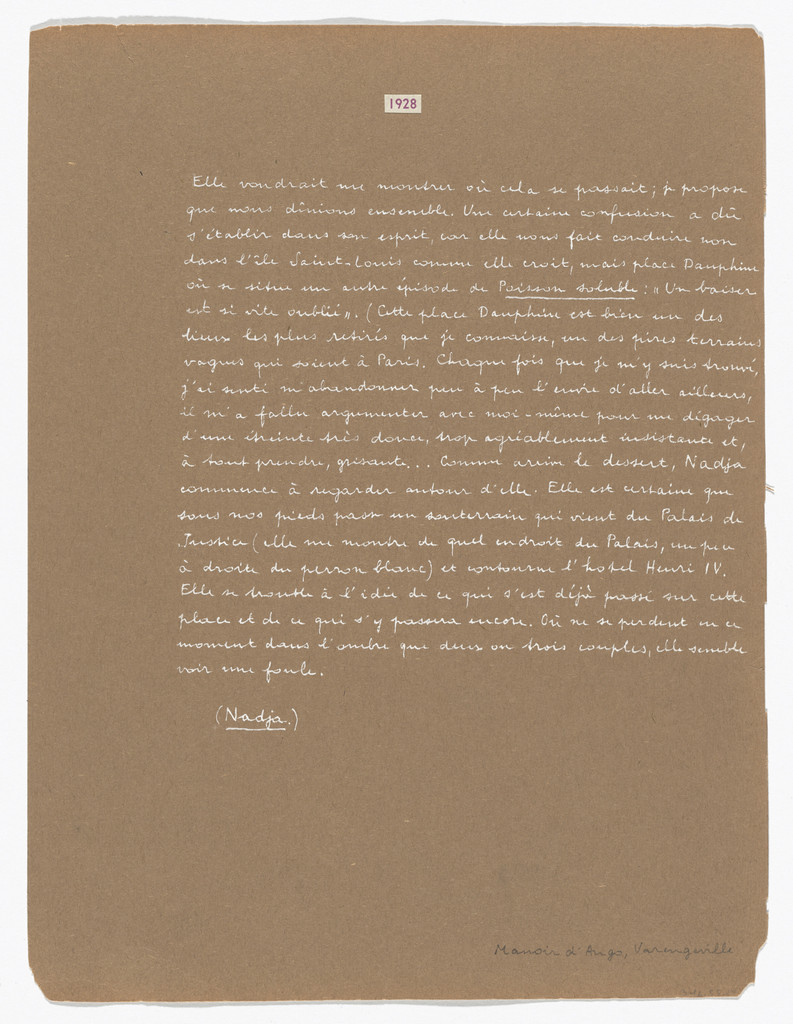
.a: Untitled (1928), .b: Untitled (1929)
André Breton
1941
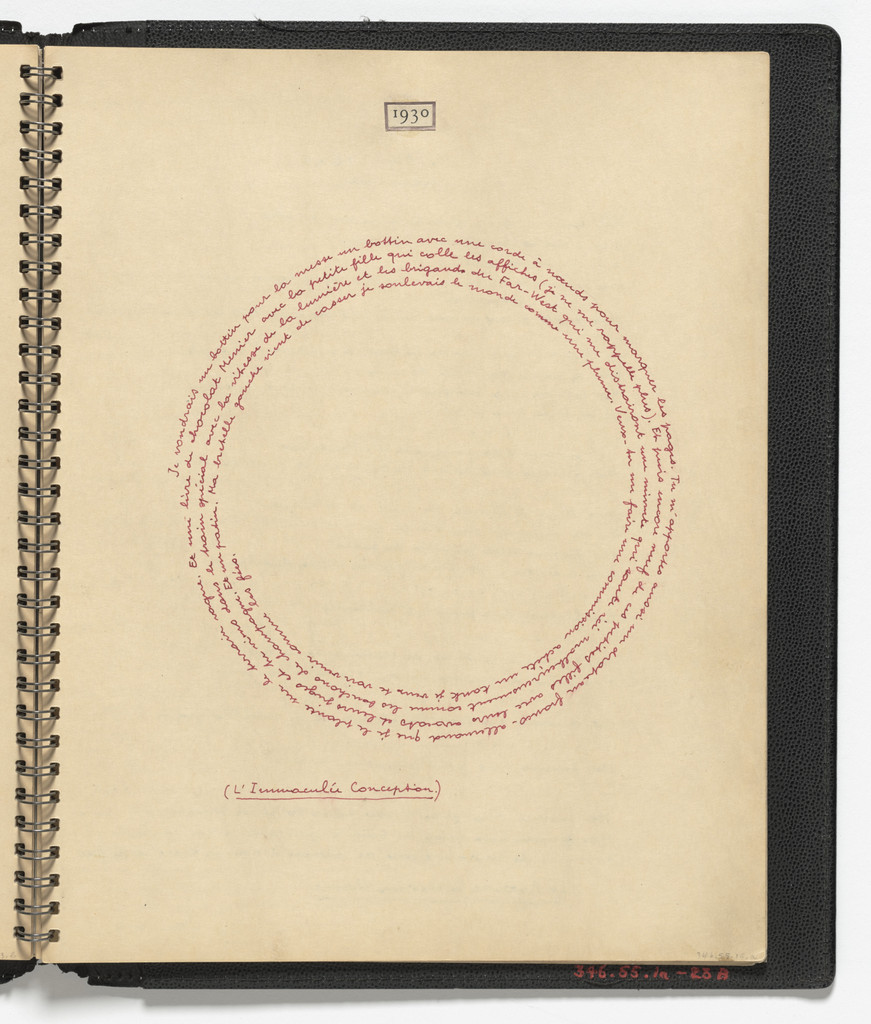
.a: Untitled (1930), .b: L'Union Libre (1931)
André Breton
1941
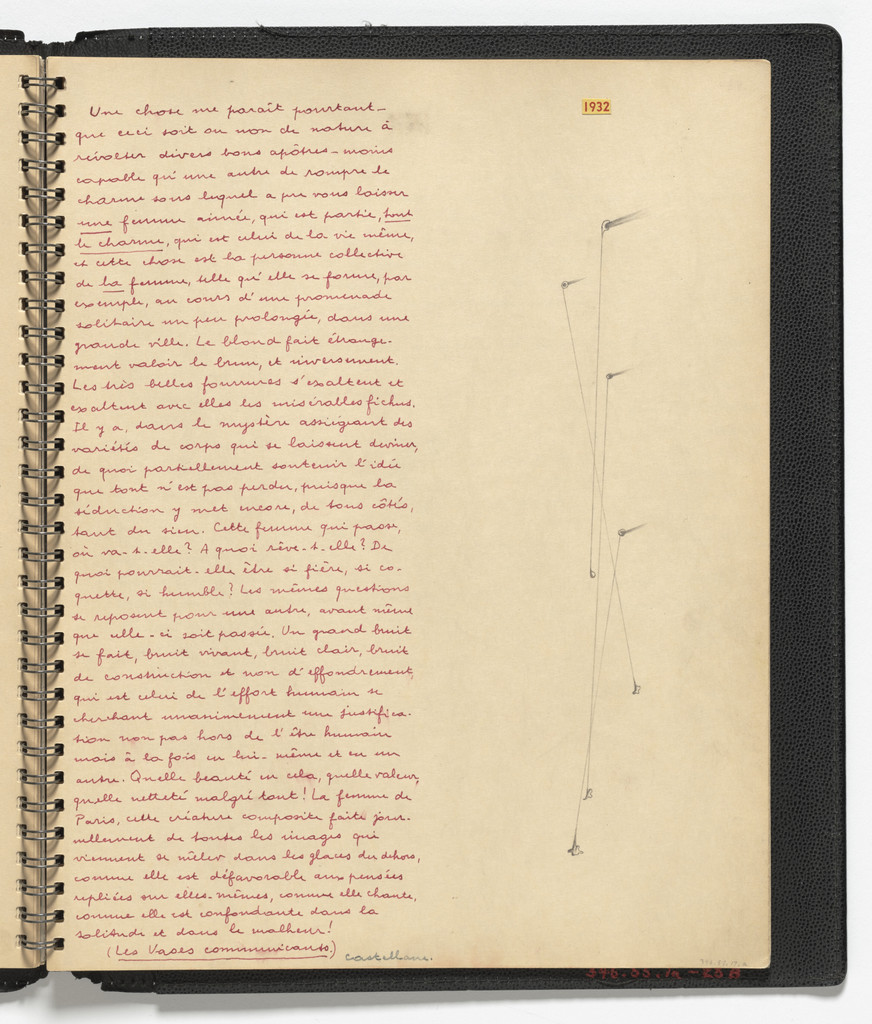
.a: Untitled (1932), .b: Untitled (1933)
André Breton
1941
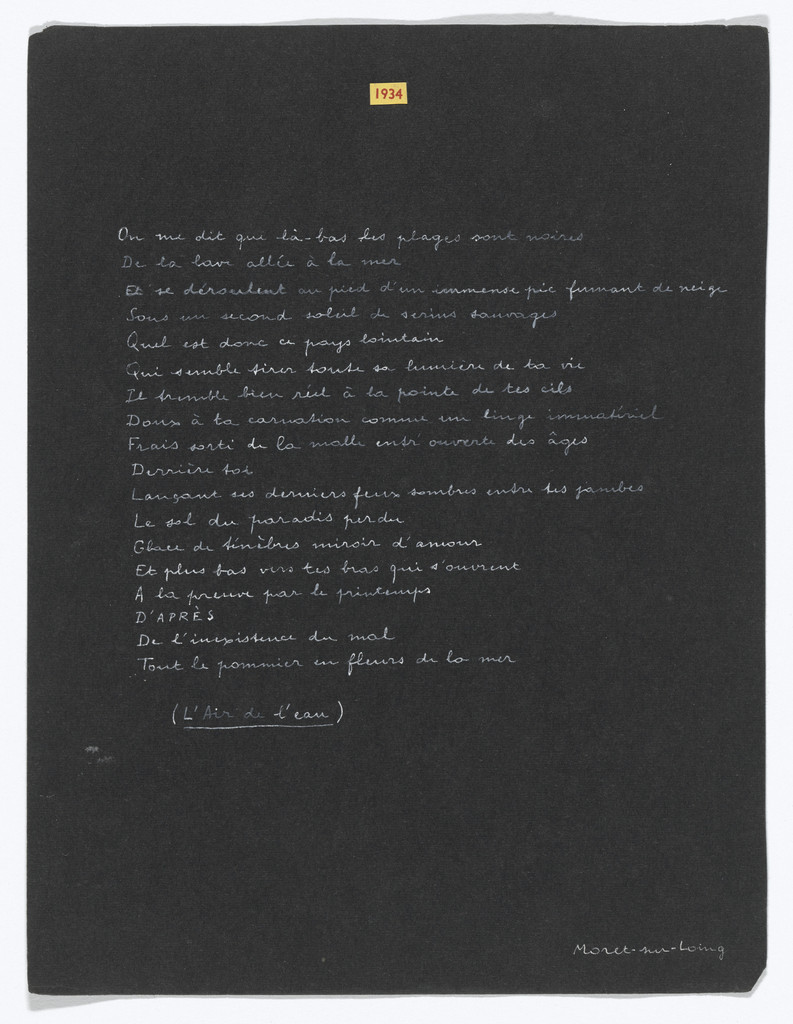
.a: Untitled (1934), .b: Untitled (1935)
André Breton
1941
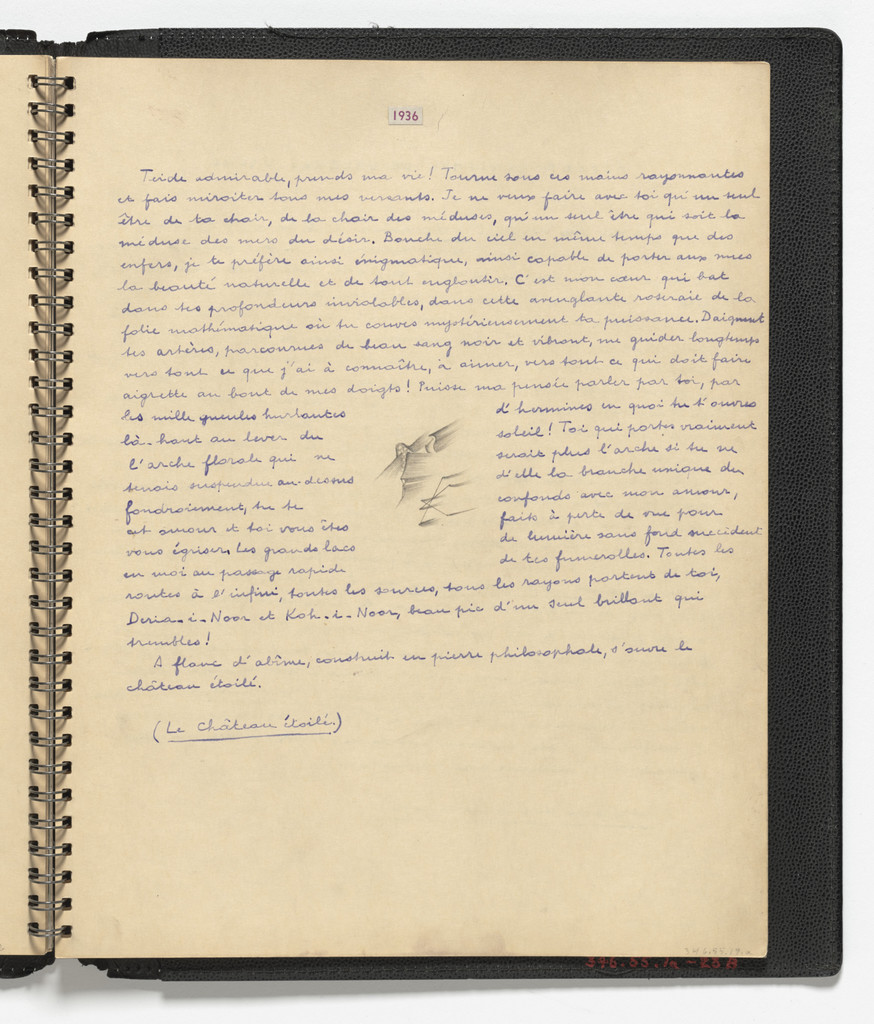
.a: Untitled (1936), .b: Aspect Zénithal de Jacques Vaché...
André Breton
1941
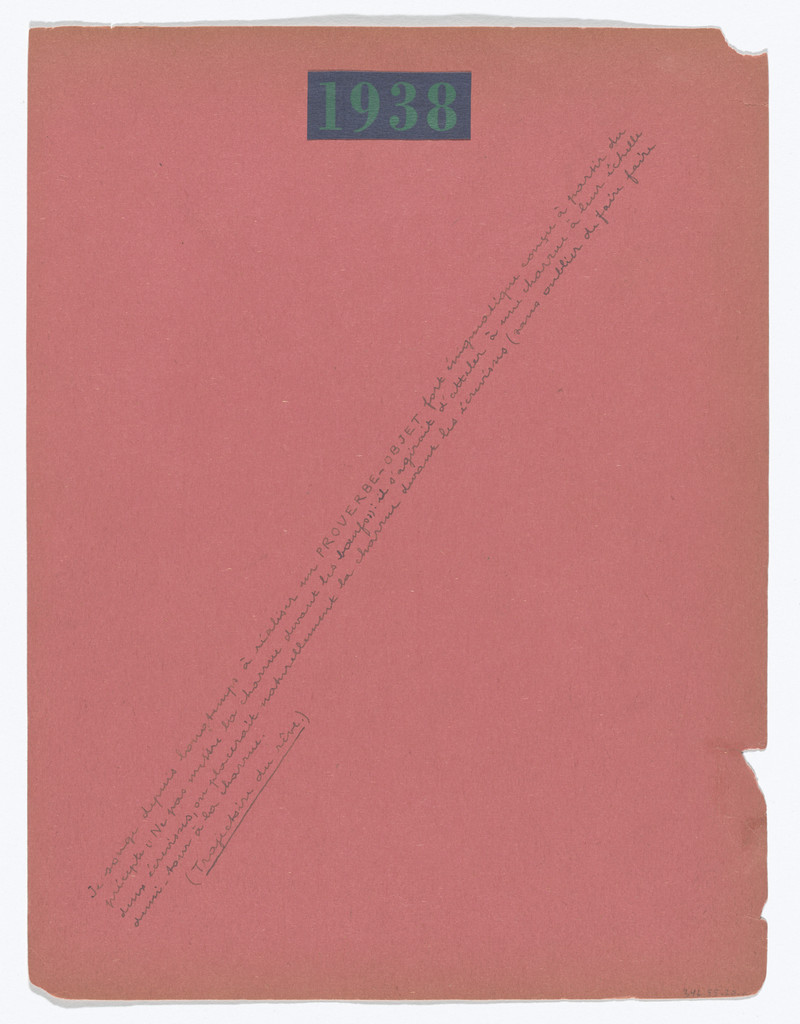
.a: Untitled (1938), .b: La Maison D'Yves Tanguy (1939)
André Breton
1941
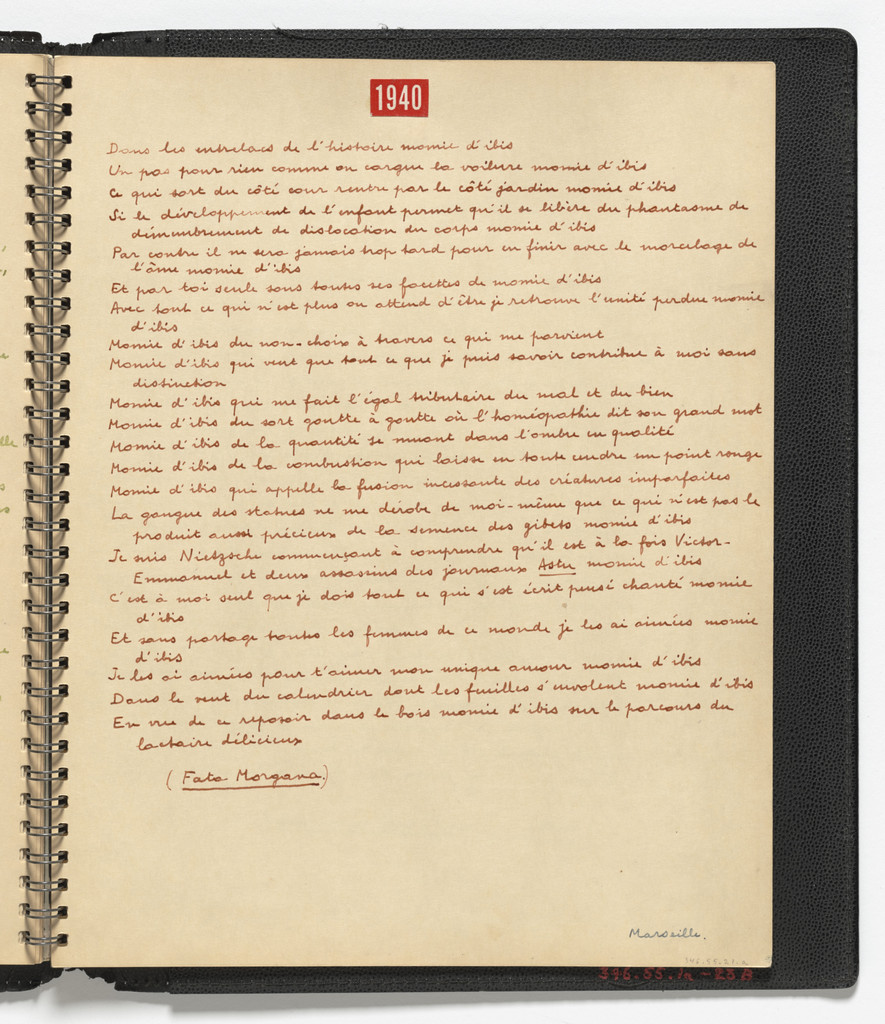
.a: Untitled (1940), .b: La Laterne Sourde (1941)
André Breton
1941
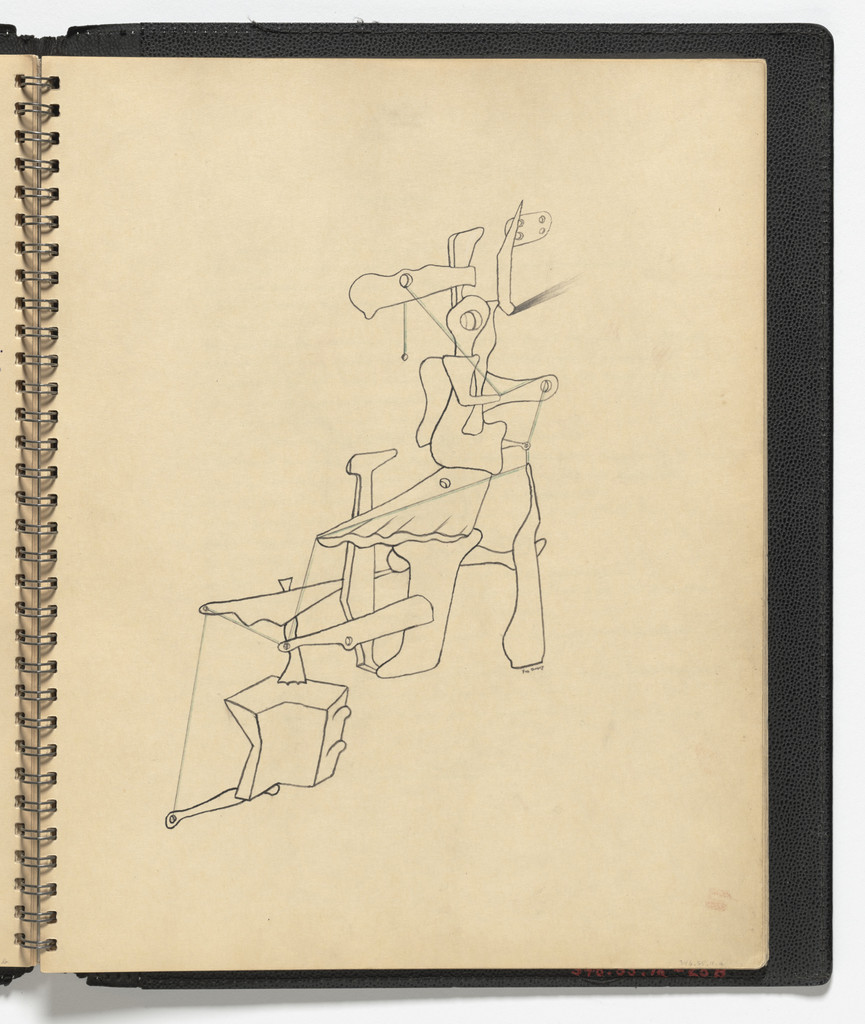
.a: Untitled (page from Breton-Tanguy Notebook), .b: Unti...
André Breton
1941
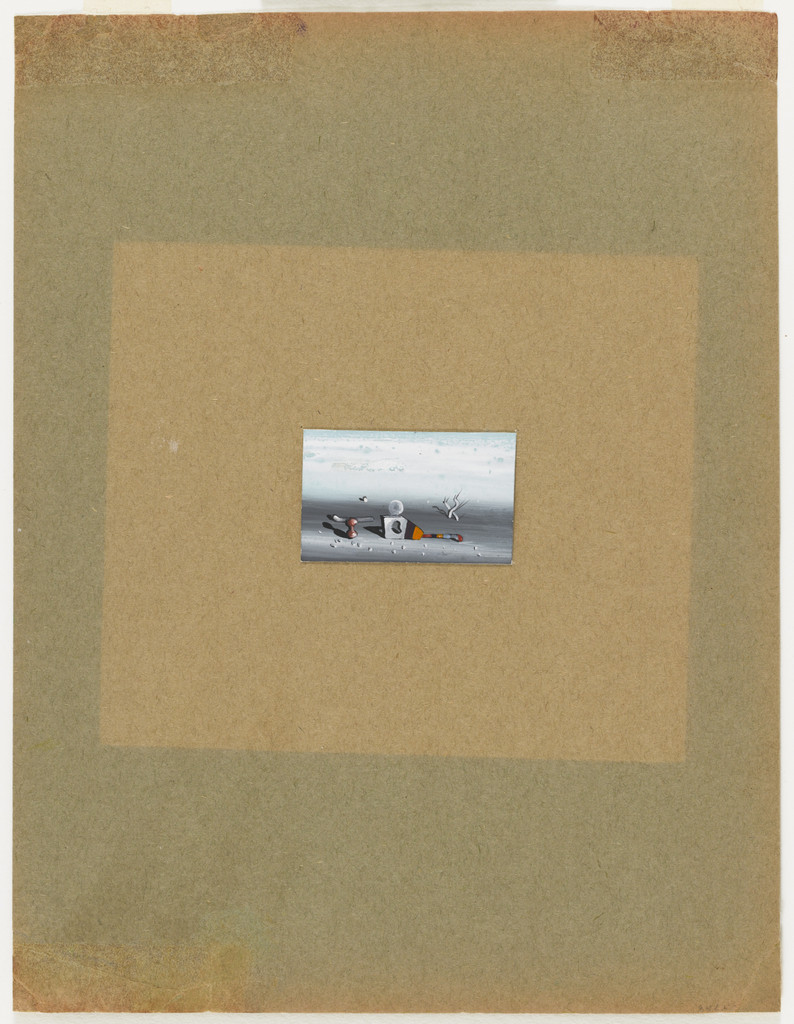
.a: Untitled, .b: (untitled)
André Breton
1941
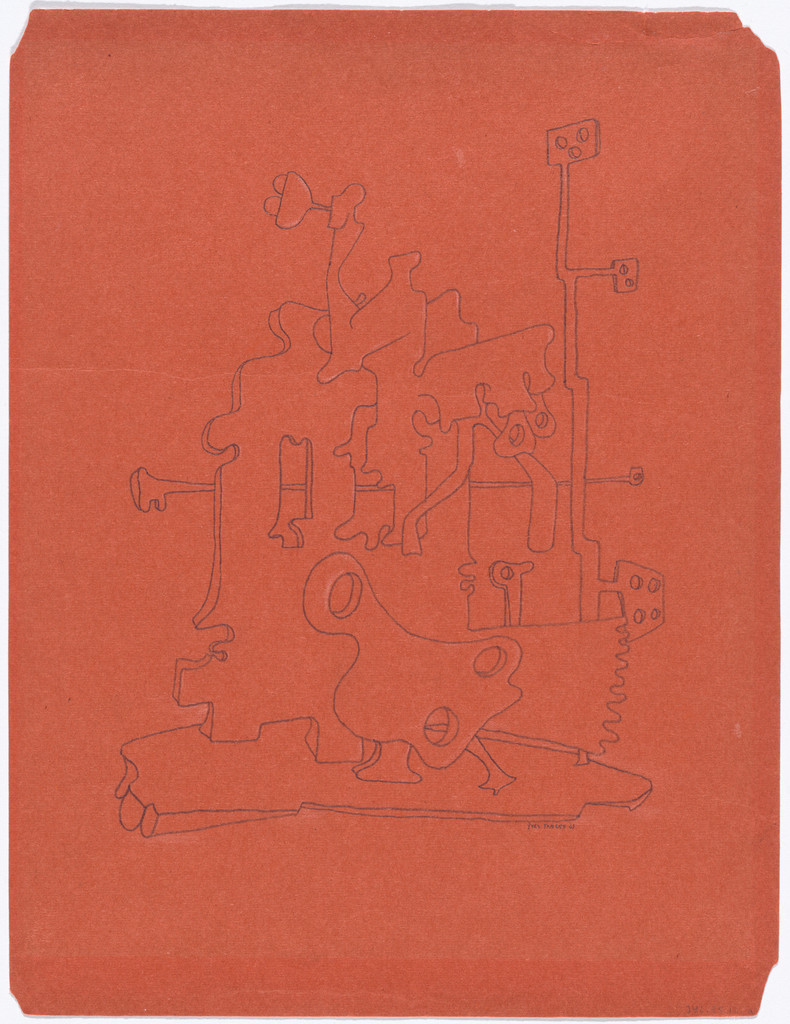
.a: Untitled, .b: Untitled
André Breton
1941
.a: Untitled, .b: Untitled
André Breton
1941
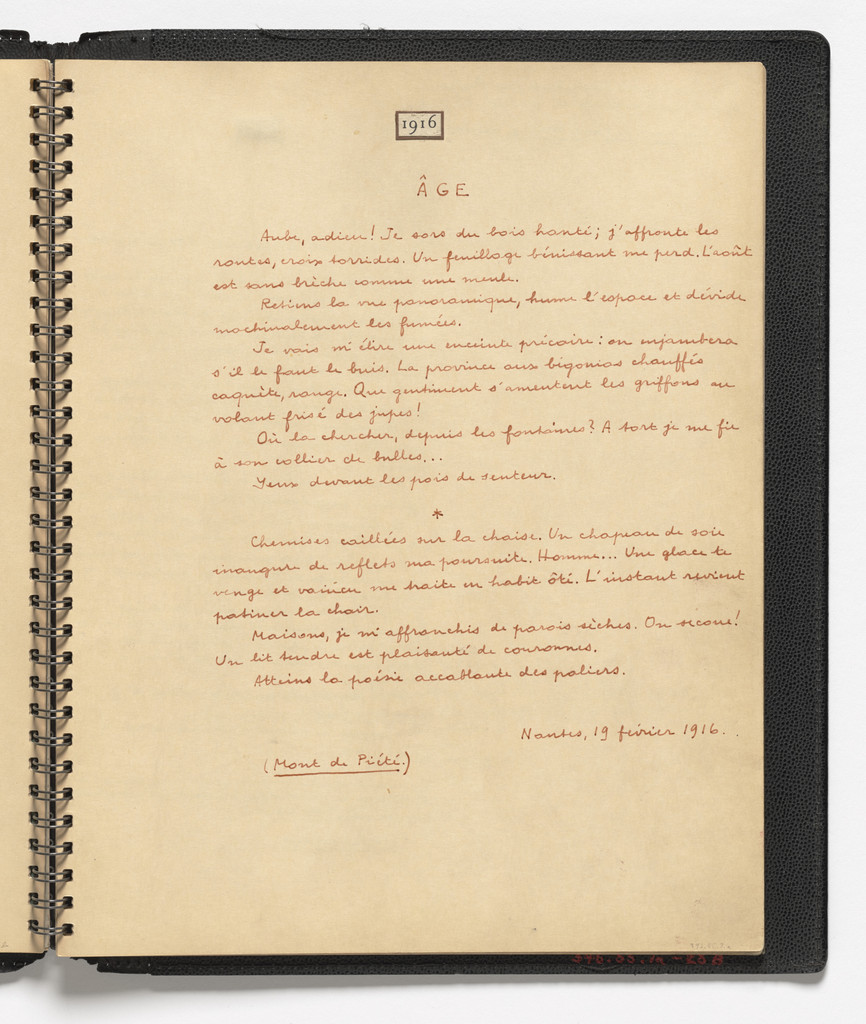
.a: Âge (1916), .b: A Propos de Guillaume Apollinaire (1917)
André Breton
1941
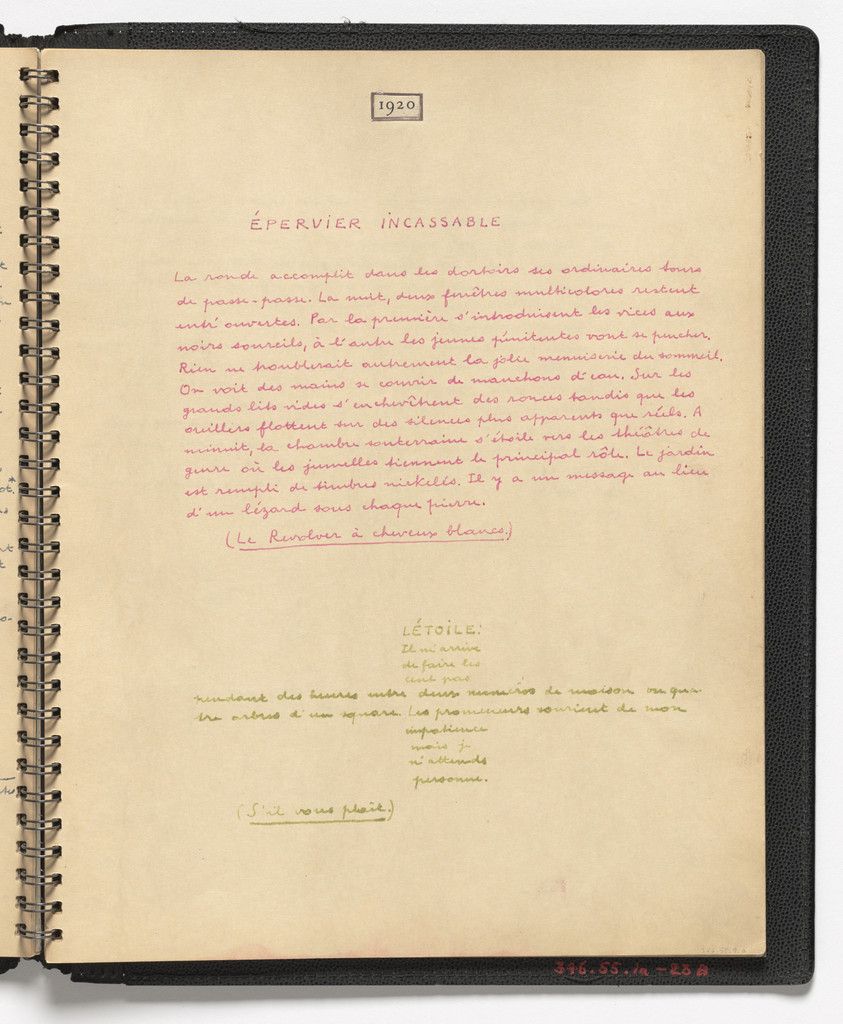
.a: Épervier Incassable (1920), .b: Untitled (1921)
André Breton
1941
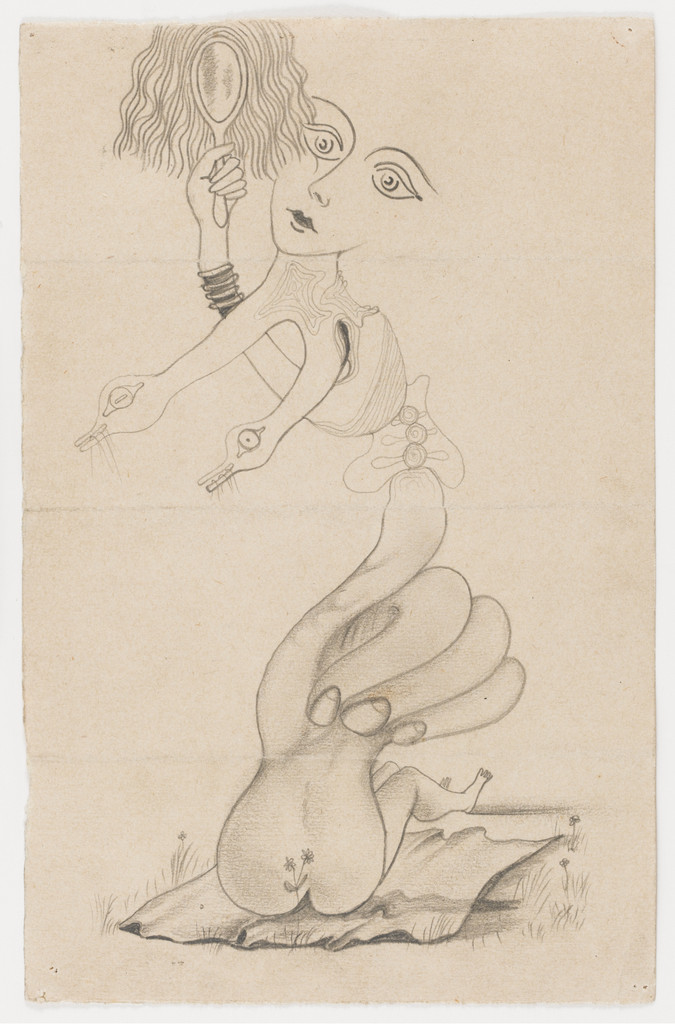
Figure
Victor Brauner
1934
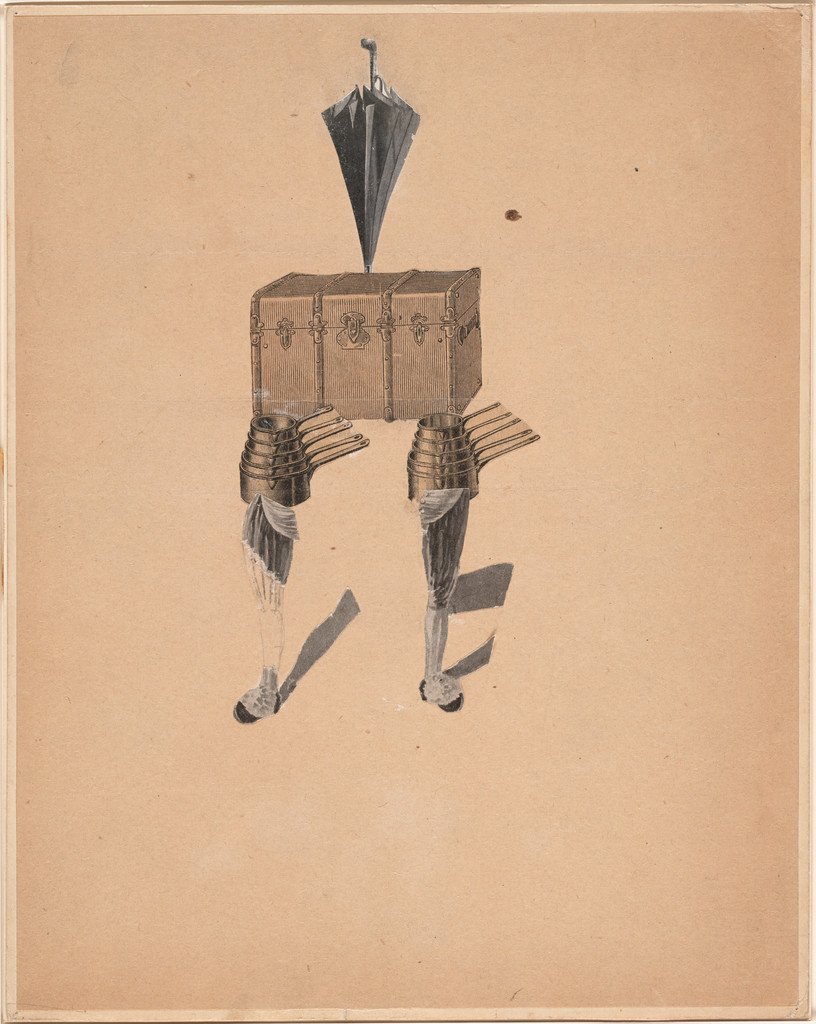
Figure
André Breton
c. 1927
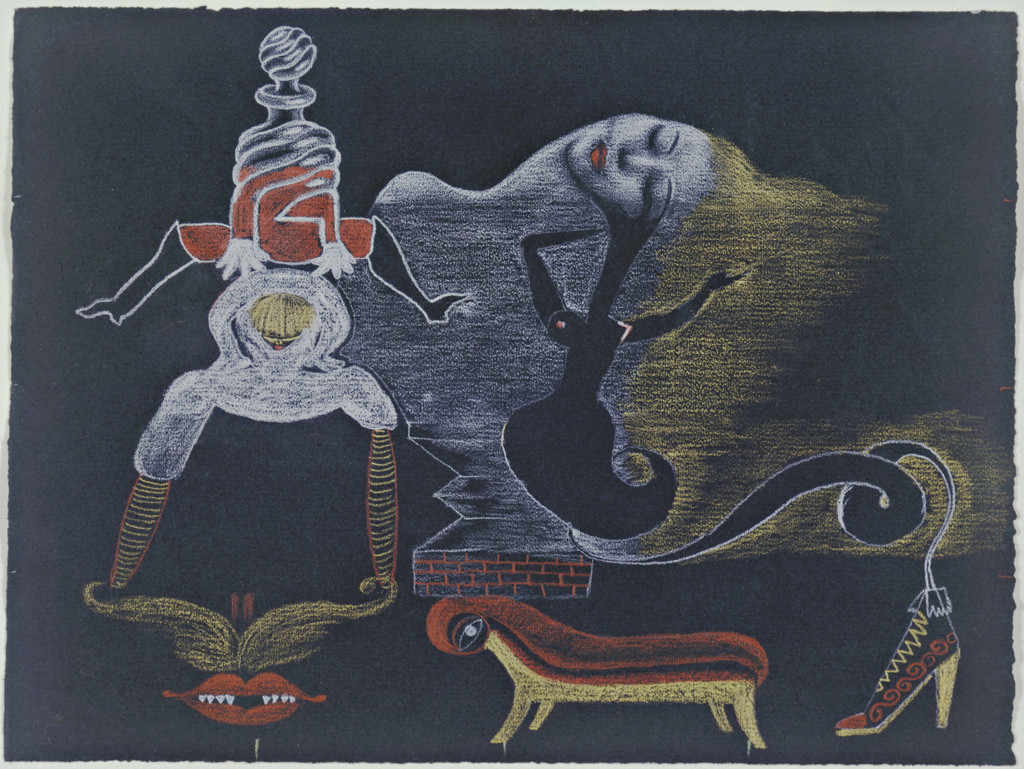
Landscape
André Breton
c. 1933
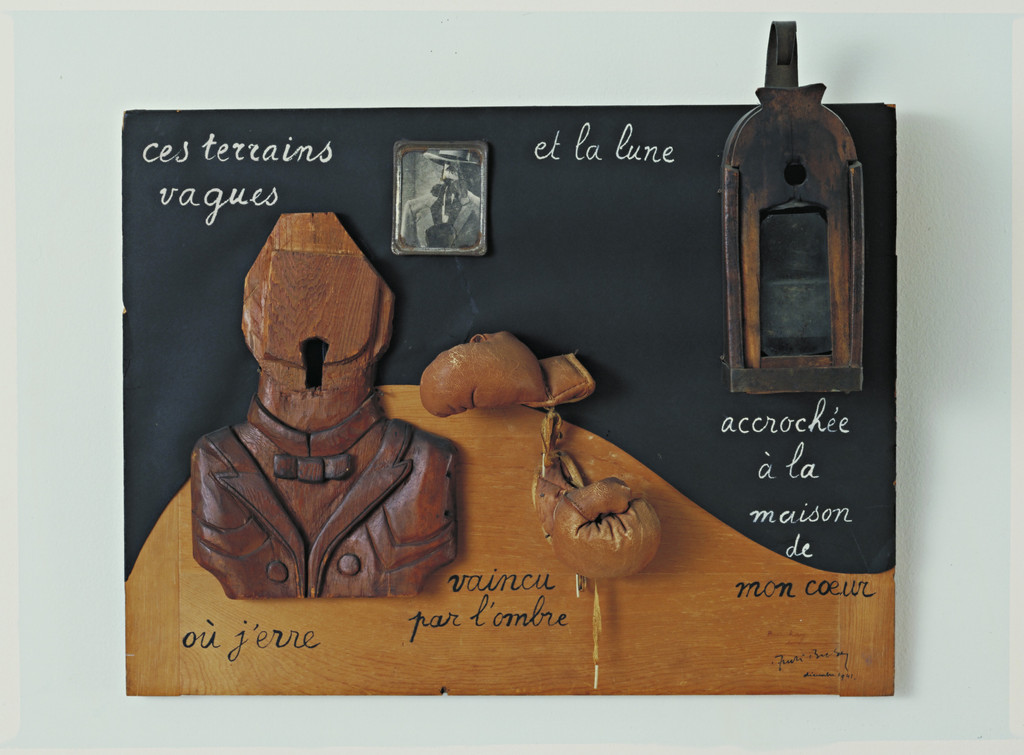
Poem-Object
André Breton
December 1941
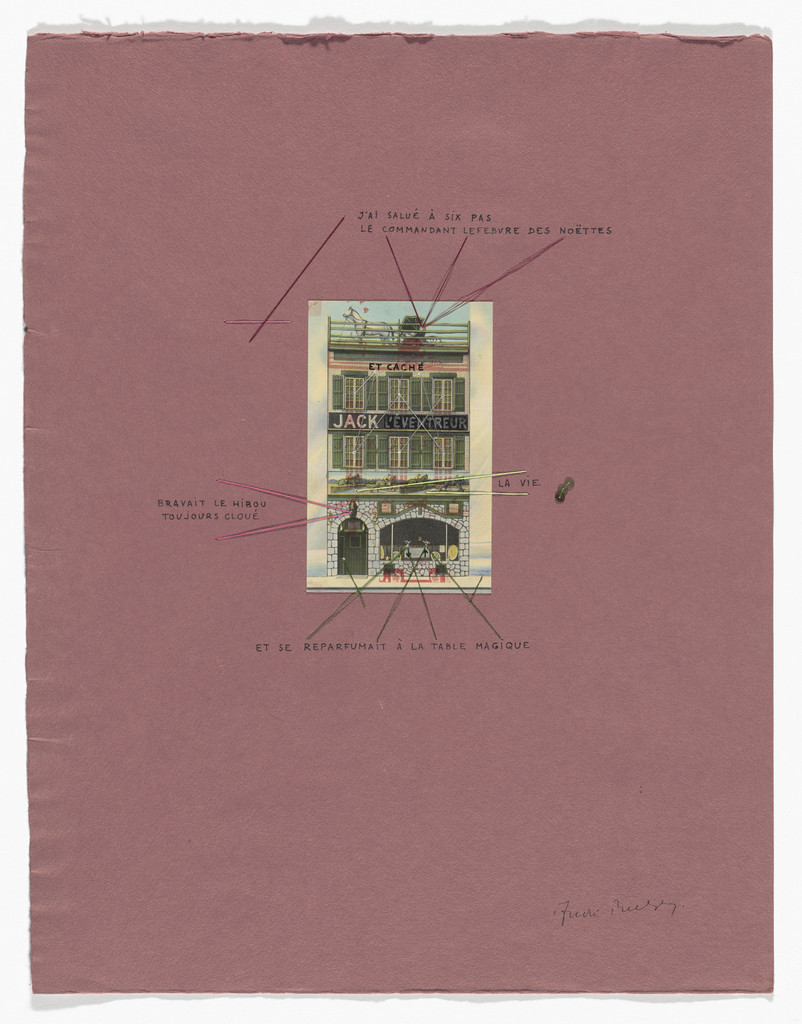
Poème-Objet from VVV Portfolio
André Breton
1942, published 1943
Exhibitions
8 exhibitionsDec 07, 1936 – Jan 17, 1937
Fantastic Art, Dada, Surrealism
179 artists · 1 curator
Sep 21, 1948 – Dec 05, 1948
Collage
39 artists · 1 curator
Oct 04, 1961 – Nov 12, 1961
The Art of Assemblage
144 artists · 1 curator
May 27, 1964
Painting and Sculpture from the Museum Collection
169 artists
Feb 16, 1965 – Apr 25, 1965
Recent Acquisitions: Painting and Sculpture
87 artists
Sep 17, 1965 – Dec 14, 1965
Recent Acquisitions: Kay Sage Tanguy Bequest
12 artists · 1 curator
Mar 27, 1968 – Jun 09, 1968
Dada, Surrealism and their Heritage
94 artists · 1 curator
Nov 03, 1988 – Feb 28, 1989
Collage: Selections from the Permanent Collection
42 artists · 2 curators