
“I never create art to be decorative.” — Marina Abramović
For three months, from open until close, The Museum of Modern Art offered visitors an unusual opportunity: to encounter not just artworks, but an artist herself. Day after day, Marina Abramović sat motionless for eight hours in the Museum’s central atrium as members of the public took turns sitting across from her and gazing silently into her eyes. Could a simpler performance be imagined? It entailed nothing other than the artist’s presence, without action or words—and yet it was nothing short of a spectacle. Visitors laughed, cried, and attested to spiritual experiences. Thousands waited in line for their moment with Abramović, and thousands more watched the live stream online. The most mundane act of human contact had been turned, as if by magic, into an irresistible catalyst for emotion. The performance, accompanying Abramović’s 2010 MoMA retrospective _The Artist Is Present_, was a culmination of her lifelong investigation into the dynamics of human encounters. What are the unspoken conventions that govern our daily lives, and what happens when those norms are subverted or break down? For Abramović, performance is a laboratory for social experimentation, a tool with which she tests the rules of art and life to the point of their collapse. The results can be unexpectedly moving—or deeply distressing, as in Abramović’s [_Rhythm 0_] (/collection/works/126441). In 1974, in Naples, Italy, the artist gathered 72 objects “for pleasure and for pain” (among them lipstick, a knife, and a loaded gun) and invited the audience to use them on her inert body. “I am the object,” Abramović declared. The audience’s behavior was gentle at first, but slowly escalated to the point of violence. A public impulse to cruelty was unveiled and put on disturbing display. Working first in her native Serbia—at the time, part of Socialist Yugoslavia—and subsequently in Western Europe and America, Abramović used her own body as the primary instrument in artworks calculated to scandalize and provoke. Along with her collaborator and partner Ulay, Abramović emerged as part of an international generation of performance artists who sought to radically redefine the bounds of aesthetic experience. This art reflected and responded to the turbulent backdrop of the late 1960s and 1970s, when protest movements swept across countries from the United States to Yugoslavia. “I had come to believe that art must be disturbing, art must ask questions, art must predict the future,” Abramović recalls. No longer could art be expected to provide mere beauty or comfort: for Abramović and her peers, art was a nail to be driven into the crumbling edifice of moral authority across political systems. Some critics have questioned the possibility and desirability of the very term central to Abramović’s practice: _presence_. As much as she may emphasize live performance, Abramović’s work is inescapably tied to her status as a media star whose viral image spreads in the absence of her physical presence. There is also something quasi-religious about Abramović’s performance persona, with her rituals of self-sacrifice (as in the flagellation and mock crucifixion in _Lips of Thomas_) that recall older traditions of asceticism and saintly devotion. All this can appear paradoxical in the relentlessly modern, mediated, and secular art world. But perhaps these contradictions are precisely what give Abramović’s work its power. A silent gaze, the taut stillness of direct contact—such tranquility, it turns out, is but the flip side of the entertainment spectacle that Abramović both conjures and thwarts. “If art comes just from art, it loses its power and becomes decorative,” Abramović warns. “I never create art to be decorative.”
Mitchell Herrmann, Mellon-Marron Research Consortium Fellow, Department of Media and Performance Art
Works in Collection
44 works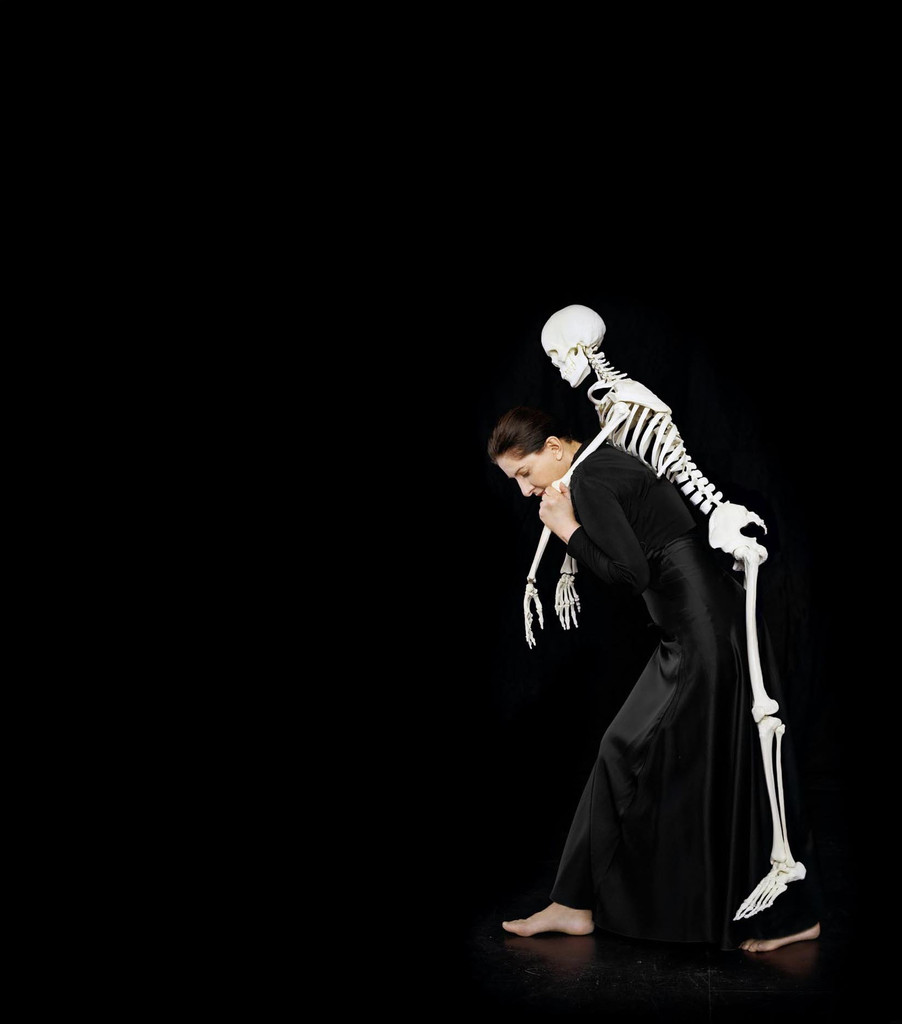
Carrying the Skeleton
Marina Abramović
2008
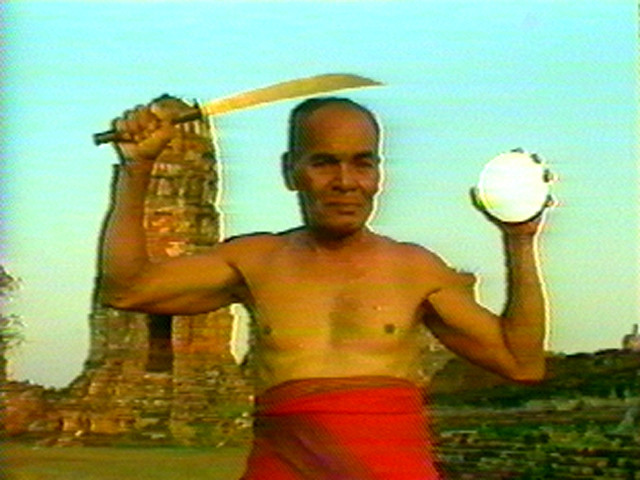
City of Angels
Marina Abramović
1983
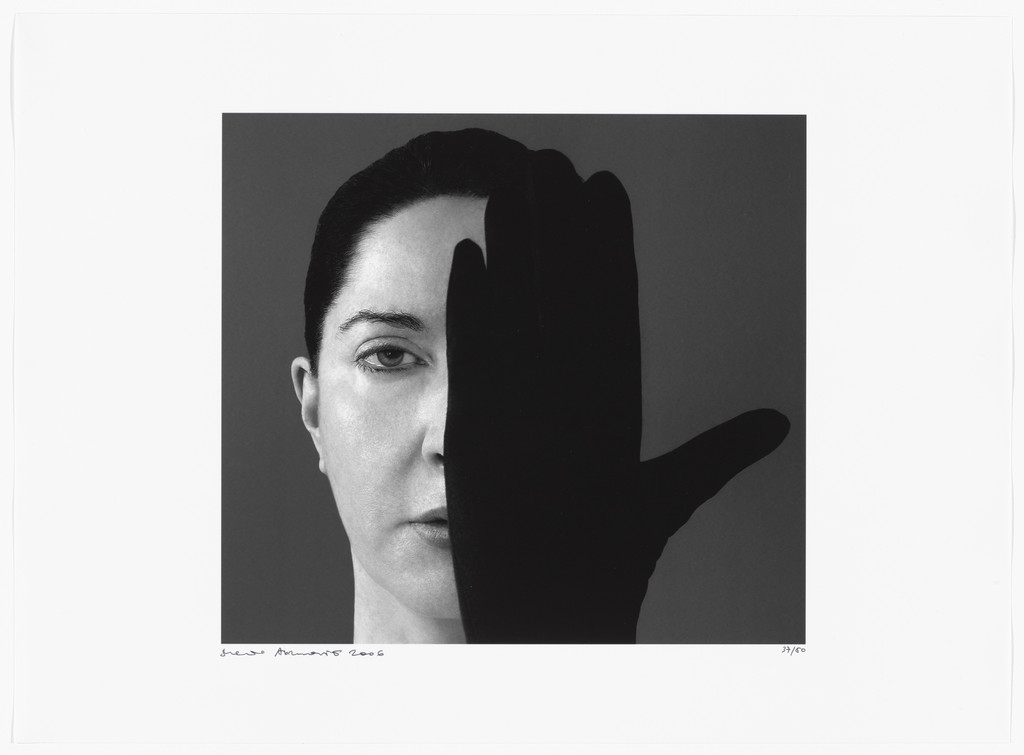
Light Side/Dark Side from 2006: Trance/Borders
Marina Abramović
2006
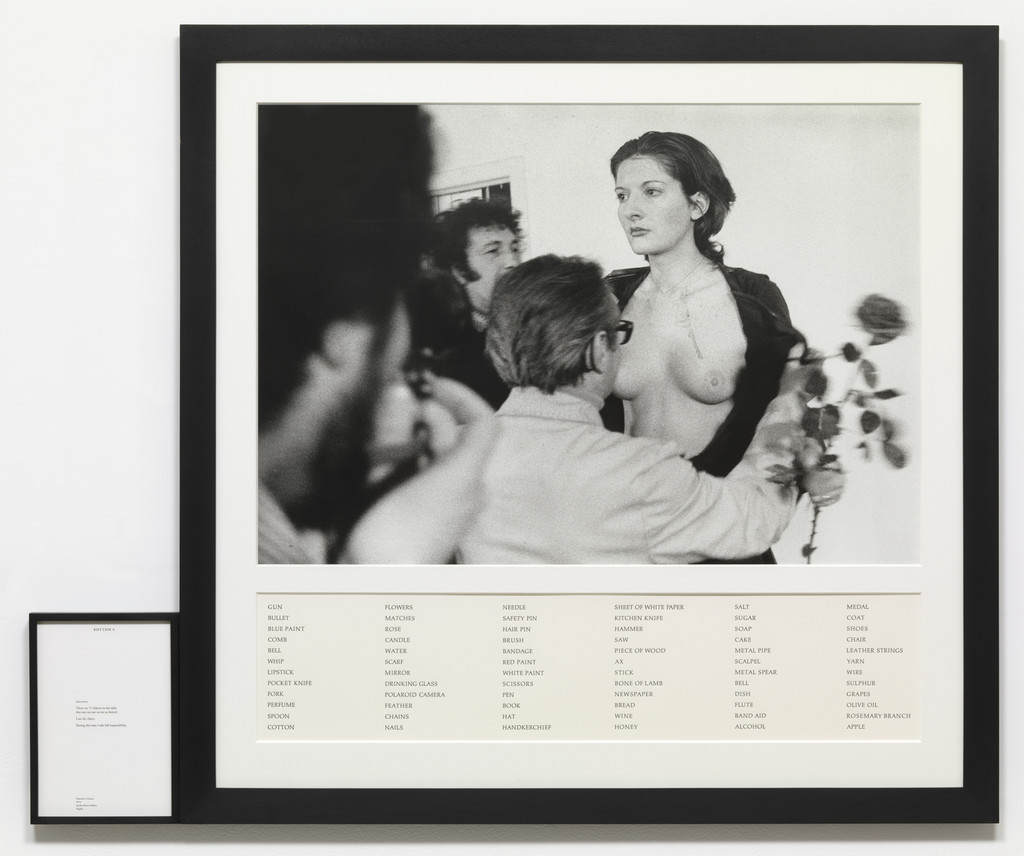
Rhythm 0 (from Performance Edition 1973-1994)
Marina Abramović
1974/1994
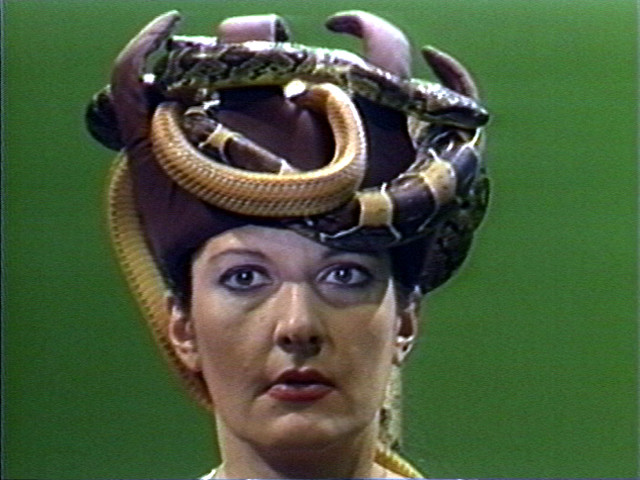
SSS
Marina Abramović
1989
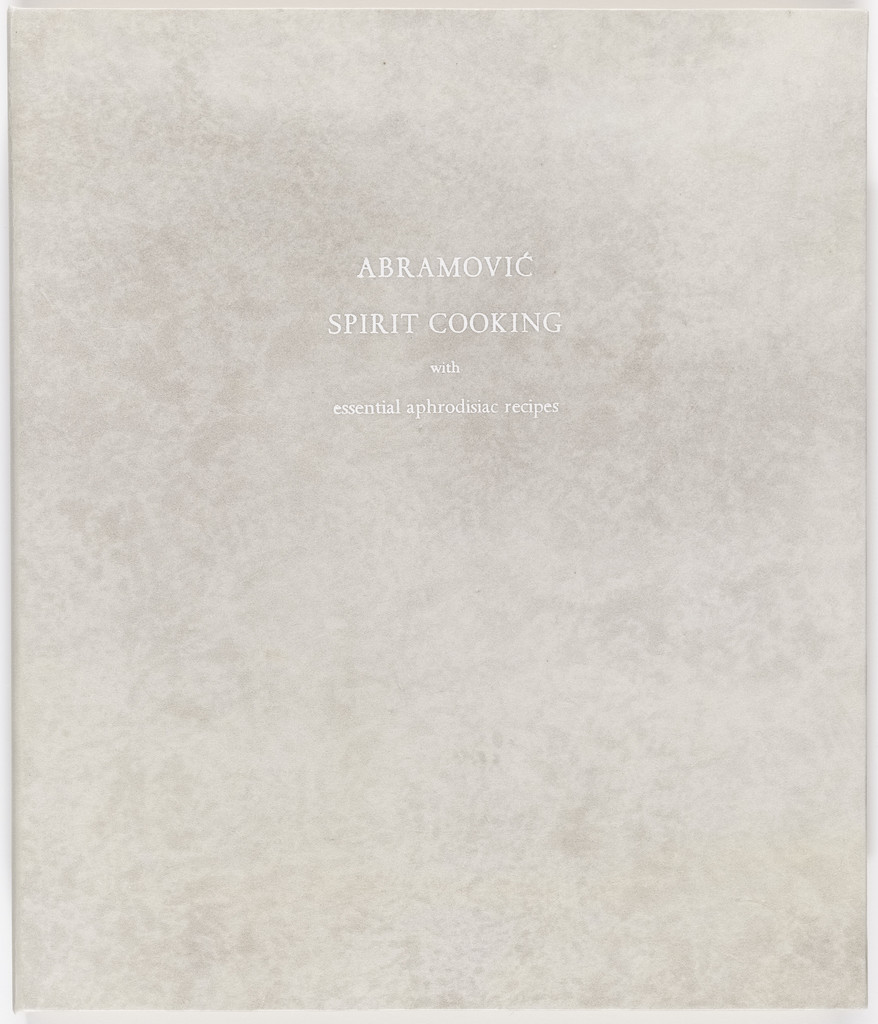
Spirit Cooking
Marina Abramović
1996
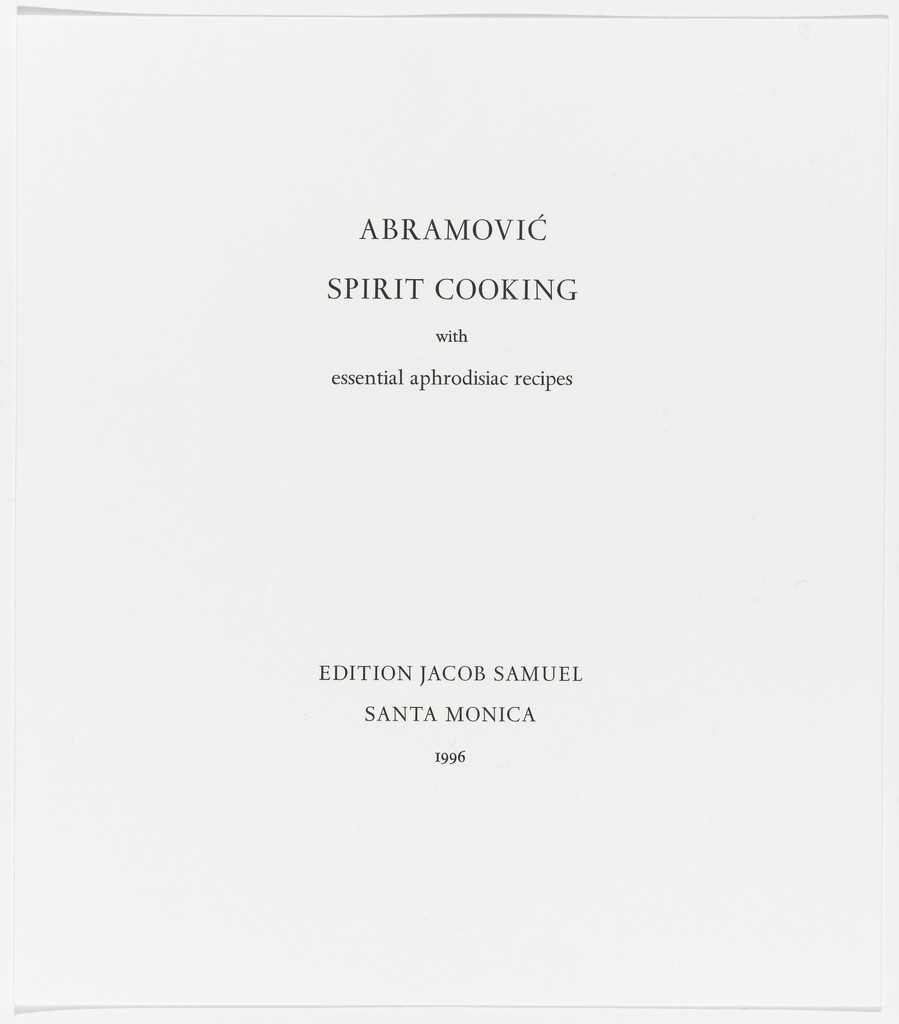
Title page from Spirit Cooking
Marina Abramović
1996
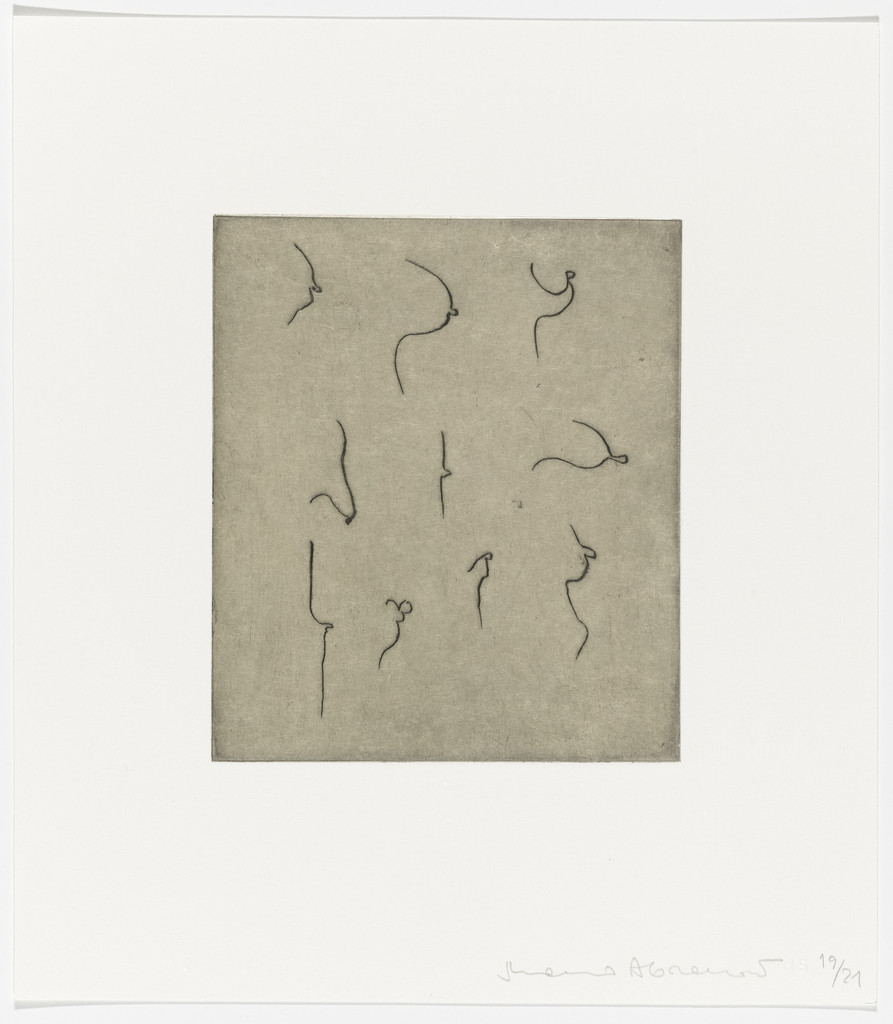
Untitled from Spirit Cooking
Marina Abramović
1996
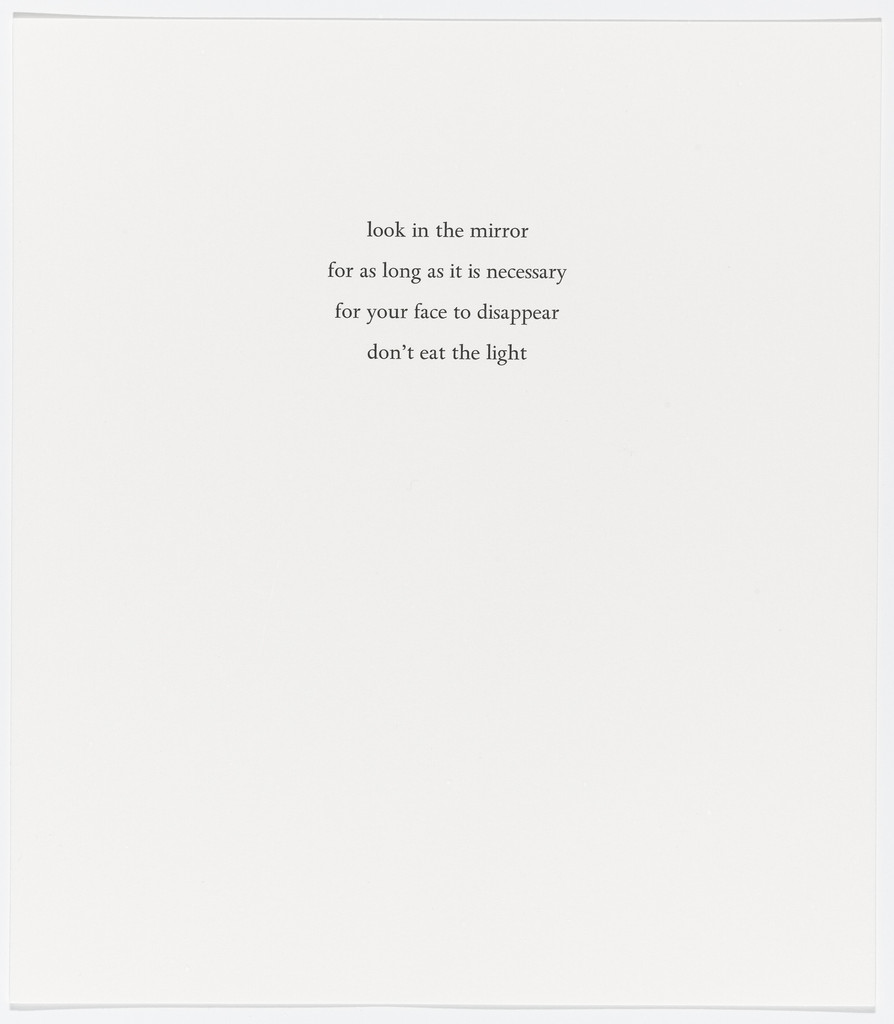
Untitled from Spirit Cooking
Marina Abramović
1996
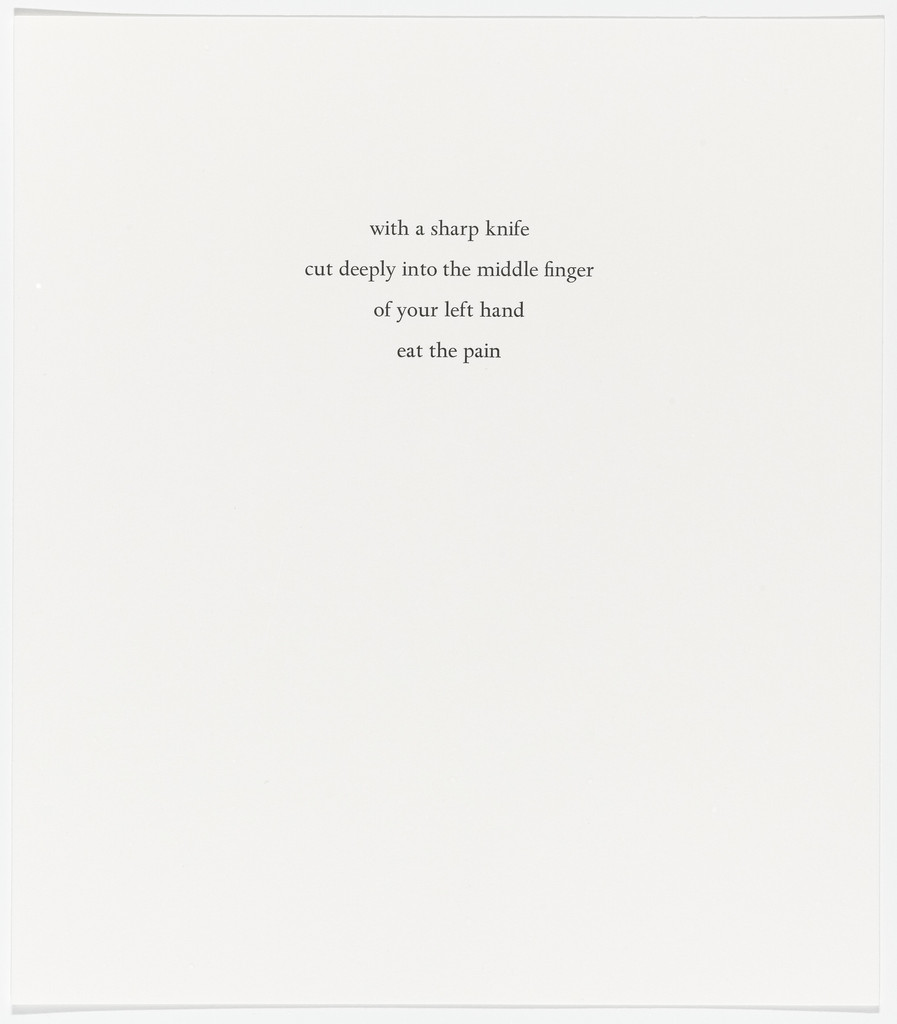
Untitled from Spirit Cooking
Marina Abramović
1996
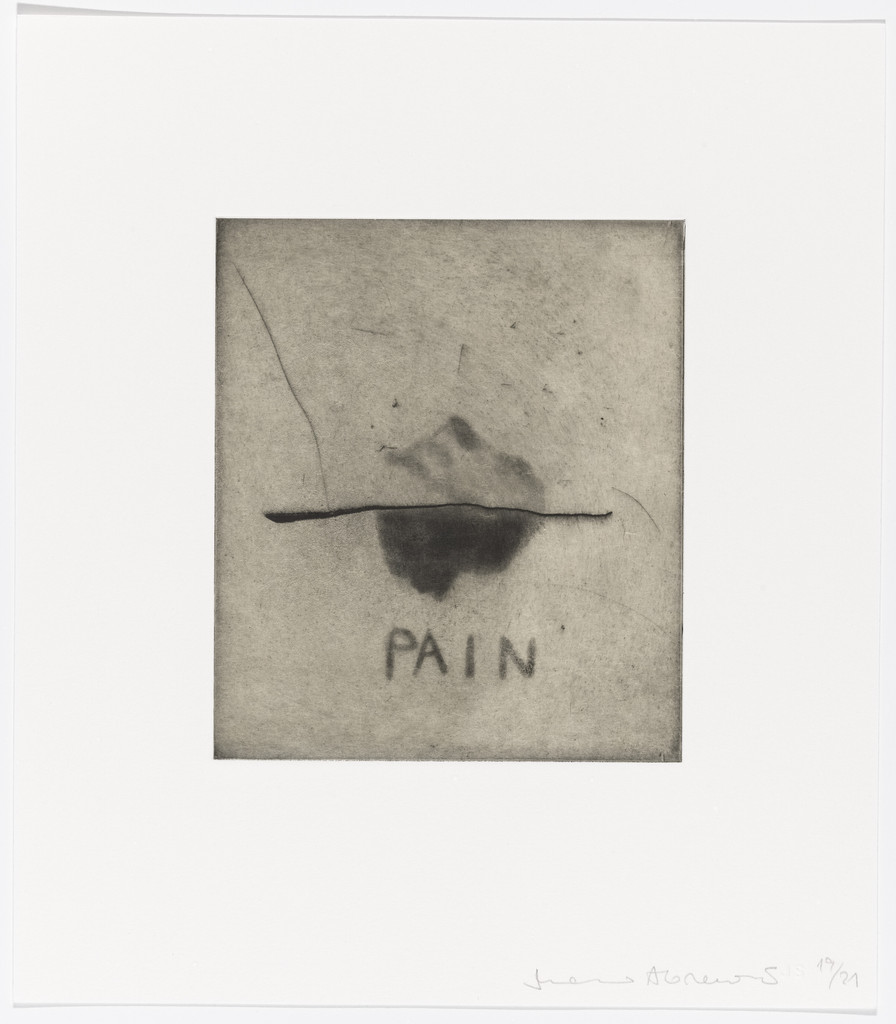
Untitled from Spirit Cooking
Marina Abramović
1996
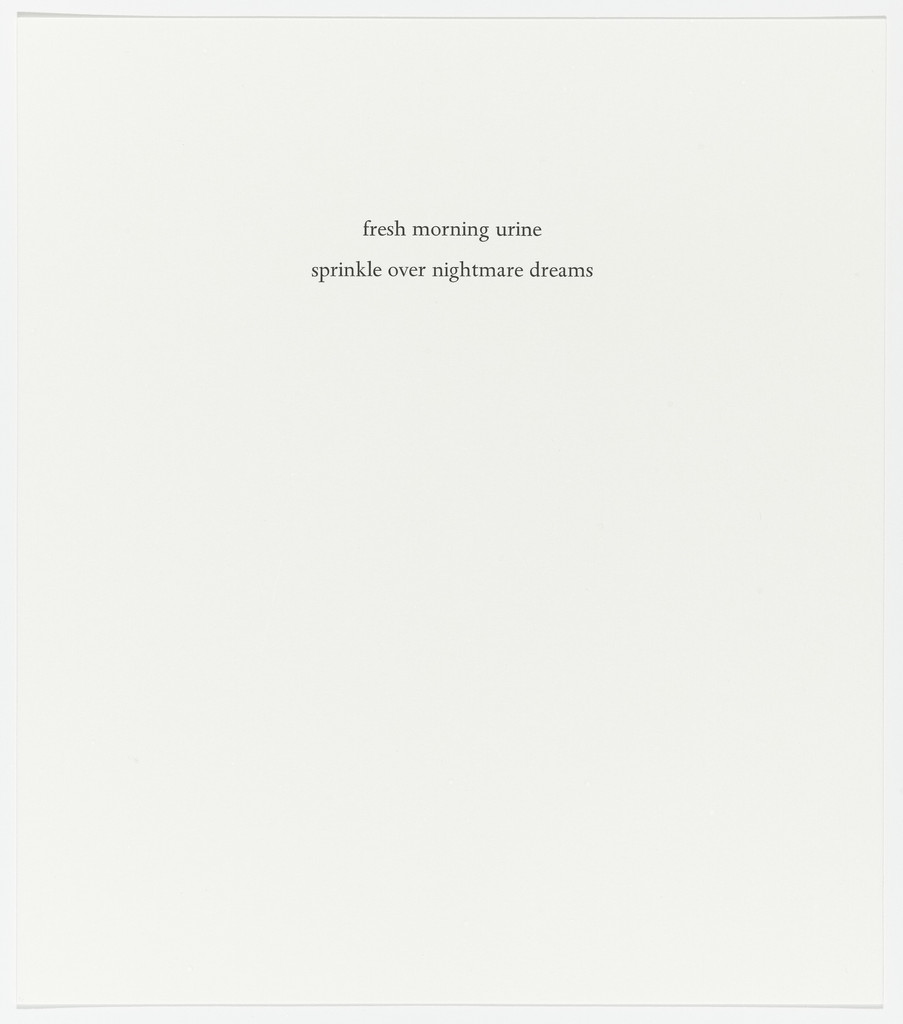
Untitled from Spirit Cooking
Marina Abramović
1996
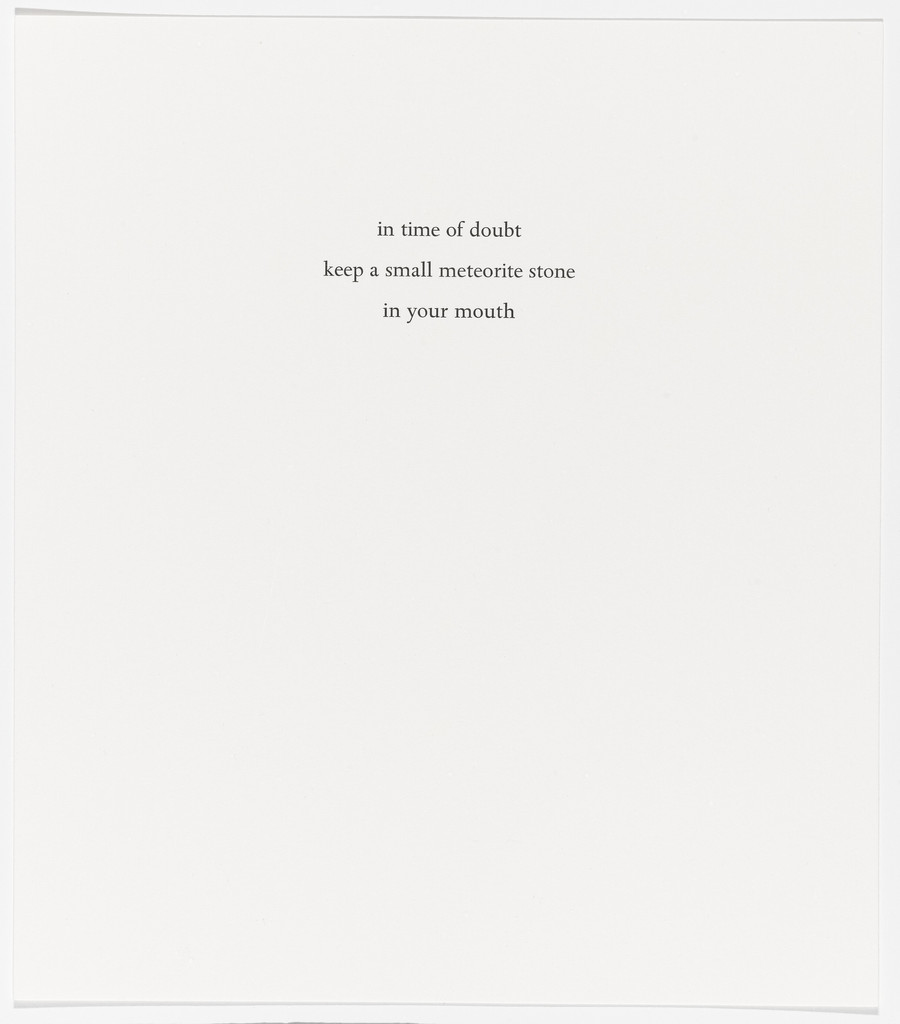
Untitled from Spirit Cooking
Marina Abramović
1996
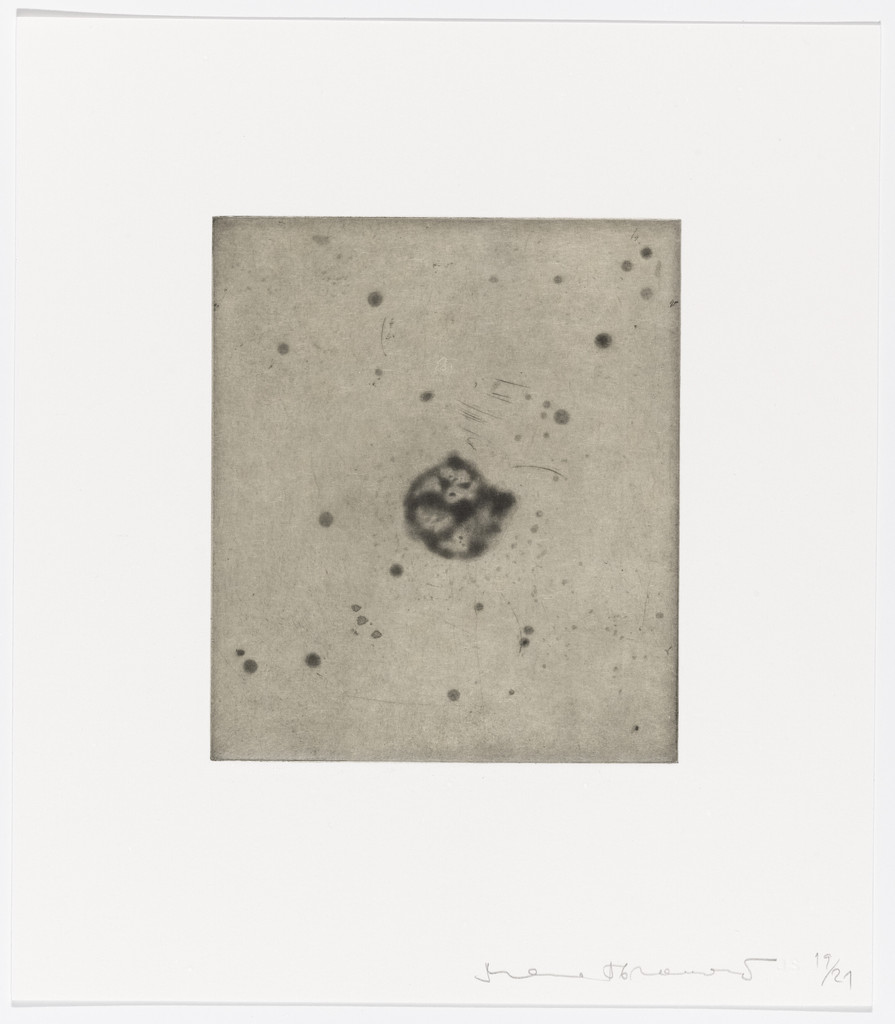
Untitled from Spirit Cooking
Marina Abramović
1996
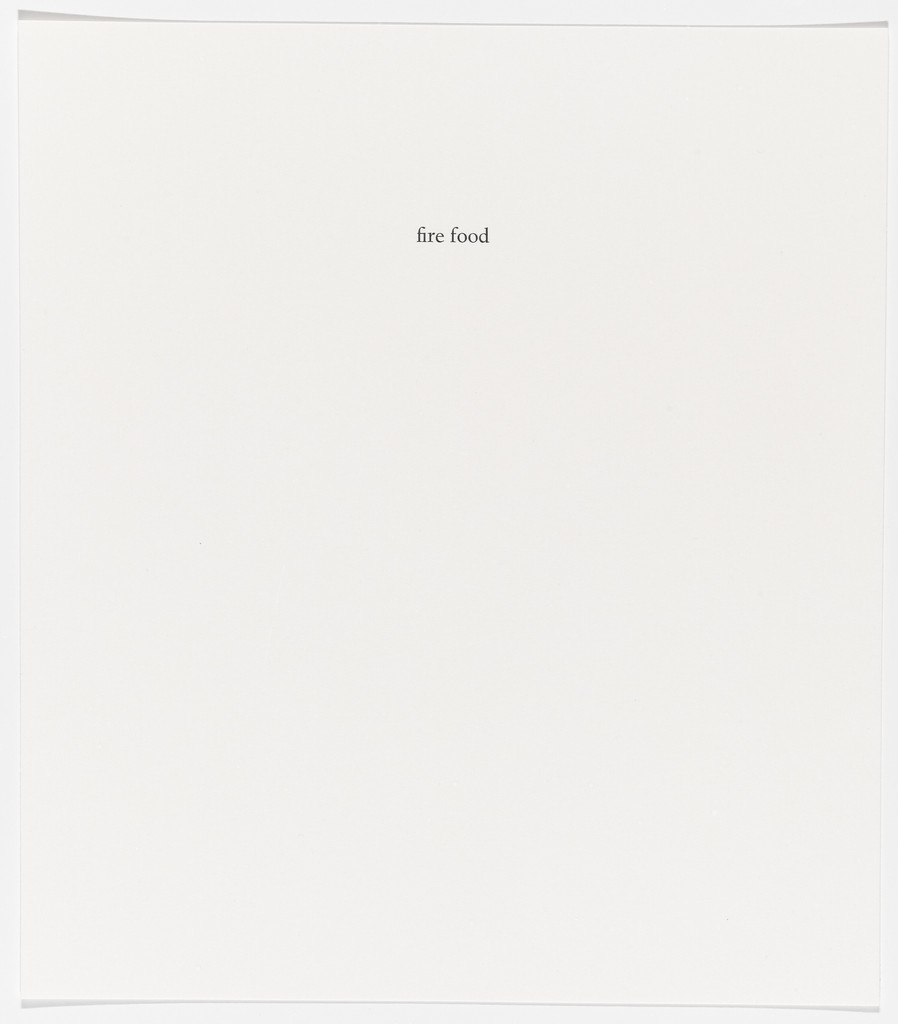
Untitled from Spirit Cooking
Marina Abramović
1996
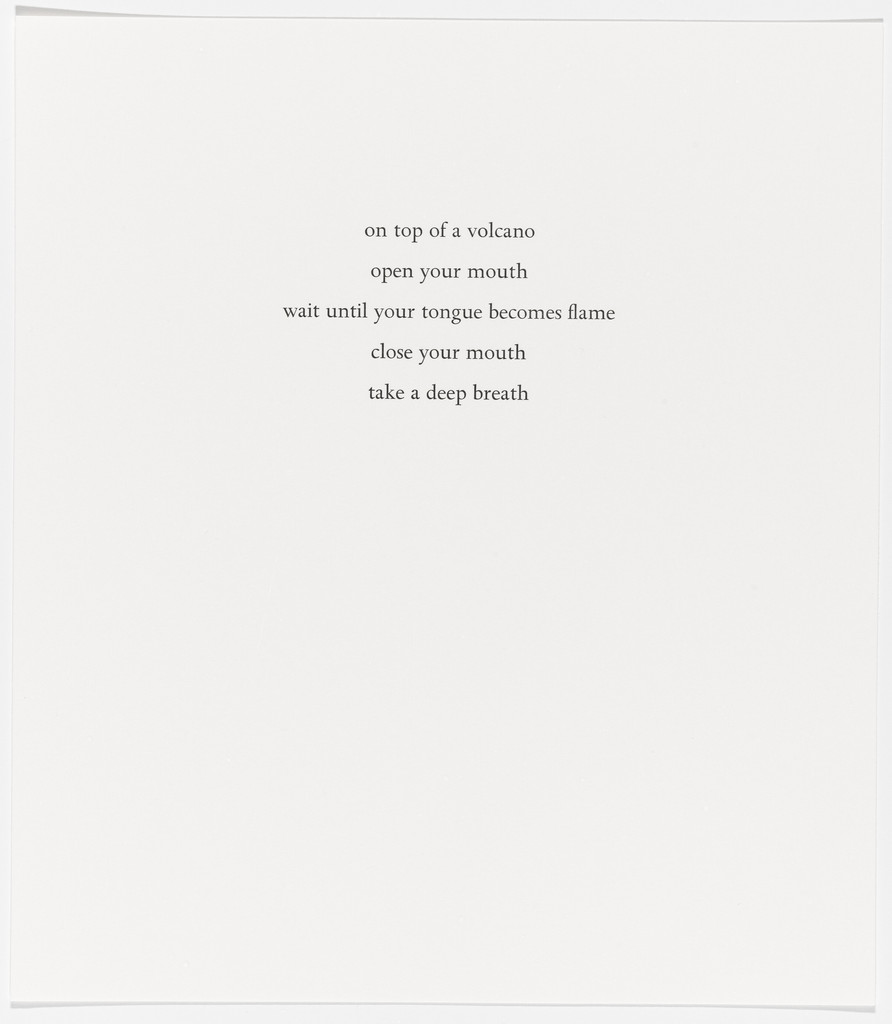
Untitled from Spirit Cooking
Marina Abramović
1996
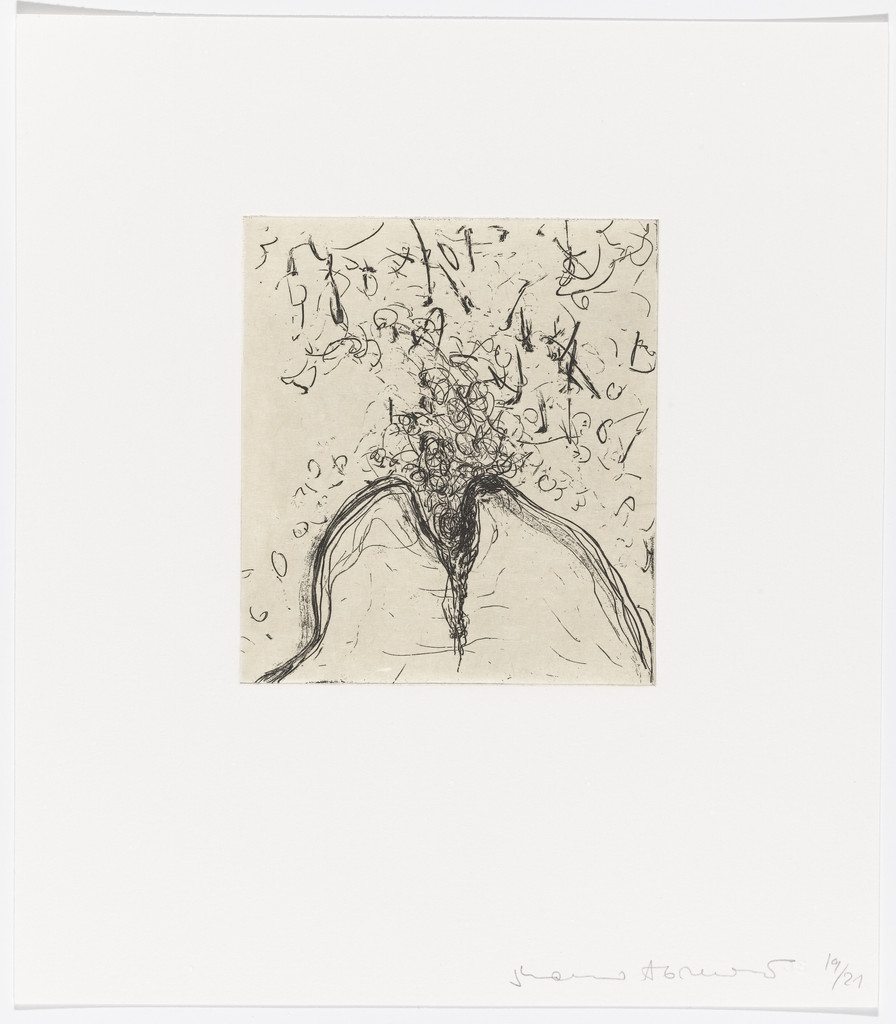
Untitled from Spirit Cooking
Marina Abramović
1996
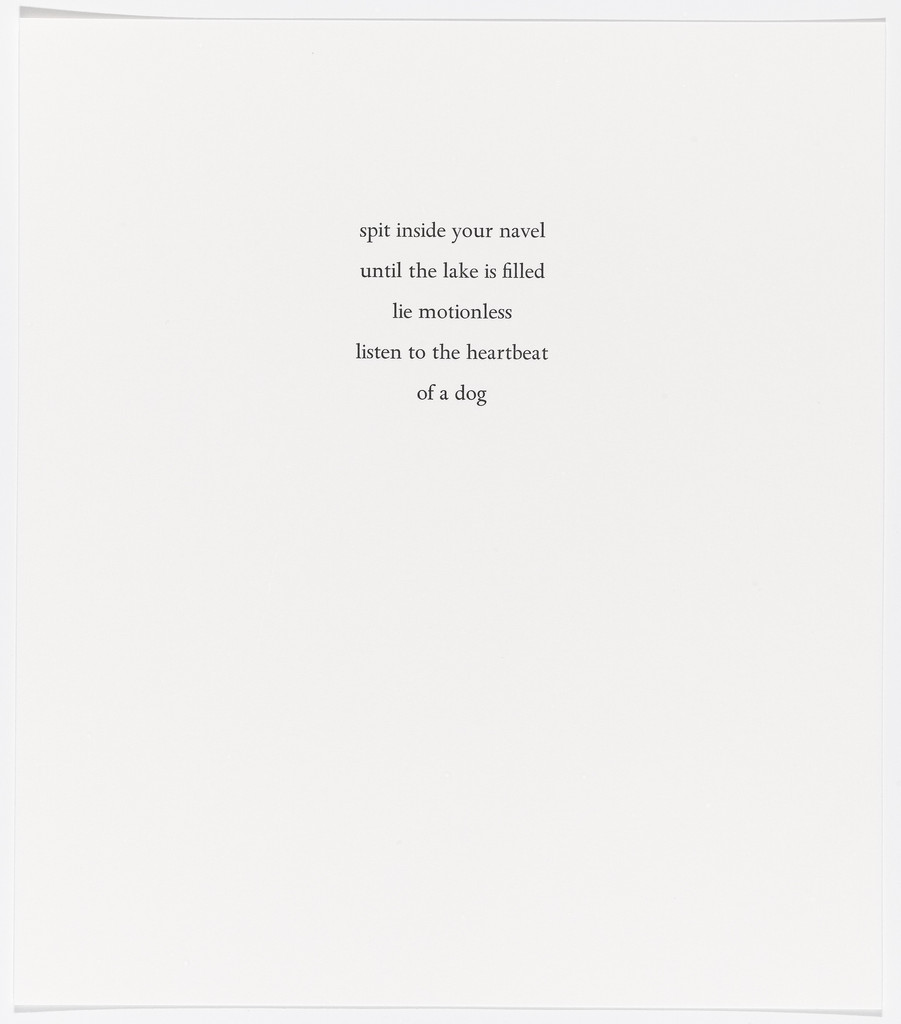
Untitled from Spirit Cooking
Marina Abramović
1996
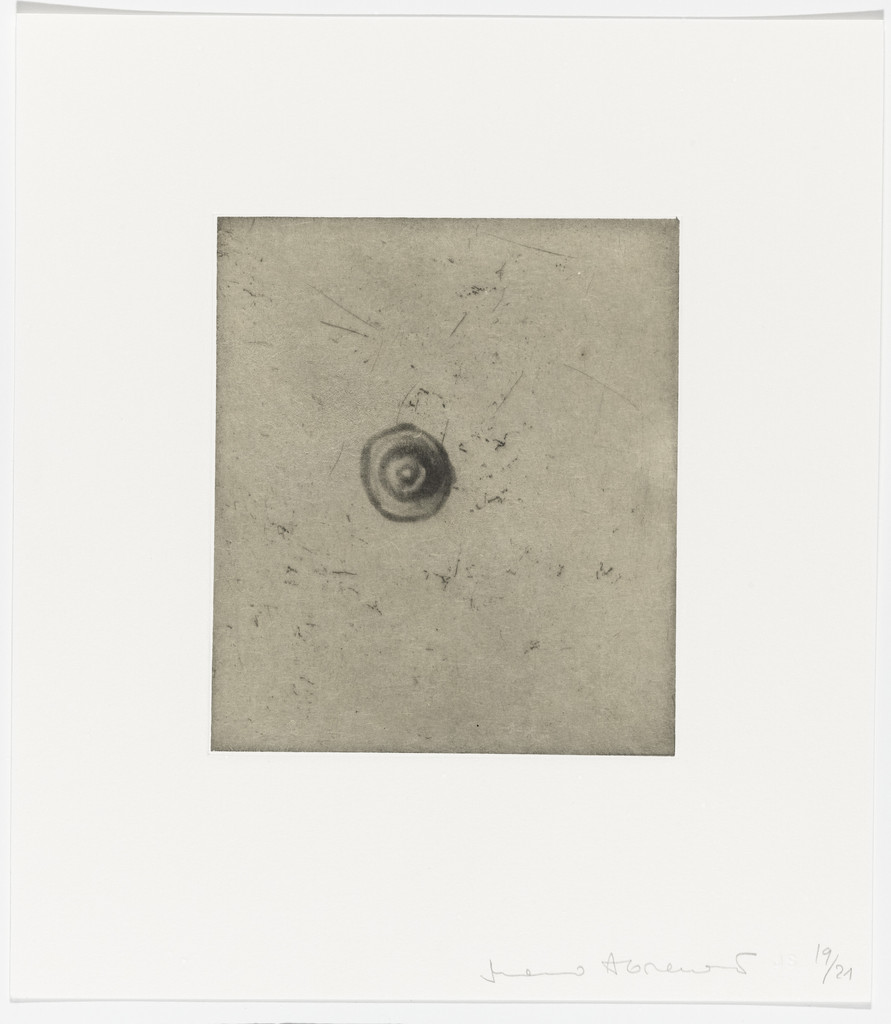
Untitled from Spirit Cooking
Marina Abramović
1996
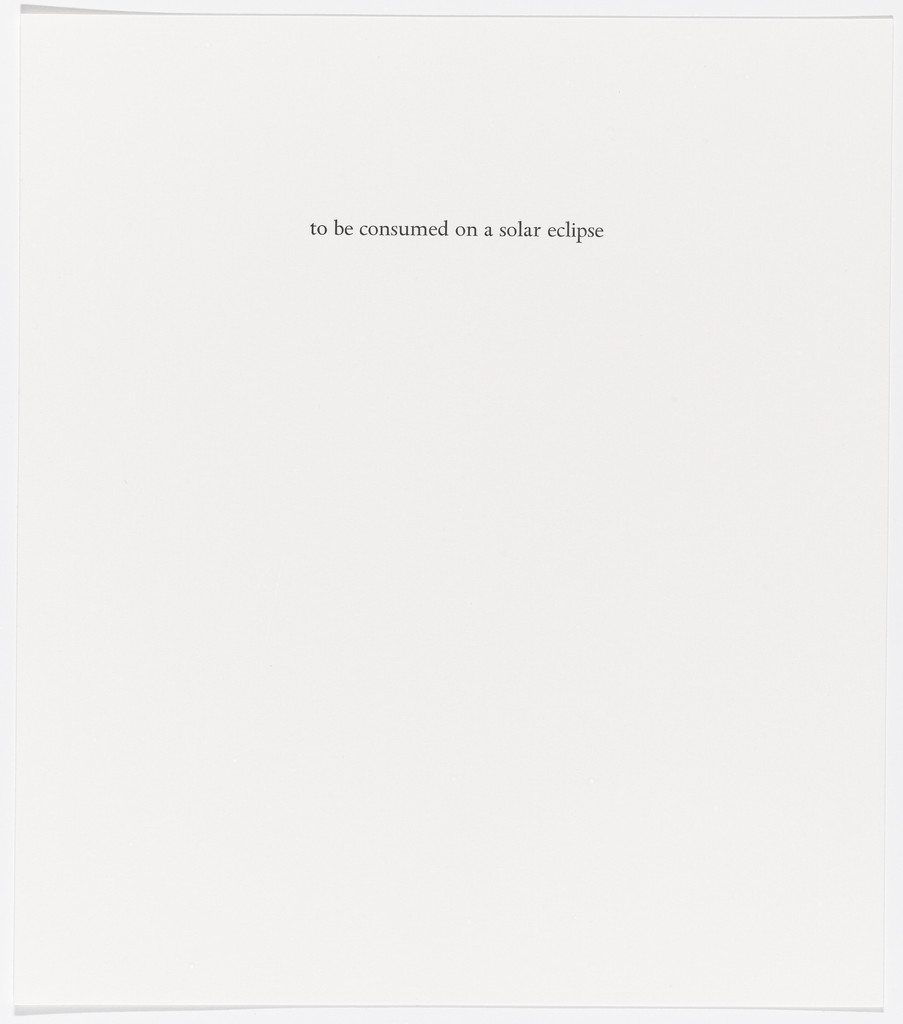
Untitled from Spirit Cooking
Marina Abramović
1996
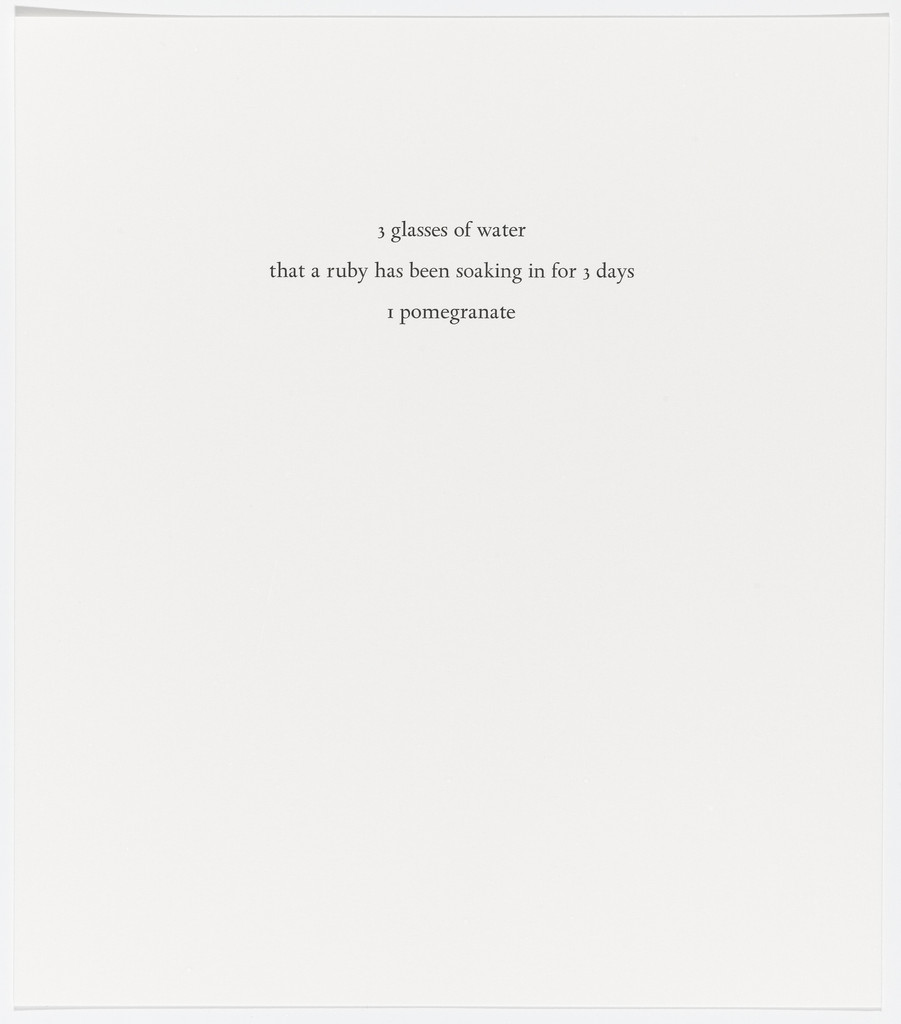
Untitled from Spirit Cooking
Marina Abramović
1996
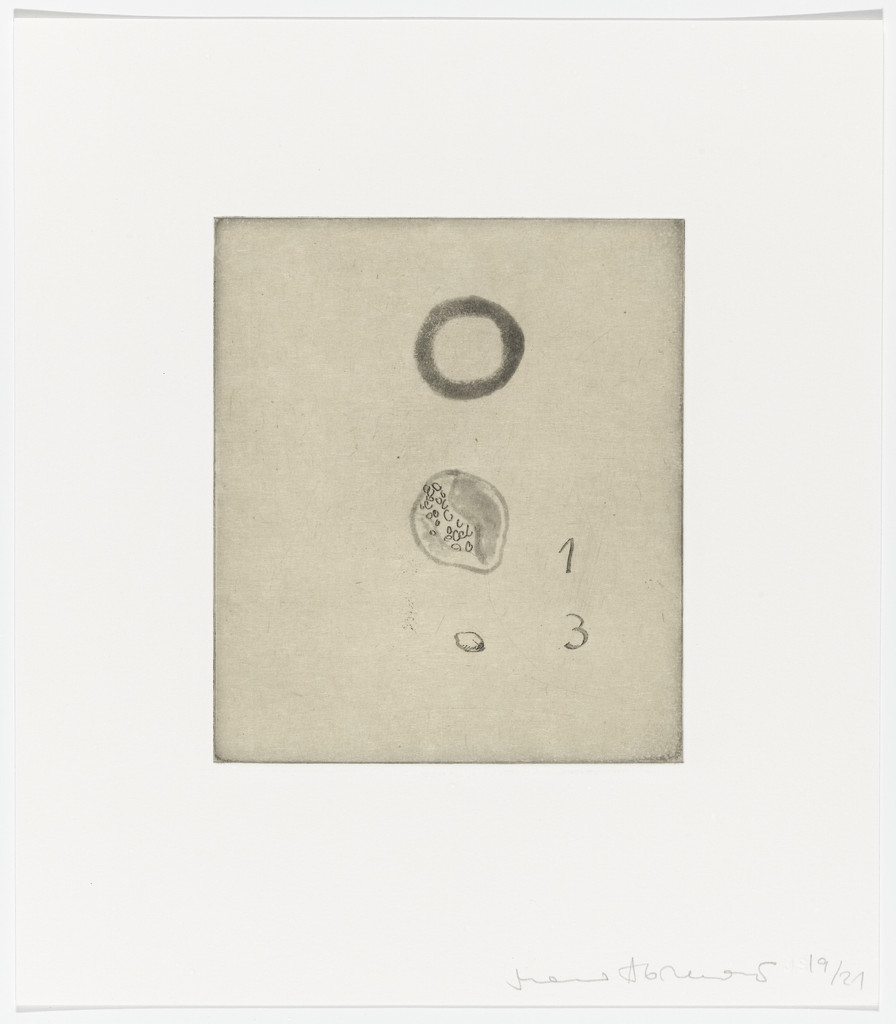
Untitled from Spirit Cooking
Marina Abramović
1996
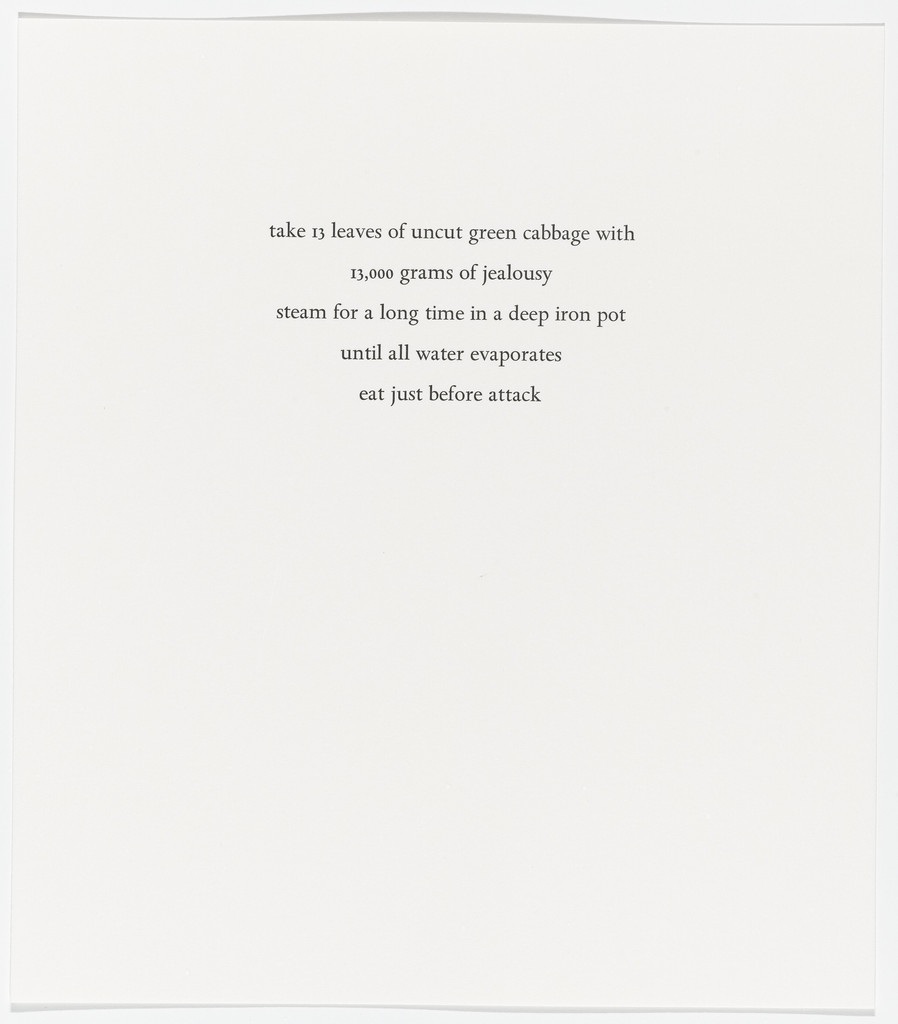
Untitled from Spirit Cooking
Marina Abramović
1996
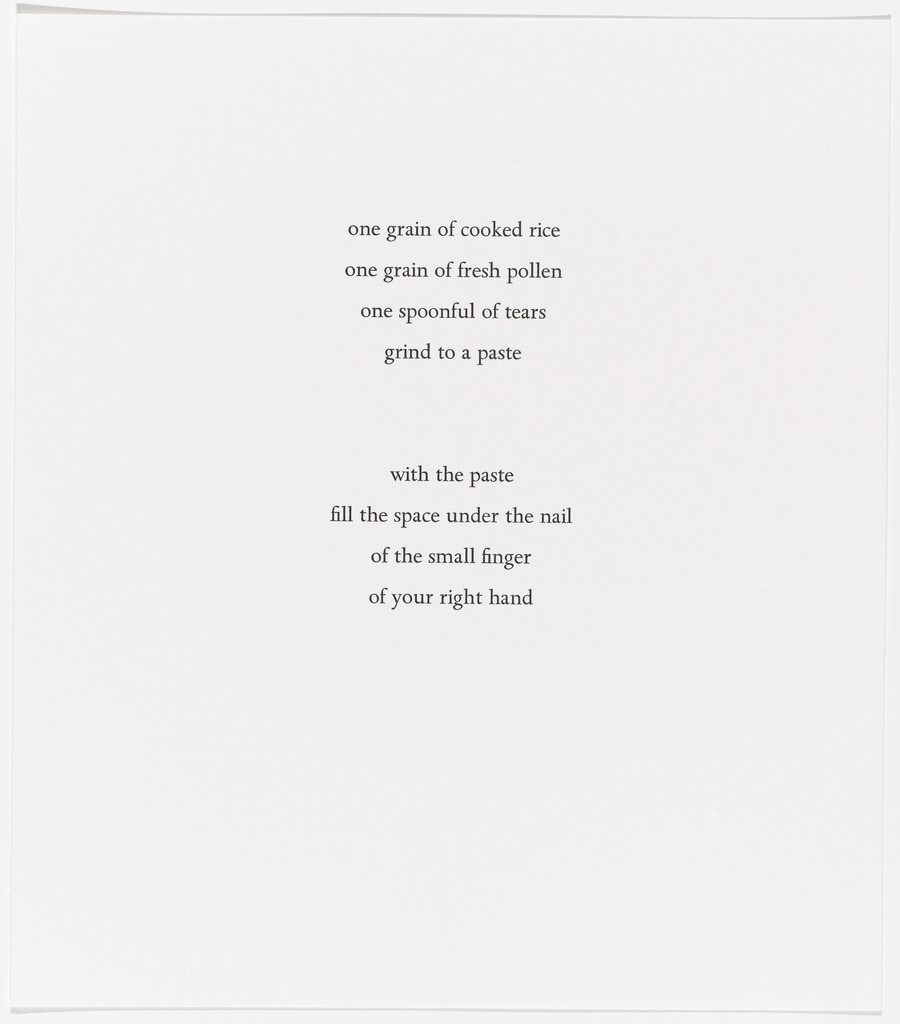
Untitled from Spirit Cooking
Marina Abramović
1996
Exhibitions
5 exhibitionsDec 09, 1982 – Jan 31, 1983
Videoart in Germany: 19631982
31 artists · 2 curators
Aug 18, 1983 – Sep 27, 1983
The Second Link: Viewpoints on Video in the Eighties
33 artists · 3 curators
May 17, 1984 – Sep 03, 1984
Video: Recent Acquisitions
45 artists · 1 curator
Jun 24, 1987 – Sep 15, 1987
Selections from the Video Study Collection: 19681987
32 artists · 1 curator
Apr 20, 1989 – May 30, 1989
The Arts for Television
75 artists · 4 curators