
“I don’t want pictures. I just want to find things out.” — Piet Mondrian
For Piet Mondrian, abstract painting was the means of achieving an equilibrium between the “concrete” (the tangible and specific aspects of reality perceived by the senses) and the “universal” (the underlying, essential truths that he believed were constant and unchanging). “The first aim in a painting should be universal expression,” he told the MoMA curator James Johnson Sweeney toward the end of his life. “The second aim should be concrete, universal expression.” He believed deeply in progress, and was convinced that his art was moving toward achieving a synthesis of the two terms in a way that would precipitate a utopian future in which the distinction between art and life would be dissolved.
Mondrian began his artistic training at 20, but didn’t even begin to think about abstract painting until he was nearly 40, when he saw an exhibition of Cubist art in Amsterdam in 1911. “One can never appreciate enough the splendid effort of Cubism,” he later wrote of the movement. It “broke with the natural appearance of things” and laid the foundation, upon which Mondrian’s own abstract art, “previously imprisoned by limited form,” could become free.
To conceive of a totally abstract art is one thing, but the process of becoming free was quite another. The latter necessitated a total rethinking of the traditions of Western art and aesthetics, which had until recently prioritized figuration. Having moved to Paris in 1914, Mondrian returned to Holland for a summer holiday but became stuck there after the outbreak of World War I. Unable to return home, he settled in the coastal town of Domburg, where he spent the next five years refining his techniques and digesting what he had seen in Cubist painting.
His mesmeric drawings from this period became increasingly abstract. In both _Pier and Ocean 5 (Sea and Starry Sky)_ and _Church Facade 6_, for example, Mondrian distills the motifs of pier and church into a network of vertical and horizontal lines that proliferates across the paper. Far from traditional landscapes, these drawings intimate only the most essential characteristics of the objects they represent: the intersection of the vertical pier and the horizontal field of the seascape, or the horizontal arcade crossing the upward thrust of the church façade.
Like his contemporaries Vasily Kandinsky and Kazimir Malevich, Mondrian’s engagement with abstraction was not only visual but philosophical. He was a prolific essayist and, during the war, grew close to a group of Dutch painters including Theo van Doesburg, with whom he founded _De Stijl_ [The Style] (1917), an international art journal in which he published much of his writing. The context of De Stijl suited Mondrian. It was a collective of artists, architects, and writers who were not only committed to giving up representational art but also to bridging the gap between art and life through the extension of art into architecture and design.
It was in this context that Mondrian formulated the general principles of the idiom for which he is best known: Neo-Plasticism. Alongside the work of Malevich and Kandinsky, Mondrian’s Neo-Plastic canvases, like _Composition No. II, with Red and Blue_, were catalytic for the development of abstraction as a modern art form. They do not begin with a natural motif and instead create meaning using a visual language of rectangular planes rendered in primary colors divided by a grid of jet-black lines. For Mondrian, Neo-Plasticism was more than an artistic style; it was an aesthetic philosophy that concerned itself with the dissolution of hierarchies in both art and society. Through it he sought to dissolve the formal hierarchies of figure and ground, subject and object, and line and color that had been fundamental to Western art since the Renaissance. This, he hoped, would offer an artistic blueprint for restoring order and balance to everyday life after the war. He even dedicated a pamphlet on Neo-Plasticism “to the men of the future.”
Mondrian stayed in Paris, working in this mode, until World War II, when political upheaval once again necessitated relocation. This time, he moved to New York, arriving in October 1940. Mondrian had always loved jazz but in New York his affection for the genre became an obsession; he would dance around his studio, playing the same records over and over. He sought out jazz clubs and became a fixture at Café Society, New York’s first interracial nightclub.
Boogie-woogie—a type of blues undergoing a resurgence in the 1940s—was especially important to Mondrian’s artistic thinking in New York. Toward the end of his life, he worked almost exclusively on two paintings—<em>Broadway Boogie-Woogie</em> and _Victory Boogie-Woogie_. As the titles suggest, music was critical to their conception. Each painting is constructed using lines of shifting color, which interrupt each other, blink, and dance. There is a dynamism in these canvases that escapes any static element remaining in Mondrian’s art; they are a testament to the vibrant sonic life of New York. “The great struggle for the artist,” Mondrian wrote, “is the annihilation of static equilibrium in their paintings…Abstract art is a concrete expression of such a vitality.”
Benjamin Price, Mellon-Marron Research Consortium Fellow, Department of Painting and Sculpture, 2023–24
Note: Opening quote is from Carl Holty, “Mondrian in New York: A Memoir,” Arts 31 (Sept. 1957): 17-21, as quoted in Alexxa Gotthardt, “Piet Mondrian on How to Be an Artist,” Artsy, November 12, 2019, https://www.artsy.net/article/artsy-editorial-piet-mondrian-artist.
Works in Collection
28 works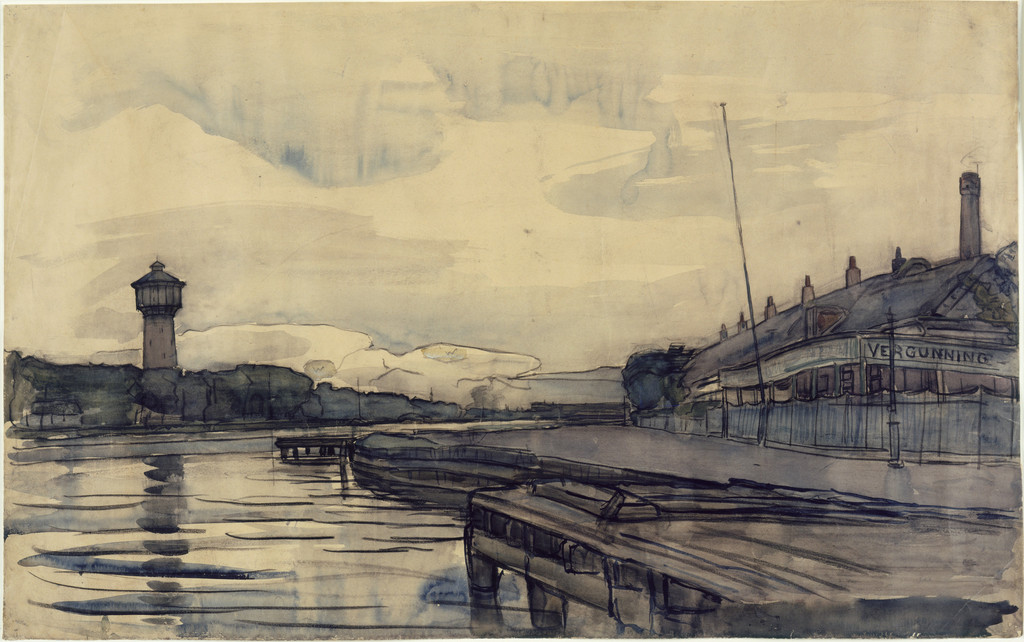
Amstel River
Piet Mondrian
1907
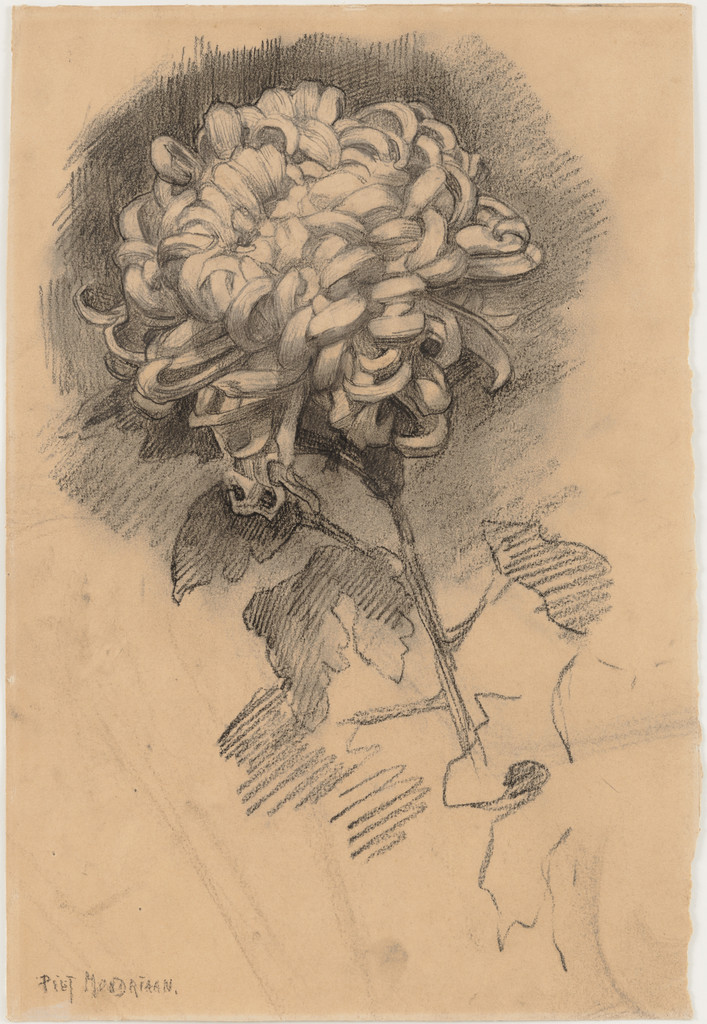
Chrysanthemum (recto) and Head in Profile (verso)
Piet Mondrian
1906
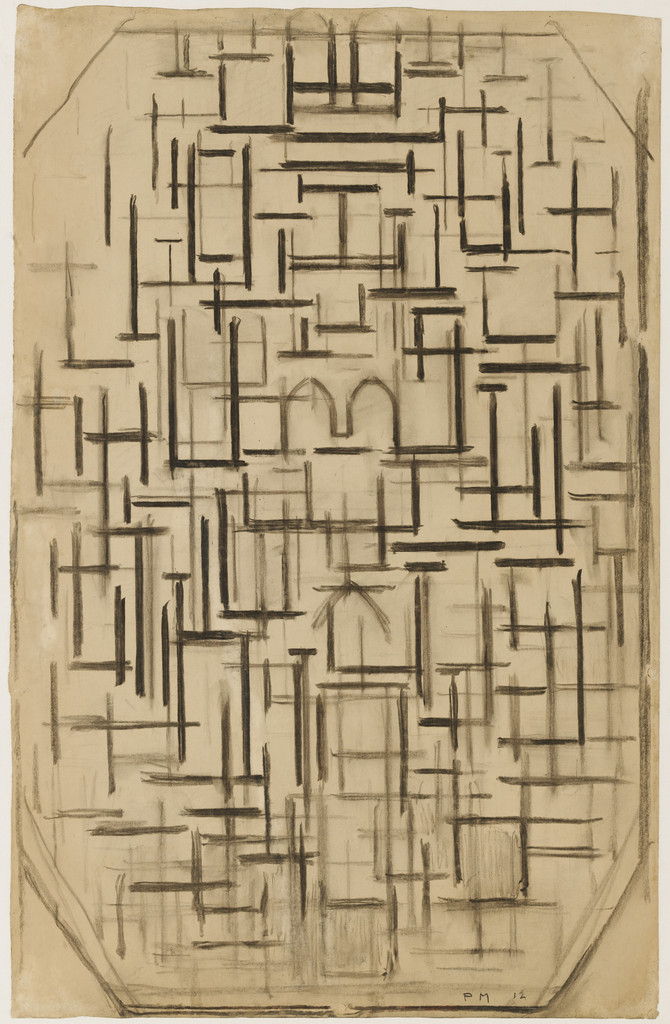
Church Facade 6
Piet Mondrian
1915, dated 1912
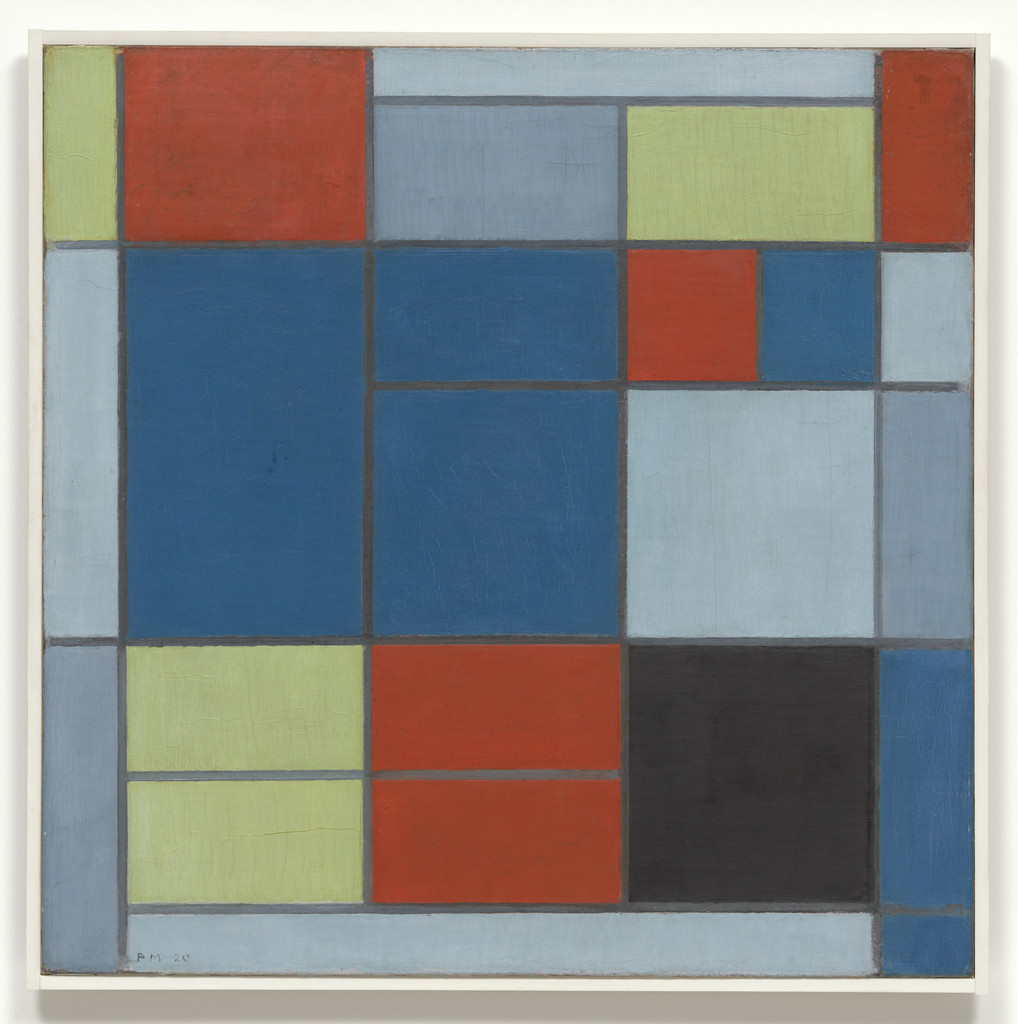
Composition C
Piet Mondrian
1920
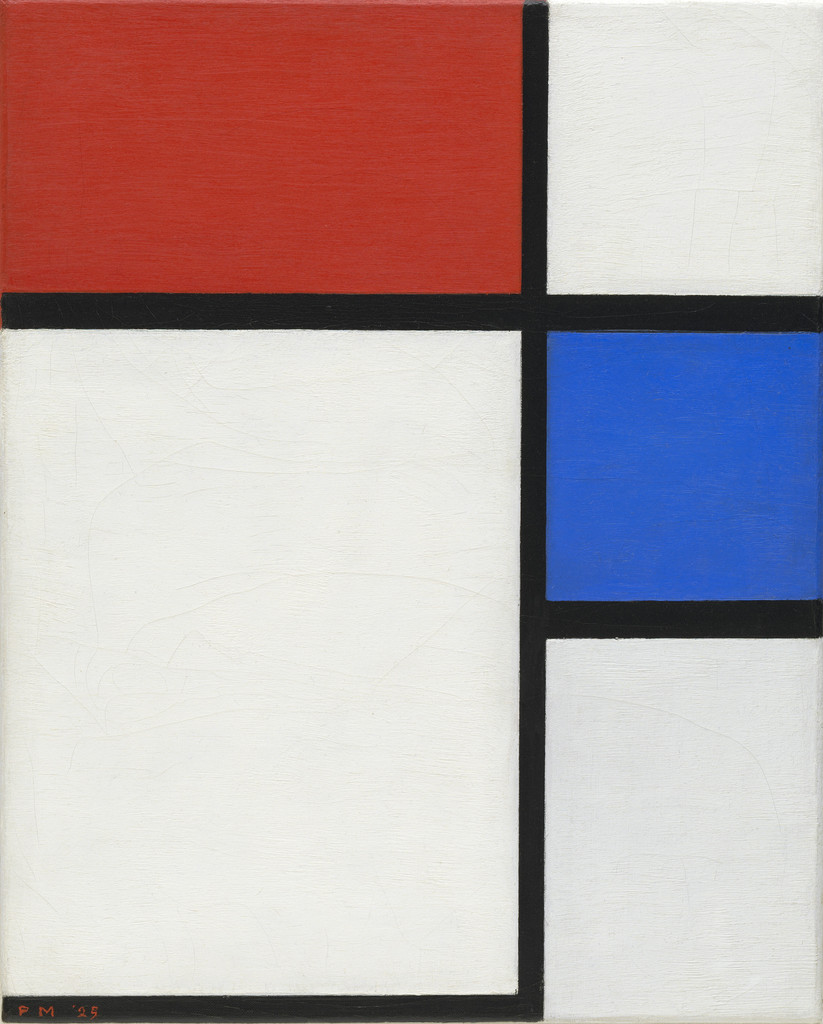
Composition No. II, with Red and Blue
Piet Mondrian
1929 (original date partly obliterated; mistakenly repainted 1925 by Mondrian)
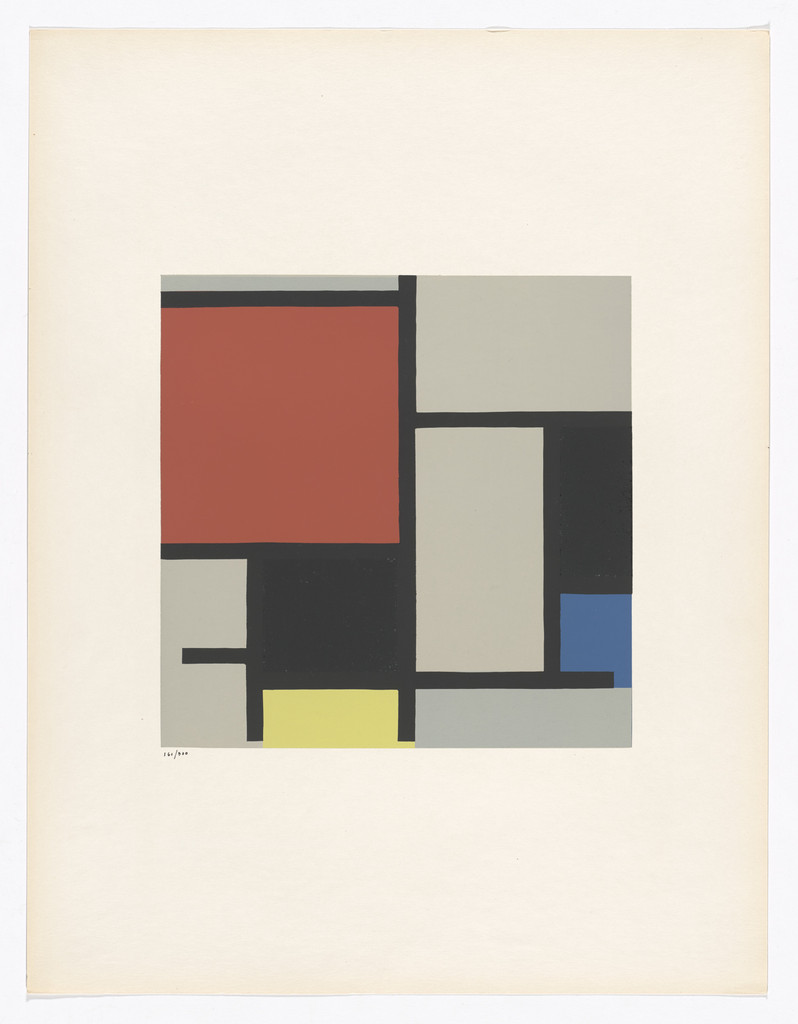
Composition from Art of Today, Masters of Abstract Art (A...
Piet Mondrian
1953 (original executed in 1921)
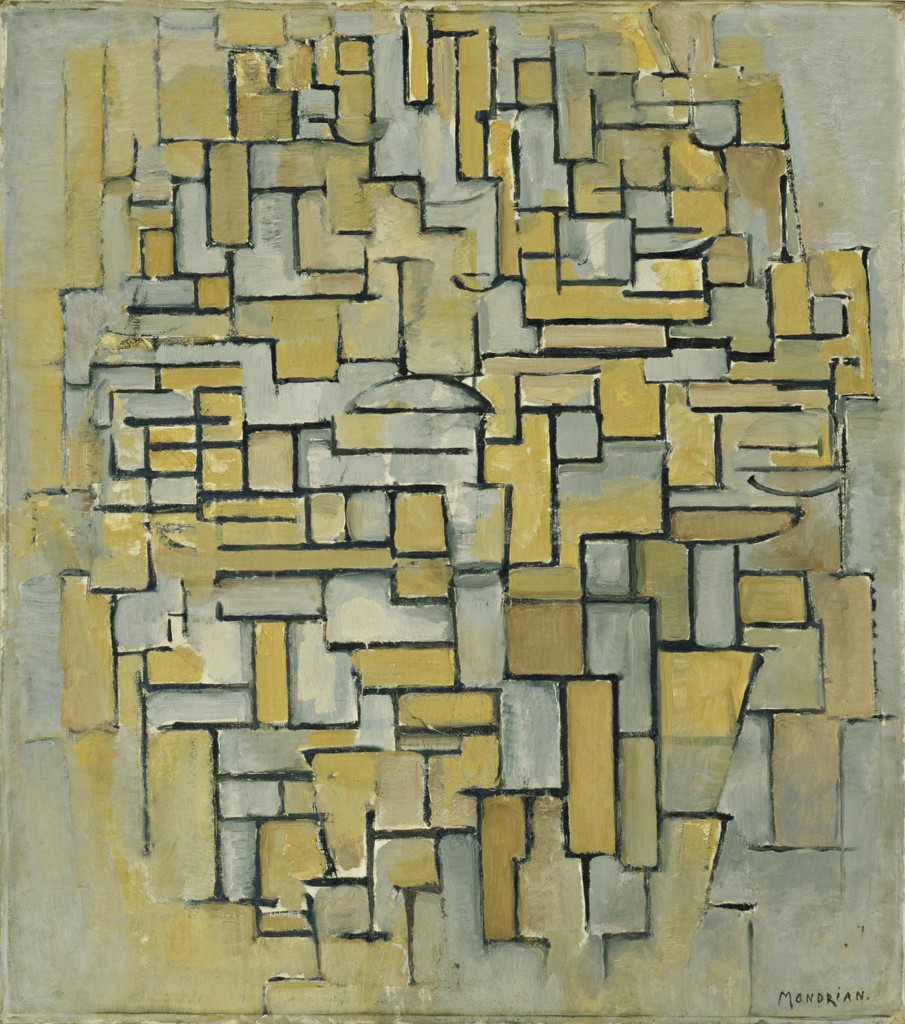
Composition in Brown and Gray
Piet Mondrian
1913
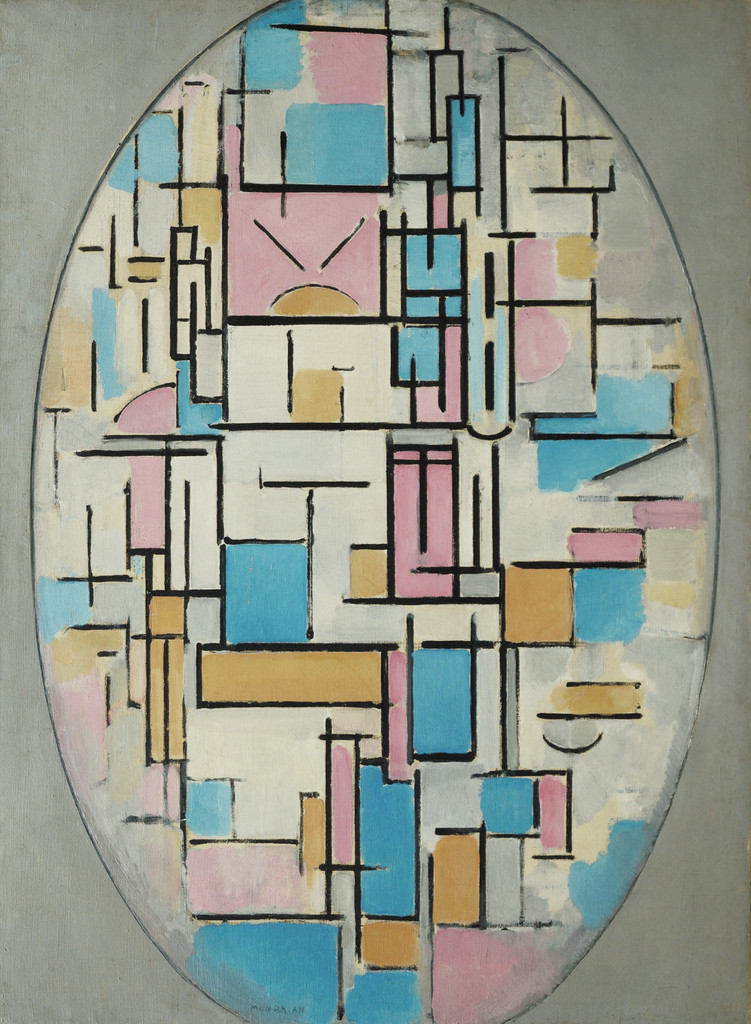
Composition in Oval with Color Planes 1
Piet Mondrian
1914
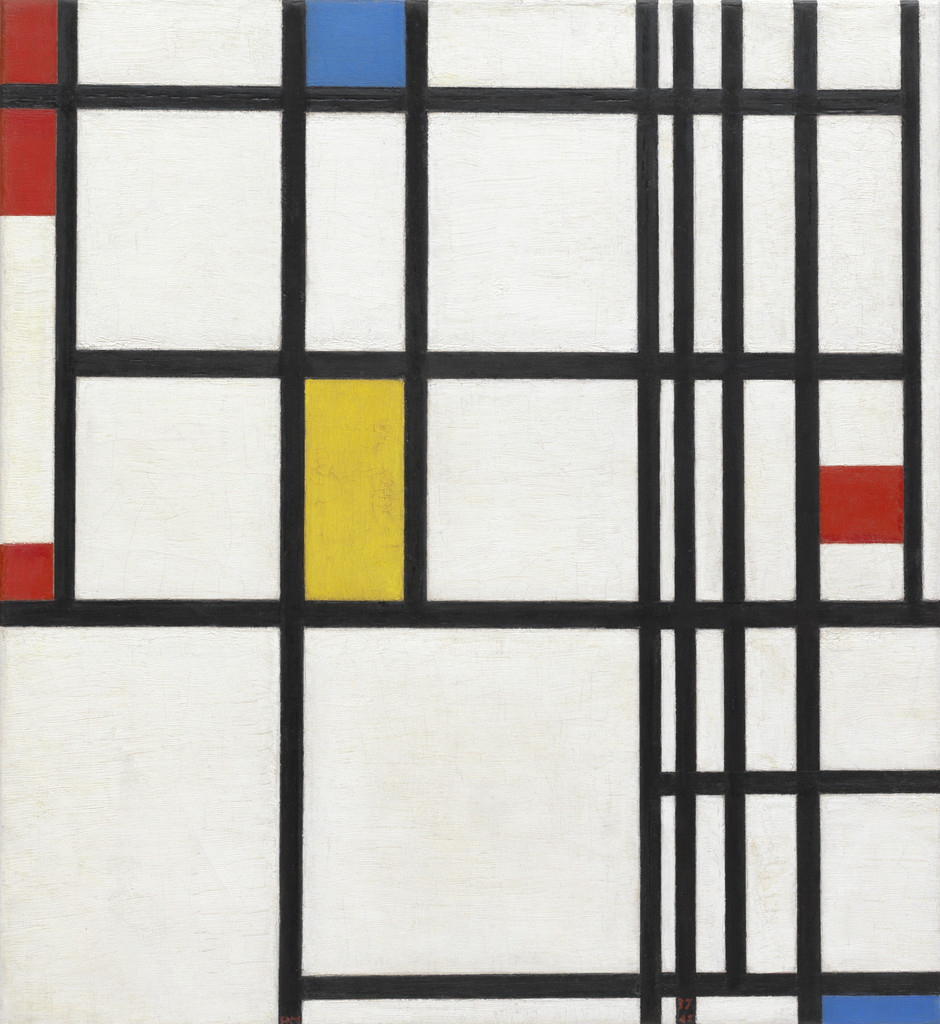
Composition in Red, Blue, and Yellow
Piet Mondrian
1937–42
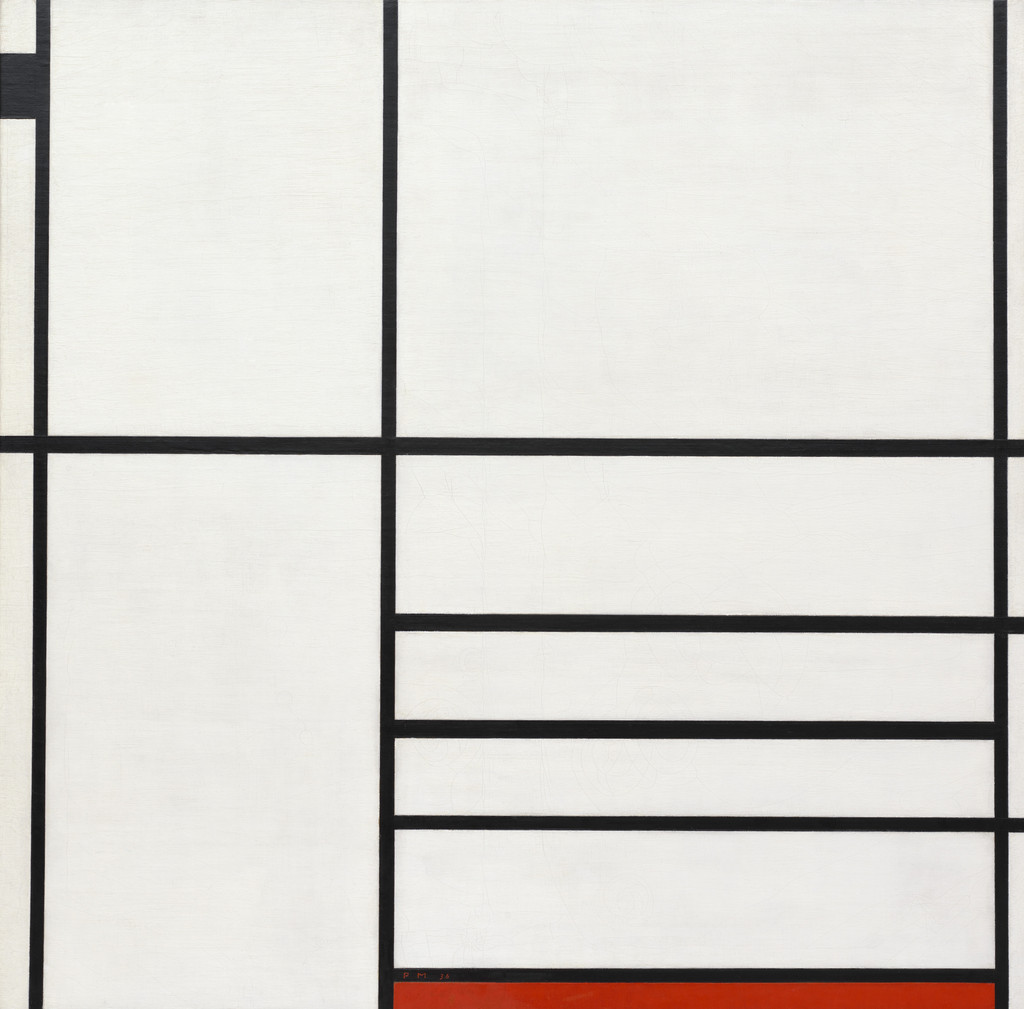
Composition in White, Black, and Red
Piet Mondrian
Paris 1936
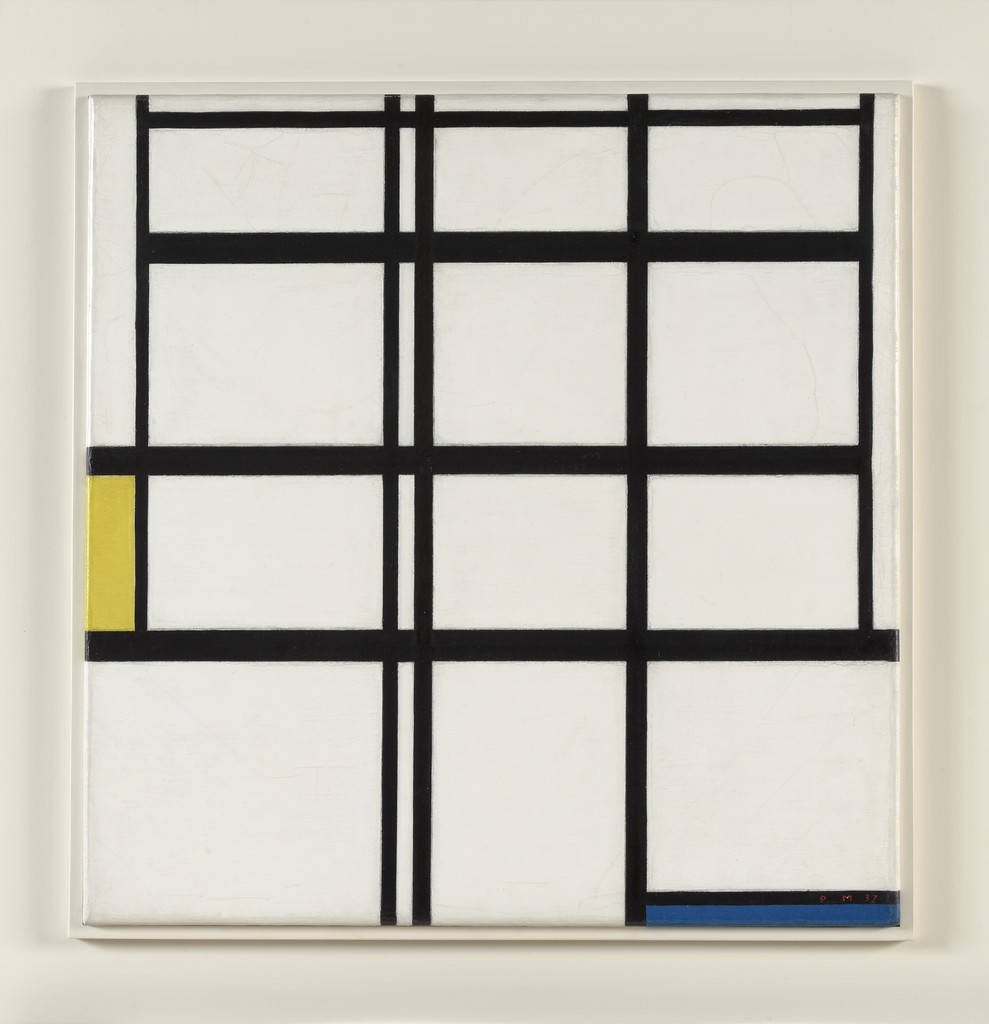
Composition in Yellow, Blue, and White, I
Piet Mondrian
1937
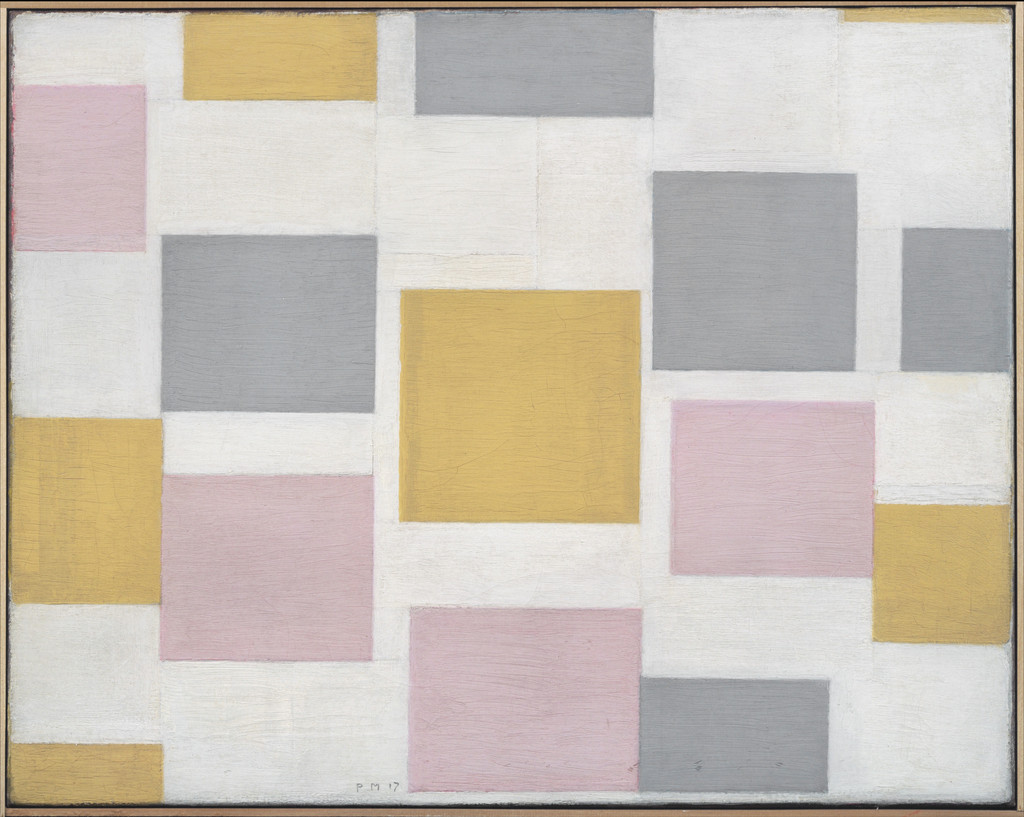
Composition with Color Planes 5
Piet Mondrian
1917
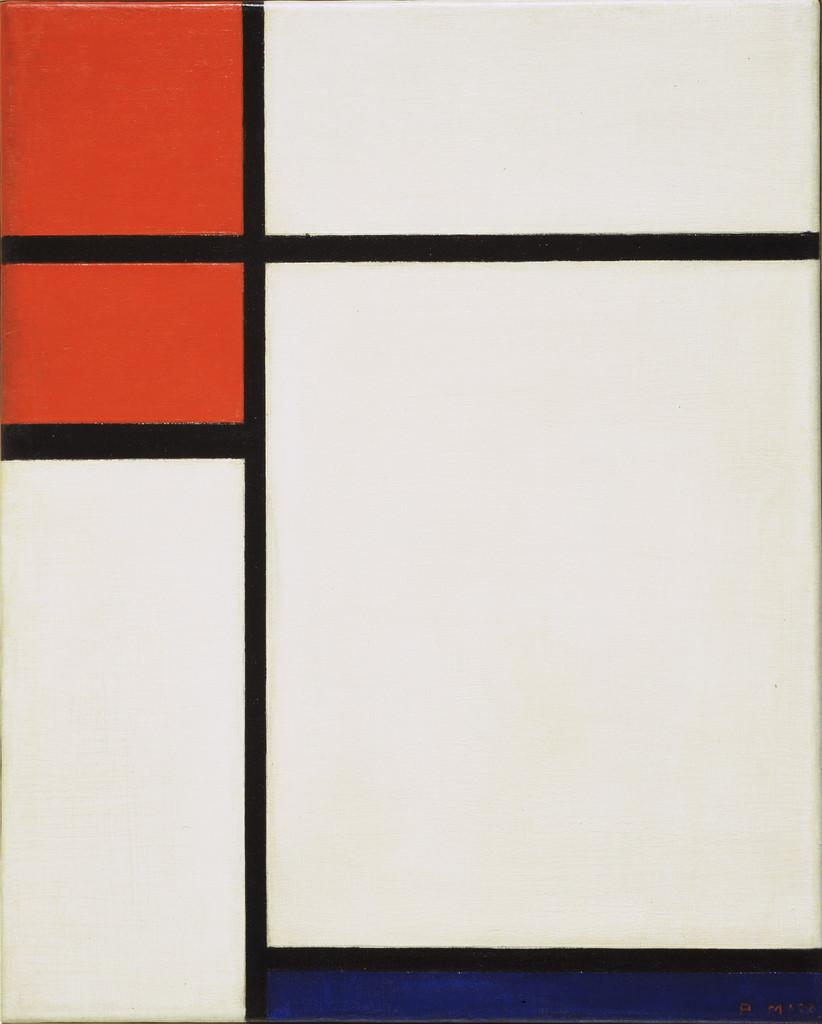
Composition with Red and Blue
Piet Mondrian
1933
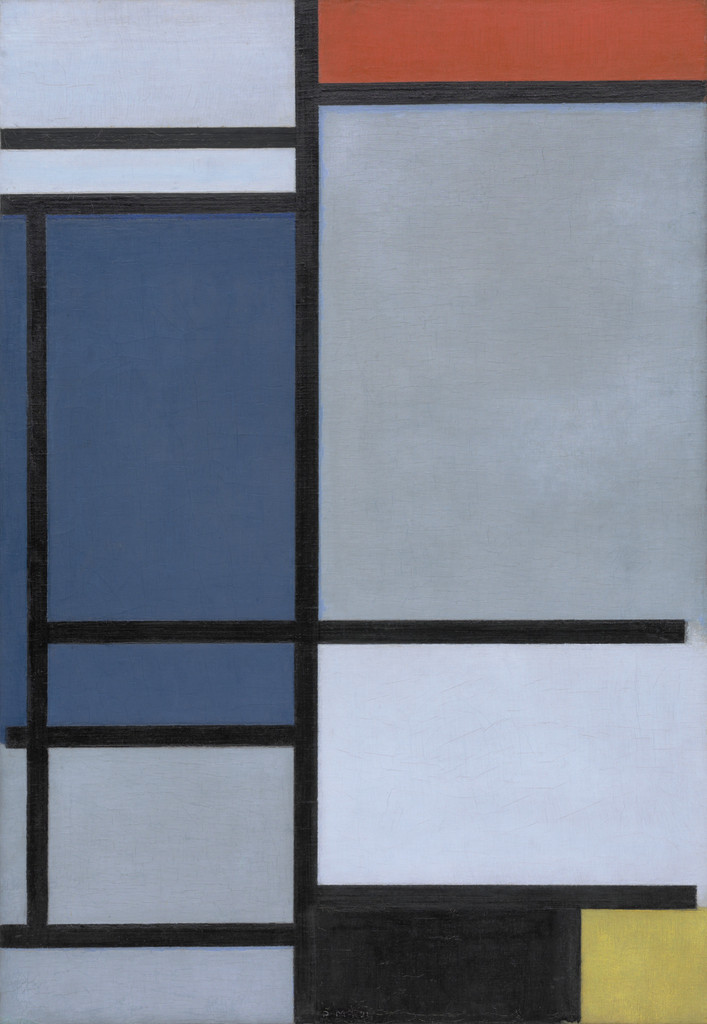
Composition with Red, Blue, Black, Yellow, and Gray
Piet Mondrian
1921
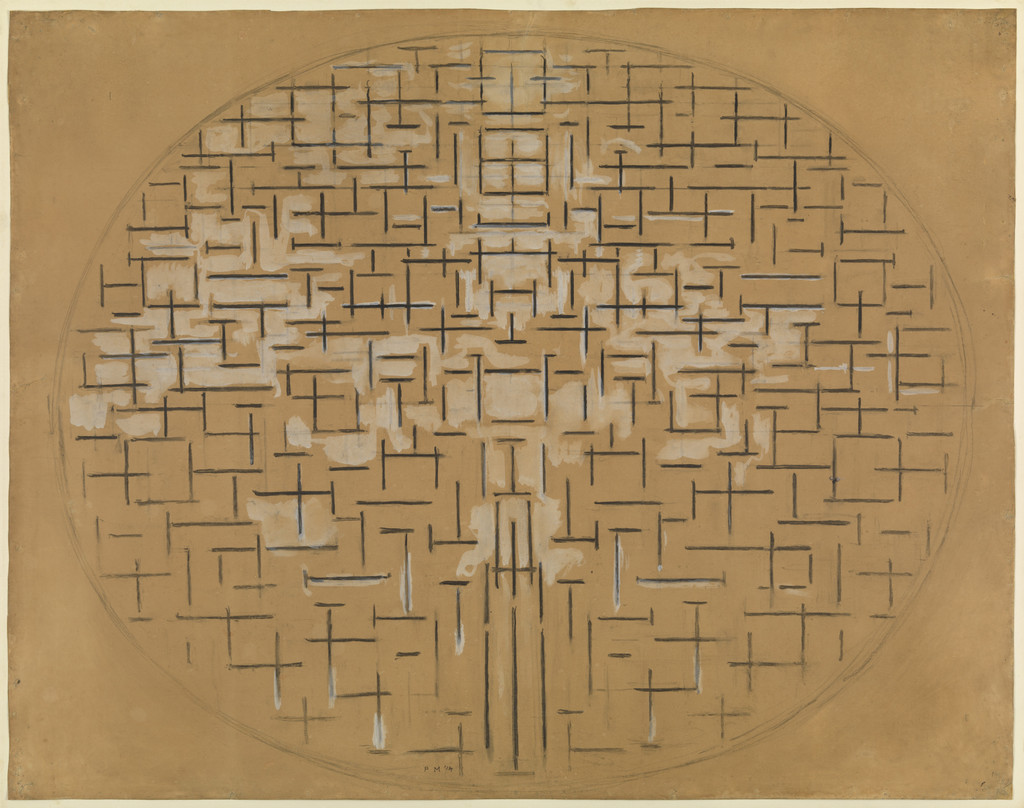
Pier and Ocean 5 (Sea and Starry Sky)
Piet Mondrian
1915, dated 1914
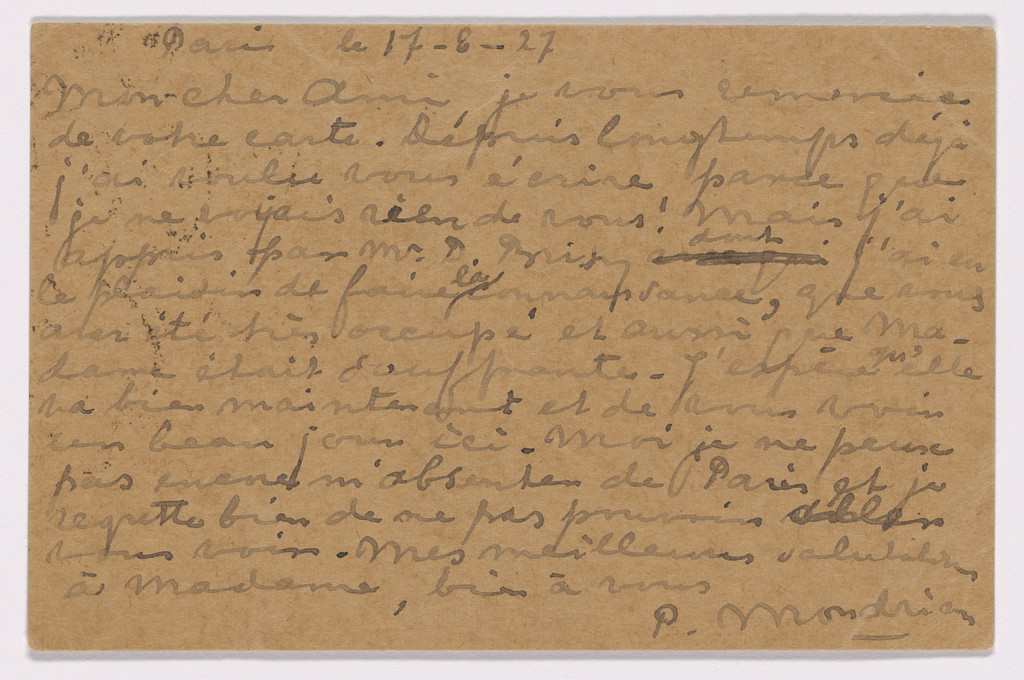
Postcard (Addressed to A.F. Del Marle)
Piet Mondrian
1927
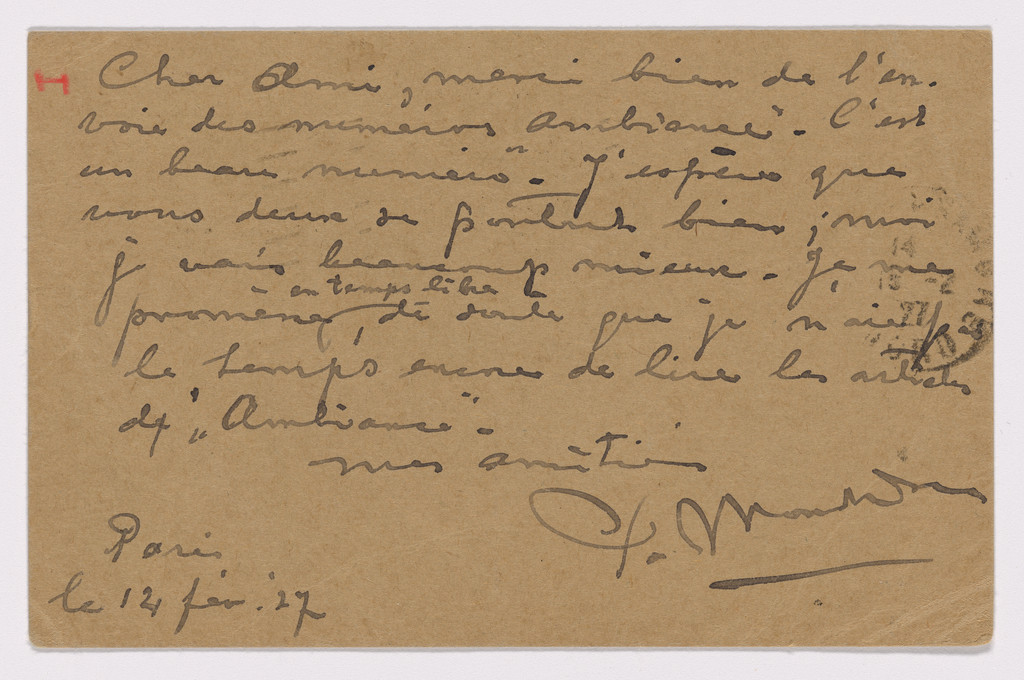
Postcard (Addressed to A.F. Del Marle)
Piet Mondrian
1927
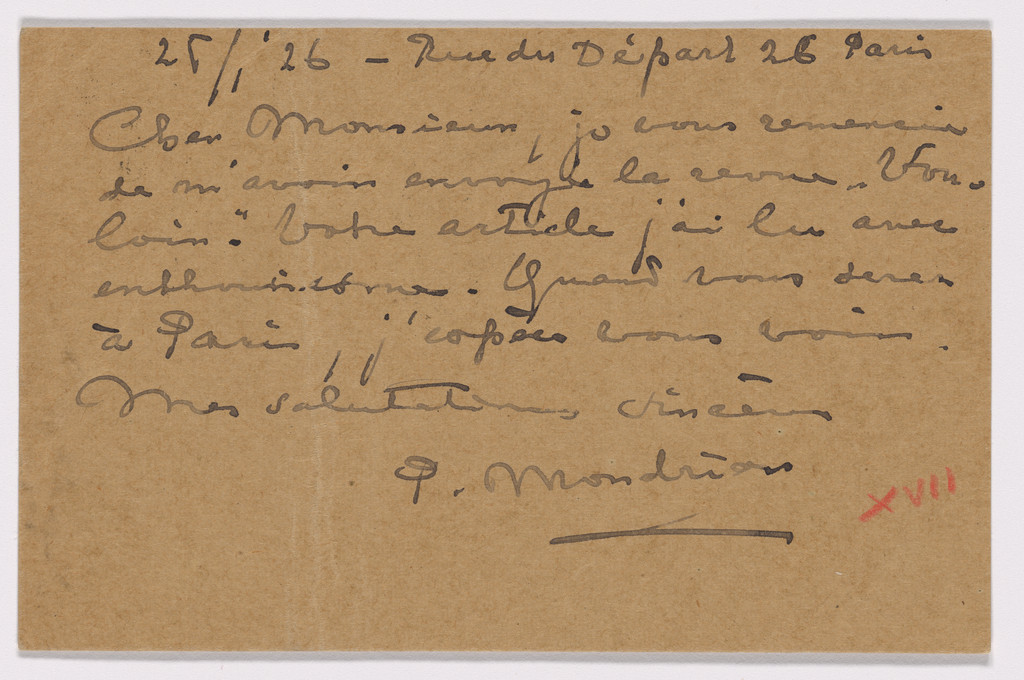
Postcard (Addressed to A.F. Del Marle)
Piet Mondrian
1926
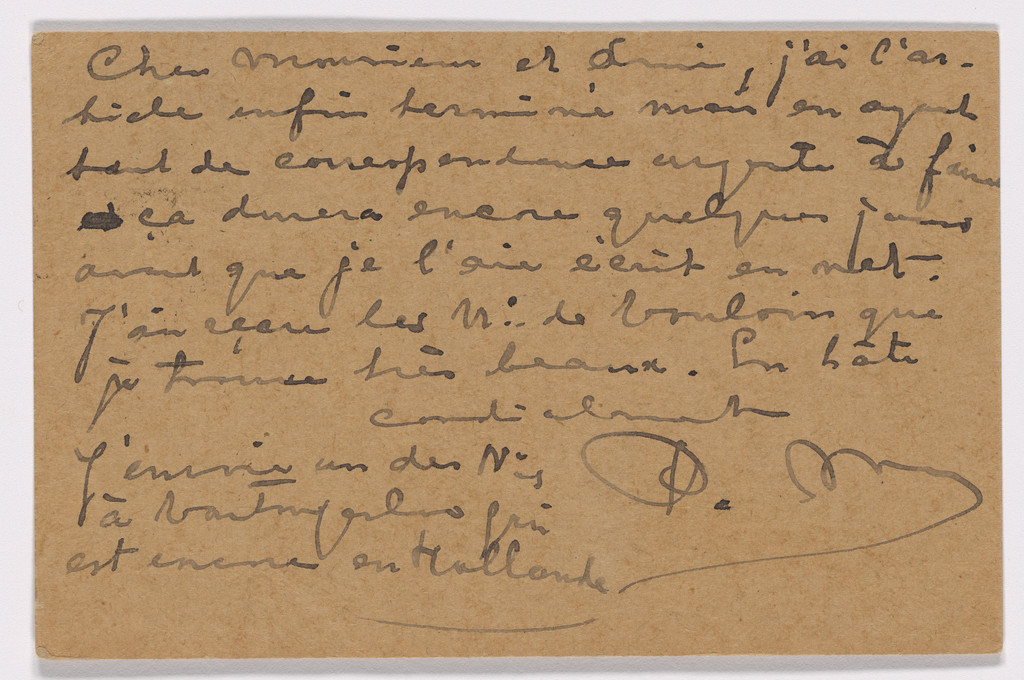
Postcard (Addressed to A.F. Del Marle)
Piet Mondrian
1926
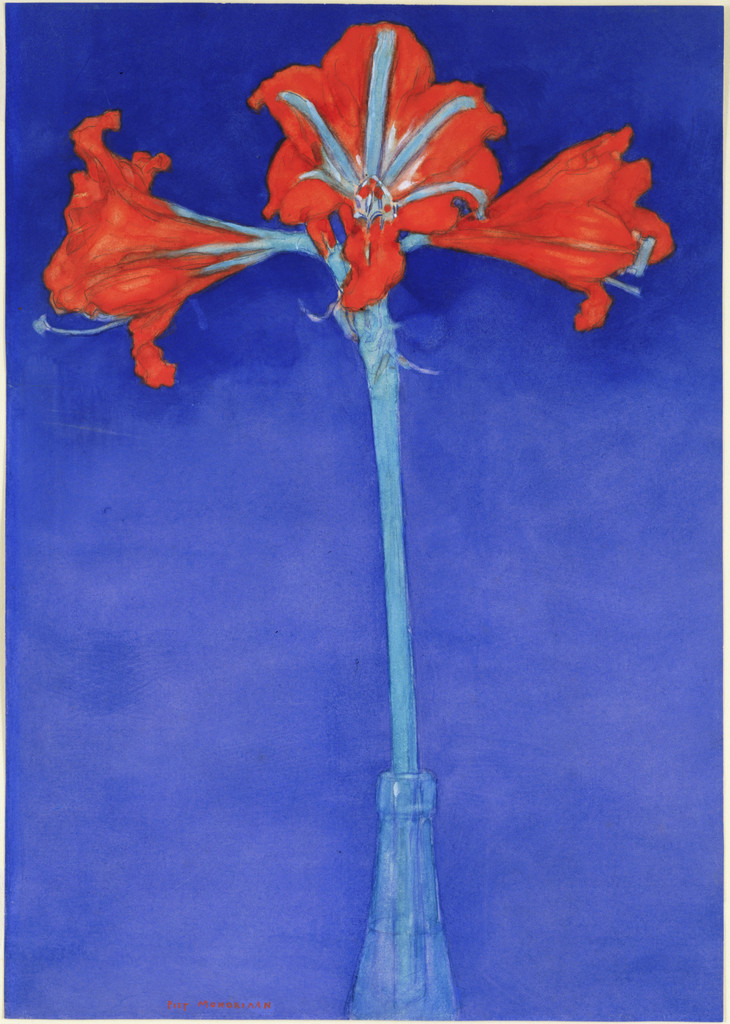
Red Amaryllis with Blue Background
Piet Mondrian
c. 1907
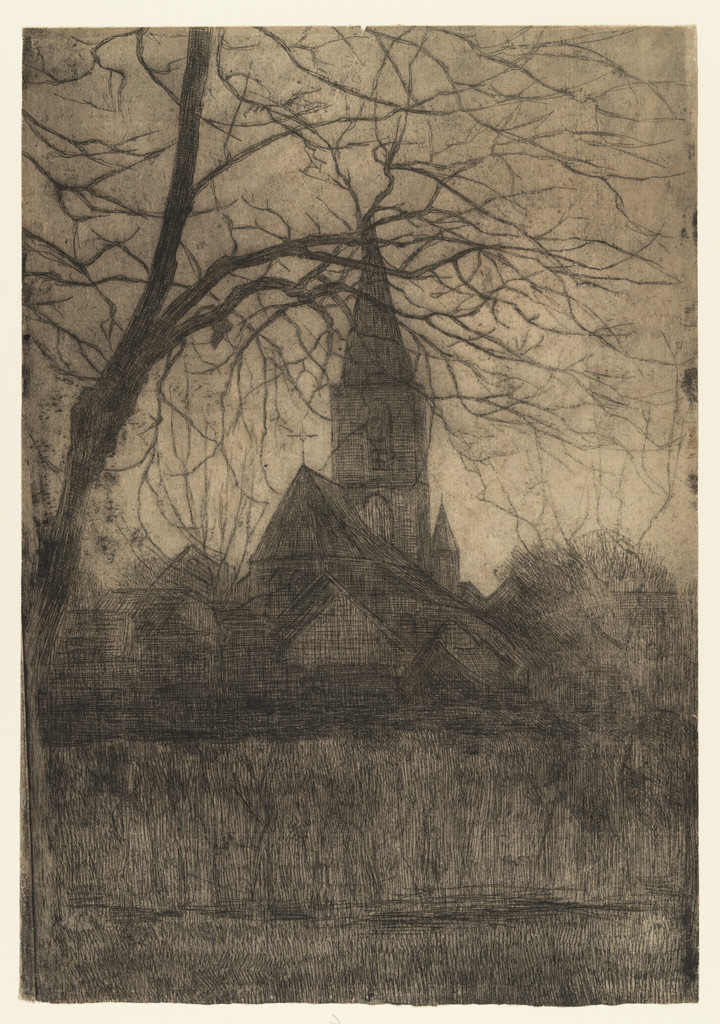
Reformed Church at Winterswijk
Piet Mondrian
1898
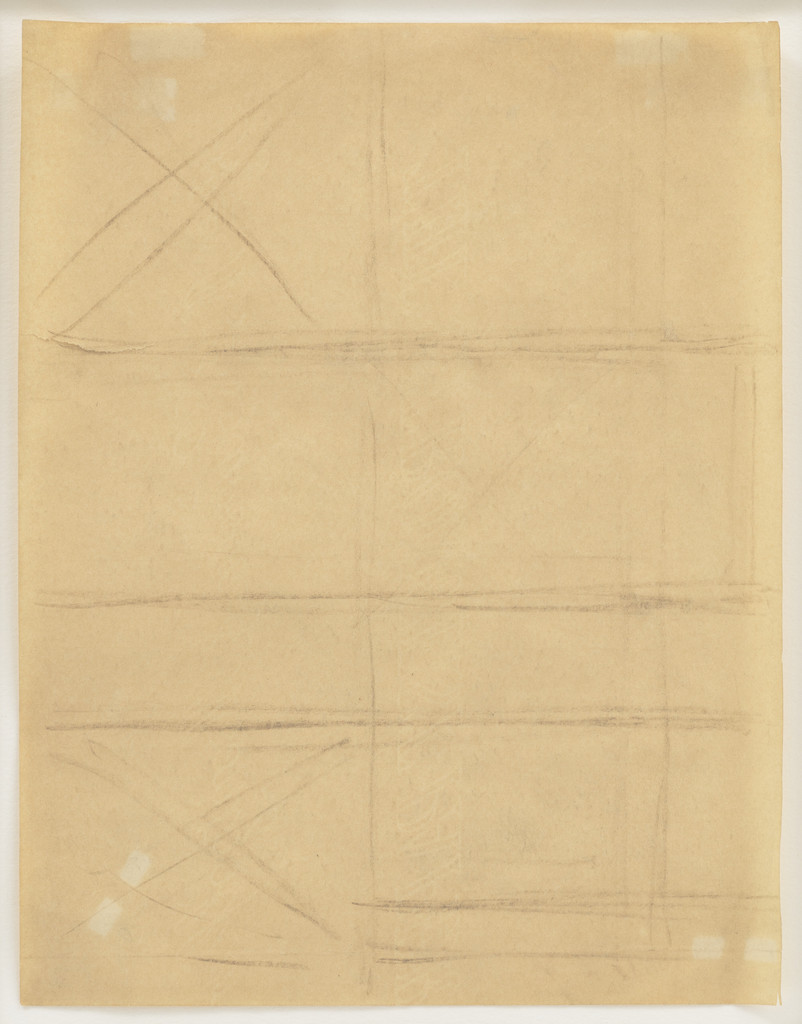
Study for a Composition
Piet Mondrian
c. 1935–36
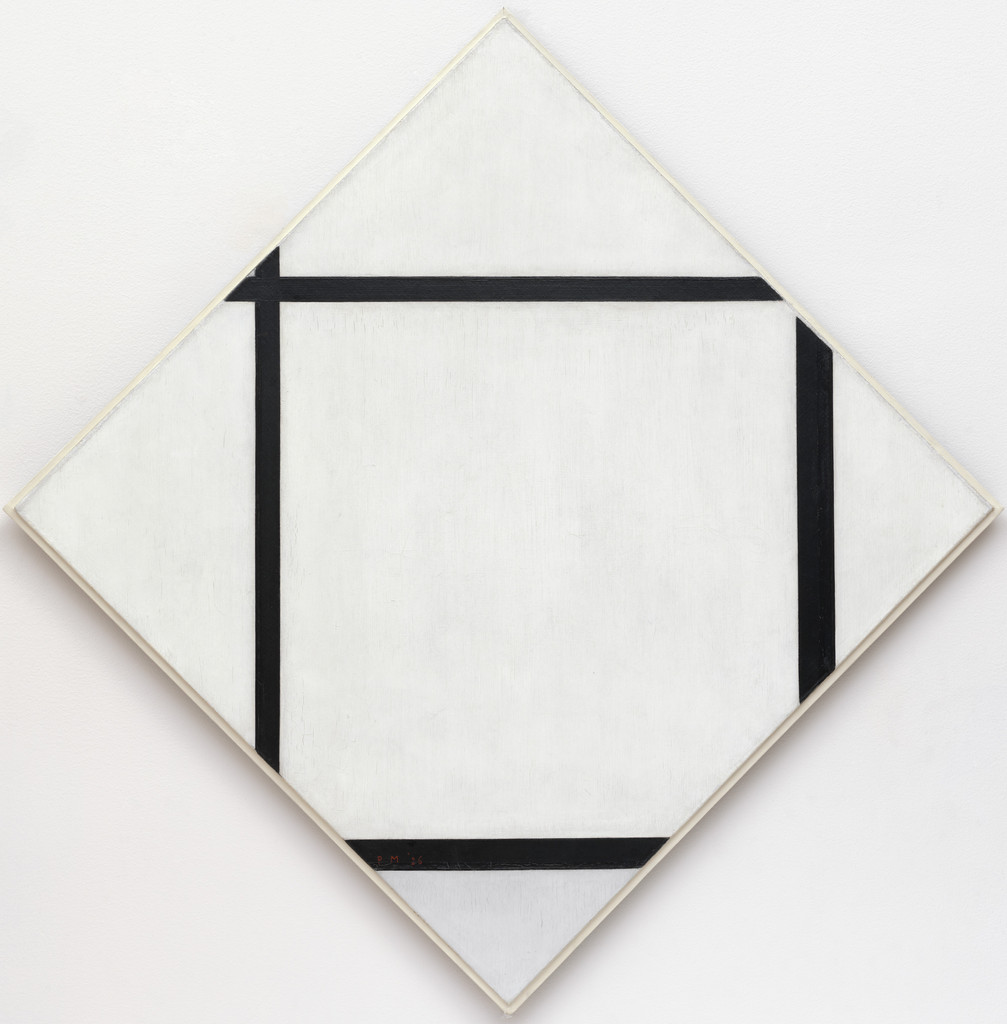
Tableau I: Lozenge with Four Lines and Gray
Piet Mondrian
1926
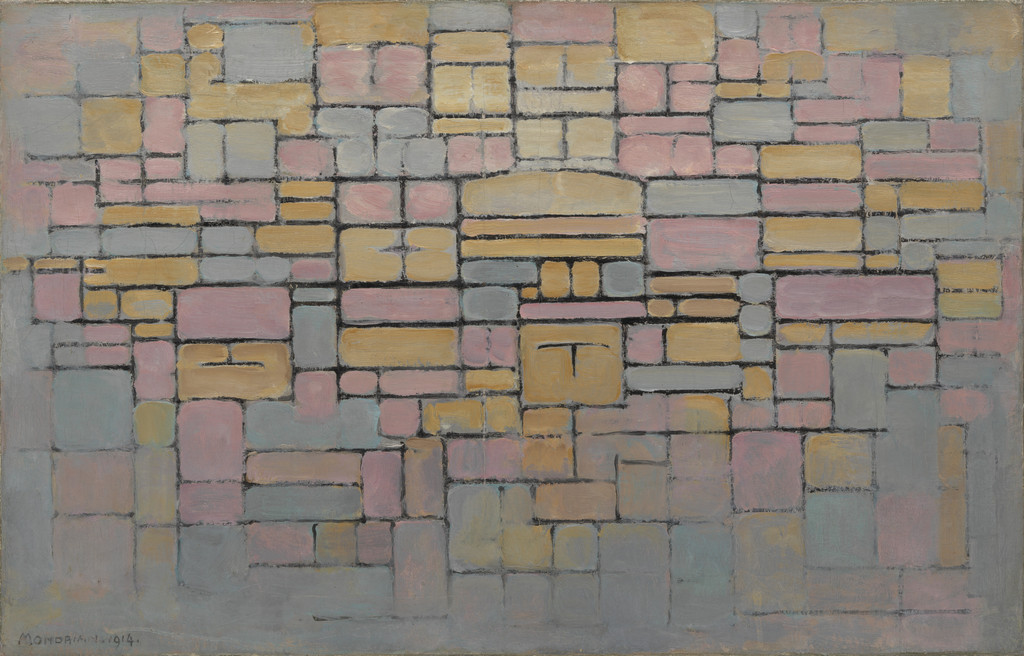
Tableau no. 2 / Composition no. V
Piet Mondrian
1914
Exhibitions
76 exhibitionsJun 07, 1932 – Oct 30, 1932
Summer Exhibition: Painting and Sculpture
57 artists
Jul 20, 1932 – Oct 05, 1932
A Brief Survey of Modern Painting
38 artists
Jul 10, 1933 – Sep 30, 1933
Summer Exhibition: Painting and Sculpture
48 artists
Oct 03, 1933 – Oct 27, 1933
Modern European Art
53 artists
Nov 19, 1934 – Jan 20, 1935
Modern Works of Art: 5th Anniversary Exhibition
117 artists
Jun 04, 1935 – Sep 24, 1935
Summer Exhibition: The Museum Collection and a Private Collection on Loan
53 artists
Mar 02, 1936 – Apr 19, 1936
Cubism and Abstract Art
113 artists · 1 curator
Feb 10, 1937 – Mar 07, 1937
New Acquisitions: Gifts of the Advisory Committee
15 artists
Jun 23, 1937 – Nov 04, 1937
Summer Exhibition: Painting and Sculpture from the Museum Collection and on Loan
53 artists
May 10, 1939 – Sep 30, 1939
Painting, Sculpture, Prints
154 artists
Oct 23, 1940 – Jan 12, 1941
Painting and Sculpture from the Museum Collection
80 artists
May 06, 1941 – Apr 30, 1941
Painting and Sculpture from the Museum Collection
74 artists
Jul 15, 1941 – Jul 28, 1941
Abstract Painting; Shapes of Things
12 artists
Mar 11, 1942 – May 10, 1942
Children's Festival of Modern Art
12 artists
Mar 25, 1942 – May 03, 1942
New Acquisitions and Extended Loans: Cubist and Abstract Art
29 artists
Jul 28, 1943 – Sep 26, 1943
Recent Acquisitions: European and American Paintings and Rugs
10 artists
Feb 16, 1944 – May 10, 1944
Modern Drawings
120 artists · 3 curators
May 24, 1944 – Oct 22, 1944
Design for Use
212 artists · 1 curator
May 24, 1944 – Oct 15, 1944
Painting, Sculpture, Prints
133 artists · 1 curator
Mar 06, 1945 – Mar 25, 1945
What is Modern Painting?
37 artists
Mar 21, 1945 – May 13, 1945
Piet Mondrian
1 artist · 1 curator
Jun 20, 1945 – Feb 13, 1946
The Museum Collection of Painting and Sculpture
174 artists
Feb 19, 1946 – May 05, 1946
The Museum Collection of Painting
67 artists
Jun 18, 1946 – Sep 15, 1946
New Photographers
21 artists
Jul 02, 1946 – Sep 22, 1946
Paintings from New York Private Collections
37 artists · 1 curator
Jul 02, 1946 – Sep 12, 1954
Paintings, Sculpture, and Graphic Arts from the Museum Collection
112 artists · 1 curator
Apr 15, 1947 – Jun 01, 1947
Drawings in the Collection of The Museum of Modern Art
83 artists
Jul 20, 1948 – Sep 12, 1948
New York Private Collections
30 artists · 1 curator
May 03, 1949 – Jul 17, 1949
Recent Acquisitions
11 artists
Oct 05, 1949 – Dec 04, 1949
Modern Art in Your Life
164 artists · 1 curator
Mar 28, 1950 – May 07, 1950
Recent Acquisitions
15 artists
Jul 11, 1950 – Sep 05, 1950
Three Modern Styles
94 artists
Jul 25, 1950 – Nov 05, 1950
Recent Acquisitions
15 artists
Jun 26, 1951 – Sep 09, 1951
Selections from 5 New York Private Collections
34 artists · 1 curator
Dec 16, 1952 – Feb 15, 1953
De Stijl
38 artists · 2 curators
Jun 23, 1953 – Oct 04, 1953
Summer Exhibition: New Acquisitions; Recent American Prints, 19471953; Katherine S. Dreier Bequest; Kuniyoshi and Spencer; Expressionism in Germany; Varieties of Realism
100 artists · 2 curators
Oct 19, 1954 – Feb 06, 1955
XXVth Anniversary Exhibition: Paintings from the Museum Collection
260 artists
Nov 13, 1957 – Jan 05, 1958
Recent Acquisitions
37 artists
Oct 08, 1958 – Nov 09, 1958
Works of Art: Given or Promised
22 artists · 1 curator
Oct 08, 1958
Second Floor Permanent Collection
28 artists
Oct 11, 1960 – Jan 02, 1961
100 Drawings from the Museum Collection
74 artists · 1 curator
Aug 06, 1963 – Sep 29, 1963
60 Modern Drawings: Recent Acquisitions
45 artists · 1 curator
May 27, 1964
Painting and Sculpture from the Museum Collection
169 artists
Jan 17, 1968 – Mar 04, 1968
The Sidney and Harriet Janis Collection
55 artists · 1 curator
Apr 28, 1969 – Nov 04, 1969
Painting and Sculpture from the Museum Collection
9 artists
May 28, 1969 – Sep 01, 1969
Twentieth-Century Art from the Nelson Aldrich Rockefeller Collection
119 artists · 1 curator
Nov 05, 1969 – Jan 02, 1973
Painting and Sculpture from the Museum Collection
35 artists
May 11, 1971 – Oct 19, 1971
A Selection of Drawings and Watercolors from the Museum Collection
58 artists · 1 curator
Jul 28, 1971 – Nov 01, 1971
Ways of Looking
132 artists · 1 curator
Mar 29, 1972
Permanent Collection
45 artists · 2 curators
Jun 27, 1972 – Oct 10, 1972
European Drawings from the Collection
24 artists · 1 curator
May 24, 1973 – Aug 19, 1973
Drawings from the Kröller-Müller National Museum, Otterlo
39 artists · 1 curator
Aug 05, 1975 – Sep 28, 1975
Modern Masters: Manet to Matisse
21 artists · 1 curator
Feb 09, 1976 – May 09, 1976
Cubism and Its Affinities
45 artists · 1 curator
Mar 26, 1976 – Jun 01, 1976
The "Wild Beasts": Fauvism and Its Affinities
22 artists · 1 curator
Nov 23, 1976 – Feb 20, 1977
Prints: Acquisitions, 19731976
81 artists · 1 curator
Dec 17, 1976 – Mar 01, 1977
European Master Paintings from Swiss Collections: Post-Impressionism to World War II
35 artists · 1 curator
Aug 05, 1977 – Oct 31, 1977
The Graphic Revolution: 19151935
31 artists · 1 curator
Apr 28, 1978 – Jul 04, 1978
A Treasury of Modern Drawing: The Joan and Lester Avnet Collection
89 artists · 1 curator
Nov 14, 1979 – Jan 22, 1980
Art of the Twenties
167 artists · 1 curator
Oct 23, 1980
Reinstallation of the Collection
129 artists
Oct 25, 1980 – Jan 27, 1981
Masterpieces from the Collection: Selections from the Late Nineteenth- and Early Twentieth-Centuries
26 artists · 1 curator
Dec 22, 1980 – Mar 10, 1981
The Symbolist Aesthetic
47 artists · 1 curator
Mar 01, 1982 – Mar 16, 1982
A Century of Modern Drawing, 18811981
59 artists · 1 curator
Mar 08, 1982 – Mar 01, 1983
Masterpieces from the Collection
19 artists · 2 curators
Jul 14, 1983 – Sep 27, 1983
Mondrian: New York Studio Compositions
4 artists · 1 curator
Oct 26, 1983 – Jan 03, 1984
The Modern Drawing: 100 Works on Paper from The Museum of Modern Art
81 artists · 1 curator
May 17, 1984
Selections from the Permanent Collection: Prints and Illustrated Books
99 artists · 2 curators
May 17, 1984
Selections from the Permanent Collection: Painting and Sculpture
59 artists · 2 curators
May 17, 1984
Selections from the Permanent Collection: Drawings
61 artists · 2 curators
Oct 02, 1985 – Jan 07, 1986
Contrasts of Form: Geometric Abstract Art, 19101980
107 artists · 2 curators
Jan 24, 1987 – Jun 14, 1987
Drawings Acquisitions
65 artists · 1 curator
Nov 20, 1987 – Mar 08, 1988
Master Prints from the Collection
66 artists · 1 curator
Nov 17, 1988 – Mar 26, 1989
Abstractions
77 artists · 1 curator
Nov 24, 1988 – Jan 10, 1989
Recent Acquisitions
22 artists · 1 curator
Mar 16, 1989 – Jul 04, 1989
Watercolors: Selections from the Permanent Collection
39 artists · 1 curator