Rayograph
Man Ray (Emmanuel Radnitzky)
American, 1890–1976
1923
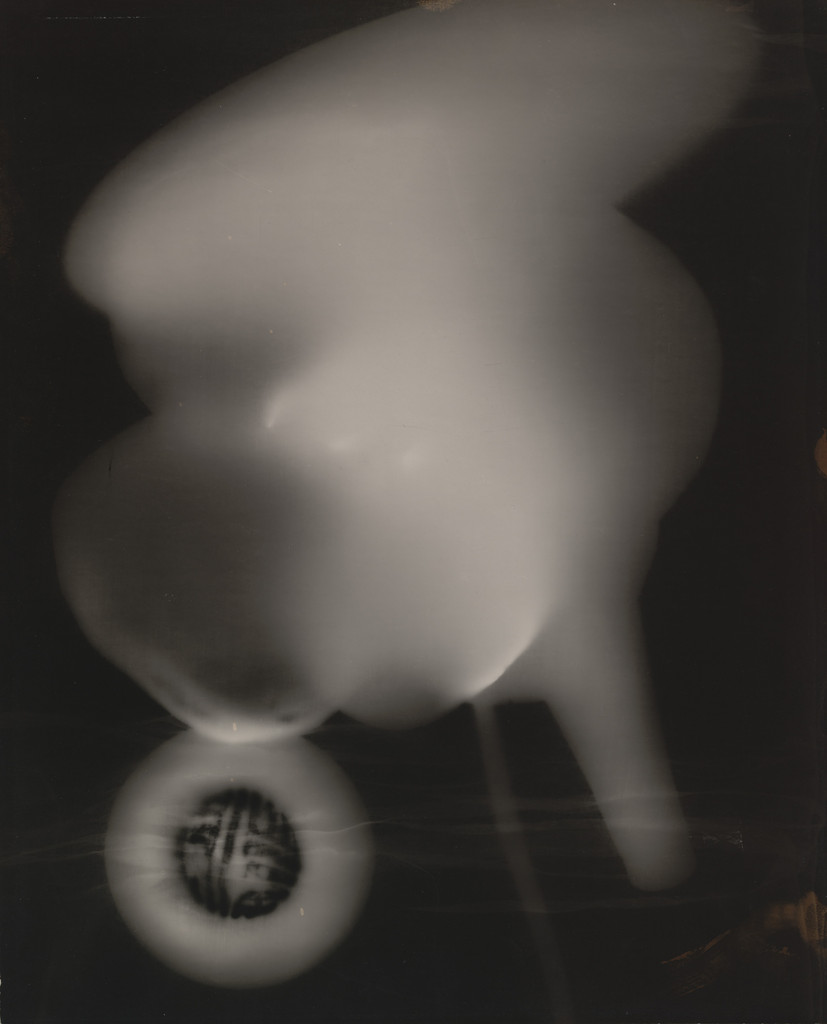
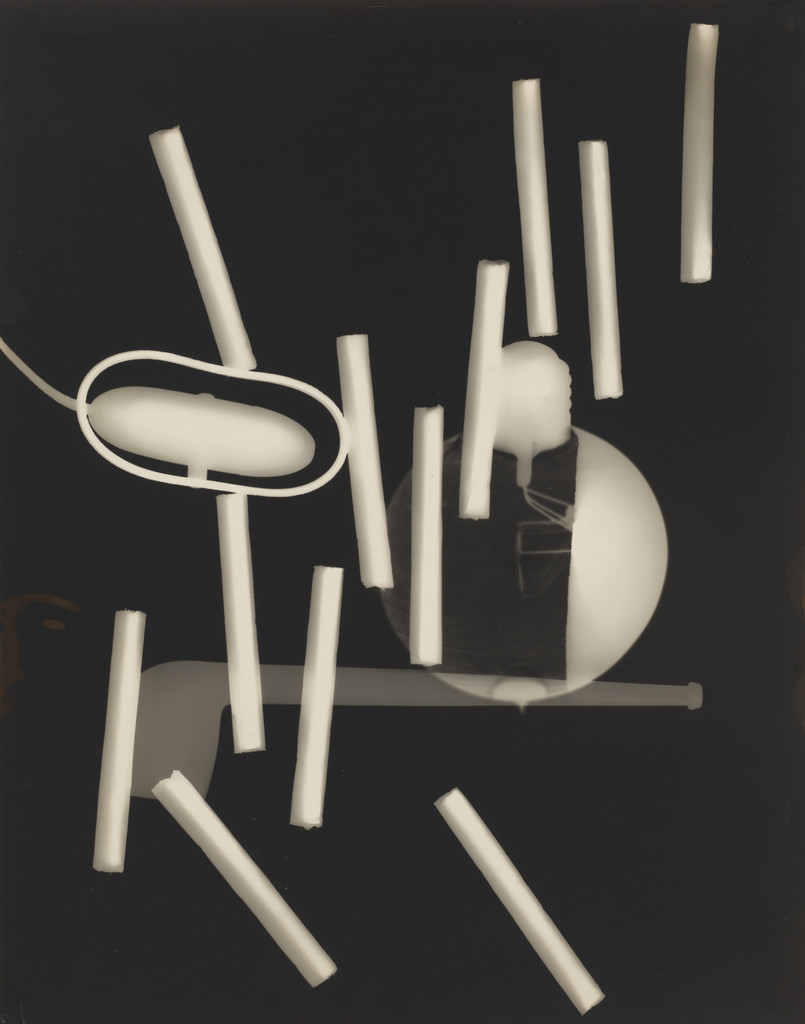
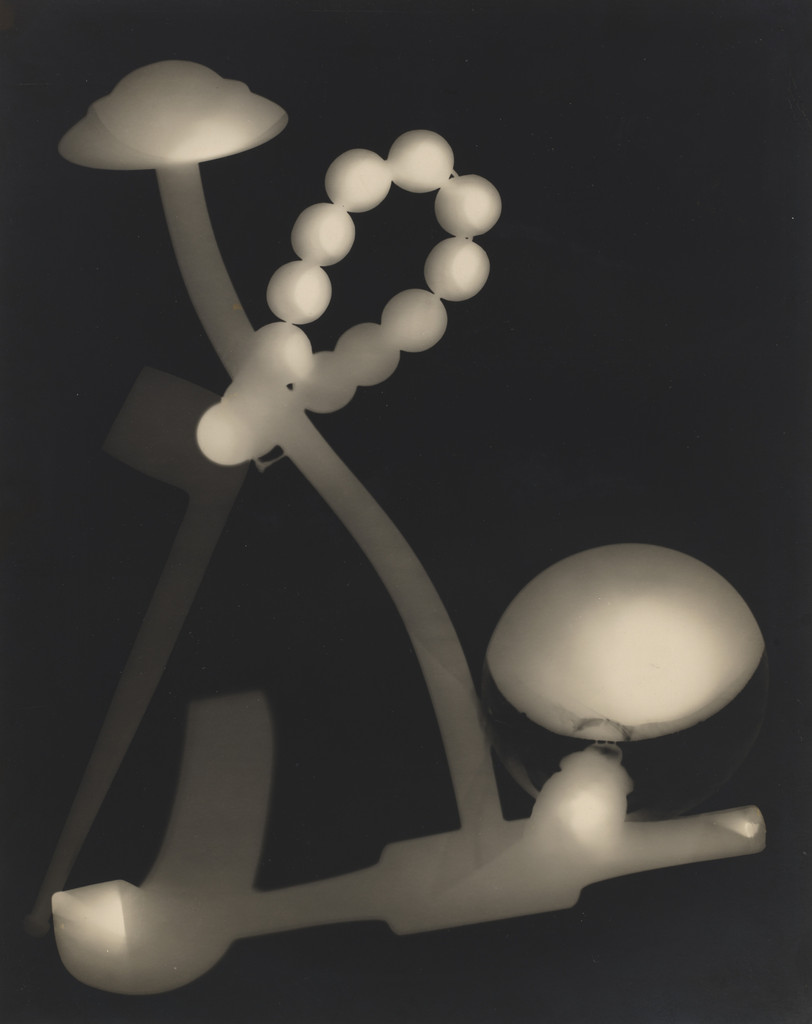
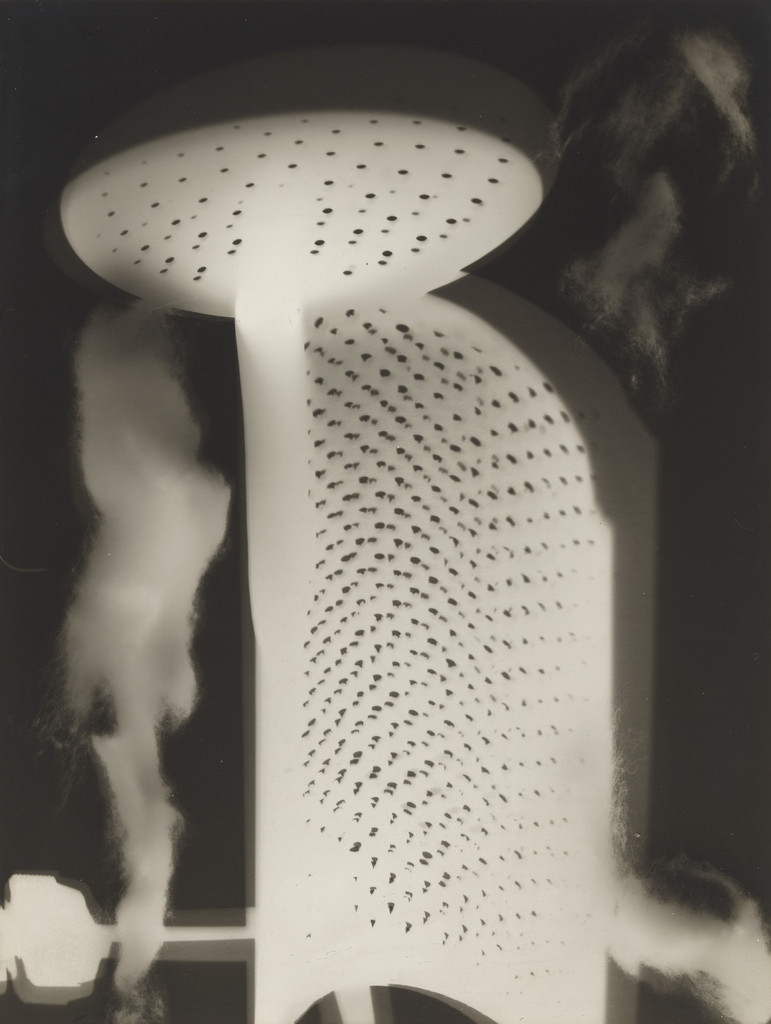
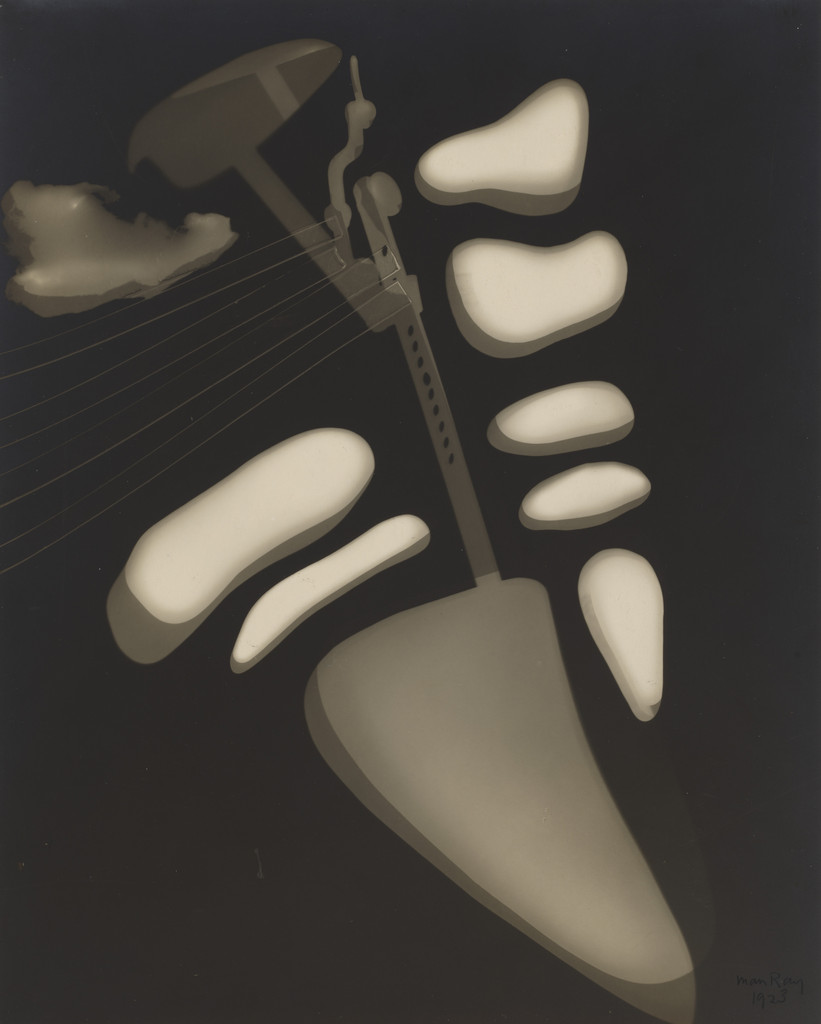
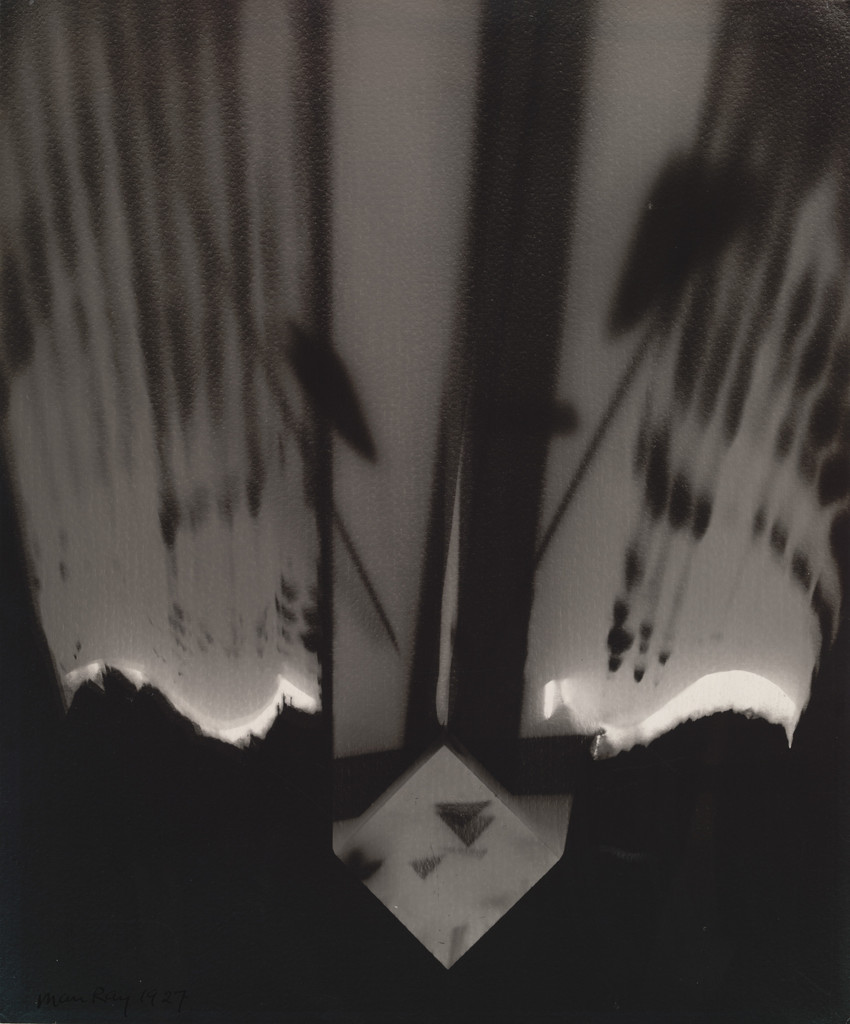
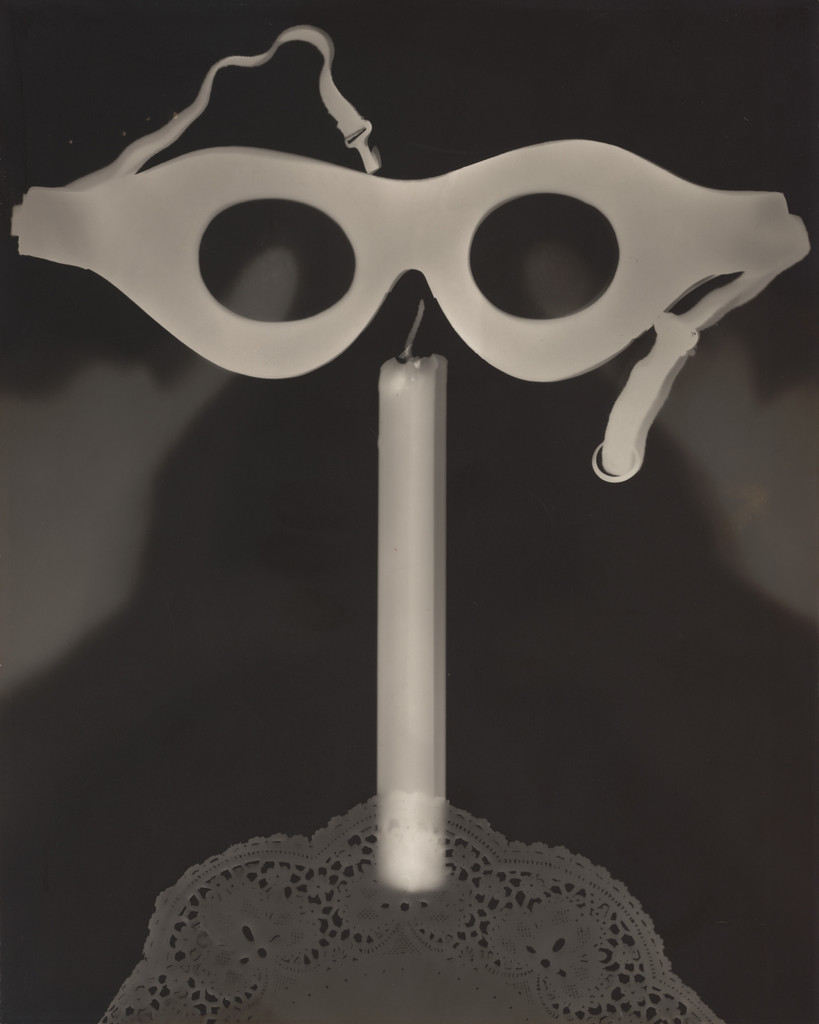
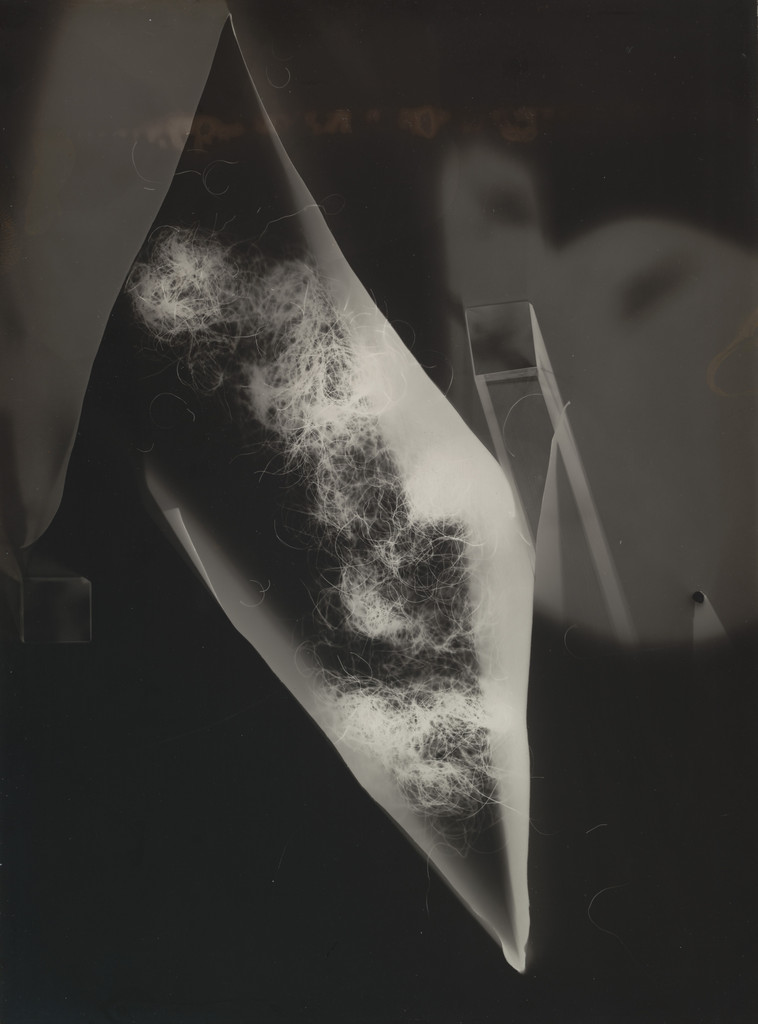
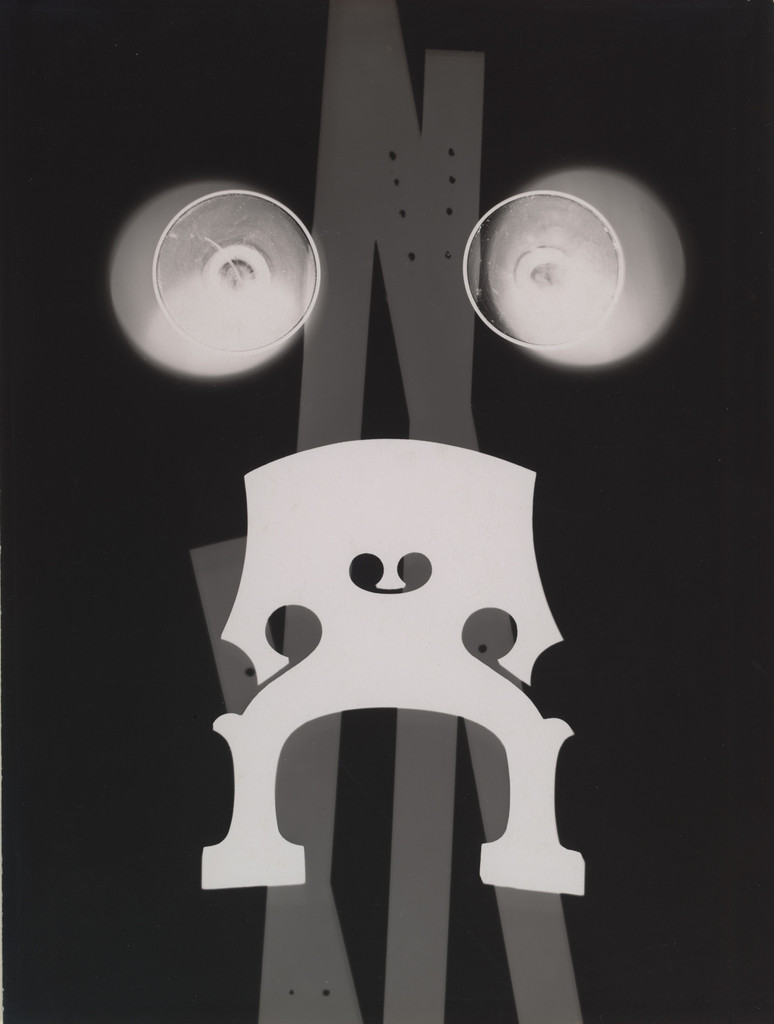
A gelatin-silver photogram in which Man Ray arranged ordinary objects directly on light-sensitive paper to make surreal, chance-driven silhouettes without a camera.
It reads like a playful, ghostly face—two glowing circular forms hover as eyes above the crisply cut white shape of a violin bridge, all set against deep black with translucent vertical bands suggesting a neck.
As an early example of Man Ray’s “rayographs,” it helped redefine photography in the 1920s by rejecting the camera, embracing serendipity and montage, and advancing Dada and Surrealist visual experimentation.
Medium
Gelatin silver print
Dimensions
9 5/16 × 7 1/16" (23.7 × 18 cm)
Classification
Department
Credit
Gift of James Thrall Soby
Accession
127.1941
Palette
Art Terms
Exhibitions